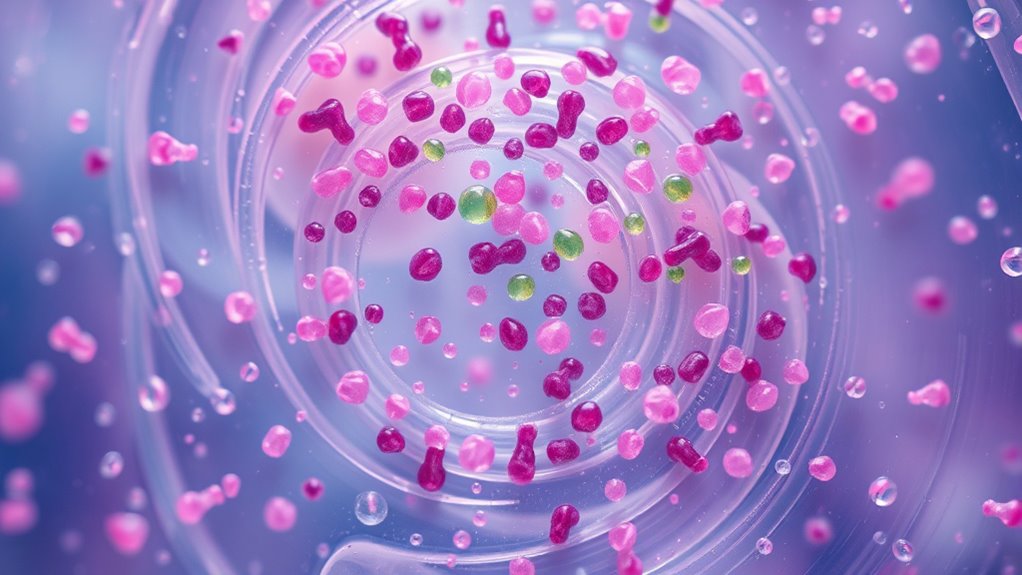

Bio-Art transforms living cells and biological processes into creative materials, turning biology into a canvas you can see and experience. Artists use techniques like genetic modification, tissue culture, and microbiology to create artworks that grow, change, or respond to stimuli over time. These dynamic pieces challenge traditional ideas of art, blending science and life itself. If you want to discover how artists manipulate organisms to produce vibrant, living designs, keep exploring this fascinating intersection of biology and art.
Key Takeaways
- Bio-Art transforms living cells and organisms into artistic mediums, using techniques like genetic engineering and tissue culture.
- Living cells, such as bacteria or tissues, are manipulated to create colorful, dynamic patterns akin to paint.
- Artists often collaborate with scientists to cultivate or modify biological materials that grow or change over time.
- The “paint” in Bio-Art consists of living entities that evolve, mutate, or respond to stimuli, making each artwork unique.
- Bio-Art challenges traditional art boundaries by integrating living processes, emphasizing the biological and ephemeral nature of the work.
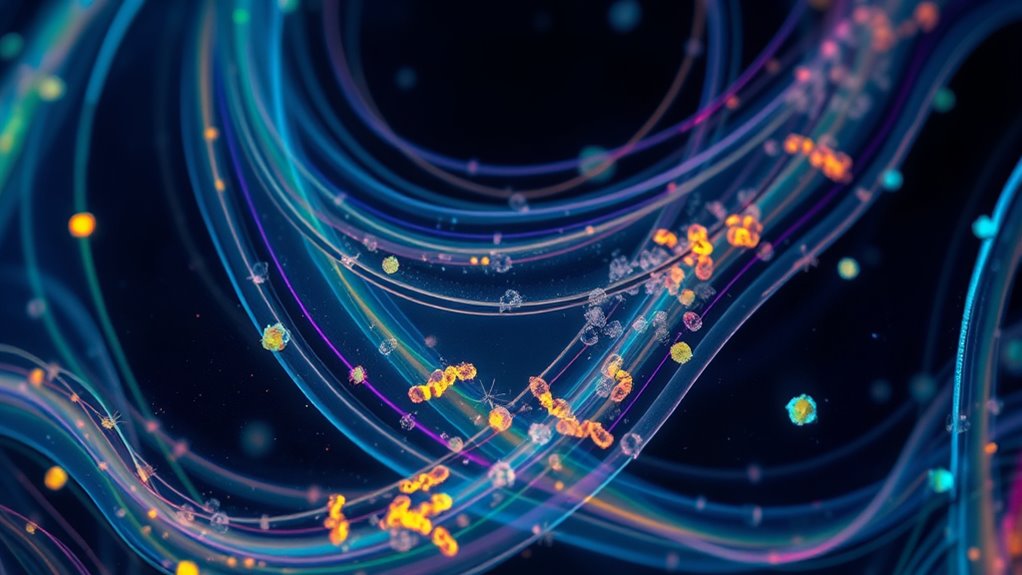
Bio-Art is an innovative form of artistic expression that uses living organisms, biological processes, and scientific techniques as its primary materials. It turns biology into a canvas, where bacteria, tissues, DNA, and other living materials become the medium for creating art. Unlike traditional art, which relies on non-living materials like paint or clay, Bio-Art involves manipulating or cultivating living entities. You might find artists working in laboratories, galleries, or studios, employing techniques like genetic engineering, tissue culture, and microscopy to craft their pieces. This practice challenges conventional notions of art by integrating science and living processes, often producing works that evolve over time, influenced by environmental conditions or biological growth.
Bio-Art uses living organisms and scientific techniques to create evolving, biological artworks.
The scope of Bio-Art covers a broad spectrum. It includes the use of imagery borrowed from medicine and biology, as well as the direct manipulation of living forms. For example, an artist might genetically modify bacteria to produce colorful patterns or cultivate tissues that change shape or color. This living “paint” can grow, mutate, or respond to stimuli, making each piece a dynamic, ever-changing artwork. However, without direct intervention—such as genetically altering cells or growing tissues—it’s not considered Bio-Art. Traditional non-living materials do not qualify, emphasizing that the essence of this art form lies in its biological foundation.
Historically, the term “Bio-Art” gained popularity from Peter Weibel in 1981, though some argue Eduardo Kac used it earlier, in 1977. Early examples include scientists like Alexander Fleming, who created visually distinctive bacterial cultures on petri dishes. The true rise of Bio-Art, however, aligns with recent advances in biotechnology and genetic engineering at the turn of the 21st century. Artists began exploring transgenic organisms and tissue culture as artistic mediums, pushing the boundaries of life manipulation. A 2017 manifesto clarified that Bio-Art involves direct interaction with the “continuum of biomateriality,” from DNA to whole organisms, emphasizing its biological depth. This expansion has been facilitated by rapid technological developments in genetics and biotechnology.
To create Bio-Art, artists employ techniques such as bacterial painting, tissue culture, genetic modification, and cloning. They work with living microorganisms, body fluids, dead plants or animals, and sometimes even assisted living tissues. These processes often require collaboration with scientists and access to laboratory facilities, blending art and science seamlessly. The resulting works are living entities that grow and change, influenced by environmental factors, making each piece unique and transient. Through these methods, Bio-Art pushes viewers to reconsider the boundaries of life, art, and nature itself.

Shuttle Art 103 PCS Drawing Kit, Professional Drawing Supplies with Sketch, Charcoal, Colored, Graphite, Pastel Pencils & Sticks, Complete Drawing Tools and Paper Pads in Zipper Case for Artists&Kids
COMPLETE DRAWING KIT: Shuttle Art 103 pack drawing pencils set includes 24 colored pencils, 24 watercolor pencils, 12…
As an affiliate, we earn on qualifying purchases.
As an affiliate, we earn on qualifying purchases.
Frequently Asked Questions
How Do Bio-Artists Ensure the Safety of Their Living Materials?
You guarantee the safety of your living materials by following strict lab protocols, like sterilizing equipment and using aseptic techniques to prevent contamination. You wear PPE, handle biological waste properly, and stay trained in biosafety procedures. You also maintain controlled environments with incubators, monitor living specimens carefully, and have clear protocols for disposal or euthanasia. These steps help protect both the organisms and the people around you.
What Legal Regulations Govern Bio-Art Projects Involving Living Organisms?
You should know that bio-art projects involving living organisms are governed by laws like copyright, patents, and bioethics regulations. You’ll need to guarantee your work complies with patent laws if you genetically modify organisms, and follow ethical guidelines that assess risks and animal welfare. While laws may be lenient for scientific purposes, you must also consider public safety, transparency, and the ethical implications to stay within legal boundaries.
Can Bio-Art Techniques Be Used for Medical or Therapeutic Purposes?
Sure, you can dream up bio-art as a medical breakthrough, but don’t get your hopes (or cells) up just yet. While it sparks innovative ideas and public awareness, there’s little evidence it’s directly used for therapies now. You might find it inspiring, but turning living art into healing tools faces huge ethical and scientific hurdles. So, for now, bio-art remains more art than medicine—though the future might surprise us!
How Durable Are Bio-Artworks Over Time Without Maintenance?
Without maintenance, bio-artworks tend to degrade quickly because living cells naturally break down, and environmental factors like humidity, temperature, and light can accelerate this process. You’ll see changes in appearance, and the artwork may eventually disappear or become unrecognizable. The unpredictable nature of living materials makes regular care essential if you want to extend the lifespan of bio-art, though some aspects may still be inherently ephemeral.
What Are the Ethical Considerations Surrounding the Creation of Bio-Art?
You might think creating bio-art is straightforward, but ethical considerations lurk beneath every brushstroke. You have to guarantee informed consent, especially when involving living beings, and prioritize their welfare during and after the project. Risks like environmental impact or ownership rights complicate things further. As you push boundaries with living materials, remember your responsibility to respect non-human agency and societal implications, keeping ethics at the core of your innovative work.

Science Art and Drawing Games for Kids: 35+ Fun Art Projects to Build Amazing Science Skills
As an affiliate, we earn on qualifying purchases.
As an affiliate, we earn on qualifying purchases.
Conclusion
You might be surprised to learn that bio-art projects like living paintings can last for months, showcasing the incredible longevity of biological materials. This blend of science and creativity pushes boundaries, transforming living cells into vibrant, dynamic art. As you explore this innovative field, remember that it’s not just about beauty—it’s about redefining what’s possible at the intersection of biology and art. Bio-art invites you to see living cells not just as science, but as a new canvas for expression.

ESRICH 20 Pack 8×10 Canvas and Easel Set, Mini Acrylic Paint, Paint Brushes, Palettes, Aprons, Sip and Paint Kits for Adults Couples Friends Date Night Painting Party Supplies
Paint Kit Supplies: You can get a total of 180 pieces Painting Kits, including 20pcs 8x10in canvas panels,…
As an affiliate, we earn on qualifying purchases.
As an affiliate, we earn on qualifying purchases.

Christian Art Gifts Gift Bag/Tissue Paper Set Trust In The Lord Proverbs 3:5 Bible Verse, Pink, Medium
Convenient and Easy Gift Bag Wrap: Birthday, anniversary, wedding and shower gift wrapping just got simple! Use this…
As an affiliate, we earn on qualifying purchases.
As an affiliate, we earn on qualifying purchases.