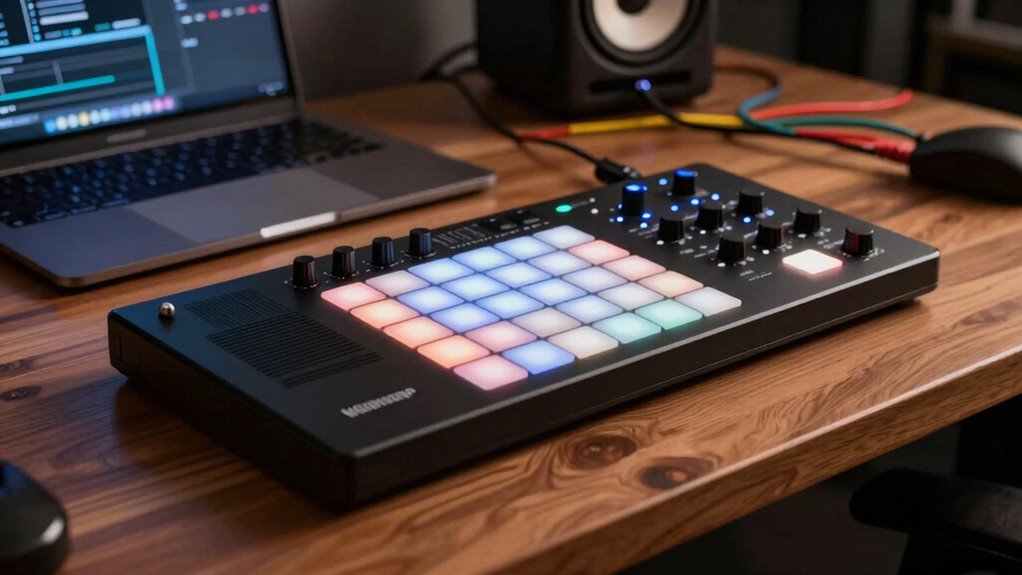
When selecting a midi keyboard controller, the main considerations revolve around size, features, and build quality, all tailored to different production needs. The Novation Launchkey 49 MK4 stands out as the best overall choice thanks to its versatile controls and seamless DAW integration. For those on a budget or with limited space, the M-AUDIO Keystation Mini 32 MK3 offers portability and simplicity. Meanwhile, the Akai Professional MPK Mini IV balances performance with a compact design, making it ideal for mobile setups. Keep reading to explore the full lineup and find the best fit for your music creation goals.

Prime made for students and young adults
- Fast, free delivery for dorm and study essentials
- Prime Video and Amazon Music included
- Member-only deals
Key Takeaways
- Size and key count vary widely, affecting portability and playing comfort, with 25 keys being most common for compactness.
- Build quality and pad responsiveness differ, influencing durability and performance for live or studio use.
- Feature sets like drum pads, knobs, and faders are pivotal for versatility, but add cost and complexity.
- Compatibility with DAWs and software is essential; some controllers offer seamless integration, others require additional setup.
- Budget options often sacrifice advanced features but still deliver reliable MIDI control for beginners.
| Novation Launchkey 49 MK4 USB MIDI Keyboard Controller |  | Best Overall for Versatile Production and Performance | Number of Keys: 49 | Connectivity Technology: USB | Additional Features: Scale and Chord modes, Arpeggiator | VIEW ON AMAZON | See Our Full Breakdown |
| M-AUDIO Keystation Mini 32 MK3 USB MIDI Controller |  | Best for Portable Creativity on the Go | Number of Keys: 32 | Connectivity: USB | Compatibility: Windows and Mac | VIEW ON AMAZON | See Our Full Breakdown |
| Akai Professional LPK25 25-Key USB MIDI Keyboard Controller |  | Best for Compact, Versatile Studio and Live Use | Number of Keys: 25 | Power Source: USB | Compatibility: Mac, PC, DAWs like Ableton, Logic | VIEW ON AMAZON | See Our Full Breakdown |
| M-AUDIO Keystation 49 MK3 USB MIDI Controller |  | Best for Full-Size Keys and Professional Control | Number of Keys: 49 | Connectivity: USB, iOS support | Includes Software: MPC Beats, Ableton Live Lite, others | VIEW ON AMAZON | See Our Full Breakdown |
| Arturia MiniLab 3 Universal MIDI Controller, White |  | Best for Compact, Creative Workflow Enhancements | Color: White | Number of Pads: 8 | Number of Faders: 4 | VIEW ON AMAZON | See Our Full Breakdown |
| Akai Professional MPK Mini IV 25-Key USB-C MIDI Keyboard Controller, Black |  | Best Overall for Versatile Performance and Portability | Number of Keys: 25 | Connectivity: USB-C, full-size MIDI Out | Included Software: Ableton Live Lite 12, Melodics, Splice | VIEW ON AMAZON | See Our Full Breakdown |
| Donner Mini MIDI Keyboard N-25, 25-Key MIDI Controller for Beginners |  | Best for Beginners and Learning on the Go | Number of Keys: 25 | Connectivity Technology: USB | Additional Features: Lighting buttons, 40 courses | VIEW ON AMAZON | See Our Full Breakdown |
| Akai Professional MPK Mini MK3 25-Key USB MIDI Keyboard Controller |  | Best for Advanced Mobility and Studio Control | Number of Keys: 25 | Power Source: USB powered | Pads: 8 backlit MPC-style | VIEW ON AMAZON | See Our Full Breakdown |
| Arturia MiniLab 37 MIDI Keyboard Controller |  | Best for Expressive Playing and Creative Features | Number of Keys: 37 | Additional Keys: 12 signature slim keys | Pad Layout: 2×4 | VIEW ON AMAZON | See Our Full Breakdown |
| Akai Professional MPK Mini Plus 37-Key USB MIDI Keyboard Controller |  | Best for Versatile Studio and Performance Control | Number of Keys: 37 | Keybed: Gen 2 dynamic | Octaves: 3 full octaves | VIEW ON AMAZON | See Our Full Breakdown |
More Details on Our Top Picks
Novation Launchkey 49 MK4 USB MIDI Keyboard Controller
The Launchkey 49 MK4 stands out for its expansive 49 keys and deep integration with major DAWs like Ableton Live, Logic, and Cubase, making it a top choice for both studio producers and performers. Its responsive FSR pads with polyphonic aftertouch enable expressive control, while onboard features such as Scale Mode and Chord Modes add creative flexibility. Compared to the Akai LPK25, it offers a more comprehensive control surface, though this comes with a larger size and a more complex feature set that might overwhelm beginners. Its USB-only connectivity limits placement options but keeps setup straightforward for home or studio use. This pick is ideal for musicians seeking a full-featured controller that can handle live performances and detailed studio work in one device.
Pros:- Extensive DAW compatibility and onboard creative tools
- Responsive pads with polyphonic aftertouch for expressive playing
- Includes bundled software and sound libraries
- Large 49-key layout suitable for detailed performance
Cons:- Size may be cumbersome for portable setups
- Advanced features could be daunting for newcomers
- Limited to USB connection, no MIDI DIN ports
Best for: Intermediate to advanced producers and performers who want a versatile, feature-rich MIDI controller with extensive DAW integration.
Not ideal for: Beginners or users with limited space who prefer a simple, portable MIDI keyboard without complex onboard tools.
- Number of Keys:49
- Connectivity Technology:USB
- Additional Features:Scale and Chord modes, Arpeggiator
- Supported Software:Ableton, Logic, Cubase, HUI
- Hardware Interface:USB
- Instrument Key:Any
- Compatible Devices:PC, Synthesizer, Groovebox
Our verdict“This controller is best suited for users who need a comprehensive, versatile device capable of both production and live play, and are comfortable with its size and feature set.”
M-AUDIO Keystation Mini 32 MK3 USB MIDI Controller
The Keystation Mini 32 MK3 excels as a compact, lightweight MIDI controller designed for musicians who need portability without sacrificing essential features. Its 32 velocity-sensitive mini keys make it ideal for quick idea sketching and mobile music production, especially for those who prefer a small footprint over full-sized keys. Unlike the Launchkey 49 MK4, it lacks advanced onboard tools but compensates with plug-and-play simplicity and included MPC Beats software, perfect for beginners or mobile musicians. Its small keys may feel less natural for pianists or those used to full-size instruments, and it offers no onboard sounds or speakers, relying entirely on connected devices. This model makes the most sense for users prioritizing portability and straightforward operation over extensive control options.
Pros:- Highly portable and lightweight design
- Plug-and-play setup with no external power needed
- Includes helpful software and tutorials for beginners
- Mini keys are ideal for tight spaces and mobile use
Cons:- Mini keys feel less natural for piano playing
- Limited control options compared to larger controllers
- No onboard sounds or built-in speakers
Best for: Beginners or mobile musicians who want a compact, easy-to-use MIDI keyboard for quick ideas and software control.
Not ideal for: Advanced producers or pianists needing full-size keys and extensive onboard features for detailed performances.
- Number of Keys:32
- Connectivity:USB
- Compatibility:Windows and Mac
- Keys Type:Miniature velocity-sensitive
- Included Software:MPC Beats
- Additional Features:Octave controls, pitch bend, modulation
Our verdict“This controller is perfect for mobile users and beginners who prioritize portability and simplicity over extensive features.”
Akai Professional LPK25 25-Key USB MIDI Keyboard Controller
The Akai LPK25 offers a highly portable 25-key controller that balances size with functionality, making it suitable for songwriting and live performance alike. Its responsive keys and programmable presets provide a versatile interface, rivaling the Akai MPK Mini but with a simpler layout. Unlike the larger Launchkey, it’s more compact, but this limits performance range and complexity. Its arpeggiator and full DAW compatibility make it a flexible choice for users who want a lightweight device that can integrate seamlessly into a variety of setups. However, with just 25 keys, it’s less suited for complex piano pieces or extensive performance, and it requires external software for full operation. This model is ideal for musicians needing a portable yet capable controller for quick ideas and on-stage use.
Pros:- Compact and lightweight for easy portability
- Full DAW compatibility and programmable presets
- Built-in arpeggiator for creative performance
- USB plug-and-play connectivity
Cons:- Limited to 25 keys, restricting performance complexity
- Requires external software for full use
- No onboard sounds or standalone capabilities
Best for: Songwriters, mobile performers, and producers who need a compact, full-featured MIDI controller that fits into small spaces.
Not ideal for: Pianists or producers requiring extensive key range or advanced onboard features for detailed studio work.
- Number of Keys:25
- Power Source:USB
- Compatibility:Mac, PC, DAWs like Ableton, Logic
- Features:Programmable presets, arpeggiator
- Additional Controls:Octave, sustain button
Our verdict“This controller is well-suited for users who need a portable, versatile device for songwriting and live performance without extensive key range.”
M-AUDIO Keystation 49 MK3 USB MIDI Controller
The Keystation 49 MK3 provides a familiar full-size 49-key layout, making it suitable for players who want a traditional piano feel combined with essential controls. Its velocity-sensitive keys offer expressive performance, and with octave controls, pitch/mod wheels, and sustain input, it supports nuanced playing and live control. Unlike the Launchkey MK4, which offers more onboard tools, this model emphasizes straightforward control and compatibility, supporting both Mac and PC seamlessly. Its plug-and-play setup is simple, though it lacks advanced onboard features like arpeggiators or chord modes, and it doesn’t include onboard sounds. For users who prioritize key feel and essential controls without extra complexity, this is an excellent choice for studio and stage.
Pros:- Full-size velocity-sensitive keys for expressive playing
- Supports iOS devices with optional adapters
- Comprehensive controls including wheels and octave buttons
- Includes a suite of professional production software
Cons:- Lacks onboard advanced features like arpeggiators
- Requires external sustain pedal for full expression
- No built-in display for detailed parameter editing
Best for: Professional musicians and producers who need a full-sized, reliable MIDI controller with essential performance features.
Not ideal for: Beginners or producers seeking advanced onboard tools or built-in sounds for immediate music creation.
- Number of Keys:49
- Connectivity:USB, iOS support
- Includes Software:MPC Beats, Ableton Live Lite, others
- Additional Controls:Volume fader, pitch/mod wheels
- Sustain Pedal Input:Yes
Our verdict“This controller offers a reliable, full-key experience ideal for musicians who value traditional piano feel and essential controls.”
Arturia MiniLab 3 Universal MIDI Controller, White
The MiniLab 3 combines a sleek, white design with practical controls, including 8 drum pads and 4 faders, making it a versatile tool for producers seeking quick control over their instruments. Its velocity-sensitive keys provide a playable experience, though with only 25 keys, it’s less suited for piano-intensive tasks. Compared to larger controllers like the Launchkey 49 MK4, the MiniLab 3 emphasizes portability and hands-on control, but its limited number of faders and pads can constrain complex mixing or performance setups. It benefits from its compact size, fitting easily into small desks or mobile rigs, but requires compatible software to unlock its full potential. This makes it a solid choice for users who want a portable, stylish MIDI controller for quick tweaks and creative sessions.
Pros:- Compact and lightweight with a stylish design
- Responsive velocity-sensitive keys
- Versatile controls for quick production tweaks
- Easy to integrate into various setups
Cons:- Limited number of faders and pads for complex mixing
- Requires compatible software for full functionality
- No standalone operation or onboard sounds
Best for: Traveling producers and hobbyists who want a stylish, portable device with essential controls for music production.
Not ideal for: Producers needing extensive fader and knob controls or those performing complex live setups.
- Color:White
- Number of Pads:8
- Number of Faders:4
- Key Type:Velocity-sensitive
Our verdict“This controller is ideal for producers seeking a portable, stylish device for basic control and quick music creation.”
Akai Professional MPK Mini IV 25-Key USB-C MIDI Keyboard Controller, Black
The Akai MPK Mini IV stands out for its balance of portability and comprehensive controls, making it ideal for musicians who need a versatile device that can handle both studio work and live performance. Compared with the Akai MPK Mini MK3, it adds a full-color display and RGB feedback pads, offering more immediate visual feedback that benefits live tweaking and production clarity. However, this increased feature set comes with a slightly higher price and a reliance on USB-C, which might require adapters for older hardware. The integrated DAW support and included instrument collections make it a strong all-rounder, but the limited 25 keys could be restrictive for more complex piano parts or layered performances. Overall, this model is best for producers and performers who want a compact controller with broad functionality without sacrificing portability.
Pros:- Compact, portable design suitable for travel and stage use
- Includes extensive virtual instrument collection and DAW support
- Real-time control with assignable knobs and RGB feedback pads
- Full-color display enhances workflow visibility
Cons:- Limited to 25 keys, which can hinder complex piano performances
- Requires USB-C connection, may need adapters for older hardware
- Basic feature set may feel limited for advanced studio users
Best for: Traveling producers and live performers who need a compact, feature-rich MIDI controller.
Not ideal for: Classical pianists or producers requiring full 88-key layouts for complex arrangements.
- Number of Keys:25
- Connectivity:USB-C, full-size MIDI Out
- Included Software:Ableton Live Lite 12, Melodics, Splice
- Pads:8 velocity- and pressure-sensitive MPC pads
- Knobs:8 assignable 360° knobs
- Display:Full-color screen
Our verdict“This controller is perfect for mobile producers and performers who want a feature-rich device in a small form factor.”
Donner Mini MIDI Keyboard N-25, 25-Key MIDI Controller for Beginners
The Donner N-25 is designed with newcomers in mind, offering an intuitive, lightweight design that makes music creation accessible. Its 25 velocity-sensitive mini keys and user-friendly controls are comparable to the Akai MPK Mini IV, but without the advanced features like a display or RGB pads. The inclusion of 40 teaching courses and plug-and-play compatibility across various OS platforms makes it especially appealing for beginners eager to learn and experiment. Yet, the limited keys and absence of onboard sounds mean users will need external software for full functionality, which could be a hurdle for absolute novices. This controller makes the most sense for beginners who want an affordable, portable option to start their musical journey, rather than for those seeking deep production features.
Pros:- Lightweight, compact design perfect for portability
- Includes 40 beginner-friendly courses for learning
- Velocity-sensitive keys for expressive playing
- Plug-and-play compatibility with multiple platforms
Cons:- Limited to 25 keys, restricting performance complexity
- No onboard sounds or speakers onboard
- Requires external software for full use
Best for: Music beginners and students seeking an easy, portable introduction to MIDI control.
Not ideal for: Advanced producers or performers needing extensive control and key range for complex compositions.
- Number of Keys:25
- Connectivity Technology:USB
- Additional Features:Lighting buttons, 40 courses
- Supported Software:Ableton Live
- Platform Compatibility:Android, Mac, Windows, iOS
- Control Method:Touch
Our verdict“Ideal for beginners and learners wanting an affordable, portable MIDI controller to start exploring music production.”
Akai Professional MPK Mini MK3 25-Key USB MIDI Keyboard Controller
The Akai MPK Mini MK3 combines a familiar compact size with a more comprehensive control set, making it suitable for producers who need versatility on the move. Its 25 velocity-sensitive keys are complemented by MPC-style drum pads, a thumbstick, and 8 MIDI-assignable knobs, offering more tactile control than the MPK Mini IV. The inclusion of software like MPC Beats and virtual instruments, along with NKS support for Native Instruments, makes it a compelling choice for more serious creators. The tradeoff lies in the limited 25 keys, which may not suffice for complex arrangements, and the initial setup complexity due to the software registration process. Still, this model targets users who want a portable yet powerful MIDI controller for both studio work and live use.
Pros:- Compact design with MPC-style drum pads and knobs
- Includes robust software bundle and NKS support
- Seamless integration with DAWs and Native Instruments
- Built-in thumbstick for modulation and pitch bend
Cons:- Limited to 25 keys, restricting performance depth
- Requires software registration to access full features
- Initial setup may be complex for newcomers
Best for: Producers and beat makers who need quick, versatile control in a portable format.
Not ideal for: Classical pianists or users requiring a full-range keyboard for detailed, layered performances.
- Number of Keys:25
- Power Source:USB powered
- Pads:8 backlit MPC-style
- Knobs:8 MIDI-assignable
- Joystick:4-way thumbstick
- Included Software:MPC Beats, virtual instruments
Our verdict“This controller offers a flexible, portable solution for producers who need tactile control and software integration in a small package.”
Arturia MiniLab 37 MIDI Keyboard Controller
The Arturia MiniLab 37 offers a more expansive 37-key layout, making it suitable for musicians seeking more performance range without sacrificing portability. It features intuitive controls, a built-in arpeggiator, chord mode, and a versatile pad layout, which sets it apart from smaller 25-key options like the Donner N-25. While the extra keys are beneficial for more complex melodies and arrangements, the device remains lightweight and portable, ideal for mobile producers and live performers. The tradeoff is that it might lack some advanced connectivity options found in larger controllers, and additional software is needed for full functionality. This model makes the most sense for those who want a step up in key range while maintaining ease of use and portability.
Pros:- More keys (37) for greater performance range
- Includes built-in arpeggiator and chord modes
- Portable and lightweight design
- Suitable for both studio and live use
Cons:- Limited control features compared to larger controllers
- Requires additional software for full feature set
- No onboard display for detailed editing
Best for: Performers and producers wanting more keys for expressive play without bulk.
Not ideal for: Producers requiring extensive control options or full-sized piano performance capabilities.
- Number of Keys:37
- Additional Keys:12 signature slim keys
- Pad Layout:2×4
- Features:Arpeggiator, Chord mode
- Design:Portable, lightweight
- Included Software:Various DAW mappings
Our verdict“This controller is ideal for performers and producers who want more keys and expressive tools in a portable format.”
Akai Professional MPK Mini Plus 37-Key USB MIDI Keyboard Controller
The Akai MPK Mini Plus raises the bar with 37 keys and advanced connectivity options like CV/Gate and MIDI I/O, appealing to producers who want a versatile, all-in-one MIDI solution. Its 37-key range offers more performance flexibility than the Mini MK3, and the built-in 64-step sequencer plus NKS support provide additional creative tools. The inclusion of MPC pads, 8 assignable knobs, and a 3-octave keybed make it suitable for both studio production and live performance. The main tradeoff is the device’s reliance on external power sources and the limited octaves, which might restrict some performance styles. This controller is best suited for producers who want a comprehensive, portable control surface with advanced connectivity and sequencing features.
Pros:- 37 keys across 3 octaves for versatile playing
- Advanced connectivity including CV/Gate and MIDI I/O
- Includes powerful 64-step sequencer and software
- NKS support for seamless sound library control
Cons:- Limited octaves may restrict some performances
- No built-in display for detailed parameter editing
- Requires external power source, impacting portability
Best for: Producers and beat makers needing a portable, feature-rich MIDI controller with sequencing capabilities.
Not ideal for: Classical pianists or users who prefer a full 88-key keyboard for detailed arrangements.
- Number of Keys:37
- Keybed:Gen 2 dynamic
- Octaves:3 full octaves
- Pads:8 RGB MPC pads
- Connectivity:USB, CV/Gate, MIDI I/O
- Built-in Sequencer:64-step, 1 drum and 1 melody/chorus track
Our verdict“This controller is best for producers seeking a portable, highly capable MIDI device with sequencing and advanced connectivity options.”
How We Picked
The products in this roundup were evaluated based on performance, build quality, feature set, portability, and value for money. I prioritized controllers that offer reliable MIDI transmission, durable construction, and intuitive controls suitable for various skill levels. Each product was also examined for compatibility with major DAWs and software, as well as user interface design. The ranking reflects a blend of these factors, emphasizing practicality and versatility for different user needs. Cost-effectiveness was considered but balanced against features and build to ensure meaningful differences among the top picks.Factors to Consider When Choosing Midi Keyboard Controllers
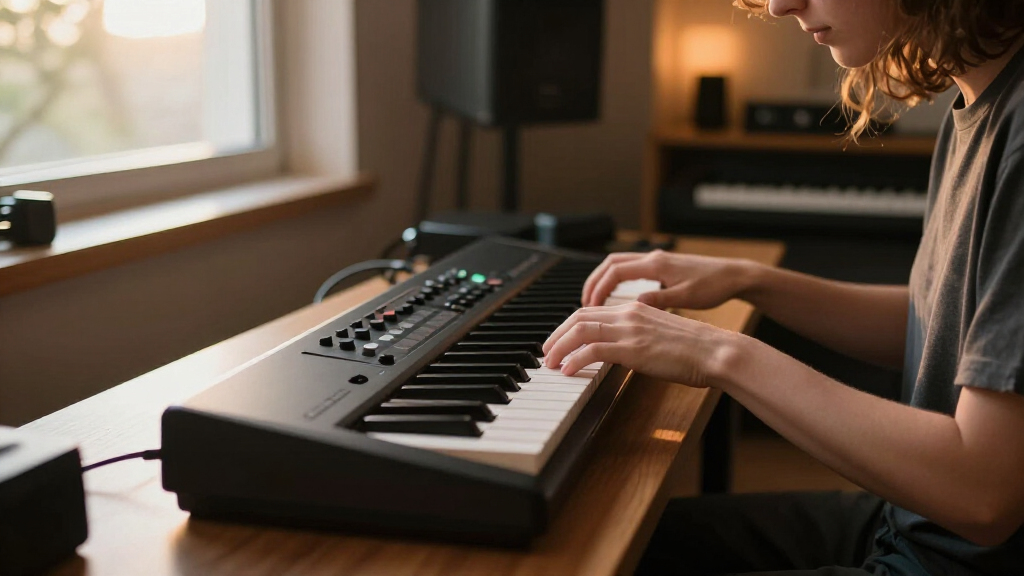
Choosing the right midi keyboard controller involves understanding several key factors that impact your workflow and musical creativity. Beyond price, consider how many keys you need, the types of controls, and compatibility with your setup. A well-chosen controller can enhance your productivity and inspire new ideas, while a mismatched one might hinder your progress. Here are the main considerations to guide your decision.Size and Key Count
The number of keys directly affects how portable your controller is and how comfortably you can perform complex pieces. Smaller models with 25 keys are lightweight and easy to carry but can limit your range of expression. Larger controllers with 49 or 61 keys offer more playing options but take up more space. Consider your typical use case—studio, live performance, or mobile setup—to pick the right size.
Build Quality and Durability
Since midi controllers are often transported or used heavily, durability matters. Look for sturdy construction with high-quality plastics or metal components, especially if you plan to take it on the road. Responsive pads and reliable knobs also contribute to long-term usability. Cheaper models might feel flimsy or wear out quickly, so weigh cost against longevity for your needs.
Controls and Features
Beyond keys, consider what additional controls are vital for your workflow. Pads for drums, knobs for modulation, and faders for volume are common extras. More features mean greater flexibility, but can also increase complexity and cost. Think about your typical production style—if you need hands-on control over multiple parameters, prioritize controllers with comprehensive control surfaces.
Compatibility and Software Integration
Ensure the controller is compatible with your preferred DAWs and software. Some models offer plug-and-play integration with popular platforms like Ableton Live, Logic, or FL Studio, while others may require additional setup. Check for driver support and compatibility with your operating system. This can save time and prevent frustration during setup.
Budget and Value
Prices for midi controllers range from budget-friendly to premium. While cheaper models may lack advanced features, they often provide good basic control for beginners. Conversely, investing more can yield better build quality, more controls, and enhanced performance. Balance your budget with your needs—sometimes, spending a little extra results in a controller that lasts longer and offers better usability.
Frequently Asked Questions
Can I use a midi keyboard controller with any DAW?
Most midi keyboard controllers are compatible with a wide range of DAWs, including Ableton Live, Logic, FL Studio, and Cubase. However, some controllers offer dedicated plugins or seamless integration with specific DAWs, making setup easier. Always check the manufacturer’s compatibility list before purchasing, especially if you rely on specialized software. In general, a standard MIDI connection ensures broad compatibility, but extra features may vary in ease of use across different platforms.
Do I need weighted keys on my midi controller?
Weighted keys are primarily found on controllers designed to mimic real piano feel and are favored by pianists or serious keyboard players. For most electronic music production, non-weighted keys are sufficient and more affordable. They offer lighter touch and faster response, which is often preferred for synths and performance. Consider your playing style and comfort—if you plan to perform classical piano pieces, weighted keys might be worth the investment.
Is it better to buy a larger or smaller midi controller?
The choice depends on your workflow and space constraints. Larger controllers with more keys and controls offer greater versatility, suitable for complex compositions and studio setups. Smaller models excel in portability and simplicity, making them ideal for live performances or limited space. Think about whether mobility or expanded features matter more to your production style, and balance that with your budget.
Are expensive midi controllers worth the extra cost?
Higher-priced controllers often provide better build quality, more controls, and advanced features that can enhance your workflow. If you are a professional or serious hobbyist, investing in a premium model can improve durability and creative possibilities. However, for beginners or casual users, a mid-range or budget option may be sufficient until you better understand your needs. Weigh the added benefits against your budget to decide if the extra cost aligns with your goals.
What should I look for in portability and power options?
Portability is key if you plan to take your controller on the go. Compact models with fewer keys are easier to carry and often include USB bus-powered operation, reducing the need for external power supplies. Check whether the controller supports USB-C or USB 3.0 for faster data transfer. For mobile setups, battery-powered options are rare but worth considering if you need true independence from power outlets.
Conclusion
For most users, the Novation Launchkey 49 MK4 offers a balanced mix of features, build quality, and compatibility, making it the best overall choice. Beginners or those with limited space will appreciate the M-AUDIO Keystation Mini 32 MK3 for its simplicity and portability. Professionals seeking a compact yet versatile controller might prefer the Akai Professional MPK Mini IV for its performance and control set. Meanwhile, those who prioritize premium build and advanced features should consider higher-end options like the Arturia MiniLab 37. Your ideal pick depends on your specific needs, workspace, and budget—use this guide to make an informed decision.
As an affiliate, we earn on qualifying purchases.Fall Picks
fall essentials