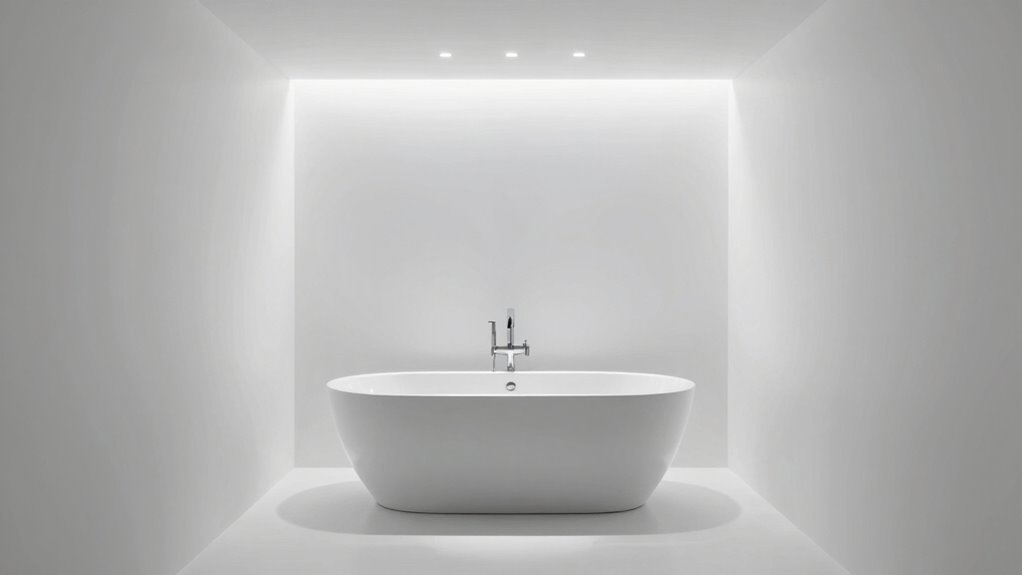
To make your small studio look bigger with LED lighting, use a combination of cool white lights around 5000K-6500K to mimic daylight, which helps brighten corners and create an open feel. Diffuse the light with softboxes or frosted covers to soften shadows and eliminate harsh lines, giving the space a seamless and spacious look. Adjusting color temperatures and diffusing light cleverly can transform your studio’s ambiance, and if you keep exploring, you’ll find even more tips to maximize your setup.
Key Takeaways
- Use high color temperature LED lights (~5000K-6500K) to mimic natural daylight and enhance openness.
- Incorporate diffusers or softboxes to create a seamless, even glow and soften shadows.
- Position lights strategically to eliminate dark corners and evenly illuminate the entire space.
- Combine different color temperatures for a balanced, inviting, and spacious ambiance.
- Avoid harsh, pinpoint lighting; opt for diffused lighting to reduce glare and improve visual expansion.
Are you ready to transform your space with efficient, versatile lighting? When you’re working with a small studio, every detail counts. Proper LED lighting setup can make your space appear larger, brighter, and more inviting. The key lies in understanding how to manipulate light through the right choices of color temperature and light diffusion. These elements help you craft an environment that feels open and airy, rather than cramped or dull.
Optimize your small studio with strategic LED lighting—brighten, expand, and create an inviting, open space.
First, focus on selecting LEDs with a flexible color temperature. Cooler tones, around 5000K to 6500K, mimic natural daylight and create an expansive feel. They reflect more light, which helps illuminate every corner of your studio, making it seem bigger. Warmer tones, while cozy, tend to make spaces feel smaller and more enclosed. So, by opting for higher color temperatures, you enhance the sense of openness. You can also mix different color temperatures strategically—using cooler lights as your main source and warmer accents for comfort—without sacrificing the overall spacious vibe. Additionally, understanding how color temperature influences perception can help you fine-tune your lighting for optimal space enhancement.
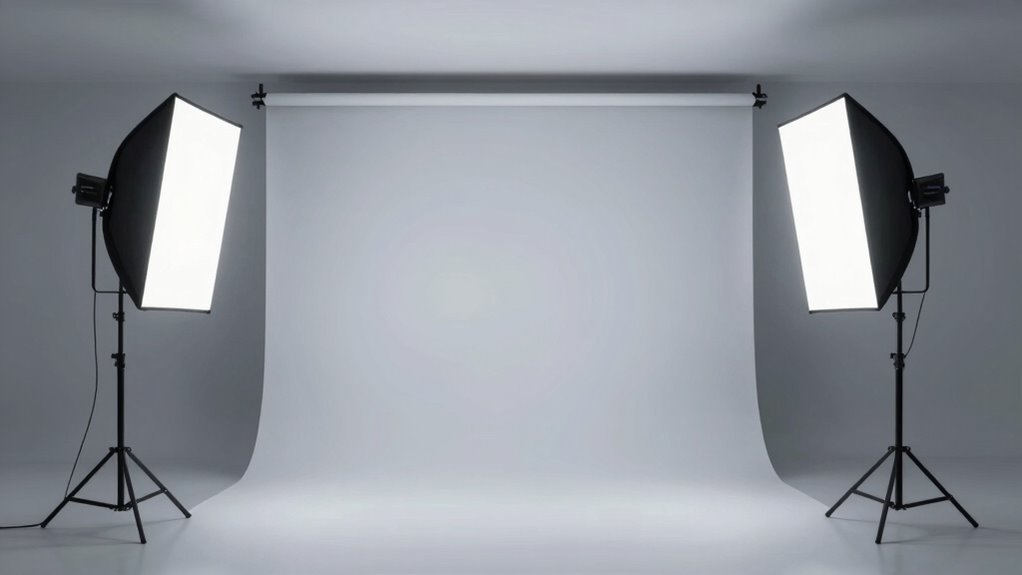
Next, consider how light diffusion plays a critical role in enlarging your studio visually. Diffused lighting softens shadows and reduces harsh lines, creating a seamless, uniform glow across your space. When you use LED fixtures with built-in diffusers or add diffusing materials like softboxes or frosted covers, you spread light evenly. This eliminates pinpoint bright spots and dark corners, which can make a room feel smaller and more cluttered. Light diffusion helps your small studio appear more open by reducing visual clutter and creating a sense of continuity in lighting. Incorporating light diffusion techniques can further amplify this effect and improve overall ambiance. Proper diffusion also minimizes glare, making the space more comfortable and visually appealing. Furthermore, choosing the right diffusion methods can help balance brightness and reduce eye strain, contributing to a more pleasant working environment.
LED softbox lighting for small studios
As an affiliate, we earn on qualifying purchases.
As an affiliate, we earn on qualifying purchases.
Frequently Asked Questions
How Does LED Lighting Affect Color Accuracy in Small Studios?
LED lighting improves color accuracy in small studios by providing consistent, flicker-free illumination essential for proper color calibration. Its adjustable brightness and color temperature help you fine-tune your lighting setup for true-to-life colors. Light diffusion softens shadows and reduces glare, enhancing overall clarity. By carefully calibrating your LEDs and using diffusion techniques, you guarantee that colors appear accurate and vibrant on camera, making your small studio look professional and polished.
What Are the Energy Savings With LED Lighting Compared to Traditional Lights?
LED lighting offers significant energy efficiency compared to traditional lights, consuming up to 75% less power. This means you save on electricity bills and reduce your studio’s carbon footprint. Over time, these cost savings add up, making LEDs a smart investment. Plus, their longer lifespan means fewer replacements, further boosting your overall cost savings. You’ll enjoy bright, consistent lighting while being kinder to your budget and the environment.
Can LED Lights Be Adjusted for Different Shooting Environments Easily?
Yes, LED lights are easily adjustable for different shooting environments. You can quickly change their color temperature to match the mood, whether you need a warm or cool look. Light positioning is straightforward, allowing you to direct and modify the illumination as needed. This flexibility helps you adapt to various settings, making your studio more versatile and ensuring ideal lighting for every shot.
How Long Do LED Lights Typically Last in a Studio Setting?
LED lights typically last around 25,000 to 50,000 hours in a studio setting, depending on usage and quality. With dimming capabilities, you can extend their lifespan by running them at lower intensities when full brightness isn’t needed. For maximum longevity, follow installation tips like ensuring proper ventilation and avoiding overheating. Regularly check connections and keep the lights clean to maintain their performance and lifespan over time.
Are There Specific LED Color Temperatures Recommended for Small Studios?
Your small studio deserves lighting so perfect, it feels like a professional film set! For ideal results, stick to a color temperature around 5500K, mimicking natural daylight for vibrant, true-to-life visuals. Use light diffusion to soften the beams, avoiding harsh shadows. This combination creates a bright, inviting atmosphere, making your space appear larger and more dynamic. Consistent color temperature and careful diffusion are key to transforming your studio into an enthralling creative hub.
daylight LED studio lights 5000K 6500K
As an affiliate, we earn on qualifying purchases.
As an affiliate, we earn on qualifying purchases.
Conclusion
By using this LED lighting setup, you can transform your small studio into a spacious, inviting space. Don’t just take my word for it—trust the science behind how proper lighting tricks the eye and creates depth. It’s more than just an illusion; it’s a powerful tool to boost confidence and creativity. So, go ahead, experiment with your lights—you might just discover that your small studio feels as limitless as your ambitions.
As an affiliate, we earn on qualifying purchases.
adjustable color temperature LED lights
As an affiliate, we earn on qualifying purchases.
As an affiliate, we earn on qualifying purchases.





![Navier-Stokes – Tristan Buckmaster [Pdf]](https://thegeniusfactory.net/wp-content/uploads/2026/09/navier-stokes-tristan-buckmaster-pdf-featured-260x140.jpg)