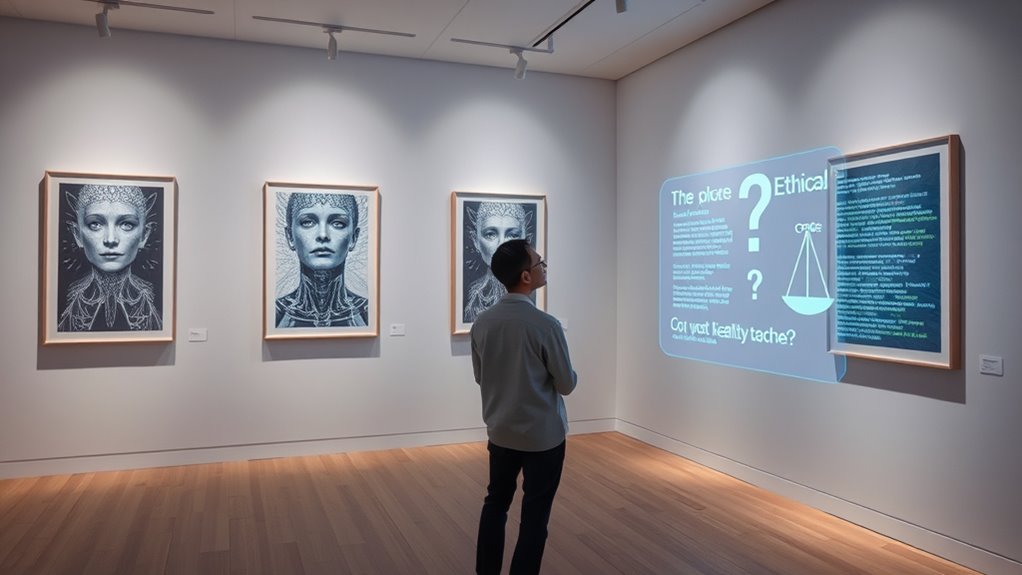

AI-generated art raises important ethical questions about who owns and authenticates creations made by algorithms. As you explore this world, you’ll encounter debates over authorship, transparency, and originality—especially since AI often uses existing artworks without clear consent. While these tools push creative boundaries, they also challenge traditional ideas of art and ownership. Understanding these issues helps you see how society is redefining creativity, and there’s much more to uncover behind the algorithms shaping this new artistic landscape.
Key Takeaways
- Ethical concerns revolve around transparency, with debates over whether viewers have a right to know how AI art is created.
- Ownership rights are unclear, raising questions about who owns AI-generated works—the artist, programmer, or AI itself.
- AI training often uses existing artists’ work without consent, prompting debates on copyright infringement and moral rights.
- The authenticity of AI art challenges traditional notions of creativity, prompting discussions on whether algorithms can truly create art.
- The rapid growth of AI art raises societal questions about value, authenticity, and the potential impact on human artists’ livelihoods.
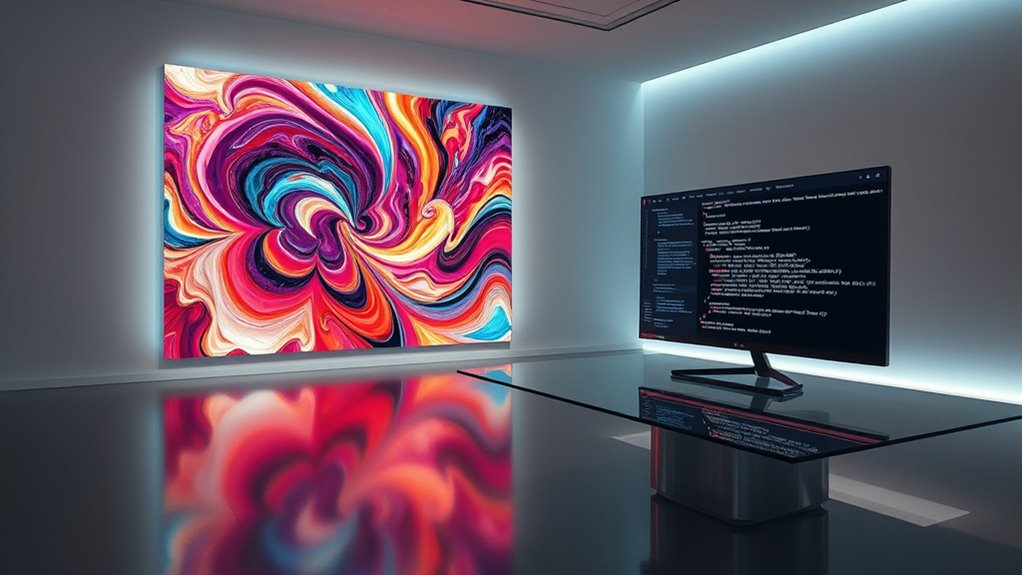
Have you ever wondered how artificial intelligence is transforming the world of art? AI-generated art is revolutionizing creativity, but it also raises complex ethical questions. As the market for AI art skyrockets—projected to reach $8.6 billion by 2033—you’re likely to encounter debates about what truly constitutes art and who owns the rights to these new creations. With platforms like Midjourney, DALL-E, and Canva leading the charge, AI tools are becoming commonplace in marketing, graphic design, and even fine art. This rapid growth prompts you to contemplate whether AI-generated works should be labeled as genuine art or dismissed as mere algorithms.
Many people are still unaware of how widespread AI art has become. Even though around 27% of Americans have seen AI-generated art, many don’t recognize it when they see it. Public perception remains skeptical—about 76% believe that AI-created works shouldn’t be called “art.” Artists themselves express concern; over half worry that AI will negatively impact their income and threaten traditional livelihoods. This skepticism stems partly from how AI challenges established notions of authorship, creativity, and ownership. The famous AI portrait “Edmond de Belamy” sold for over $430,000, showing that AI art can command significant value, yet many question whether it’s truly creative or just a product of algorithms.
Many remain unaware of AI art’s prevalence; skepticism persists about its authenticity and creative value.
Legal and ethical concerns intensify these debates. Most artists—around 89%—feel current copyright laws are outdated and inadequate for protecting AI-generated works. Who owns an image created by an algorithm trained on countless artists’ work? Is the human who prompted the AI or the machine itself the creator? This ambiguity fuels ongoing discussions about intellectual property rights. Ethical questions also arise about transparency: do viewers have the right to know how an artwork was created? As AI tools become more sophisticated, these issues will only grow more pressing. The rapid adoption of AI in creative industries has led to the development of new regulations and guidelines to address these concerns.
While some traditional institutions are embracing AI art—like Christie’s “Augmented Intelligence” auction—many still wrestle with its legitimacy. The intersection of art, science, and technology is blurring boundaries, forcing you to rethink what art can be. As innovations in style transfer and adaptation emerge, AI’s influence will expand further, disrupting conventional art forms. The challenge for you is to navigate an evolving landscape where algorithms create, inspire, and even own a piece of the artistic future. Ethical considerations will remain central as society grapples with defining the role of AI in the creative world.
As an affiliate, we earn on qualifying purchases.
Frequently Asked Questions
Can AI Art Be Considered Original or Truly Creative?
You might wonder if AI art is truly original or creative. Currently, copyright laws require human input for originality, and AI is seen as a tool, not an author. Without significant human involvement, AI-generated works often lack the self-expression needed for protection. So, unless you add your creative touch, AI art isn’t considered fully original or creative, and legal recognition remains limited.
How Do Copyright Laws Apply to Ai-Generated Artwork?
You might wonder how copyright laws apply to AI-generated artwork. Currently, laws require human authorship for protection, so AI art alone isn’t eligible for copyright. If you create with significant human input, your work could qualify. However, AI trained on copyrighted material raises legal issues, especially around infringement and transparency. As the legal landscape evolves, expect more debates and potential new regulations to clarify how AI-generated art fits within existing copyright frameworks.
Who Owns the Rights to Ai-Created Images?
Imagine a painter leaving their brush behind but still claiming the masterpiece. That’s similar to your question: who owns AI-created images? Currently, the law says only humans can hold copyright, so AI art isn’t protected. You, as the creator of the AI or the trainer, might claim ownership if you contributed considerably. However, without clear rules, ownership remains uncertain, like a painting in a foggy gallery.
Are There Biases Embedded in AI Art Algorithms?
You should know that biases are often embedded in AI art algorithms. These biases come from the training data, which might lack diversity or reflect societal inequalities. As a result, the algorithms can favor certain styles or features, leading to cultural misrepresentation or reinforcing stereotypes. To address this, it’s essential to use diverse data, regularly audit algorithms, and promote ethical practices in AI art development.
How Does AI Art Impact Human Artists’ Careers?
You might notice that AI art impacts your career by reducing opportunities and income, especially as clients turn to AI for faster, cheaper work. It creates financial uncertainty, making it harder for you to sustain your craft. While AI can foster collaboration and innovation, it also threatens traditional roles, raises legal issues over copyright, and challenges the value of human-created art, pushing you to adapt or find new avenues.
As an affiliate, we earn on qualifying purchases.
Conclusion
As you navigate this brave new world of AI-generated art, remember that every brushstroke and pixel echoes human creativity and ethics. Like Da Vinci’s sketches before the Renaissance, these algorithms hold immense potential—and responsibility. Don’t let the rise of machines turn you into a digital Frankenstein. Instead, embrace the balance, ensuring that technology enhances, rather than diminishes, our shared artistic soul. After all, art’s true power lies in your heart, not just in ones and zeroes.
As an affiliate, we earn on qualifying purchases.
As an affiliate, we earn on qualifying purchases.