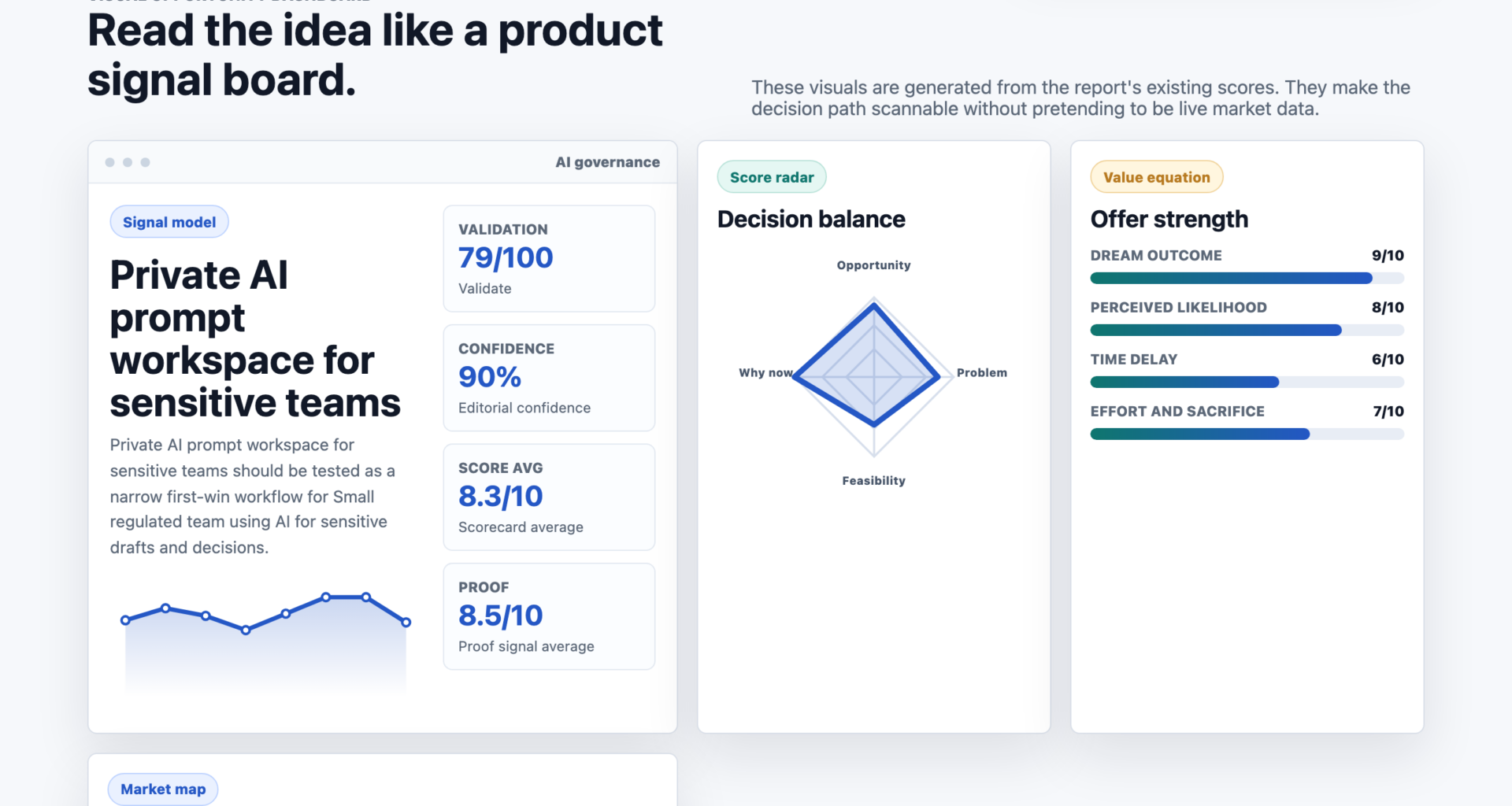

📊 Full opportunity report: Private AI prompt workspace for sensitive teams on IdeaNavigator AI — validation score, market gap, and execution plan.

Prime made for students and young adults
- Fast, free delivery for dorm and study essentials
- Prime Video and Amazon Music included
- Member-only deals
TL;DR

A new private AI prompt workspace designed for small, regulated teams is being tested to address concerns over data control and security in sensitive AI workflows. The development aims to provide better local control, redaction tools, and audit logs.
A new private AI prompt workspace tailored for small, sensitive teams is entering a testing phase, aiming to enhance control over AI workflows and data security. The development responds to increasing concerns about data privacy and control in AI-assisted work, particularly among regulated teams handling sensitive information.
The proposed workspace is designed as a local-first environment that allows small teams to manage AI prompts, uploads, and artifacts with tighter control. It features redaction checklists, source notes, review status indicators, and exportable audit logs to ensure compliance and traceability. The initiative is currently in a pilot testing stage, involving interviews with five operators who are avoiding pasting sensitive data into standard AI tools and instead manually running redacted workflows. The project is being developed as a minimum viable product (MVP) with a subscription or annual license model targeted at small teams with sensitive AI workflows. The goal is to provide a solution that balances the efficiency of AI with the strict control required by regulated industries.Why It Matters
This development is significant because it addresses a key barrier to wider adoption of AI in regulated environments. By offering a secure, local-first workspace, it aims to reduce risks related to data leaks, non-compliance, and lack of auditability. The solution could enable sensitive teams—such as legal, healthcare, or finance—to leverage AI while maintaining necessary controls, potentially expanding AI use cases in highly regulated sectors.
private AI prompt workspace software
As an affiliate, we earn on qualifying purchases.
As an affiliate, we earn on qualifying purchases.
Background
As AI adoption accelerates across industries, concerns over data privacy and control have grown, especially among teams handling sensitive information. Current AI tools often require uploading data to cloud services, raising compliance and security issues. This has led to a demand for more controlled environments where sensitive workflows can be managed locally. The concept of a private, local-first AI prompt workspace aligns with broader trends in AI governance and data security, responding to calls for more transparent and auditable AI processes. The initiative is part of a broader movement to develop specialized tools that meet the needs of regulated industries while enabling AI’s benefits.
“The goal is to provide small regulated teams with a workspace that offers tight control over prompts, uploads, and artifacts, addressing key security concerns.”
— an anonymous researcher
data security tools for AI workflows
As an affiliate, we earn on qualifying purchases.
As an affiliate, we earn on qualifying purchases.
What Remains Unclear
It is not yet clear how widely this workspace will be adopted or how effective it will be in real-world scenarios. Details about the specific technical implementation, integration with existing systems, and user feedback from the pilot phase are still emerging. Additionally, the timeline for broader rollout remains uncertain.
As an affiliate, we earn on qualifying purchases.
What’s Next
The next steps include completing the pilot testing with the participating operators, refining the MVP based on user feedback, and planning for a broader release. Further validation will focus on assessing the workspace’s effectiveness in real-world sensitive workflows and its compliance with industry standards.
As an affiliate, we earn on qualifying purchases.
Key Questions
Who is this private AI prompt workspace intended for?
It is designed for small, regulated teams that handle sensitive information and require tight control over AI workflows, such as legal, healthcare, or financial teams.
What features will the workspace include?
Features include redaction checklists, source notes, review status indicators, and exportable audit logs to ensure compliance and traceability.
How is this different from standard AI tools?
Unlike typical AI platforms that store prompts and data in the cloud, this workspace emphasizes local control, data redaction, and auditability to meet strict security and compliance needs.
When will the workspace be generally available?
It is currently in testing, with no confirmed release date. Broader availability depends on pilot results and user feedback.
Source: IdeaNavigator AI
Fall Picks
fall essentials
As an affiliate, we earn on qualifying purchases.