
TL;DR

Prime made for students and young adults
- Fast, free delivery for dorm and study essentials
- Prime Video and Amazon Music included
- Member-only deals
Thorsten Meyer has started a 19-part Built in Public series with DojoClaw, the AI system he says runs more than 450 magazine-style sites. The post frames DojoClaw as both the revenue base of his portfolio and the model for later products, while leaving open key questions about performance, quality control and economics.
Thorsten Meyer has named DojoClaw as the system behind more than 450 magazine-style websites, saying the AI-assisted publishing engine is the revenue foundation of his product portfolio and the starting point for a 19-part Built in Public series.
The first installment describes DojoClaw as a single content operation that turns topics, product categories and search-query clusters into researched, formatted, internally linked and monetized pages across hundreds of brands. Meyer says the system is run by one operator with agentic AI and human editorial oversight, rather than by adding writers, freelancers and editors in step with output.
The post says DojoClaw is built around four operating ideas: local-first compute, provider independence, non-developer building with AI assistance and editing by subtraction. Meyer says the platform routes most inference to owned local compute, with cloud frontier models used only for work that needs them. The stated target is to keep 70% to 90% of inference local.
Some claims remain operator-reported. The source states that the fleet includes more than 450 sites and that DojoClaw is the portfolio’s revenue base, but it does not provide traffic data, revenue figures, third-party audits, cost records or quality metrics. The article also discloses that pages across the fleet may include affiliate links and that Meyer earns from qualifying Amazon purchases.
DojoClaw — the engine behind the fleet
One operator. 450+ magazine-style sites. Not scaled by hiring — scaled by building an engine, and a template every other product inherits.
Local inference meter — where the work runs
Target: 70–90% of inference local. Rented cloud is a cost line that climbs with every page you publish. Owned compute is paid once, then ridden — so the marginal cost of the next page falls toward the price of electricity. Cloud frontier models are routed in only for the work that genuinely needs them.
Independent commentary, produced with AI assistance under human editorial oversight. The views are the author’s own and may change. Portions of the products described generate content via automated AI pipelines and may contain errors — verify independently before relying on any of it for a decision. As an Amazon Associate the author earns from qualifying purchases; pages across the fleet may contain affiliate links. Product and company names are trademarks of their respective owners; mention does not imply endorsement.
Why It Matters
The announcement matters because it lays out one model for AI-assisted publishing at scale: using software, local compute and model routing to lower the cost of producing and maintaining large numbers of content sites. If the system works as described, the business case is operating leverage, where output can rise without the same rise in headcount or cloud API costs.
For publishers, marketers and AI infrastructure builders, the post also points to a broader question: whether small operators can run large media-like portfolios through automated workflows while still maintaining editorial quality, attribution, disclosure and reader trust. Meyer presents DojoClaw as a business system rather than a one-off writing tool, but the public evidence so far is limited to the operator’s own description.
As an affiliate, we earn on qualifying purchases.
Background
DojoClaw is the first product covered in Meyer’s Built in Public series, which is planned as 19 daily installments about the operator portfolio. The source describes the portfolio as 18 products built on a common foundation, including content, platform, market, defense and diagnostic tools.
The DojoClaw post says the same design pattern will carry into the rest of the series: own compute where possible, avoid dependence on one model provider, use AI agents to let a non-developer build systems, and cut aggressively during editing. Meyer also states that independent commentary is produced with AI assistance under human editorial oversight and warns readers that automated pipelines may contain errors.
As an affiliate, we earn on qualifying purchases.
What Remains Unclear
It is not yet clear how many of the 450-plus sites are active, how much traffic they receive, how much revenue they generate, or how often human editors review published pages. The source does not include independent verification of the fleet size, the 70% to 90% local inference target, the cost savings, or the quality of the output. It also does not identify the full technical stack, moderation process, correction process or compliance controls for affiliate content.
As an affiliate, we earn on qualifying purchases.
What's Next
The next step is the continuation of the Built in Public series, with Meyer expected to describe the remaining products in the portfolio one per day. Readers should look for more evidence on DojoClaw’s economics, editorial workflow, model-routing setup, quality checks and how the system connects to the other products Meyer says inherit its architecture.
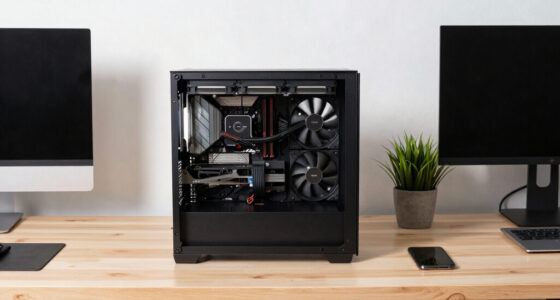
local compute AI inference hardware
As an affiliate, we earn on qualifying purchases.
As an affiliate, we earn on qualifying purchases.
Key Questions
What is the actual news development?
Thorsten Meyer has publicly identified DojoClaw as the AI-assisted engine behind more than 450 magazine-style websites and made it the first subject of his Built in Public series.
Is the 450-site figure independently confirmed?
No. The number comes from the supplied Thorsten Meyer AI source material. No third-party audit, site list, traffic report or revenue documentation was included.
What does DojoClaw do?
According to the source, it takes topics, product categories and search-query clusters and turns them into researched, written, formatted, internally linked and monetized pages across many brands.
Why does local compute matter here?
Meyer argues that owned compute can reduce the marginal cost of producing pages because cloud inference bills rise with usage. The claimed target is to run 70% to 90% of inference locally, while using cloud models for selected tasks.
What remains unclear?
Traffic, revenue, site quality, editorial review depth, model costs, accuracy controls and the full technical stack remain unverified from the supplied source material.
Source: Thorsten Meyer AI
Halloween Picks
halloween
As an affiliate, we earn on qualifying purchases.