
🔍 Read the full analysis: A Visual Guide To “TURBINE — WERK 9”’S Scroll-Driven Rotor on ThorstenMeyerAI.com

Get school and study supplies delivered free — and shop member deals
- Fast, free delivery on millions of items
- Access to Prime Big Deal Days deals on October 6–7
- Prime Video, Amazon Music and more included
TL;DR
TURBINE — WERK 9 is an interactive web experience built around a scroll-driven SVG rotor, presented as a field guide to an industrial space. ThorstenMeyerAI.com says the page links scrolling with the rotor’s motion, but does not provide implementation details, performance data or information about the team.
TURBINE — WERK 9 is an interactive browser experience built around a scroll-driven SVG rotor, turning a visitor’s movement down the page into part of the visual presentation, as described in the original analysis. Featured by ThorstenMeyerAI.com, the project frames the interface as a field guide to an industrial setting, rather than a conventional brochure; technical specifications and the creators’ identities are not supplied in the available description.
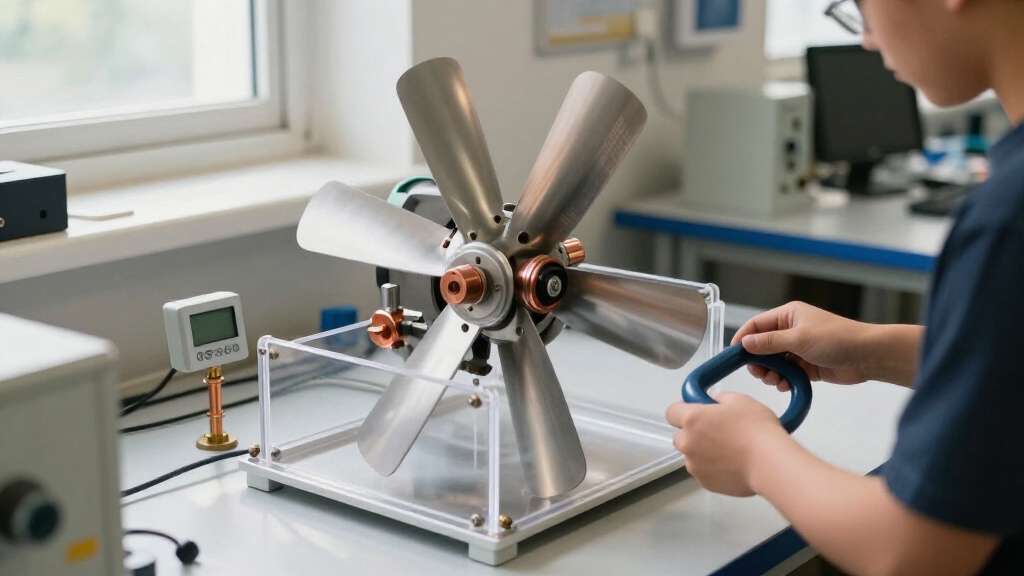
The experience connects page scrolling with the motion of a rotor drawn from SVG vector paths. Its presentation describes that interaction as a way to make navigation feel related to the mechanics of the place. The confirmed account is limited to this broad description: it does not give the rotor’s dimensions, the number of animation states, or the method used to map scroll position to movement.
ThorstenMeyerAI.com describes the site as an interactive field guide with an industrial atmosphere and an invitation to explore. The write-up says the visual system was organized around the rotor and that the project translates a physical-feeling space into a browser experience. It points readers to a live room and a fuller design teardown, but does not reproduce the teardown’s technical explanation.
The project is presented as combining a browser, vector artwork and scroll input into a responsive interface. No test results or comparative evidence are provided, so claims about responsiveness should be understood as part of the project’s description, not as independently measured performance. The available information also does not identify the software libraries, accessibility features or device support.
Scroll Becomes Part of the Rotor
The design’s central idea is that navigation can carry visual meaning: scrolling does not merely reveal another section but is described as driving the movement of an illustrated machine component. That approach can make a web page feel more like an explorable object than a stack of static panels, while giving the user’s ordinary input a clear role in the experience.
For designers and developers, TURBINE — WERK 9 is a compact example of how SVG graphics and scroll interaction can be paired to establish a visual theme. The project’s industrial subject and field-guide framing give the motion a narrative purpose. The available description, however, is not enough to establish how well the interaction works for visitors using touchscreens, keyboard navigation, reduced-motion settings or assistive technology.
SVG animation tools for web development
As an affiliate, we earn on qualifying purchases.
As an affiliate, we earn on qualifying purchases.
A Field Guide in the Browser
ThorstenMeyerAI.com presents TURBINE — WERK 9 as a design project and directs visitors to a live version and a case study. Its description contrasts the experience with a brochure-style page, emphasizing exploration and a physical sense of place. The rotor is the clearest stated mechanism behind that framing.
The project’s description also links its appeal to people interested in AI tools and automation, but it does not say that artificial intelligence generates or controls the animation. The details provided instead identify browser-based interaction, SVG paths and scrolling. That distinction matters: the presentation situates the work for a technology-oriented audience, while describing a specific visual design technique rather than an AI system.
“What if a web page behaved less like a brochure and more like a machine you could walk around?”
— ThorstenMeyerAI.com
scroll-driven interactive SVG components
As an affiliate, we earn on qualifying purchases.
As an affiliate, we earn on qualifying purchases.
Animation Details Remain Unpublished
The available project description does not identify its designers or developers, provide a publication date, or explain how the interaction is implemented. It also gives no measurements of loading speed, responsiveness or browser compatibility, and does not say whether rotor motion follows scroll position continuously or changes at set points.
Accessibility and user testing are not discussed. It is therefore unclear whether the experience offers reduced-motion controls, keyboard alternatives or a non-animated way to access the same content. No evidence is provided to assess those features, or to determine how the interface behaves on mobile devices.
industrial-themed web design elements
As an affiliate, we earn on qualifying purchases.
As an affiliate, we earn on qualifying purchases.
The Live Experience and Case Study
ThorstenMeyerAI.com directs readers to the live room and a fuller design teardown. Those materials may provide more detail about the visual system and the rotor’s motion, but the current description does not specify what the case study contains or announce any planned updates. Until further details are published, the project can be described as a scroll-driven SVG experience, with its implementation and accessibility characteristics still unreported.
Source: ThorstenMeyerAI.com
As an affiliate, we earn on qualifying purchases.
Key Questions
What is TURBINE — WERK 9?
It is an interactive browser experience presented as a field guide to an industrial setting, built around a rotor animation that responds to scrolling.
How does the rotor move?
The project description says the page uses scroll input and SVG vector paths to create rotor motion. It does not explain the precise animation technique or how scroll position controls it.
Does the project use artificial intelligence?
The write-up mentions an audience interested in AI tools and automation, but does not say that AI generates or controls the experience. It describes a browser interaction built with SVG graphics and scrolling.
Who created TURBINE — WERK 9?
The available description does not name the designers or development team. ThorstenMeyerAI.com features the project and links to a live version and a design teardown.
What remains unknown about the experience?
Its implementation details, device and browser support, performance measurements and accessibility options are not specified in the published description.
Source: ThorstenMeyerAI.com
Halloween Picks
halloween
As an affiliate, we earn on qualifying purchases.