
TL;DR

Prime made for students and young adults
- Fast, free delivery for dorm and study essentials
- Prime Video and Amazon Music included
- Member-only deals
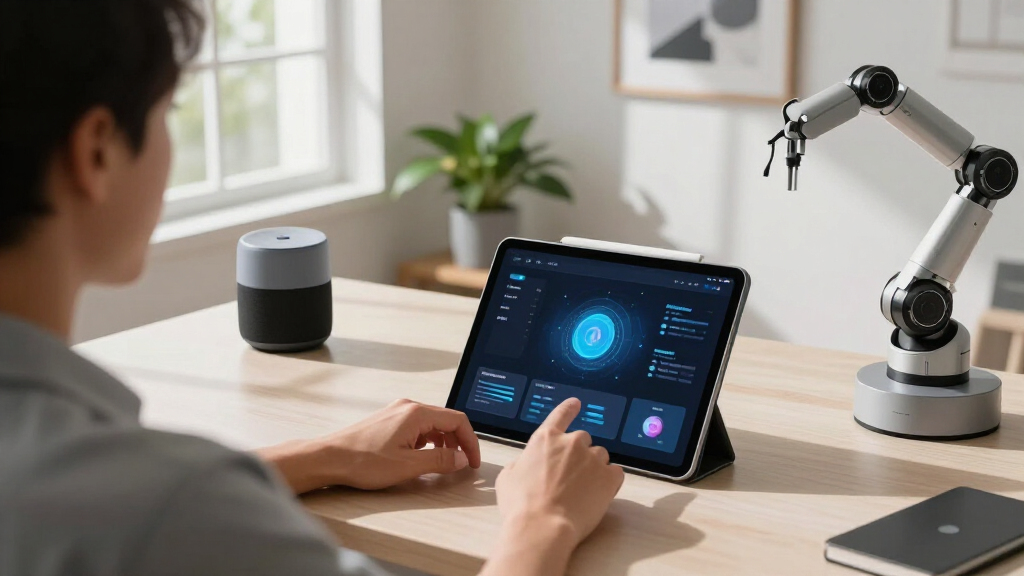
By 2026, significant AI advancements are expected, including breakthroughs in natural language processing, autonomous systems, and ethical AI. These developments will reshape industries and daily life, though some technological details and timelines remain uncertain.
Several leading AI research institutions and technology companies have publicly outlined major advancements expected to materialize by 2026, signaling a new era of AI capabilities. For more details, see the original analysis. These developments include improved language understanding, more autonomous systems, and enhanced ethical frameworks, which could significantly impact industries and everyday life.
According to industry sources and recent announcements, key AI breakthroughs anticipated by 2026 include the deployment of more sophisticated natural language processing models, advances in autonomous vehicle technology, and the integration of AI-driven ethical decision-making frameworks. Companies like OpenAI, Google DeepMind, and others have indicated ongoing projects targeting these areas, with some prototypes already in testing phases.
Experts suggest that these innovations will lead to AI systems capable of more nuanced understanding and interaction, greater autonomy in robots and vehicles, and improved alignment with human values. You can read more about industry trends in SpaceX’s recent bond sale. However, details about specific timelines and the full capabilities of these systems remain uncertain, as some projects are still in research or early deployment stages.
The 10 picks
- 1
 Sonos Arc Ultra Soundbar with Dolby Atmos – BlackView on Amazon →
 - 2
 Sonos Beam Gen 2 – Black – Soundbar with Dolby AtmosView on Amazon →
 - 3
 Bose TV Speaker – Compact Soundbar with Bluetooth and HDMI-ARC, Remote Includ…View on Amazon →
 - 4
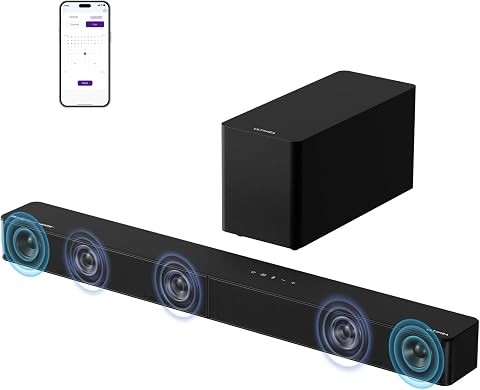 Ultimea 5.1CH Surround Sound Bar System with Dolby Atmos, Poseidon M60View on Amazon →
 - 5
 Fire TV Soundbar Plus (Newest Model) with Built-in Subwoofer, 3.1 Channel, Do…View on Amazon →
 - 6
 Sony S100F 2.0ch Soundbar with Bass Reflex Speaker, Bluetooth, and HDMI ARCView on Amazon →
 - 7
 Amazon Fire TV Soundbar, 2.0 Speaker with DTS Virtual:X and Dolby AudioView on Amazon →
 - 8
 Samsung B-Series Soundbar HW B400F 2.0 Ch with Built-in Subwoofer (2025 Model)View on Amazon →
 - 9
 ULTIMEA Sound Bar with Wireless Subwoofer, App Control, 2.1 ChannelView on Amazon →
 - 10
 Sound Bar for Smart TV with Bluetooth, ARC, Optical, AUX, Detachable Design, 80WView on Amazon →
Impact of 2026 AI Breakthroughs on Society
The anticipated AI advancements by 2026 are poised to transform multiple sectors, including healthcare, transportation, and customer service. More intelligent and autonomous systems could improve efficiency, safety, and accessibility, while also raising important questions about ethics, regulation, and employment. Understanding these developments helps consumers, policymakers, and industry leaders prepare for the changes ahead.
Recent Trends and Future Projections in AI Development
Over the past few years, AI has rapidly advanced, with models like GPT-4 and progress in autonomous vehicle testing showcasing the trajectory toward more capable systems. Industry leaders have consistently projected further improvements, emphasizing not only technological capabilities but also the importance of ethical frameworks and safety measures. The push for AI that can understand context better and make ethical decisions is central to current research agendas, with many projects aiming for deployment within the next few years.
While specific innovations are still under development, the overall trend indicates a move toward more integrated, human-like AI systems that can operate safely and effectively across diverse environments.
Unconfirmed Aspects of 2026 AI Advancements
While projections are optimistic, many specific details about the capabilities, deployment timelines, and regulatory frameworks of these AI systems remain uncertain. Some projects are still in experimental phases, and unforeseen technical or ethical challenges could delay or alter these developments. The full scope of societal impact and safety measures is also still under discussion and development.
Next Steps for AI Development and Regulation
Industry leaders and policymakers are expected to continue collaboration to refine AI safety standards and ethical guidelines. Research will likely focus on improving robustness, transparency, and alignment of AI systems with human values. Public and private sectors will monitor progress through pilot programs and regulatory frameworks, aiming for broader deployment of advanced AI technologies by 2026.
Key Questions
What are the main AI advancements expected by 2026?
Expected advancements include more sophisticated natural language processing, autonomous systems with higher reliability, and AI frameworks that incorporate ethical decision-making. These developments aim to make AI more human-like, autonomous, and aligned with societal values.
How soon might we see these AI innovations in everyday life?
Some innovations, such as improved language models and autonomous vehicles, could start appearing in limited applications by 2025, with broader adoption expected by 2026 as systems become more reliable and regulatory frameworks mature.
What are the risks associated with these AI advancements?
Potential risks include ethical concerns, job displacement, security vulnerabilities, and unintended behaviors in autonomous systems. Ongoing research aims to address these issues through safety protocols, transparency, and regulation.
Will AI development be regulated by 2026?
Regulatory efforts are underway globally, but it is uncertain whether comprehensive frameworks will be fully established by 2026. Policymakers are actively working with industry leaders to develop standards for safe and ethical AI deployment.
Source: ThorstenMeyerAI.com
Halloween Picks
halloween
As an affiliate, we earn on qualifying purchases.