

📊 Full opportunity report: The SSD Squeeze: Why Storage Joined The Party on ThorstenMeyerAI.com — validation score, market gap, and execution plan.
TL;DR
Storage prices are rising sharply in 2026 as NAND shortages intensify, driven by AI’s growing storage needs and competition for manufacturing capacity. This affects enterprise, consumer, and industrial markets, with supply tightness expected to continue.
The SSD squeeze: storage joined the party
Storage was the last cheap thing in computing. Not anymore — a 2TB NVMe that was $120–150 in 2024 now lists at $300–480. And this time flash isn’t only collateral damage: AI eats storage directly.
both ways
Flash got hit twice — once as collateral sharing fabs with HBM, once directly as AI inference turned fast storage into something it consumes by the petabyte. That second force won’t fade; it grows with every model, every RAG pipeline, every cache that must live somewhere fast. Buy what you need now; favor TLC with DRAM cache, don’t overpay for Gen 5, watch for counterfeits. Relief isn’t forecast before late 2027. When the cheapest component in computing has a two-year waitlist, “commodity” no longer fits. Next: The High-End PC & Workstation Tax.
Implications of the NAND Shortage on Global Storage Markets
The sharp increase in storage prices impacts a broad range of sectors, from enterprise data centers to consumer electronics. As AI continues to demand vast storage resources, supply constraints threaten to slow AI deployment and innovation. For consumers, higher SSD costs translate into more expensive PCs and upgrades, while industrial and automotive sectors face prolonged lead times for durable flash components. The market’s tightness underscores a shift from historically cheap storage to a more strained supply environment, raising questions about future pricing, capacity expansion, and the pace of AI-driven technological growth.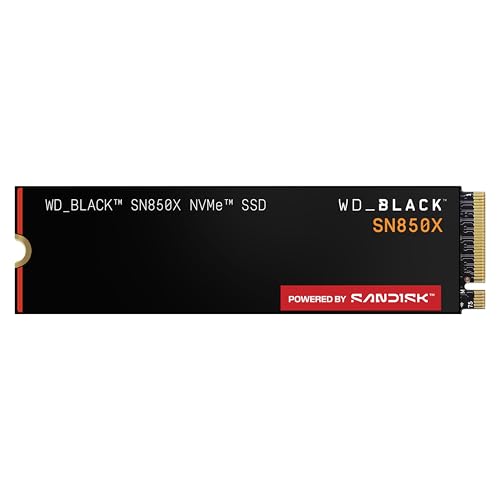
WD_BLACK SN850X 2TB NVMe SSD – M.2 2280, Up to 7,300 MB/s Read speeds, Up to 6,300 MB/s write speeds, Gaming Expansion, High Performance Internal Solid State Drive – WDS200T2X0E
TRANFORM YOUR PC: Insane speeds up to 7,300MB/s (1TB – 4TB models) deliver top-tier performance with ridiculously short…
As an affiliate, we earn on qualifying purchases.
As an affiliate, we earn on qualifying purchases.
2026 Memory Crunch: From RAM to Storage Scarcity
The current NAND shortage is part of a broader memory crisis that began with RAM supply constraints in 2024. As detailed in earlier parts of the series, memory manufacturers faced increased costs and capacity limitations due to high demand and limited fab capacity. This pattern has now extended to storage, with NAND prices rising sharply after years of decline. The industry’s focus on high-margin products and the competition for fab space with high-performance memory like HBM have further constrained supply. The shift is driven by AI’s insatiable storage appetite, which has transformed NAND from a passive component into a strategic resource. Major manufacturers have scaled back wafer targets, citing profitability, but this has resulted in a supply-demand imbalance that is unlikely to resolve quickly, given the multi-year timeline for new fabs and the ongoing AI boom.“Our current production targets reflect market conditions and profitability considerations; we are not increasing wafer capacity until demand stabilizes.”
— Samsung spokesperson

Carbon Fiber Solid State Drive Organizer Compatible with Samsung SSD T7/T9, SSD Holder Organizer Stand, Vertical Space-Saving Solid State Drive Storage with Non-Slip Base
Space-Saving Vertical Design: Compact upright orientation keeps SSDs organized, maximizes desk space, and reduces clutter for a professional…
As an affiliate, we earn on qualifying purchases.
As an affiliate, we earn on qualifying purchases.
Unclear Duration and Long-term Impact of the Shortage
It remains uncertain how long the NAND supply constraints will last, as new fabs are still two to three years away from operational status. The extent to which manufacturers will further restrict supply or increase capacity remains unknown, as does the full impact on global AI deployment and consumer markets.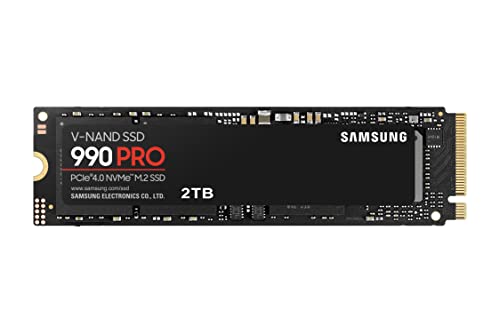
Samsung 990 PRO NVMe M.2 SSD, 2 TB, PCIe 4.0, 7,450 MB/s Read, 6,900 MB/s Write, Internal SSD, for Gaming and Video Editing, MZ-V9P2T0BW
Powerful NVMe SSD of the 4th PCI Express generation for demanding 4K video and 3D graphics editing and…
As an affiliate, we earn on qualifying purchases.
As an affiliate, we earn on qualifying purchases.
Industry Strategies and Market Outlook for 2026 and Beyond
Manufacturers are likely to continue prioritizing high-margin enterprise and AI storage products, maintaining tight supply and high prices. The industry expects new fabs to come online gradually over the next few years, which should eventually ease shortages. Buyers are advised to plan carefully, purchase only necessary capacity, and monitor developments in fab capacity and AI storage demands. Further price fluctuations and supply adjustments are anticipated as the market seeks equilibrium.
Gigastone 【NAS Certified】 1TB High Endurance SSD (2-Pack) Up to 550MB/s TLC Flash with SLC Caching 24/7 Reliable for Gaming/PC/NAS SSD 5-Year Warranty 2.5" SATA Internal Solid State Drives RAID Disk
[High Endurance Grade] : No.1 NAS SSD choice in heavy workloads NAS systems|24/7 superior NAS Cache with reliable…
As an affiliate, we earn on qualifying purchases.
As an affiliate, we earn on qualifying purchases.
Key Questions
Why are SSD prices rising so rapidly in 2026?
Prices are increasing due to a combination of NAND flash shortages caused by high AI demand and manufacturers deliberately limiting supply to maximize margins, with production capacity constrained by shared fab resources.How long will the NAND shortage last?
The shortage is expected to persist into 2027, as new fabrication plants are still two to three years from becoming operational, and current supply discipline remains in place.Who is most affected by the rising storage costs?
Enterprise buyers, hyperscalers, and industrial sectors are feeling the most immediate impact, with consumers experiencing higher prices and reduced storage options in new devices.Will new fabs alleviate the shortage?
Yes, but only gradually. Building new fabs takes years, and current industry focus on high-margin products means supply will remain tight until these facilities are operational.What should buyers do in this market?
Buy only what is necessary now, favor TLC NAND with DRAM cache, avoid premium PCIe Gen 5 drives unless needed, and purchase from reputable sources to avoid counterfeits.Source: ThorstenMeyerAI.com