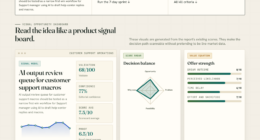

📊 Full opportunity report: QAtrial: Compliance That Shows Its Work on ThorstenMeyerAI.com — validation score, market gap, and execution plan.
TL;DR
QAtrial has unveiled a new open-source platform designed to bring AI into regulated life sciences QA processes while maintaining strict compliance standards through provenance tracking. The system emphasizes auditability and model transparency to meet regulatory demands.
QAtrial has launched a new open-source compliance platform that enables AI-assisted quality assurance in regulated life sciences environments while ensuring strict traceability and auditability. The platform’s core feature is its provenance-first approach, recording which model, version, and purpose produced each AI-generated output, aligned with regulatory standards such as 21 CFR Part 11 and EU Annex 11. This development marks a significant step toward integrating AI into heavily regulated QA processes without compromising compliance.
The platform, built on an open-source AGPL-3.0 architecture, allows regulated organizations to incorporate AI tools like large language models into their workflows while maintaining full traceability of AI outputs. Every action—such as drafting records, linking requirements, or proposing corrective actions—is stamped with detailed provenance data, including model source, version, and purpose. Human reviewers then electronically sign these outputs, creating an unalterable audit trail that satisfies regulatory demands for accountability and transparency.
According to Thorsten Meyer, the creator behind QAtrial, the system does not claim to validate or certify compliance but supports organizations in their compliance efforts by ensuring that AI-generated records are fully attributable and reviewable. This approach addresses the fundamental challenge of AI in regulated environments: how to leverage its productivity benefits without sacrificing the integrity and traceability required by regulators.
QAtrial — compliance that shows its work
You can’t put an unaccountable black box into a regulated process. So every AI-assisted output records which model produced it — reviewed, e-signed, and traceable.
no validation risk
Independent commentary, produced with AI assistance under human editorial oversight. The views are the author’s own and may change. QAtrial is open source under AGPL-3.0, provided “as is” without warranty; see the repository LICENSE. It is designed to align with frameworks including 21 CFR Part 11 and EU Annex 11 but is not validated, certified, or a guarantee of regulatory compliance, and is not legal or regulatory advice — computer-system validation and all regulatory obligations remain the user’s responsibility. AI-assisted outputs may contain errors and require qualified human review. Product and company names are trademarks of their respective owners; mention does not imply endorsement.
Why Provenance-First AI Matters for Regulated QA
This development is significant because it offers a practical solution for integrating AI into regulated life sciences workflows without violating compliance standards. By emphasizing provenance and auditability, QAtrial addresses the core concerns regulators have about black-box AI models—namely, the inability to trace how outputs are generated. This approach could enable broader adoption of AI tools in areas like CAPA workflows, risk management, and documentation, potentially reducing manual drudgery while maintaining regulatory integrity.
For organizations, this means they can incorporate AI assistance with confidence that each step is fully documented and attributable, easing the path toward digital transformation in highly regulated environments. It also underscores the importance of vendor-agnostic architectures, allowing organizations to swap or update models without risking validation status or compliance breaches.

THE AI HARNESS PLAYBOOK: Stop Prompting. Start Engineering. The AI Skill Every Professional Needs to Govern the Model — and How to Master It Without Writing Code
As an affiliate, we earn on qualifying purchases.
As an affiliate, we earn on qualifying purchases.
Regulated QA and the Challenges of AI Integration
In regulated life sciences, quality assurance systems rely on validated, paper-trail-backed processes to ensure patient safety and compliance. These systems require detailed records of who did what, when, and why, with electronic signatures and traceability matrices being fundamental. Introducing AI into this environment has been challenging because AI models typically generate outputs that are difficult to fully inspect or attribute, raising concerns about compliance and audit readiness.
Historically, the heavy manual effort involved in drafting, cross-referencing, and maintaining traceability matrices has been a bottleneck. AI offers an opportunity to automate these tasks but has been resisted due to fears of losing control over record integrity and traceability. QAtrial’s approach seeks to bridge this gap by embedding provenance tracking directly into AI-assisted outputs, aligning with existing regulatory frameworks.
“Our platform makes every AI-assisted action carry its own paper trail, linking each output to its model, version, and purpose, reviewed and signed by a human reviewer.”
— Thorsten Meyer
regulated industry audit trail software
As an affiliate, we earn on qualifying purchases.
As an affiliate, we earn on qualifying purchases.
Uncertainties About Validation and Broader Adoption
It is not yet clear how regulatory agencies will evaluate or accept provenance-based AI systems like QAtrial in formal audits. The platform is designed to support compliance, but it does not claim validation or certification, and the practical impact of widespread adoption remains to be seen. Additionally, how organizations will implement and verify the provenance layer in complex workflows is still developing.
provenance tracking tools for AI models
As an affiliate, we earn on qualifying purchases.
As an affiliate, we earn on qualifying purchases.
Next Steps for QAtrial and Regulatory Acceptance
Moving forward, QAtrial will likely seek pilot implementations with regulated organizations to demonstrate its effectiveness in real-world settings. Engagement with regulators to clarify acceptance criteria for provenance-tracked AI outputs may follow. Monitoring how organizations adopt and adapt the platform will be crucial to understanding its role in future regulated AI integration.

Heritage Eagle Design Compliance Marking Self-Inking Tool – Stamp + Inspection for Qa Inspectors, Regulatory Managers Manufacturing
Speed: Stamp compliance marks in seconds with the Easy Press and Print self-inking mechanism—no separate ink pad needed,…
As an affiliate, we earn on qualifying purchases.
As an affiliate, we earn on qualifying purchases.
Key Questions
Can QAtrial guarantee compliance with regulatory standards?
No, QAtrial is a tool designed to support compliance efforts by ensuring traceability and auditability. Responsibility for validation and regulatory adherence remains with the user organization.
How does QAtrial ensure AI outputs are attributable?
Every AI-assisted output is stamped with provenance data, including the model used, version, purpose, and timestamp. Human review and electronic signatures finalize the record, making it fully attributable and auditable.
Will regulators accept AI systems like QAtrial?
Acceptance depends on regulatory agencies’ evolving stance on provenance and auditability. The platform aligns with existing standards but has not yet been formally certified or validated by regulators.
Is QAtrial compatible with different AI providers?
Yes, the platform supports provider-agnostic architectures, allowing integration with models like OpenAI and Anthropic, with purpose-scoped routing and provenance tracking.
What are the limitations of QAtrial?
While it enhances traceability, it does not replace validation processes or guarantee regulatory approval. Its effectiveness depends on proper implementation and organizational compliance practices.
Source: ThorstenMeyerAI.com