
📊 Full opportunity report: Recovery-percentile tracker for orthopedic surgery patients on IdeaNavigator AI — validation score, market gap, and execution plan.
TL;DR
A pilot program is launching to test a recovery-percentile tracker for orthopedic surgery patients, aiming to help patients and reduce post-op call volume. The test will involve 15 knee-replacement patients over two weeks.
A recovery-percentile tracker for orthopedic surgery patients is being tested in a pilot program to help patients monitor their recovery and reduce unnecessary post-operative calls to surgeon offices.
The initiative involves a simple daily check-in system where patients undergoing procedures such as knee replacements log pain levels, range of motion, and walking milestones. These data points are then plotted against anonymized recovery curves to generate a percentile ranking, indicating how the patient’s recovery compares with typical outcomes for the same procedure.
The pilot aims to recruit 15 knee-replacement patients from a single orthopedic practice. Over two weeks, these patients will log their recovery metrics daily, and the practice will compare call volume and patient reassurance levels against a control group not using the tracker.
According to sources involved in the project, the goal is to validate whether this tool can help patients better understand their recovery progress and reduce the number of ‘is this normal?’ calls, which currently overwhelm office staff during peak post-op periods.
Potential Impact on Post-Operative Care Efficiency
If successful, the recovery-percentile tracker could significantly improve post-operative care by providing patients with objective, personalized data on their recovery status. This could decrease the volume of non-urgent calls, freeing staff time and reducing patient anxiety. The system also offers a scalable model for broader adoption across orthopedic practices as outpatient procedures continue to rise.
Reducing unnecessary calls not only improves operational efficiency but also enhances patient satisfaction by offering immediate, data-backed reassurance. The approach aligns with the broader shift toward digital health tools that empower patients with real-time information and support recovery management.

Total Knee Replacement Recovery Journal: 12-Week Post-Op Tracker for Pain, ROM, and Physical Therapy Exercises
As an affiliate, we earn on qualifying purchases.
As an affiliate, we earn on qualifying purchases.
Growing Need for Better Post-Op Monitoring Tools
The rise in outpatient orthopedic surgeries, such as knee and hip replacements, has increased the demand for effective post-operative monitoring solutions. Currently, patients often rely on subjective feelings and have limited access to personalized recovery benchmarks, leading to frequent calls to offices seeking reassurance.
Existing methods lack standardized, objective data to guide patients and staff, resulting in high call volumes and potential delays in identifying complications. The development of data-driven tools like the recovery-percentile tracker aims to fill this gap by providing real-time, personalized recovery insights.
Previous efforts in digital health have focused on remote monitoring and telehealth consultations, but integrating simple, daily self-reporting with anonymized recovery curves represents a novel approach tailored specifically for post-op orthopedic care.
“This pilot aims to determine whether providing patients with objective recovery data can reduce their anxiety and the volume of post-op calls.”
— an anonymous researcher
orthopedic surgery recovery monitoring device
As an affiliate, we earn on qualifying purchases.
As an affiliate, we earn on qualifying purchases.
Uncertainties About Effectiveness and Adoption
It is not yet clear whether the recovery-percentile tracker will significantly reduce call volume or improve patient satisfaction beyond initial testing. The results will depend on patient engagement, accuracy of self-reported data, and integration into clinical workflows. Longer-term impacts and scalability are still under evaluation.
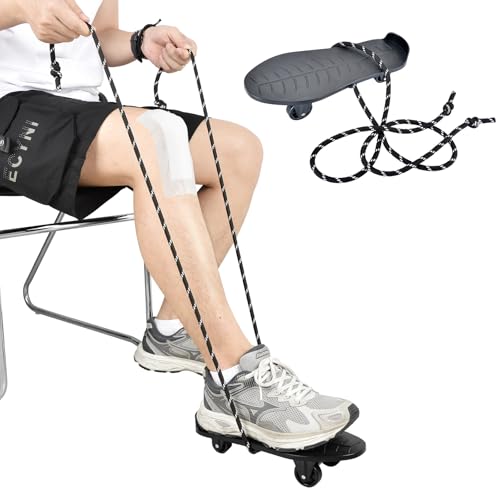
Generturbo Knee Glider for Knee Replacement Recovery Aids, Knee Surgery Recovery Equipment, Increasing Range of Motion and Stretches Knees, Exercise Tool for PCL, ACL Recovery Must Haves
【Helpful for Knee Surgery Recovery】 Our Generturbo knee sliders for knee replacement is designed to help patients after…
As an affiliate, we earn on qualifying purchases.
As an affiliate, we earn on qualifying purchases.
Next Steps in Validation and Broader Deployment
The pilot program will conclude within two weeks, after which data will be analyzed to assess reductions in call volume and patient-reported reassurance. If results are positive, plans for wider deployment and integration into orthopedic practice management systems will follow.
Further research may explore expanding the tracker to other procedures and refining the interface based on patient feedback. Stakeholders will also consider reimbursement models and potential partnerships for broader rollout.
postoperative pain and mobility tracking tool
As an affiliate, we earn on qualifying purchases.
As an affiliate, we earn on qualifying purchases.
Key Questions
How does the recovery-percentile tracker work?
Patients log daily metrics such as pain, mobility, and walking milestones, which are then plotted against anonymized recovery curves to generate a percentile ranking indicating their recovery progress compared to typical outcomes.
Will this tool replace in-person follow-ups?
No, the tracker is designed to supplement existing care by providing objective data and reassurance, potentially reducing unnecessary calls and visits but not replacing clinical assessments when needed.
How will patient privacy be protected?
All data will be anonymized and securely stored, with strict adherence to privacy regulations. Only aggregated recovery curves will be used for benchmarking.
When will the results of the pilot be available?
Results are expected within a few weeks after the two-week logging period concludes, with detailed analysis to follow.
Could this system be used for other surgeries?
Yes, if the pilot proves successful, the system could be adapted for other outpatient procedures requiring post-op monitoring.
Source: IdeaNavigator AI