
TL;DR
The Supreme Court’s latest ruling appears to give the Republican Party an advantage in upcoming midterm elections by allowing more partisan gerrymandering. The decision is controversial and raises questions about judicial impartiality and voting rights.
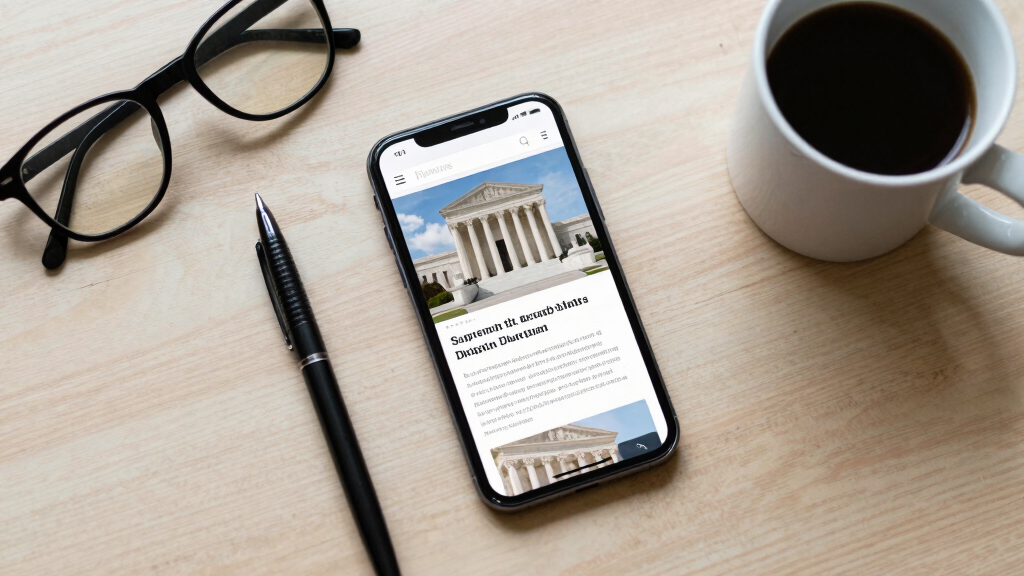
The Supreme Court’s recent 6-3 decision significantly favors Republican redistricting strategies, potentially tilting the 2024 midterm elections toward the GOP. The ruling, issued on Tuesday night, marks a shift in the Court’s approach to voting rights and gerrymandering, with implications that could benefit Republican candidates in key districts.
The decision stems from the Supreme Court’s ruling in Allen v. Milligan, where the majority justices sided with Republican-controlled states, allowing them greater latitude in drawing electoral maps without strict scrutiny over racial considerations. The Court’s six Republican-appointed justices voted to uphold the new maps, while the three Democratic justices dissented, criticizing the ruling as undermining voting rights protections.
Legal experts note that this decision reverses previous standards set by the Court, especially the ruling in Louisiana v. Callais, which required plaintiffs to demonstrate racial intent in gerrymandering cases. The recent decision appears to weaken that requirement, making it easier for states to draw maps favoring one party, regardless of racial impact.
Critics, including Justice Sonia Sotomayor, argue that the decision is inconsistent with prior Court statements and seems motivated by partisan interests. The case involved Alabama’s new congressional maps, which the lower courts found to intentionally dilute Black voters’ influence, a conclusion the Supreme Court appears to have dismissed.
Why It Matters
This ruling could have a substantial impact on the 2024 midterm elections by enabling states to draw district boundaries that favor Republicans more easily. If the Court’s majority continues this approach, it may lead to more gerrymandered districts, potentially skewing election outcomes and affecting the balance of power in Congress. The decision raises concerns about the erosion of voting rights protections and the Court’s impartiality in politically charged cases.

Language Assistance under the Voting Rights Act: Are Voters Lost in Translation?
As an affiliate, we earn on qualifying purchases.
As an affiliate, we earn on qualifying purchases.
Background
Over recent years, the Supreme Court has shifted toward a more permissive stance on gerrymandering, especially after the 2019 ruling in Rucho v. Common Cause, which declared partisan gerrymandering non-justiciable. The Court’s recent decisions, including Louisiana v. Callais and now Allen v. Milligan, reflect a broader trend of dismantling federal safeguards against partisan map-drawing.
The case of Alabama’s maps, challenged for racial discrimination, became a focal point because lower courts found evidence of intentional racial gerrymandering aimed at diluting Black voters’ influence. The Supreme Court’s recent ruling appears to disregard this evidence, emphasizing legislative good faith over detailed factual findings.
“The Court’s latest decision undermines decades of voting rights protections and disregards clear evidence of racial discrimination.”
— Justice Sonia Sotomayor
“This decision signals a shift toward more permissive standards for partisan gerrymandering, which could benefit Republican candidates in the upcoming elections.”
— Legal analyst Dr. Emily Carter

THE CONSENT OF THE GOVERNED – Ending the Age of Gerrymandering: Volume II The Reform and Its Pathway
As an affiliate, we earn on qualifying purchases.
As an affiliate, we earn on qualifying purchases.
What Remains Unclear
It remains unclear how broadly this ruling will be applied across other states and districts, and whether future courts will revisit the standards for challenging gerrymandering based on racial or partisan grounds. The long-term impact on voting rights protections is still uncertain, as legal challenges are likely to follow.

ZMKDLL Womens Suffrage Vote Poster Retro Woman Right to Vote Tin Sign 12×8 Inches
🍓Size:8"x12"Inch Material:These Are High quality Metal Sign.100% Brand New
As an affiliate, we earn on qualifying purchases.
As an affiliate, we earn on qualifying purchases.
What’s Next
Legal challenges to the decision are expected, potentially reaching the Supreme Court again. States may proceed with redistricting efforts under the new standards, which could influence the 2024 midterms. Monitoring how courts interpret and implement this ruling will be crucial in the coming months.

Evan-Moor Daily Science, Grade 1 Homeschooling and Classroom Resource Workbook, Printable Worksheets, Teaching Edition, Earth, Life, and Physical Science, Vocabulary, Test Prep, Hands-On Projects
Help your grade 1 students explore standards-based science concepts and vocabulary using 150 daily lessons.
As an affiliate, we earn on qualifying purchases.
As an affiliate, we earn on qualifying purchases.
Key Questions
How does this decision affect voting rights?
The ruling may weaken federal protections against racial and partisan gerrymandering, potentially allowing states to draw districts that favor one party and dilute minority voting influence.
Will this impact the outcome of the 2024 midterms?
Yes, by enabling more partisan gerrymandering, the decision could give Republicans an electoral advantage in key districts, influencing the composition of Congress.
What are the legal grounds for challenging this ruling?
Challenges could focus on whether the decision disregards clear evidence of racial discrimination or violates constitutional protections. However, success is uncertain given the Court’s current stance.
Could this lead to more court battles over district maps?
Yes, states and advocacy groups are likely to file lawsuits challenging district maps that they believe violate voting rights or constitutional standards, leading to ongoing litigation.
Source: Vox