
Automated vertical farms use advanced robotics to grow fresh produce right in urban areas. These systems streamline planting, monitoring, and harvesting, making food production efficient and sustainable. You get year-round access to local fruits and vegetables, reducing the carbon footprint associated with transportation. Plus, they save water and protect natural resources. By integrating vertical farms into cities, you’re part of a movement towards a greener future. Discover how these innovations are transforming urban living.
Key Takeaways
- Automated vertical farms utilize robotics to streamline planting, tending, and harvesting, enhancing operational efficiency in urban agriculture.
- Robotics in vertical farms monitor crop health and manage nutrient delivery, ensuring consistent and optimal growth conditions.
- These farms produce fresh, local produce year-round, significantly reducing transportation needs and carbon footprints in cities.
- Automated systems in vertical farms conserve water through efficient hydroponic methods, addressing urban water scarcity issues.
- Urban agriculture policies support the integration of automated vertical farms, fostering sustainable food production and resilient urban environments.
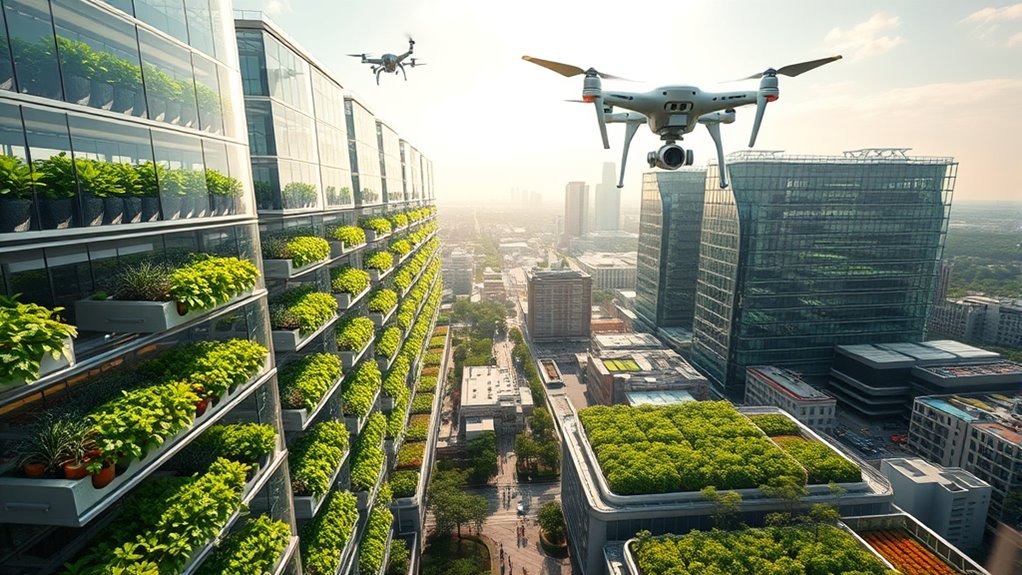
As urban populations swell and arable land dwindles, vertical farms are emerging as a revolutionary solution to feed our cities. These innovative agricultural systems maximize limited space, allowing you to grow food in multi-story structures. By utilizing hydroponic techniques, vertical farms cultivate crops without soil, relying instead on nutrient-rich water solutions. This method not only conserves water but also accelerates plant growth, making it an efficient choice for urban environments. You’ll find that these farms can produce fresh, local produce year-round, reducing the need for transportation and minimizing carbon footprints.
As you explore the world of automated vertical farms, you’ll notice the integration of robotics plays a vital role. Robots streamline various farming processes, from planting seeds to harvesting crops. These automated systems increase efficiency, reduce labor costs, and improve consistency in production. You can easily imagine a future where robots tend to crops, monitor growth, and even manage nutrient delivery—all while you focus on optimizing your urban agriculture policies. By embracing this technology, cities can markedly enhance food security and sustainability. Additionally, the use of real-time monitoring systems in these farms can help ensure optimal growing conditions for crops, akin to techniques used in fraud prevention.
The future of urban agriculture lies in automated vertical farms, where robotics revolutionizes efficiency and sustainability in food production.
Urban agriculture policies are essential for creating a supportive environment for vertical farms. If you’re involved in city planning or policy-making, it’s vital to advocate for regulations that promote these innovative farming practices. You’ll want to explore zoning laws that allow for the construction of vertical farms in urban areas, as well as incentives for businesses that invest in agricultural technology. By aligning policies with the goals of vertical farming, cities can foster a culture of local food production, which ultimately benefits the community.
In a world increasingly impacted by climate change, vertical farms offer a way to adapt to shifting environmental conditions. You’ll appreciate the reduced reliance on traditional farming, which often leads to deforestation and soil degradation. By investing in vertical farming, we can protect our natural resources while addressing urban food challenges. Imagine a city where fresh vegetables and herbs are just a few floors away, accessible to everyone and grown sustainably.
As you consider the future of food production, it’s clear that automated vertical farms, powered by robotics and hydroponic techniques, can transform urban agriculture. By advocating for supportive urban agriculture policies, you can help pave the way for a greener, healthier future—one where cities thrive on locally grown, sustainable food sources.

Multi-Crop Vertical Hydroponic Shipping Container Farm, Automated Mobile Plant Factory with Rotating Tower Growing Kit, Precise IoT Climate Controller for Strawberry & Microgreen Production
- Customizable Design: Fully customizable to meet your needs
- Dual Cultivation System: Supports leafy greens and fruit vegetables
- Rotating Tower Accessory: Ensures uniform light exposure for plants
As an affiliate, we earn on qualifying purchases.
As an affiliate, we earn on qualifying purchases.
Frequently Asked Questions
How Do Automated Vertical Farms Impact Local Economies?
Automated vertical farms profoundly impact local economies by reshaping urban economics and the labor market. They create new job opportunities in tech and maintenance while reducing the need for traditional agricultural roles. You’ll see local produce prices drop, benefiting consumers and boosting nearby businesses. As these farms thrive, they attract investments and innovation, transforming urban landscapes and encouraging sustainable practices that enhance community resilience and economic growth.
What Types of Crops Are Best Suited for Vertical Farming?
Imagine a lush garden reaching for the sky, where fresh produce thrives all year round. In vertical farming, leafy greens like lettuce and spinach flourish in hydroponic systems, soaking up nutrients without soil. You’ll find herbs like basil and cilantro dancing in this vibrant environment too. Crop variety selection is key; focusing on fast-growing, high-yield plants guarantees you maximize your harvest, turning your vertical space into a verdant oasis of flavor and health.
Are There Any Environmental Concerns With Vertical Farms?
Yes, there are environmental concerns with vertical farms. You’ll want to take into account energy consumption, as these farms often rely heavily on artificial lighting and climate control, which can lead to a higher carbon footprint if not managed properly. On the bright side, many vertical farms implement water recycling systems, greatly reducing water waste. Balancing these factors is essential for ensuring that vertical farming remains a sustainable solution for food production.
How Do Vertical Farms Manage Pests and Diseases?
Vertical farms manage pests and diseases through integrated pest management and disease control strategies. You’ll find that they often use beneficial insects for natural pest control, along with organic pesticides when necessary. Additionally, they maintain strict sanitation practices and monitor environmental conditions to minimize disease outbreaks. By controlling humidity, temperature, and air circulation, they create an environment that discourages pests and pathogens, ensuring healthier crops and reducing the need for chemical interventions.
What Is the Future of Robotics in Agriculture?
The future of robotics in agriculture is nothing short of revolutionary! You’ll see robotic pollination and autonomous harvesting transforming how crops are grown and collected. Imagine drones zipping through fields, ensuring every flower gets pollinated while robotic arms efficiently gather ripe produce. These technologies not only boost efficiency but also reduce labor costs and increase yields. As robotics advances, you’ll witness a smarter, more sustainable agricultural landscape that meets the world’s growing food demands.

Hydroponic Tower, 14-Layer Hydroponics Growing System Kit with 70 Slots, Vertical Garden System with 20L Water Tank and Pump for Indoor Outdoor Home, Balcony & Patio
- Smart Watering System: Top-to-bottom nutrient circulation
- Vertical Garden Capacity: Supports 70 plants in 14 layers
- Large Water Reservoir: 20L tank for extended use
As an affiliate, we earn on qualifying purchases.
As an affiliate, we earn on qualifying purchases.
Conclusion
Automated vertical farms are revolutionizing how cities grow their food, blending technology and agriculture seamlessly. As these robotic systems take root, they’re not just feeding urban populations but also nourishing the planet. Imagine a future where fresh produce is as close as your neighbor’s window—no more long supply chains or food deserts. By embracing this innovation, we’re sowing the seeds for a sustainable tomorrow, ensuring that cities thrive and flourish like gardens in full bloom.

As an affiliate, we earn on qualifying purchases.

JPWDDWYT Hydroponics Tower Indoor Growing System Vertical Garden Planter Indoor Smart Garden Kit with Pump and Movable Water Tank Vegetable Plant Gift for Gardening Lover (35-Plants)
- Soilless Hydroponic Cultivation: Uses water-based growing system to save water
- Portable and Space-Saving: Compact design for easy placement indoors
- Vertical Indoor Garden: High-yield tower for efficient gardening
As an affiliate, we earn on qualifying purchases.
As an affiliate, we earn on qualifying purchases.