📊 Full opportunity report: When-to-replace planner for data center equipment on IdeaNavigator AI — validation score, market gap, and execution plan.
Open a free Amazon Business account
Business pricing, bulk buying and tax-exempt orders.
Create a free accountAs an affiliate, we earn on qualifying purchases.
TL;DR

A proposed ‘when-to-replace’ planner for data center equipment is being tested as a targeted workflow for capacity planning. It aims to optimize replacement timing based on asset data, energy costs, and failure risks, potentially transforming capital planning.
A new ‘when-to-replace’ planner for data center equipment is being tested as a targeted workflow to assist facilities and capacity managers in making data-driven replacement decisions. This development aims to address the longstanding reliance on spreadsheets and gut feel, which often lead to premature or delayed hardware replacements, impacting costs and reliability. For more on data center automation, see Bloom Energy’s recent AI data center deals.
The proposed software ingests a facility’s asset list, including data on equipment age, power consumption, and maintenance costs. It then produces a ranked list of assets, indicating whether each should be replaced immediately or retained, based on a comparison of rising energy costs, failure risks, and hardware efficiency improvements.
This tool is designed for data center facilities and capacity planning managers, offering a structured, data-driven alternative to traditional decision-making methods. The initial validation involves applying the planner to an existing asset register, reviewing the recommendations with a capacity manager, and assessing agreement levels to gauge effectiveness.
Why It Matters
This development could significantly impact data center operations by enabling more precise, cost-effective hardware replacement strategies. As energy costs and hardware densities increase, the ability to optimize replacement timing becomes more critical, potentially reducing operational costs and improving reliability.
Adopting such a planner could also lead to better capital planning, reducing waste from premature upgrades and preventing costly failures from aging equipment. The shift toward data-driven decision tools reflects broader trends in data center automation and efficiency.
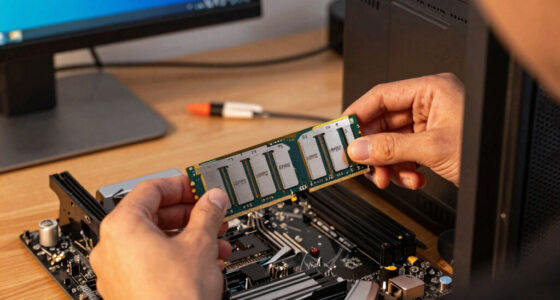
data center server replacement tools
As an affiliate, we earn on qualifying purchases.
As an affiliate, we earn on qualifying purchases.
Background
Data center facilities traditionally rely on manual methods, such as spreadsheets and intuition, to decide when to replace hardware like servers, UPS units, and cooling systems. Rising energy costs and hardware improvements have made these decisions more complex and economically significant. Recent industry focus on efficiency and cost reduction has increased interest in automated planning tools.
Previous efforts to improve replacement timing have been limited to heuristic approaches or reactive maintenance. The new ‘when-to-replace’ planner aims to provide proactive, data-informed recommendations, representing a potential step change in asset management.
“This tool could help facilities teams make more objective, economically sound decisions about hardware replacement, reducing both waste and risk.”
— an anonymous researcher
As an affiliate, we earn on qualifying purchases.
What Remains Unclear
It is not yet clear how well the planner’s recommendations will align with actual operational needs or how widely it can be adopted across different facility types. The effectiveness of the tool depends on the quality of asset data and user acceptance, which are still being evaluated.
cooling system maintenance for data centers
As an affiliate, we earn on qualifying purchases.
As an affiliate, we earn on qualifying purchases.
What’s Next
Next steps include applying the planner to additional facilities, refining its algorithms based on feedback, and conducting broader validation studies. For related insights, see Bloom Energy’s valuation and AI data center initiatives.
energy-efficient data center hardware
As an affiliate, we earn on qualifying purchases.
As an affiliate, we earn on qualifying purchases.
Key Questions
How does the ‘when-to-replace’ planner work?
The planner analyzes asset data such as age, power consumption, and maintenance costs to rank equipment based on whether it should be replaced now or kept, considering rising energy costs and failure risks.
Who can benefit from this tool?
Data center facilities teams and capacity planning managers seeking to optimize hardware replacement timing and reduce operational costs.
Is this tool ready for widespread use?
It is currently in testing with initial validation, and broader adoption will depend on further validation and refinement.
What are the main challenges for implementation?
Ensuring accurate asset data and integrating the tool into existing workflows are key challenges, along with gaining user trust in automated recommendations.
Source: IdeaNavigator AI
NFL season / tailgating Picks
team gear
As an affiliate, we earn on qualifying purchases.