
You’re about to set out on a fascinating journey to uncover Planet Nine, an elusive giant theorized to exist in the outer solar system. This hypothetical planet is believed to influence the orbits of distant Kuiper Belt objects due to its massive gravity. Astronomers are piecing together clues from unusual orbital patterns, facing challenges in detection due to space’s vastness. As the search intensifies, you’ll discover how scientists are closing in on this hidden giant and what it could mean for our understanding of the solar system.
Key Takeaways
- Planet Nine is a theoretical massive planet proposed to explain the unusual orbits of Kuiper Belt objects in the outer solar system.
- Orbital anomalies observed in distant celestial bodies suggest additional gravitational forces, pointing to the existence of a hidden massive object.
- The search for Planet Nine faces challenges due to the vastness of space and the faintness of distant objects within a crowded region.
- Advanced telescopes and data analysis techniques are employed to identify patterns and refine search strategies for locating this elusive planet.
- Discovering Planet Nine could transform our understanding of solar system formation and influence future planetary exploration initiatives.
Have you ever wondered if there’s a hidden giant lurking in the far reaches of our solar system? If you have, you’re not alone. Astronomers have been piecing together clues for years, and the notion of a mysterious Planet Nine has sparked imaginations and debates alike. This hypothetical planet might be responsible for the strange orbital anomalies observed in the outer solar system. These anomalies hint at a massive, unseen force influencing the orbits of distant objects, and the search for Planet Nine is on.
The quest to locate Planet Nine centers around these orbital anomalies. Scientists have noted that several celestial bodies in the Kuiper Belt—the region beyond Neptune—display unusual paths that can’t easily be explained by the gravitational pull of known planets. When you consider how these objects cluster together and behave, it becomes increasingly plausible that a massive, as-yet-undiscovered planet is at play. But here’s where the observational challenges come in. The vastness of space, combined with the faintness of distant objects, makes it incredibly difficult to catch a glimpse of this elusive giant.
The search for Planet Nine hinges on the mysterious orbital anomalies of distant Kuiper Belt objects, hinting at an unseen giant.
You might be surprised to learn that the search isn’t just about looking through telescopes. It involves advanced technology and innovative techniques to detect the faint light of distant objects. Astronomers have to sift through mountains of data, looking for patterns that might reveal Planet Nine’s presence. With each discovery and failure, the excitement builds. If this planet exists, it could reshape our understanding of the solar system’s formation and evolution. Furthermore, the quest for Planet Nine parallels the growing interest in energy efficiency as scientists explore ways to optimize energy use in various applications.
The observational challenges don’t stop there. The region where Planet Nine might reside is crowded with other celestial bodies, making it hard to isolate what you’re looking for. Plus, the planet’s orbit could be highly elliptical, meaning it might not always be in the same spot. This uncertainty adds another layer of complexity to the search. Yet, astronomers remain undeterred. They continue to refine their methods, utilizing advanced simulations and predictive models to narrow down potential locations.

SVBONY SV48P Telescope for Adults High Powered, 102mm Large Aperture F6.5 Refractor OTA for Adults Beginner Astronomer, Astronomical Telescope for Observation of Deep Space Celestial Objective
The SVBONY SV48P is a 102mm f/6.5 achromatic refractor with fully multi-coated optics; a 2.5-inch dual-speed focuser and…
As an affiliate, we earn on qualifying purchases.
As an affiliate, we earn on qualifying purchases.
Frequently Asked Questions
What Is the Significance of Planet Nine in Our Solar System?
Planet Nine’s significance lies in its potential influence on solar system dynamics. If it exists, it could help explain the unusual orbits of distant celestial bodies, shedding light on the formation and evolution of our solar system. Its gravitational pull might shape the paths of these objects, revealing new insights into the complex interactions at play. Understanding Planet Nine could redefine your perspective on the structure and behavior of the cosmos around us.
How Does Planet Nine Affect the Orbits of Other Celestial Bodies?
Planet Nine’s presence creates a stark contrast in the stability of our solar system. You’ll notice that its gravitational pull causes significant orbital perturbations among distant celestial bodies. While some orbits remain predictable, others become chaotic under Planet Nine’s influence. This hidden giant’s celestial influences can reshape trajectories, leading to unique clustering patterns in the orbits of trans-Neptunian objects. Understanding these dynamics helps you grasp the complex interactions that define our cosmic neighborhood.
What Tools Are Used to Search for Planet Nine?
You’ll use advanced telescope technology to search for Planet Nine, focusing on powerful observatories that can detect faint objects in the outer Solar System. These telescopes capture images and data, which you then analyze using sophisticated algorithms and software to identify potential candidates. By examining the orbits of known celestial bodies, you can determine if there’s a massive object influencing their paths, guiding your search for this elusive planet.
How Long Has the Search for Planet Nine Been Ongoing?
The search for Planet Nine has been ongoing for over a decade, much like a treasure hunt where the map keeps changing. Since around 2016, astronomers have made numerous historical attempts to locate this elusive planet, facing significant observational challenges along the way. You’ll notice that each discovery and setback adds to the mystery, drawing in both scientists and enthusiasts enthusiastic to unravel the secrets of our solar system.
Are There Any Theories About Planet Nine’s Composition?
There are several theories about Planet Nine’s composition. You might find that theoretical models suggest it could be a giant icy body, similar to Uranus or Neptune, containing significant amounts of water, ammonia, and methane. Some scientists propose it might even have a rocky core surrounded by a thick atmosphere. These models help researchers estimate its mass and influence on the solar system, although direct observations have yet to confirm any specifics.

Astronomical Data Analysis Software and Systems IV (Conference Series)
As an affiliate, we earn on qualifying purchases.
As an affiliate, we earn on qualifying purchases.
Conclusion
In your quest to uncover Planet Nine, you’re not just chasing a distant world; you’re unraveling the mysteries of our solar system. You’re piecing together the clues, you’re following the orbits, and you’re igniting your curiosity. Each discovery brings you closer, each theory sparks your imagination, and each moment fuels your passion. So, keep looking to the stars, keep questioning the unknown, and keep believing that the secrets of the universe are just waiting to be revealed.

Belt Length Finder
Genuine Gates V-Ribbed & V-Belt Length Finder
As an affiliate, we earn on qualifying purchases.
As an affiliate, we earn on qualifying purchases.
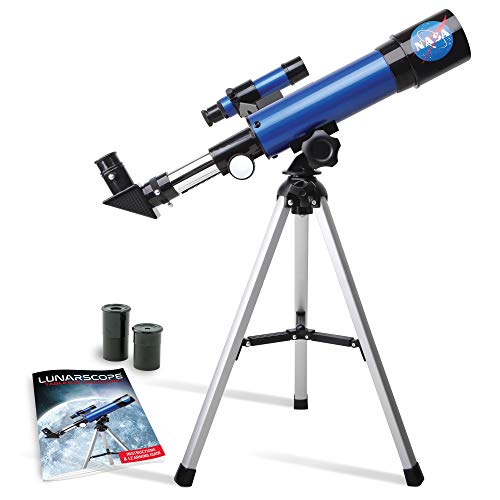
NASA Lunar Telescope for Kids – 90x Magnification, Includes Two Eyepieces, Tabletop Tripod, and Finder Scope- Kids Telescope for Astronomy Beginners, Space Toys, NASA Gifts (Amazon Exclusive)
INSPIRE CURIOSITY – The NASA Lunar Telescope allows your child to see the moon in incredible detail; the…
As an affiliate, we earn on qualifying purchases.
As an affiliate, we earn on qualifying purchases.