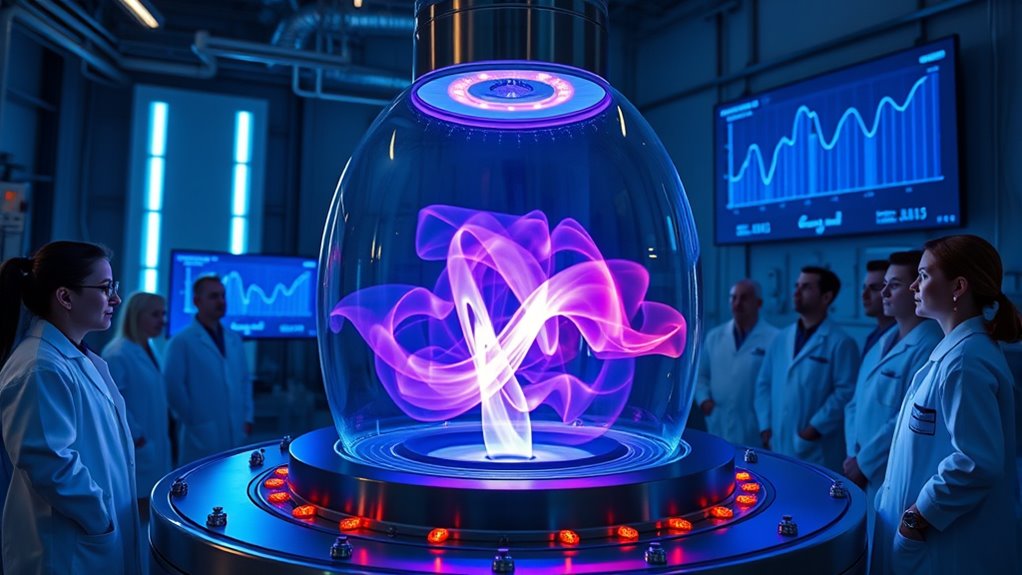

Fusion energy breakthroughs are advancing toward net energy gain, bringing us closer to a clean and virtually limitless power source. Innovations in materials and technology are helping us maintain the extreme conditions needed for sustained nuclear fusion. With improvements in plasma containment techniques and superconductors, we’re on a path to transform the global energy landscape. Discover how these exciting developments could shape a sustainable future as we tackle the challenges of ignition and efficiency together.
Key Takeaways
- Recent advancements in plasma containment techniques are improving the chances of achieving sustained nuclear fusion and approaching net energy gain.
- The development of advanced materials enhances reactor stability, enabling longer-lasting fusion reactions crucial for achieving ignition.
- Superconducting magnets are revolutionizing plasma control, allowing for better confinement and temperature management necessary for successful fusion.
- Breakthroughs in cooling systems are essential for managing extreme heat produced during fusion, facilitating the maintenance of critical ignition conditions.
- Continued research and innovation in fusion technology are paving the way for a future with abundant, clean energy, moving closer to commercial viability.
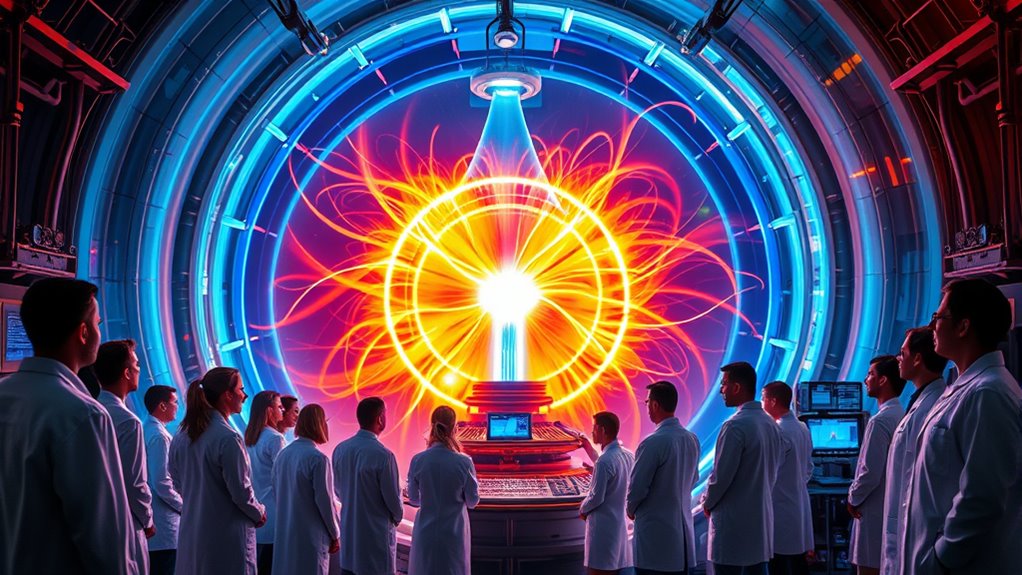
What if we could harness the power of the stars right here on Earth? It’s a tantalizing thought, one that drives researchers and scientists to push the boundaries of what we know about energy production. Fusion energy, the process that powers the sun, presents a compelling solution to our energy needs, promising a clean, virtually limitless source of power. Yet, as we strive for breakthroughs, we face significant ignition challenges that must be addressed before we can achieve net energy gain.
You might wonder what these ignition challenges entail. Essentially, they revolve around creating and sustaining the conditions necessary for fusion to occur. For fusion to happen, atomic nuclei need to collide with enough energy to overcome their natural repulsion. This requires extremely high temperatures and pressures, similar to those found in the core of the sun. Achieving and maintaining these conditions is no small feat. It’s a delicate balance, and any misstep could lead to catastrophic failures or, at the very least, inefficiencies that hinder progress.
In recent years, material innovations have emerged as a key focus for overcoming these ignition challenges. Scientists are exploring advanced materials that can withstand the extreme conditions of a fusion reactor. These innovations are vital, as traditional materials often degrade or fail under intense heat and radiation. By developing stronger, more resilient materials, researchers can enhance the stability and efficiency of fusion reactions. This not only helps in maintaining the necessary conditions for ignition but also improves the overall sustainability of fusion energy systems.
You might be surprised to learn that advancements in superconductors, plasma containment, and cooling systems are all part of this journey toward fusion energy. For instance, new superconducting magnets can generate powerful magnetic fields to confine plasma, making it easier to reach the required temperatures for fusion. Each of these innovations brings us one step closer to realizing the dream of controlled fusion as a viable energy source. Moreover, the principles of electricity production from alternative sources, like bike generators, can inspire our approach to sustainable energy solutions.
As we continue to explore and innovate, the potential of fusion energy grows ever more promising. Imagine a world where energy is abundant, clean, and safe—where we can power our cities and homes with the same energy that fuels the stars. While there’s still much work to be done, the fusion energy breakthroughs on the horizon could transform our energy landscape, making that dream a reality. Embracing these challenges and innovations could lead us to a brighter, more sustainable future.
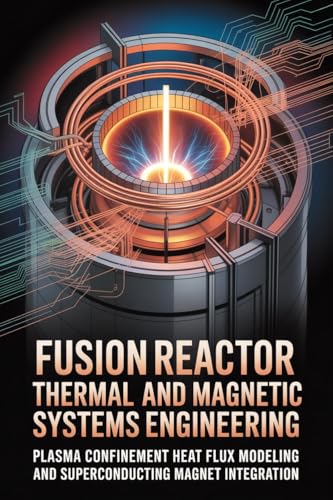
FUSION REACTOR THERMAL AND MAGNETIC SYSTEMS ENGINEERING : Plasma confinement heat flux modeling and superconducting magnet integration
As an affiliate, we earn on qualifying purchases.
As an affiliate, we earn on qualifying purchases.
Frequently Asked Questions
What Are the Environmental Impacts of Fusion Energy Production?
Fusion energy production has minimal environmental impacts compared to fossil fuels. You won’t deal with significant greenhouse gas emissions, and it reduces resource scarcity by relying on abundant elements like hydrogen. However, there’s still some radioactive waste generated, though it’s much less hazardous and shorter-lived than that from fission. Overall, fusion offers a cleaner, more sustainable energy source, helping to mitigate climate change while addressing pressing energy demands.
How Does Fusion Energy Compare to Fossil Fuels?
Fusion energy offers a cleaner alternative to fossil fuels, reducing pollution and dependence on finite resources. While fusion costs are currently high, the potential for virtually limitless energy makes it worth exploring. Unlike fossil fuels, which emit greenhouse gases, fusion produces minimal waste. Additionally, energy storage technologies can bridge the gap, enabling stable energy supply. Embracing fusion means investing in a sustainable future, where energy is abundant and the planet thrives.
What Is the Timeline for Commercial Fusion Energy?
The fusion timeline for commercial energy is still uncertain, but many experts predict we could see viable fusion power plants by the 2030s or 2040s. It’s exciting to think about the potential for clean energy, but several technical challenges remain. As research continues and funding increases, the commercial prospects for fusion look more promising. You’ll want to stay updated on advancements, as breakthroughs could shift this timeline considerably.
Are There Any Safety Concerns With Fusion Reactors?
Yes, there are some safety concerns with fusion reactors, but they’re generally considered lower than those of fission reactors. Fusion safety focuses on minimizing reactor hazards like radiation leaks and equipment failures. Since fusion reactions require precise conditions, if something goes wrong, the reaction simply stops, preventing a catastrophic meltdown. Additionally, the materials used in fusion reactors are designed to withstand extreme conditions, reducing risks even further. Overall, fusion is a promising, safer energy option.
What Materials Are Used in Fusion Reactors?
In fusion reactors, you’ll find materials like superconductors for magnetic confinement, which helps keep the plasma stable. The reactors often use lithium as a breeding material to generate tritium and structural materials like steel and advanced composites to withstand extreme temperatures. These materials play a vital role in maintaining plasma stability, ensuring efficient energy production while minimizing risks. It’s all about creating the right environment for fusion to occur safely and effectively.

Magnetic Control of Tokamak Plasmas (Advances in Industrial Control)
As an affiliate, we earn on qualifying purchases.
As an affiliate, we earn on qualifying purchases.
Conclusion
As we stand on the brink of a new era in energy, fusion’s potential sparkles like a distant star finally coming into focus. With recent breakthroughs inching us closer to net energy gain, the dream of clean, limitless power is more tangible than ever. While challenges remain, the journey toward harnessing the sun’s power is both thrilling and essential. Together, let’s embrace this revolutionary path and ignite a brighter, sustainable future for generations to come.

BDFHYK 13126 Aluminum Radiator for Ford Fusion 2010-2012, for Mercury Milan 2010-2011, CU13126 DPI13126, 22mm Core, Direct Fit Replacement, OE BE5Z8005F FO3010289 RK1735
Direct Fit & Easy Installation – Compatible with Ford Fusion 2010-2012 and Mercury Milan 2010-2011. Engineered for precise…
As an affiliate, we earn on qualifying purchases.
As an affiliate, we earn on qualifying purchases.

Advanced Nuclear Energy Systems And Small Modular Reactor Technologies: Innovations, Safety, and Integration for the Next Generation of Nuclear Power
As an affiliate, we earn on qualifying purchases.
As an affiliate, we earn on qualifying purchases.