
If you’re new to quantum computing, I recommend starting with beginner-friendly books that use simple language, analogies, and visuals to explain concepts like qubits, superposition, and entanglement. These titles focus on foundational ideas without heavy math, making complex topics approachable. By exploring these resources, you’ll build a solid understanding and spark curiosity for more advanced topics. Keep exploring, and you’ll discover how quantum tech is shaping the future.
Key Takeaways
- Focus on books that simplify complex quantum concepts with analogies and layman terms, ideal for beginners.
- Prioritize titles that include visuals, diagrams, and practical examples to enhance understanding.
- Look for books covering foundational topics like qubits, superposition, and entanglement without heavy math.
- Choose resources that highlight real-world applications and future implications of quantum computing.
- Select introductory books suitable for self-study, students, and enthusiasts new to quantum physics.

Quantum Computing Explained for Beginners: The Science, Technology, and Impact
As an affiliate, we earn on qualifying purchases.
Quantum Computing Explained for Beginners
If you’re new to quantum computing and want a clear, accessible introduction, these books are an excellent starting point. They use analogies, metaphors, and layman terms to simplify complex ideas like qubits, entanglement, and quantum gates, making the concepts manageable without advanced math or physics. While some readers find the explanations superficial or overly reliant on metaphors, these books do a good job establishing foundational principles. They cover topics like superposition, quantum hardware, and algorithms, offering a broad overview suitable for beginners, students, and enthusiasts enthusiastic to understand the transformative potential of quantum technology.
Best For: beginners and enthusiasts seeking a straightforward, non-technical introduction to quantum computing concepts and their potential applications.
Pros:
- Uses analogies and layman terms to make complex topics understandable
- Provides a broad overview of foundational principles like superposition and entanglement
- Highlights real-world applications and future implications of quantum technology
Cons:
- Some explanations may be superficial or overly reliant on metaphors without visuals
- Lacks in-depth technical details and advanced explanations for experienced learners
- May feel repetitive or vague, with limited coverage of quantum algorithms and hardware

Quantum Physics for Beginners: From Wave Theory to Quantum Computing. Understanding How Everything Works by a Simplified Explanation of Quantum Physics and Mechanics Principles
As an affiliate, we earn on qualifying purchases.
Quantum Physics for Beginners
Quantum Physics for Beginners is an ideal starting point for anyone curious about quantum mechanics but hesitant to plunge into complex math or technical jargon. It offers a clear, accessible overview that breaks down core ideas like wave theory and quantum principles using simple language and engaging analogies. This book covers the history of quantum physics and introduces key concepts without overwhelming beginners. While it’s perfect for sparking curiosity and building a solid foundation, some parts may feel challenging without prior background. Overall, it’s an excellent resource to demystify quantum physics and inspire further exploration into this fascinating field.
Best For: beginners, students, and enthusiasts seeking a straightforward, non-technical introduction to quantum physics to spark curiosity and build foundational understanding.
Pros:
- Clear, engaging explanations that simplify complex concepts
- Uses analogies and visualizations to aid comprehension
- Accessible language suitable for readers without advanced physics or math backgrounds
Cons:
- May oversimplify some topics, leaving gaps for deeper understanding
- The latter sections can be challenging due to the introduction of formulas and technical terms
- Not a comprehensive textbook, requiring additional resources for advanced study

Quantum Computing Explained for Beginners: The Science, Technology, and Impact
As an affiliate, we earn on qualifying purchases.
Quantum Computing Explained for Beginners
Are you curious about quantum computing but feel overwhelmed by its complexity? “Quantum Computing Explained for Beginners” is an excellent choice if you’re seeking a straightforward, accessible introduction without delving into heavy math or technical jargon. This book simplifies complex ideas using analogies and layman’s terms, making topics like qubits, superposition, and entanglement easy to grasp. It covers foundational quantum mechanics and explores practical applications such as cryptography, AI, and healthcare. While some may find it superficial or lacking visuals, many appreciate its ability to demystify quantum concepts and spark curiosity—perfect for beginners wanting a solid, engaging starting point.
Best For: beginners curious about quantum computing who want a clear, accessible introduction without heavy technical details.
Pros:
- Simplifies complex quantum concepts using analogies and layman’s terms.
- Covers foundational quantum mechanics and practical applications like cryptography and AI.
- Engages readers and sparks curiosity without requiring advanced math or technical background.
Cons:
- Some readers find the coverage superficial and lacking in depth.
- The book may rely heavily on metaphors and analogies that can sometimes confuse.
- The absence of visuals like diagrams or illustrations might hinder understanding for visual learners.

Quantum Computing for Everyone (Mit Press)
As an affiliate, we earn on qualifying purchases.
Quantum Computing for Everyone (Mit Press)
This book stands out as an ideal starting point for anyone curious about quantum computing but hesitant to plunge into complex mathematics. I appreciate how it introduces core concepts like superposition, entanglement, and quantum gates with accessible language and real-world analogies. The book minimizes heavy math, instead focusing on conceptual understanding, making it suitable for beginners with some technical background. It covers fundamental algorithms, quantum cryptography, and practical applications, all explained clearly. I found the narrative engaging and logical, providing a solid foundation without overwhelming technical detail. It’s a perfect entry point for those enthusiastic to explore quantum computing’s fascinating world.
Best For: beginners and enthusiasts with some technical background seeking an accessible yet comprehensive introduction to quantum computing concepts.
Pros:
- Clear explanations of complex quantum principles using real-world analogies
- Focus on conceptual understanding with minimal heavy mathematics
- Engaging, logical narrative that builds foundational knowledge
Cons:
- Limited depth on advanced algorithms and technical implementations
- Some sections may still be challenging without prior physics or linear algebra knowledge
- Lacks detailed practical examples or hands-on programs for quantum computers
Essential Mathematics for Quantum Computing

If you’re a professional or student looking to strengthen your foundation in the math behind quantum computing, “Essential Mathematics for Quantum Computing” by Leonard is an excellent choice. This book offers a beginner-friendly overview of key linear algebra concepts like vectors, matrices, complex numbers, eigenvalues, and eigenvectors, all crucial for understanding quantum principles. It’s concise, with practical exercises and clear illustrations, making complex topics accessible without overwhelming you. Whether you’re revisiting fundamentals or starting fresh, this resource helps demystify the math, bridging the gap between theory and application, and reducing the intimidation often associated with advanced quantum mathematics.
Best For: professionals and students seeking a clear, accessible introduction to the essential math concepts underpinning quantum computing.
Pros:
- Concise and beginner-friendly, making complex topics approachable
- Includes practical exercises, solutions, and helpful diagrams for better understanding
- Covers both foundational and advanced linear algebra concepts relevant to quantum physics
Cons:
- Some users find the notation and explanations to be cryptic or overly simplified at certain points
- The high school-level math scope may feel limiting for those seeking in-depth mathematical detail
- Occasional issues with product packaging and logistical handling, though unrelated to content quality
Quantum Physics for Beginners
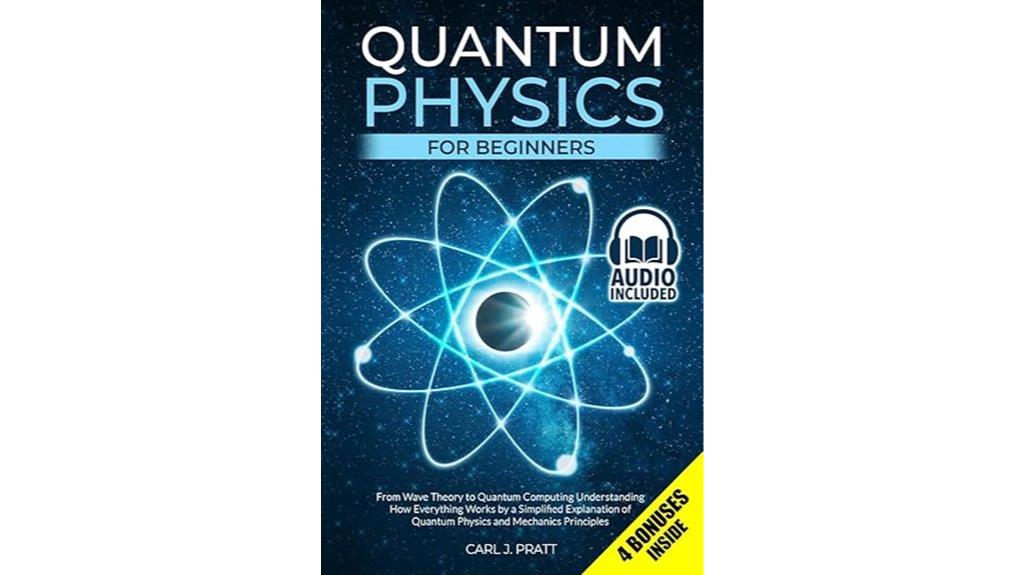
Looking for an accessible introduction to quantum physics that doesn’t require advanced math or prior knowledge? “Quantum Physics for Beginners” is an ideal choice for students, professionals, and enthusiasts enthusiastic to understand the core concepts behind quantum mechanics without feeling overwhelmed. This book provides a clear, non-technical overview, using simple language, analogies, and visualizations to explain wave theory, quantum mechanics, and key principles. It offers a compelling mix of history and fundamental ideas, making complex topics approachable. Perfect as a starting point, it sparks curiosity and lays a solid foundation for further study, emphasizing understanding over technical detail.
Best For: beginners, students, and enthusiasts seeking a clear, non-technical introduction to quantum physics without requiring advanced mathematics.
Pros:
- Makes complex quantum concepts accessible and easy to understand through simple language and analogies
- Offers a compelling historical context combined with fundamental ideas to spark curiosity
- Well-suited as an introductory resource that can serve as a foundation for further study
Cons:
- The latter sections with formulas and technical terms may overwhelm beginners with no prior background
- Some explanations might lack depth, requiring additional resources for full comprehension
- Not a detailed or comprehensive textbook, limiting its use for advanced or in-depth learning
Introduction to Classical and Quantum Computing
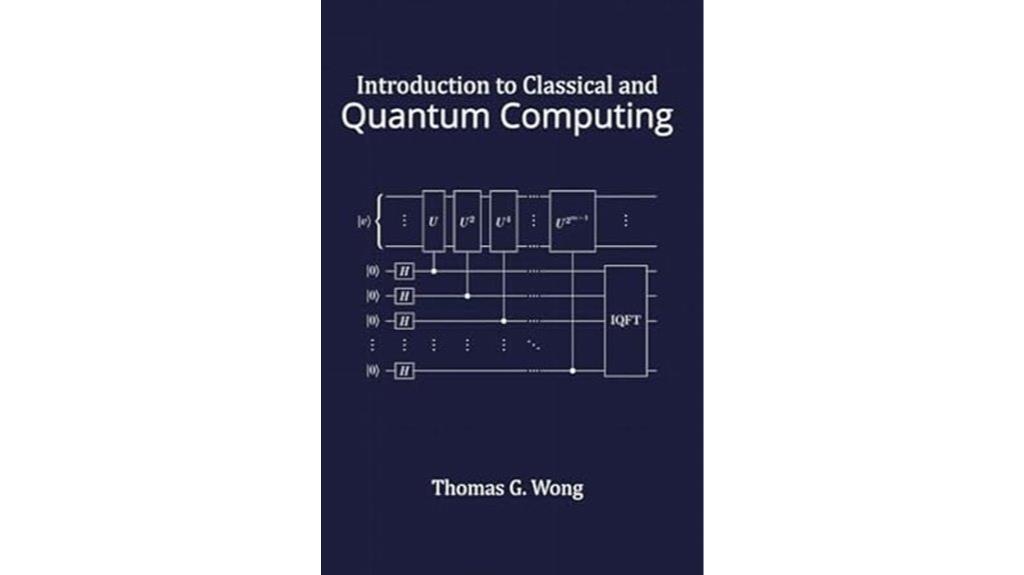
Anyone interested in gaining a solid, approachable introduction to both classical and quantum computing will find this book an ideal starting point. It’s praised for its clear explanations and balanced mix of theory and practice, making complex topics accessible—even for those with limited math backgrounds. The coverage spans from logic gates and electronics to advanced quantum mechanics, with helpful mathematical explanations and engaging exercises. Readers often report that it deepens their understanding and clarifies key concepts, making it a favorite for self-study, teaching, or research. Its visual aids and relatable analogies further enhance comprehension, making the journey into quantum computing both manageable and enjoyable.
Best For: beginners and enthusiasts seeking a clear, accessible introduction to classical and quantum computing with practical exercises and engaging explanations.
Pros:
- Highly praised for its clear explanations and balanced mix of theory and practice
- Suitable for readers with limited math backgrounds, making complex topics approachable
- Includes helpful visual aids, diagrams, and relatable analogies that enhance understanding
Cons:
- Some copies may have missing pages or minor printing issues
- The mathematical content can be challenging for those with very limited backgrounds despite explanations
- A few readers desire more practical examples or real-world applications
Demystifying Qubits: A Beginner’s Guide to Quantum Computing
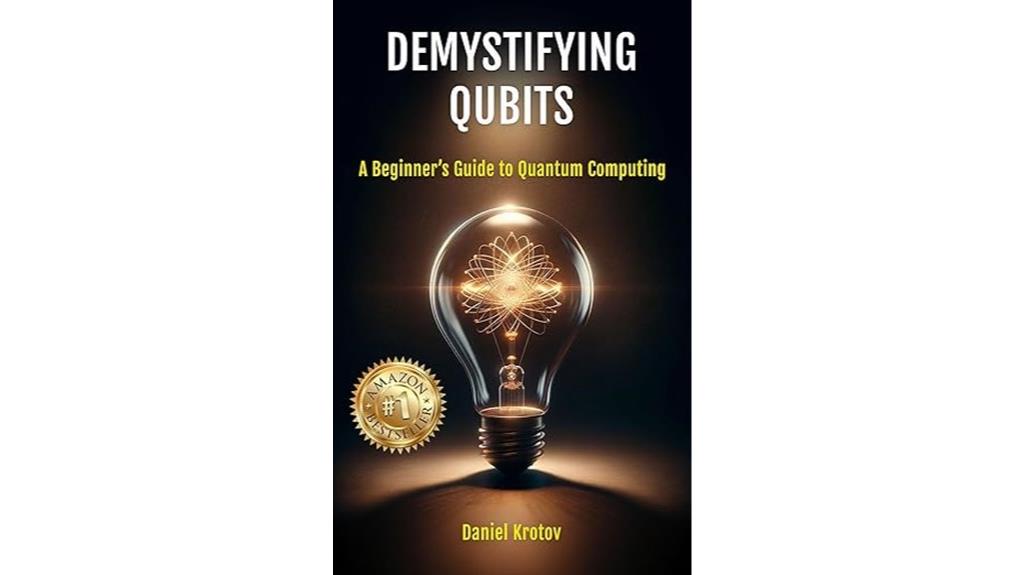
Are you curious about how quantum computing works but don’t have a technical background? I found that *Demystifying Qubits* by Daniel Krotov makes complex ideas simple and accessible. It explains key concepts like superposition and how qubits differ from classical bits using clear language and visuals. The book traces the history and future of quantum tech, emphasizing its potential to revolutionize industries. Even without prior physics knowledge, I appreciated its step-by-step approach, making the field approachable. It’s a great starting point for anyone interested in understanding the basics of quantum computing and its exciting possibilities.
Best For: Beginners and non-technical readers interested in gaining a clear, foundational understanding of quantum computing concepts without prior physics knowledge.
Pros:
- Simplifies complex quantum concepts with clear language and visuals.
- Provides a well-structured, beginner-friendly introduction suitable for self-study and educational use.
- Includes helpful resources like online platform links and programming guides to enhance learning.
Cons:
- Some sections may be repetitive or lack in-depth technical details.
- May not satisfy readers seeking advanced or highly detailed explanations of quantum algorithms.
- A few reviews mention the absence of engaging real-world examples or stories to boost interest.
Quantum Computing: An Applied Approach

Quantum Computing: An Applied Approach by Jack Hidary stands out as an ideal choice for readers with STEM backgrounds or coding experience who want a practical, well-structured introduction to quantum computing. I appreciate how the book’s three sections—Foundations, Hardware and Applications, and Toolkit—cover physics, computer science, and math, making complex topics accessible. It includes hands-on Python code snippets and references for further learning, emphasizing recent breakthroughs like quantum supremacy. The book balances technical depth with clarity, making it suitable for self-study or instruction. It’s especially valuable for those wanting to understand industry trends, applications, and the state-of-the-art in quantum tech today.
Best For: learners with STEM backgrounds or coding experience seeking a practical, well-structured introduction to quantum computing and its real-world applications.
Pros:
- Clear, well-organized coverage of physics, computer science, and mathematics, making complex topics accessible
- Includes practical Python code snippets and references for hands-on learning and further study
- Keeps pace with recent advances like quantum supremacy, ensuring relevance in a rapidly evolving field
Cons:
- Some sections may be challenging without a strong prior mathematical background
- Occasional issues with the quality or condition of used copies reported by users
- The technical depth, while balanced, might be overwhelming for complete beginners without any STEM experience
Quantum Computing: A Beginners Introduction

If you’re looking for a straightforward introduction to quantum computing concepts without requiring prior knowledge of physics or advanced mathematics, this book might seem like a good starting point. However, many reviews point out significant errors, typos, and misconceptions, especially about formulas and core concepts. Some explanations are muddled, and notations are inconsistent, which can make grasping ideas difficult. While it claims to be concise and self-contained, the inaccuracies and unclear explanations limit its usefulness for beginners. Overall, better resources are available online or in established textbooks that offer clearer, more reliable information to build a solid foundation in quantum computing.
Best For: beginners seeking a very basic, non-technical overview of quantum computing concepts without prior background in physics or math.
Pros:
- Concise and straightforward explanations, suitable for absolute beginners
- Self-contained with no requirement for advanced prior knowledge
- Useful for understanding some foundational concepts like Dirac notation
Cons:
- Contains numerous errors, typos, and misconceptions that compromise accuracy
- Explanations are often unclear or muddled, making comprehension difficult
- Lacks depth and detail compared to other reputable resources or textbooks
Factors to Consider When Choosing Quantum Computing Books for Beginners

When selecting a quantum computing book for beginners, I look for clear and simple explanations that make complex ideas understandable. I also consider the depth of content and whether it offers enough technical detail without overwhelming. Additionally, I check for visual aids and practical examples to help reinforce learning effectively.
Clarity and Simplicity
Choosing a beginner-friendly quantum computing book can feel intimidating, but focusing on clarity and simplicity makes the process much easier. Look for books that use analogies, layman’s terms, and visualizations to help grasp complex ideas. Clear, concise explanations that break down technical jargon without oversimplifying are essential. Avoid books filled with heavy mathematical notation; instead, choose resources that provide supplementary explanations or practical examples. A well-organized presentation helps you follow along and retain concepts better. Prioritize books that reinforce learning through relatable analogies or real-world applications without overwhelming you. These features make complicated topics accessible, turning a formidable subject into an engaging and manageable learning experience. Ultimately, clarity and simplicity are key to building a solid foundation in quantum computing.
Depth of Content
How much depth you need in a quantum computing book depends largely on your current knowledge and learning goals. If you’re just starting out, look for books that focus on conceptual understanding, using analogies and simple explanations. These will give you a solid foundation without overwhelming you. As you gain confidence, you might explore books with more detailed technical content, including mathematical derivations and algorithms. Consider whether the book covers practical applications or industry-relevant topics, especially if you’re interested in real-world use cases. Also, check if it includes exercises, examples, or code snippets to reinforce learning. Be cautious—books that are too superficial may lack depth, while overly technical texts can be overwhelming for beginners. Find a balance that matches your current skills and ambitions.
Visual Support Elements
Have you ever struggled to grasp complex quantum concepts through text alone? Visual support elements like diagrams, charts, and illustrations can make a huge difference. Clear, well-designed visuals help clarify abstract ideas such as superposition, entanglement, and quantum gates—things that are tough to understand with words alone. Books lacking these visuals often rely heavily on metaphors and analogies, which can sometimes cause confusion or misinterpretation. To get the most out of a quantum computing book, look for those that label and explain visuals thoroughly, ensuring they complement the text. Incorporating visual aids not only makes the material easier to understand but also boosts retention, engagement, and your overall learning experience—especially if you’re a visual learner.
Technical Explanation Level
When selecting a quantum computing book for beginners, it’s important to contemplate how the technical explanations are presented. I look for books that strike a balance between simplicity and depth, ensuring the content isn’t overwhelming but still informative. Effective use of analogies and metaphors helps clarify complex ideas without excessive jargon. I also check if the book offers practical examples, exercises, or visual aids, which reinforce understanding of technical concepts. Depending on my prior knowledge and goals, I prefer materials that either simplify topics for a complete novice or provide enough technical detail for those seeking a solid foundation. Ultimately, the right level of technical explanation makes learning engaging and accessible, without sacrificing essential concepts.
Practical and Application Focus
Choosing a quantum computing book with a practical and application-focused approach helps bridge the gap between theory and real-world use. I look for books that include practical examples, code snippets, or case studies to see how quantum algorithms solve actual problems in cryptography, optimization, or machine learning. It’s important to understand current hardware developments, error correction techniques, and software tools, giving insight into the real challenges faced when building and using quantum computers. I also prefer resources that offer supplementary materials such as toolkits, online platforms, or project exercises, making learning hands-on and engaging. Ultimately, I choose books that highlight industry impacts and future applications, helping me see how quantum computing can transform various fields and stay relevant in today’s fast-evolving landscape.
Author Expertise and Credibility
How can you guarantee a quantum computing book is trustworthy? First, check the author’s background—do they have expertise in quantum physics, computer science, or engineering? This ensures their explanations are credible and accurate. Look into whether they’ve published other reputable works or have professional experience in the field. An affiliation with academic institutions, research labs, or industry leaders adds to their credibility. Review their credentials—degrees, research contributions, or industry recognition—to gauge their authority. Also, see if they update their work regularly or cite current research, which indicates they stay informed about recent developments. By considering these factors, you can confidently select a book authored by someone qualified, ensuring you’re learning from a reliable and knowledgeable source.
Supplementary Resources
Have you considered supplementing your quantum computing books with additional resources? These tools can substantially boost your understanding beyond what’s covered in textbooks. Online tutorials, interactive platforms, and coding exercises make abstract concepts more tangible and practical. Many books suggest or include access to workbooks, digital toolkits, or quantum programming simulators, allowing hands-on practice. Video lectures and online courses provide visual explanations and real-time demonstrations that can clarify complex ideas. Engaging with community forums, webinars, or workshops creates opportunities for discussion and clarification, deepening your grasp of the subject. Using these supplementary resources bridges gaps when books rely heavily on metaphors or lack detailed technical illustrations, ensuring a well-rounded and more effective learning experience.
Frequently Asked Questions
How Do Quantum Algorithms Differ From Classical Algorithms?
When I think about how quantum algorithms differ from classical ones, I realize that quantum algorithms leverage superposition and entanglement to process multiple possibilities simultaneously. This allows them to solve certain problems much faster than classical algorithms, which follow a step-by-step approach. Quantum algorithms are designed to exploit the unique properties of quantum bits, making them powerful for specific tasks like factoring or searching large databases efficiently.
What Prior Knowledge Is Essential Before Starting Quantum Computing Books?
Before diving into quantum computing books, I found that understanding basic linear algebra, probability, and classical computing concepts is essential. Familiarity with matrices, vectors, and algorithms helps me grasp quantum principles more easily. I also made sure to review some physics basics, like superposition and entanglement. Having this foundation makes tackling the material less intimidating and allows me to focus on the unique aspects of quantum mechanics.
Are There Recommended Resources for Hands-On Quantum Programming?
You’re wondering about hands-on quantum programming resources. I recommend trying IBM’s Quantum Experience platform, which offers a free, user-friendly interface to experiment with real quantum hardware and simulators. Additionally, Qiskit tutorials are fantastic for practical learning. You can also explore Microsoft’s Quantum Development Kit with Q# for more advanced coding. These tools make it easy to get practical experience, even as a beginner.
How Soon Can Beginners Expect to Build Quantum Algorithms Independently?
Sure, I can tell you when beginners might build quantum algorithms on their own—probably sooner than you think, or maybe not. Honestly, it’s a wild ride, and progress depends on your dedication and background. I’d say expect a few months of study, hands-on practice, and patience. With the right resources, you’ll surprise yourself, but don’t rush—quantum computing is a marathon, not a sprint.
What Are the Practical Applications of Quantum Computing in Everyday Life?
Quantum computing’s practical applications are rapidly growing and could transform everyday life. I see it improving drug discovery, optimizing supply chains, and enhancing cybersecurity. It might also lead to faster data analysis and smarter artificial intelligence. While many uses are still in development, I believe that as quantum tech advances, we’ll see it solving complex problems that today’s computers can’t handle, making our daily routines smoother and more efficient.
Conclusion
As I explored these books, I realized each one offered a unique doorway into quantum computing—sometimes I stumbled upon concepts I’d never heard before, other times I found clarity in the simplest explanations. It’s like discovering a hidden universe right in my hands. If you’re curious, just pick one and start your journey. Who knows? Maybe the next breakthrough in quantum tech will have your name on it someday!