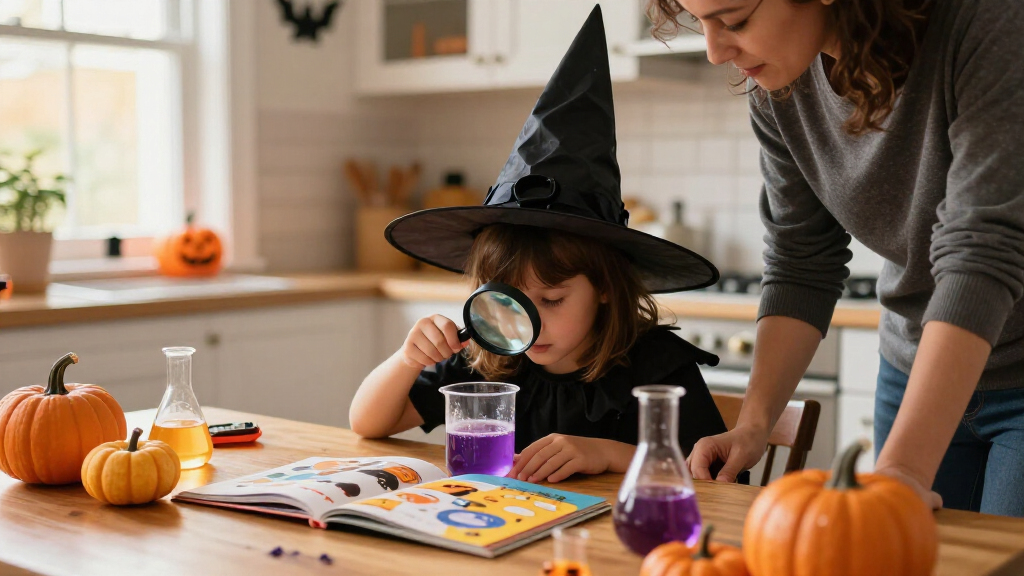
For a strong mix of spooky fun and real science, The Big Halloween Book of Why is my best overall pick: its wide range of questions suits curious kids who like jumping between topics. The Spooky Science of Your Skeleton focuses on anatomy for readers ready to explore one subject, while Why? Wow! Halloween for Preschoolers offers younger children simpler explanations and hands-on play. The main tradeoff is breadth versus depth, with age range and reading level also shaping which book will hold a child’s attention. Some picks lean toward facts or early reading, while others invite coloring or activity. Read on for the full comparison and help match the book to your child.

Get school and study supplies delivered free — and shop member deals
- Fast, free delivery on millions of items
- Access to Prime Big Deal Days deals on October 6–7
- Prime Video, Amazon Music and more included
Key Takeaways
- The Big Halloween Book of Why leads for topic variety, with 400 questions and answers for kids who enjoy browsing and asking follow-up questions.
- The Spooky Science of Your Skeleton is the most focused choice; its anatomy subject gives curious readers more room to stick with one science theme.
- Why? Wow! Halloween for Preschoolers serves a different stage from the other picks, pairing simple answers with play for younger children.
- Halloween Under the Microscope adds a coloring format, which may suit kids who like visual activities but want less continuous reading.
- National Geographic Kids Readers: Halloween is the clearest early-reader option, while the fact collections favor dipping in and out over a guided reading path.
| The Spooky Science of Your Skeleton for Curious Kids Ages 8–12 |  | Best Overall for Kids Who Love Gross Anatomy and Bone Facts | Target Age: 8-12 years | Topic: Human Skeleton/Anatomy | Format: Book | VIEW LATEST PRICE | See Our Full Breakdown |
| Weird But True! Halloween: 300 Spooky Facts to Scare You Silly |  | Best for Fact Enthusiasts Who Want a Quick Scare | ASIN: 1426338287 | Fact count: 300 | VIEW LATEST PRICE | See Our Full Breakdown | |
| The Big Halloween Book of Why: 400 Spooky Questions and Amazing Answers for Curious Kids Ages 6–12 | 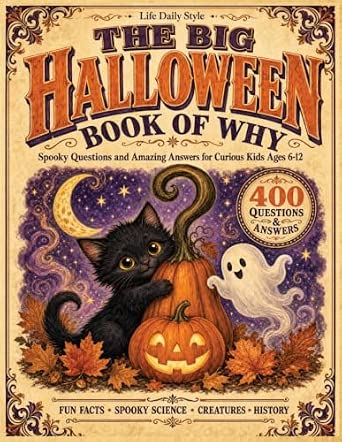 | Best for Question-Driven Curious Kids | ASIN: 8368391652 | Age range: 6–12 | Question count: 400 | VIEW LATEST PRICE | See Our Full Breakdown |
| Halloween Under the Microscope: A Science Coloring Book for Kids Ages 8–10 |  | Best for Hands-On Science and Art in Halloween Fun | Format: Coloring book | Recommended age: 8–10 years | Illustrated worlds: 45 | VIEW LATEST PRICE | See Our Full Breakdown |
| Why? Wow! Halloween for Preschoolers: Full-Color Illustrated Book with Real Questions, Simple Answers & Hands-On Play |  | Best for Preschoolers Curious About Halloween | Target Age: 3-5 years | Format: Illustrated Book | Topic: Halloween, Science, Preschool Education | VIEW LATEST PRICE | See Our Full Breakdown |
| Halloween (National Geographic Kids Readers, Level 1) |  | Best for Early Readers | Series: National Geographic Kids Readers | Reading level: Level 1 | Subject: Halloween traditions and history | VIEW LATEST PRICE | See Our Full Breakdown |
| Halloween science books for kid | Format | ASIN |
|---|---|---|
| The Spooky Science of Your Ske | Book | — |
| Weird But True! Halloween: 300 | — | 1426338287 |
| The Big Halloween Book of Why: | — | 8368391652 |
| Halloween Under the Microscope | Coloring book | — |
| Why? Wow! Halloween for Presch | Illustrated Book | — |
| Halloween | — | 142631034X |
More Details on Our Top Picks
The Spooky Science of Your Skeleton for Curious Kids Ages 8–12
This book stands out for transforming the human skeletal system into a spooky, engaging subject that appeals to kids who enjoy creepy facts and gross anatomy. Unlike Halloween Under the Microscope, which focuses on microscopic worlds, this book dives into the macabre and bizarre aspects of bones, making it perfect for children intrigued by body horror or spooky trivia. The content’s graphic nature might be off-putting for sensitive readers, and its focus on bones limits its scope compared to broader Halloween topics. However, its lively facts and accessible language make science approachable for children aged 8 to 12 who want a mix of education and gross-out fun.
Pros:- Engages kids with spooky and gross facts about bones
- Makes science fun and accessible for middle-grade readers
- Includes interesting trivia that encourages curiosity
Cons:- Content may be too graphic for sensitive or younger children
- Limited to skeletal topics, lacking variety for broader Halloween themes
Best for: Children ages 8–12 who love creepy, gross anatomy facts and engaging science stories
Not ideal for: Parents looking for gentle, non-graphic Halloween books for sensitive children under 8
- Target Age:8-12 years
- Topic:Human Skeleton/Anatomy
- Format:Book
Our verdict“Best suited for children who enjoy spooky, gross, and fascinating science about the human body.”
Weird But True! Halloween: 300 Spooky Facts to Scare You Silly
This collection delivers a hefty dose of Halloween facts, making it ideal for kids who love to amass trivia and fun tidbits. Compared to The Big Halloween Book of Why, which offers questions and answers, this book is more straightforward, providing rapid-fire spooky facts without much context. Its lack of descriptive or illustrative content may limit engagement for younger children or those seeking more interactive experiences. Nonetheless, for kids eager to learn dozens of quick facts about Halloween’s quirkiest side, this book keeps the facts coming fast and furious.
Pros:- Provides 300 spooky facts for quick reading
- Ideal for kids who love trivia and fun facts
- Easy to browse and share
Cons:- Lacks detailed explanations or illustrations
- No additional content beyond facts, limiting engagement for some children
Best for: Children who love collecting Halloween facts and enjoy quick, bite-sized trivia
Not ideal for: Parents seeking in-depth explanations or activities, as the book offers little beyond facts
- ASIN:1426338287
- Fact count:300
Our verdict“Perfect for trivia-loving kids who want to gather a large collection of Halloween facts in one book.”
The Big Halloween Book of Why: 400 Spooky Questions and Amazing Answers for Curious Kids Ages 6–12
This book earns its place by offering 400 questions designed to spark curiosity in kids aged 6 to 12, blending spooky trivia with fall activities. Unlike Why? Wow! Halloween for Preschoolers, which simplifies explanations for very young children, this book caters to a broader age range with more complex questions and answers. While it’s packed with questions about Halloween and science, the data offers little detail about the specific questions or activities, which could leave parents wanting more substance. For children who love asking ‘why’ and exploring Halloween mysteries, this book provides a rich question-and-answer experience.
Pros:- Includes a large number of questions and answers to satisfy curiosity
- Combines spooky trivia with fall-themed activities
- Appeals to kids who love asking ‘why’ questions
Cons:- Lacks specific detail about the questions included
- Some questions may be too challenging for younger children within the age range
Best for: Curious children aged 6–12 who enjoy asking questions and exploring Halloween mysteries
Not ideal for: Preschoolers or very sensitive children who might find some questions too spooky or complex
- ASIN:8368391652
- Age range:6–12
- Question count:400
Our verdict“A strong pick for inquisitive kids who thrive on asking questions and exploring Halloween’s mysteries.”
Halloween Under the Microscope: A Science Coloring Book for Kids Ages 8–10
This coloring book makes science visually engaging by encouraging kids to color microscopic Halloween worlds, making it ideal for children who enjoy combining art with science. Unlike The Spooky Science of Your Skeleton, which is text-heavy and more educational, this book offers a creative, hands-on activity that emphasizes visual learning and fine motor skills. However, it’s limited to microscopic scenes, so children seeking broader Halloween themes or more detailed science explanations might find it less satisfying. Still, for ages 8 to 10, it’s a colorful way to explore Halloween through science and art simultaneously.
Pros:- Transforms science into colorful, artistic scenes
- Includes 45 microscopic Halloween worlds for creative exploration
- Ideal for developing fine motor skills alongside scientific curiosity
Cons:- Limited to microscopic worlds, lacking broader Halloween themes
- Not suitable as a standalone educational resource for science concepts
Best for: Children ages 8–10 who enjoy coloring, microscopic worlds, and combining art with science
Not ideal for: Kids who prefer reading or detailed explanations over coloring activities
- Format:Coloring book
- Recommended age:8–10 years
- Illustrated worlds:45
Our verdict“Best for creative kids who want to combine science and art in a Halloween-themed coloring adventure.”
Why? Wow! Halloween for Preschoolers: Full-Color Illustrated Book with Real Questions, Simple Answers & Hands-On Play
This full-color book excels at engaging preschoolers with simple, clear explanations about Halloween, blending visual appeal with interactive activities. Compared with The Big Halloween Book of Why, which targets slightly older children, this book keeps explanations straightforward and age-appropriate, making it perfect for the youngest Halloween enthusiasts. The inclusion of hands-on play activities enhances learning through activity, though its narrow focus on preschoolers and Halloween-specific content limits its use outside the holiday. It provides an excellent introduction for toddlers and preschoolers just beginning to explore Halloween’s wonders.
Pros:- Bright, engaging full-color illustrations
- Combines learning with hands-on activities
- Age-appropriate explanations for very young children
Cons:- Limited to a specific holiday season and theme
- Narrow target age range restricts broader learning applications
Best for: Parents of children aged 3–5 looking for a gentle, colorful introduction to Halloween and science
Not ideal for: Older children or families seeking comprehensive Halloween science beyond preschool level
- Target Age:3-5 years
- Format:Illustrated Book
- Topic:Halloween, Science, Preschool Education
Our verdict“Ideal for parents seeking a gentle, visual, and activity-based introduction to Halloween for preschoolers.”
Halloween (National Geographic Kids Readers, Level 1)
For a child starting to read independently, Halloween offers a gentler entry point than the question-packed The Big Halloween Book of Why. Its Level 1 text and National Geographic photography support young readers as they learn about Halloween’s traditions and history, making it more of an early-reading book than a hands-on science activity guide. That distinction matters: it can build holiday vocabulary and reading confidence, but it does not promise the experiments or science-focused activities found in Why? Wow! Halloween for Preschoolers. The narrow seasonal subject also gives it less year-round appeal than broader curiosity books. I’d choose it for a new reader who enjoys real photographs and simple factual text; older children looking for detailed science explanations will likely outgrow it quickly.
Pros:- Level 1 reading designation suits early independent readers.
- National Geographic photography gives young readers visual context for the text.
- Introduces Halloween traditions and history through educational content.
Cons:- Limited text depth may not hold older children’s interest.
- Focuses on a seasonal holiday rather than science topics with year-round appeal.
Best for: Parents and caregivers seeking a short, photo-led Halloween nonfiction book for children beginning to read on their own.
Not ideal for: Older elementary readers or families seeking experiments, detailed science explanations, or a book with year-round subject matter.
- Series:National Geographic Kids Readers
- Reading level:Level 1
- Subject:Halloween traditions and history
- Format emphasis:Engaging photography and simple text
- Intended audience:Young children and early readers
- ASIN:142631034X
Our verdict“Choose this for an early reader who wants an accessible, photo-rich introduction to Halloween traditions, not a deeper science or activity book.”
How We Picked
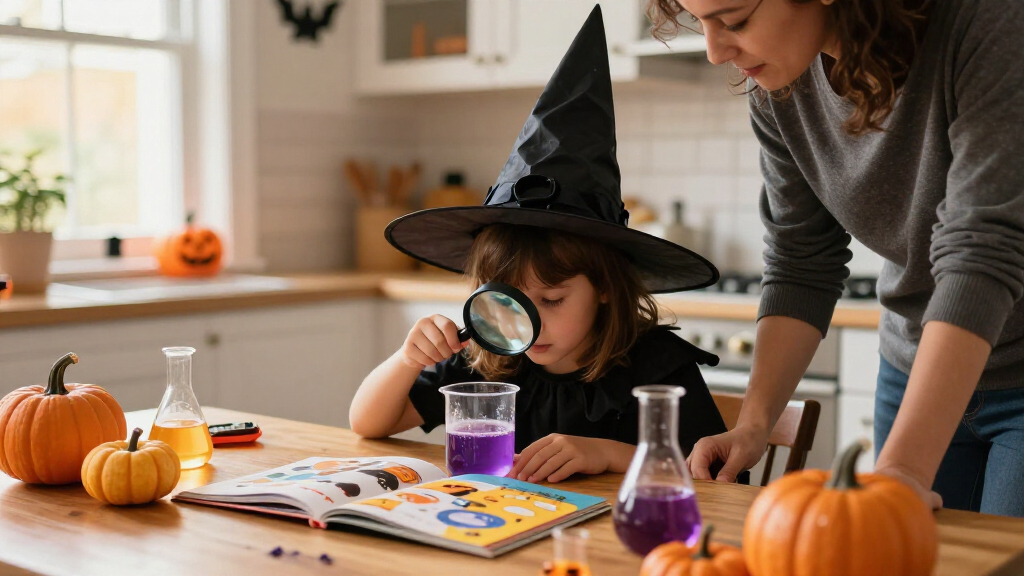
I compared the six books by how well they connect Halloween themes with science, how clearly their stated age ranges signal a reading fit, and what kind of engagement each format supports. I also looked at subject breadth, opportunities for hands-on or visual participation, and whether a book seems designed for independent reading, shared reading, or browsing.
The ranking favors books with a clear match between content, format, and likely reader. The Big Halloween Book of Why ranks first for its broad question-and-answer approach; focused anatomy, preschool play, coloring, bite-sized facts, and beginner reading each earn a distinct place for a narrower need. A broad collection can be less focused, and an activity-led book may offer less continuous science reading, so the best fit depends on what the child will actually enjoy using.
| Halloween science books for kid | Format |
|---|---|
| The Spooky Science of Your Ske | Book |
| Weird But True! Halloween: 300 | — |
| The Big Halloween Book of Why: | — |
| Halloween Under the Microscope | Coloring book |
| Why? Wow! Halloween for Presch | Illustrated Book |
| Halloween | — |
Factors to Consider When Choosing Halloween Science Books For Kids
Choosing a Halloween science book is partly about subject matter and partly about how a child likes to read. I would start with the child’s reading habits, then weigh how much science detail, spooky atmosphere, and participation the book offers.
Match the reading format to the child
A child who reads independently may prefer a clear sequence or short sections they can finish without help. Question-and-answer collections and fact books work well for readers who like opening to any page, though their loose structure may not suit a child who wants a story-like path. For shared reading, look for topics that invite a quick conversation rather than long blocks of text. A common mistake is choosing by age label alone, since reading confidence and attention span can vary widely within the same age group. If possible, preview a sample page and check text density, vocabulary, and illustration support. The format should make it easy to return to the book after Halloween, too.
Decide how much science detail is welcome
Some children want a simple explanation they can repeat, while others want to know why a body, animal, or seasonal phenomenon works the way it does. A single-subject book can build a more connected understanding than a collection of unrelated facts, but it may lose a reader whose curiosity changes by the minute. Broad books create more chances to find a hook, though individual topics may receive less space. Think about whether the child tends to ask follow-up questions or prefers a quick answer and a new subject. For a first science title, clear explanations matter more than dense terminology. Older or especially curious readers may appreciate a narrower subject with room to linger.
Treat the Halloween theme as a gateway
Spooky packaging can draw a child in, but the lasting value comes from the science underneath it. Check whether Halloween is simply a visual theme or whether the questions connect to anatomy, nature, materials, or other concepts. A strong match gives the child a reason to keep reading after the holiday decorations come down. Parents sometimes prioritize the most frightening cover, even when the child is sensitive to skeletons, monsters, or dark imagery. Consider the child’s comfort level and whether the book uses playful illustrations or more realistic pictures. The right amount of spooky atmosphere is the amount that sparks curiosity without putting the book aside.
Choose between reading and doing
Coloring, observation prompts, and simple activities can help a child stay engaged when a conventional nonfiction page feels passive. Those features also change what the book is for: an activity-led title may be better for a short creative session than for sustained reading practice. Check whether activities need supplies, adult help, or repeat use before choosing one as a gift. A child who loves making things may value participation more than the number of facts on each page. A child who wants answers may find too much activity distracting. Consider the setting as well: a read-aloud book suits bedtime, while a coloring book may fit a table or quiet-time routine.
Think about whether the book will be shared
One book may need to work for siblings at different ages, a classroom group, or a single reader. For mixed ages, short questions and visual material can give adults ways to simplify or extend a discussion, though the youngest child may still need help with vocabulary. A leveled early reader can suit a child practicing independence but may feel basic to an older sibling. If the book will be shared, look for a format that supports taking turns and revisiting favorite pages. Also consider durability if children will handle it during activities. A more specialized choice often works best when you know the recipient’s interests, while a varied format can be easier to share across a group.
Frequently Asked Questions
Which type of Halloween science book works best for a child who loses interest quickly?
I would start with a book built from short entries, questions, or visual activities, since a child can get a complete idea without committing to a long chapter. The tradeoff is that a collection may feel less connected than a focused subject book. Let the child choose a page or question, then follow their curiosity instead of reading cover to cover. If they prefer making or coloring, an activity format may hold attention better than a fact-heavy one. A sample page can reveal more about fit than the cover or age label.
Should I choose a book at the child’s age level or one they can grow into?
For a gift they can use right away, reading confidence and interest are better guides than selecting the highest age range. A book that is too difficult may turn an appealing Halloween topic into a frustrating reading task. For a shared read, an adult can explain unfamiliar words and add follow-up questions, which makes a slightly more advanced subject workable. Consider whether the child enjoys being read to or wants to read alone. If independence is the goal, prioritize accessible text and a layout that supports solo reading.
Are fact collections better than a focused science book?
They serve different kinds of curiosity. A fact collection offers variety and makes it easy to browse, which can help a child discover a topic they want to explore further. A focused book can build a more coherent understanding because its ideas stay within one subject. If the child jumps between questions, breadth is likely to be more appealing; if they return to the same topic repeatedly, depth may be more rewarding. Neither format guarantees lasting interest, so consider how the child already chooses books and videos.
Can a Halloween science book work as an early reader?
Yes, if the child’s reading level and the book’s text demands line up. A leveled reader can offer a seasonal subject in a more manageable reading experience, while a science book for older children may use longer explanations and more specialized vocabulary. Look at the amount of text per page, sentence length, and whether pictures help clarify the subject. Some early readers are designed for supported reading, so an adult reading alongside the child can still be part of the experience. If independent practice is the priority, choose for readability before topic breadth.
What should I check before buying an activity-based science book?
Check whether the activities are integrated with explanations or mainly provide a creative task around the theme. Look for any listed supplies, adult guidance, and whether the pages are intended to be written or colored in. That last detail matters if the book may be shared or kept for later use. Think about where the child will use it: a coloring format needs a suitable surface and materials, while a read-aloud title is easier to use in more settings. Activity books are a good fit when participation is part of the appeal, but they may not replace a book chosen for sustained reading.
Conclusion
For the best overall fit, I recommend The Big Halloween Book of Why for curious readers who want many topics to explore. For a focused science subject, choose The Spooky Science of Your Skeleton; for younger beginners, Why? Wow! Halloween for Preschoolers is the age-specific option. I would pick Halloween Under the Microscope for a child who prefers coloring alongside science, and National Geographic Kids Readers: Halloween for early-reading practice. The facts collection suits kids who like quick, surprising snippets. There is no single best format for every child: match the choice to reading confidence, attention style, and the kind of Halloween science that already sparks questions.
Halloween Picks
halloween
As an affiliate, we earn on qualifying purchases.