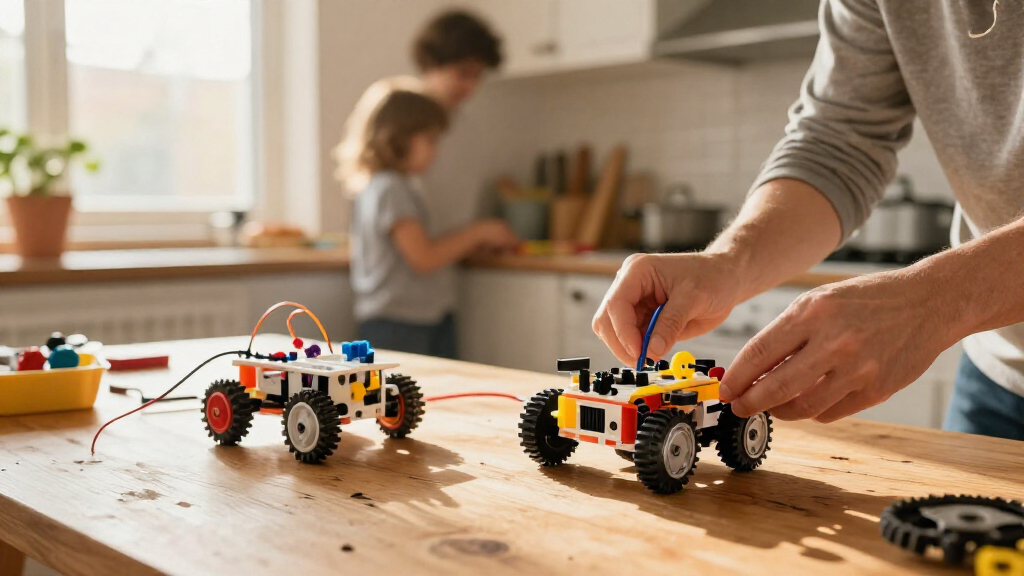

The best STEM gifts for kids turn a child’s curiosity into something they can build, test, or solve. My best overall pick is the Elenco Snap Circuits Explorer SC-100, which makes electronics approachable through hands-on circuit building. For younger beginners, Doctor Jupiter My First Science Experiments Kit offers an accessible starting point, while ThinkFun Gravity Maze is a strong choice for kids who prefer logic challenges over craft projects. The main tradeoffs are age fit, adult help, replay value, and whether the gift teaches through open-ended building or guided activities. Read on for how the 15 options compare and which one best fits your child.

Prime made for students and young adults
- Fast, free delivery for dorm and study essentials
- Prime Video and Amazon Music included
- Member-only deals
Key Takeaways
- Snap Circuits Explorer SC-100 leads for repeatable learning: its component-based electronics projects invite experimentation beyond a single build, while many kits in this group center on a set of activities.
- The strongest beginner options reduce setup friction: Doctor Jupiter’s guided experiments and Gravity Maze’s clear puzzle format are easier entry points than radio, robotics, or multi-step model construction.
- Hands-on does not always mean open-ended: the 3Doodler, building kits, and robotic hand favor making, while Gravity Maze and the FM Radio Kit focus more on structured problem-solving.
- Some gifts depend on adult participation: geode breaking, chemistry activities, and several construction projects may need supervision or help, making them less suitable as fully independent gifts.
- The lineup covers different kinds of STEM curiosity: microscope and root-viewer kits lean toward observation, solar and wind models toward energy concepts, and the coding chameleon toward programmable behavior.
| BeAndge STEM Building Kit for Kids, 5 Projects |  | Best for Variety | Brand: BeAndge | Projects: 5 | Included projects: Solar-powered car, wind-powered car, obstacle-avoidance robot, transmission tank, glider | VIEW LATEST PRICE | See Our Full Breakdown |
| 3Doodler Start+ Essentials 3D Pen Set for Kids, Ages 6+ |  | Best for Screen-Free Creative STEM | Brand and model: 3Doodler Start+ | Age range: 6 years and up | Included components: 3D pen, DoodlePad/Doodlemat, 72 mixed-color plastic strands, USB-C cable, activity guide | VIEW LATEST PRICE | See Our Full Breakdown |
| SCAEMO STEM Science Kits for Kids, 4 Wooden Solar and Wind-Powered Models |  | Best for Learning About Energy | Brand: SCAEMO | Age range: 8–13 years | Number of models: 4 | VIEW LATEST PRICE | See Our Full Breakdown |
| ThinkFun Gravity Maze Marble Logic Game |  | Best for Spatial Reasoning | Brand: ThinkFun | Age range: 8 years and up | Challenges: 60, beginner to expert | VIEW LATEST PRICE | See Our Full Breakdown |
| DIY FM Radio STEM Kit |  | Best for Practical Electronics | Brand: CYOEST | Age range: 8 years and up | FM frequency range: 88–108 MHz | VIEW LATEST PRICE | See Our Full Breakdown |
| National Geographic LED Air Rocket Launcher for Kids |  | Best for Outdoor Physics | Age range: 8–12 years | Maximum launch distance: Up to 100 feet | Power source: Air-powered foot pump | VIEW LATEST PRICE | See Our Full Breakdown |
| Smartivity DIY Robotic Mechanical Hand STEM Toy for Ages 8–14 |  | Best for Hands-On Engineering | Recommended age: 8–14 years | Material: Engineered wood | Theme: Anatomy and robotics | VIEW LATEST PRICE | See Our Full Breakdown |
| National Geographic Break Open 10 Premium Geodes Kit |  | Best for Geology Discovery | Age range: 8 years and up | Geodes included: 10 | Included components: Safety goggles, magnifying glass, display stand, learning guide | VIEW LATEST PRICE | See Our Full Breakdown |
| Doctor Jupiter My First Science Experiments Kit for Kids Ages 4+ |  | Best for Young Beginners | Recommended age: 4 years and up | Number of experiments: Over 100 | Educational focus: Science and STEM | VIEW LATEST PRICE | See Our Full Breakdown |
| BMDSAE 1000x Handheld Digital Microscope for Kids with 2.0-Inch IPS Screen |  | Best for Portable Specimen Exploration | Magnification: Up to 1000x | Camera: 2MP | Screen: 2.0-inch IPS | VIEW LATEST PRICE | See Our Full Breakdown |
| Elenco Snap Circuits Explorer SC-100 STEM Electronics Kit |  | Best for Learning Circuit Basics | Brand: Elenco | Model: SC-100 | Age range: 8 years and up | VIEW LATEST PRICE | See Our Full Breakdown |
| Klutz LEGO Gear Bots STEM Activity Kit for Ages 8–12 |  | Best for Mechanical Motion | Age range: 8–12 years | Number of models: 8 | LEGO elements: 62 | VIEW LATEST PRICE | See Our Full Breakdown |
| Thames & Kosmos My Robotic Pet: Coding Chameleon |  | Best for Screen-Free Coding | Brand: Thames & Kosmos | Model number: 620507 | Age range: 8–12 years | VIEW LATEST PRICE | See Our Full Breakdown |
| Dan&Darci Root Viewer Gardening Kit for Kids |  | Best for Young Plant Scientists | Brand: Dan&Darci | Recommended age: 6–8 years | Educational objective: Botany and plant growth | VIEW LATEST PRICE | See Our Full Breakdown |
| National Geographic Magic Chemistry Set with 10 Experiments for Kids Ages 8–12 |  | Best for Chemistry Demonstrations | Brand: Blue Marble | Model number: NGSCIMAGIC | Age range: 8 years and up | VIEW LATEST PRICE | See Our Full Breakdown |
| STEM gifts for kid | Age range | Brand |
|---|---|---|
| BeAndge STEM Building Kit for | — | BeAndge |
| 3Doodler Start+ Essentials 3D | 6 years and up | — |
| SCAEMO STEM Science Kits for K | 8–13 years | SCAEMO |
| ThinkFun Gravity Maze Marble L | 8 years and up | ThinkFun |
| DIY FM Radio STEM Kit | 8 years and up | CYOEST |
| National Geographic LED Air Ro | 8–12 years | — |
| Smartivity DIY Robotic Mechani | — | — |
| National Geographic Break Open | 8 years and up | — |
| Doctor Jupiter My First Scienc | — | — |
| BMDSAE 1000x Handheld Digital | — | — |
| Elenco Snap Circuits Explorer | 8 years and up | Elenco |
| Klutz LEGO Gear Bots STEM Acti | 8–12 years | — |
| Thames & Kosmos My Robotic Pet | 8–12 years | Thames & Kosmos |
| Dan&Darci Root Viewer Gardenin | — | Dan&Darci |
| National Geographic Magic Chem | 8 years and up | Blue Marble |
More Details on Our Top Picks
BeAndge STEM Building Kit for Kids, 5 Projects
Five different builds make this a strong choice for kids who want to try several kinds of moving machines rather than repeat one activity. The solar-powered car, wind-powered car, obstacle-avoidance robot, transmission tank, and glider give families or classrooms different entry points into hands-on STEM. Compared with SCAEMO’s four-model energy kit, BeAndge adds a robot and tank, so the projects span more mechanisms, though SCAEMO puts a clearer focus on energy conversion. A step-by-step manual and mini screwdriver give children some practical support, but assembly is part of the activity, not a shortcut to immediate play. The age range covers a broad span, so younger builders may need adult help. AA batteries are not included, which can delay powered projects if you don’t have them ready.
Pros:- Five projects offer more variety across vehicles, a robot, and a glider than the four-model SCAEMO kit.
- Step-by-step instructions and a mini screwdriver support the building process.
- Projects can be used for family activities or classroom STEM sessions.
- Hands-on assembly encourages problem-solving and fine motor practice.
Cons:- AA batteries are required for some functions and are not included.
- Assembly takes time and may call for adult help, particularly for younger children.
- The plastic construction may be less appealing to families seeking wooden models.
Best for: Families or teachers seeking several build-and-test projects for children ages 6–14, especially when adults can help younger builders.
Not ideal for: Children who want a ready-to-play toy or households without AA batteries on hand; assembly and battery preparation are required.
- Brand:BeAndge
- Projects:5
- Included projects:Solar-powered car, wind-powered car, obstacle-avoidance robot, transmission tank, glider
- Recommended age:6–14 years
- Educational skills:Coding, concentration, motor skills, problem solving, STEM
- Material:Plastic
- Included tools and instructions:Mini screwdriver; step-by-step manual
- Batteries:AA batteries required; not included
Our verdict“Choose BeAndge for a broad assortment of buildable machines, provided the child is ready for assembly and you can supply AA batteries.”
3Doodler Start+ Essentials 3D Pen Set for Kids, Ages 6+
Where the build kits in this roundup teach through assembling a specific machine, the 3Doodler Start+ turns STEM into open-ended making. Kids can draw with plastic strands, use the included stencils, and turn flat designs into three-dimensional creations. Its touch-safe design with no hot parts suits younger makers who are not ready for a conventional 3D pen, while the DoodlePad and activity guide provide a starting point when freeform ideas are hard to come by. Compared with Gravity Maze, which develops spatial reasoning through fixed logic challenges, this set gives more room for imaginative design but less structured problem-solving. The tradeoff is material dependence: it is designed for 3Doodler Start filaments, so supplies are not interchangeable by default. Its listed size also takes more storage space than a pen alone suggests.
Pros:- No hot parts and touch-safe plastic make it more suitable for young users than conventional hot-nozzle 3D pens.
- Includes 72 mixed-color plastic strands, 10 stencils, a DoodlePad, and an activity guide.
- Supports open-ended, screen-free design rather than a single prescribed build.
- USB-C charging and a slimmer design update the earlier version.
Cons:- Designed for use with 3Doodler Start plastic filaments, limiting material flexibility.
- The kit’s listed dimensions may require more storage space than a pen-only toy.
- Open-ended making may be less satisfying for children who prefer clear, progressively harder challenges like Gravity Maze.
Best for: Caregivers of children six and older who enjoy drawing, crafting, and screen-free creative projects with a STEM angle.
Not ideal for: Families seeking a structured logic game or a kit with broadly compatible filament; this set is tied to 3Doodler Start plastic strands.
- Brand and model:3Doodler Start+
- Age range:6 years and up
- Included components:3D pen, DoodlePad/Doodlemat, 72 mixed-color plastic strands, USB-C cable, activity guide
- Stencils:10
- Safety design:No hot parts; nozzle and plastic designed to be touch-safe
- Dimensions:9.06 × 6.02 × 2.56 inches
- Weight:10.72 ounces
- Warranty:1 year against manufacturer defects
Our verdict“Pick the 3Doodler Start+ for a young creative who wants to design and build freely, not for a child seeking a structured puzzle or machine kit.”
SCAEMO STEM Science Kits for Kids, 4 Wooden Solar and Wind-Powered Models
Energy conversion is the clear teaching focus here: children assemble a solar-powered car and plane, a wind-powered car, and an electric fan, then see how different power sources can drive motion. That makes SCAEMO a more concentrated lesson than BeAndge’s five-project kit, which covers a wider mix of machines and mechanisms. The wooden models and no-weld circuit connections offer a hands-on introduction without requiring soldering, and instructions guide the build. This kit is aimed at ages 8–13, so it suits children ready to follow assembly steps and connect components; it may be a stretch for younger kids compared with BeAndge’s stated starting age of six. The tradeoff is a narrower topic range: all four models serve the energy theme, so children seeking logic puzzles or creative design will find more variety elsewhere in the roundup.
Pros:- Four models demonstrate solar and wind power through different types of moving builds.
- The energy-conversion theme gives the kit a clearer science focus than BeAndge’s broader project mix.
- No-weld circuit connections avoid soldering during assembly.
- Wood construction offers a different feel from the plastic BeAndge kit.
Cons:- The stated age range of 8–13 makes it less suited to younger builders.
- All four activities center on energy-powered models, limiting topic variety.
- Children must assemble the models before using them.
Best for: Children ages 8–13 who are curious about solar and wind power and can follow guided assembly instructions.
Not ideal for: Younger children needing simpler, adult-led projects, or kids who want a wider mix of coding, puzzles, and open-ended building.
- Brand:SCAEMO
- Age range:8–13 years
- Number of models:4
- Included models:Solar-powered car, solar-powered plane, wind-powered car, electric fan
- Material:Wood
- Educational subject:Energy conversion
- Assembly:No welding; instructions included
- Dimensions and weight:9.1 × 5.9 × 2 inches; 0.31 kg
Our verdict“Choose SCAEMO when the goal is a guided, hands-on lesson in solar and wind energy for a school-age builder.”
ThinkFun Gravity Maze Marble Logic Game
Gravity Maze makes spatial reasoning the main event: players arrange towers on a grid to guide a marble to its target. Its 60 challenges, ranging from beginner to expert, provide a clearer progression than the open-ended 3Doodler Start+, which is better for imaginative design than step-by-step logic practice. Unlike the build kits from BeAndge and SCAEMO, this game skips model assembly and gets straight to testing routes, making it a practical choice for a child who likes puzzles more than construction. It can be played alone or worked through with another person, so it also suits shared problem-solving. The tradeoff is that success depends on interpreting challenge cards and planning tower placement; a child who finds that kind of puzzle frustrating may prefer a more guided build. The set includes only three marbles.
Pros:- 60 challenges progress from beginner to expert, giving the game a structured learning curve.
- Tower placement and marble paths exercise spatial reasoning and problem-solving.
- Can support solo play or collaborative challenge-solving.
- Avoids the assembly and batteries required by some powered model kits.
Cons:- Challenge solving may frustrate children who find spatial planning difficult.
- Only three marbles are included.
- Offers less open-ended building than the 3Doodler Start+ or the multi-model kits.
Best for: Children ages 8 and up who enjoy logic puzzles, visual planning, and solving challenges independently or with a partner.
Not ideal for: Kids who prefer making a physical project to solve, or who need an adult to simplify abstract spatial challenges.
- Brand:ThinkFun
- Age range:8 years and up
- Challenges:60, beginner to expert
- Included components:Game grid, 9 towers, 3 marbles, 1 target piece, 60 challenge cards
- Play style:Solo or collaborative
- Color:Multicolor
- Model number:44001006
Our verdict“Choose Gravity Maze for a child who likes structured logic challenges more than assembling powered machines or creating freeform designs.”
DIY FM Radio STEM Kit
Building a working FM radio gives this kit a concrete electronics goal that distinguishes it from the moving models in BeAndge and SCAEMO. Children assemble the circuit without soldering, then use the volume control, retractable antenna, and power indicator as parts of a recognizable device. Its 88–108 MHz FM range keeps the project focused on standard FM reception, while the wooden enclosure gives the finished build a different character from the plastic construction kits. Compared with Gravity Maze, this is more about assembling a functioning object than planning a solution to a puzzle. The tradeoff is that assembly and reception can make the result less predictable than a self-contained logic game, and the kit needs two AA batteries that are not included. It suits a child interested in how electronics work, not someone looking for instant play.
Pros:- A working FM radio gives circuit assembly a practical, easy-to-understand purpose.
- No soldering is required, and instructions are included.
- Retractable antenna, volume control, and power indicator connect components to familiar radio functions.
- Wooden construction sets it apart from the plastic BeAndge building kit.
Cons:- Requires two AA batteries, which are not included.
- Reception is limited to the 88–108 MHz FM band.
- Assembly is required, so it is less suited to children seeking an immediate-use toy.
Best for: Children ages 8 and up who want to assemble a functional electronic device and are curious about radios and circuits.
Not ideal for: Families wanting a battery-ready activity or children who prefer puzzle challenges, open-ended creativity, or projects with no reception-dependent outcome.
- Brand:CYOEST
- Age range:8 years and up
- FM frequency range:88–108 MHz
- Power source:2 AA batteries; not included
- Material:Wood
- Size:2.16 × 3.54 × 2.75 inches
- Assembly:No soldering required
- Included components and warranty:Speaker; 2-year limited warranty
Our verdict“Pick this kit for a child ready to assemble an FM radio and explore basic circuits, as long as you can supply two AA batteries.”
National Geographic LED Air Rocket Launcher for Kids
For kids who learn by launching, adjusting, and trying again, this set makes flight and motion visible in a way a tabletop kit cannot. The foot pump sends foam-tipped rockets up to 100 feet, and the adjustable tube lets children compare how launch angle changes a flight. Its learning guide gives those repeated launches a physics focus, while switchable LEDs add a nighttime-play option. Compared with the Smartivity Robotic Mechanical Hand, this is less about careful building and more about quick experiments with immediate results. That makes it easier to share outdoors, but it also needs open space and adult help may be useful when setting up experiments. The rockets’ lights require batteries, and this is a poor fit for families without a suitable outdoor launch area.
Pros:- Foot-powered launches reach up to 100 feet without a motor
- Adjustable launch angle supports experiments with flight paths
- Three foam-tipped rockets have switchable LED lights
- Learning guide connects play to motion and aerodynamics
Cons:- Needs a clear outdoor area for launches
- Rocket LEDs require batteries
Best for: Families with children ages 8–12 who have outdoor space and want an active way to explore basic physics.
Not ideal for: Apartment dwellers or families seeking a compact, indoor STEM activity, since launching requires open space.
- Age range:8–12 years
- Maximum launch distance:Up to 100 feet
- Power source:Air-powered foot pump
- Rockets:3 foam-tipped rockets with switchable LED lights
- Launch tube:Adjustable angle
- Included components:Launcher, 3 rockets, full-color learning guide
- Educational objective:Physics
Our verdict“Choose this for an energetic outdoor physics activity; pick the Smartivity Robotic Mechanical Hand instead for a build-focused project.”
Smartivity DIY Robotic Mechanical Hand STEM Toy for Ages 8–14
This kit gives kids a tangible way to explore how a mechanical system can imitate a hand, making it a strong pick for patient builders interested in robotics and anatomy. Step-by-step instructions guide the assembly, and the finished project offers a physical result to examine rather than a series of one-off experiments. Compared with the National Geographic LED Air Rocket Launcher, it trades fast, outdoor action for a more focused, screen-free construction activity. Engineered wood and included replacement parts support the build, but assembly is part of the experience—not a shortcut to instant play. Children who find multi-step projects frustrating may need adult support, and those who prefer chemistry-style experimentation may get more variety from the Doctor Jupiter My First Science Experiments Kit.
Pros:- Step-by-step instructions guide the construction process
- Working hand connects mechanics with anatomy and robotics
- Screen-free activity encourages hands-on exploration
- Engineered wood construction and replacement parts are included
Cons:- Requires assembly before the finished hand can be explored
- May need adult support for children who struggle with multi-step builds
Best for: Ages 8–14 who enjoy following build instructions and want a screen-free introduction to mechanical motion.
Not ideal for: Kids looking for an activity they can use immediately or who lose interest during multi-step assembly.
- Recommended age:8–14 years
- Material:Engineered wood
- Theme:Anatomy and robotics
- Educational objective:STEM
- Item dimensions:11.81 × 9.8 inches
- Set name:Smartivity DIY Robotic Mechanical Hand STEM
- Manufacturer part number:SMRT1135
Our verdict“Pick this for a child who wants to build and study a moving mechanism, rather than run a collection of separate experiments.”
National Geographic Break Open 10 Premium Geodes Kit
The appeal here is the reveal: children crack open 10 natural geodes and inspect the crystals inside, turning geology into a hands-on discovery rather than a diagram. A magnifying glass, display stand, goggles, and full-color guide support both examining the specimens and learning how geodes form. Compared with the Doctor Jupiter My First Science Experiments Kit, this offers fewer kinds of activities, but its focus is more direct and the specimens can remain interesting after the opening session. The main tradeoff is that the geodes must be broken to see their interiors, so this is a supervised activity, not a ready-to-go tabletop exploration. Kids who want repeated experiments with varied materials may prefer Doctor Jupiter’s broader activity set.
Pros:- Includes 10 natural geodes with varied crystal interiors
- Goggles are included for opening the specimens
- Magnifying glass helps children inspect crystal details
- Guide explains geode formation, and a stand supports display
Cons:- Geodes must be cracked open to reveal the crystals
- Opening specimens calls for adult supervision and a suitable work area
Best for: Children ages 8 and up who are curious about rocks, crystals, and collecting specimens, with an adult available for opening the geodes.
Not ideal for: Families seeking a low-mess, repeatable activity that children can complete independently.
- Age range:8 years and up
- Geodes included:10
- Included components:Safety goggles, magnifying glass, display stand, learning guide
- Educational objective:STEM
- Material type:Crystal
- Item dimensions:2.75 × 7.75 × 12 inches
- Item weight:2.1 pounds
- Model number:NGGEO10
Our verdict“Choose this for a child drawn to real rocks and the excitement of discovery; choose Doctor Jupiter for a wider range of repeatable activities.”
Doctor Jupiter My First Science Experiments Kit for Kids Ages 4+
For younger children just starting with science activities, this kit stands out for variety and guided exploration: it includes supplies and illustrated instructions for more than 100 experiments. Beakers, a flask, goggles, and other tools give simple activities a recognizable lab feel, while the age recommendation of 4 years and up makes it a younger-child alternative to the National Geographic Break Open 10 Premium Geodes Kit, which is recommended for ages 8 and up. The tradeoff is that an experiment count does not mean every activity is independent or endlessly repeatable. Some require adult participation, and included consumable ingredients can run out. Compared with the geode kit’s one focused discovery, this offers more variety, but families should expect to supervise and manage supplies.
Pros:- Offers more than 100 guided experiments
- Illustrated step-by-step instructions support young beginners
- Includes lab-style tools such as beakers, a flask, and goggles
- Hands-on activities introduce science and STEM concepts
Cons:- Some experiments require adult participation or supervision
- Activities depend partly on included consumable ingredients
Best for: Families with children ages 4 and up who want guided, varied science activities and can provide adult supervision.
Not ideal for: Caregivers seeking a fully independent kit or an activity set that does not rely on consumable ingredients.
- Recommended age:4 years and up
- Number of experiments:Over 100
- Educational focus:Science and STEM
- Included tools:2 beakers, conical flask, spatula, 2 stirring sticks, 2 spray bottles, 2 cups, funnel, safety goggles, tray
- Other included materials:Food essences, food additives, dried leaves, food colors
- Instructions:Instruction manual and bonus experiment booklet
- Safety standard:ASTM F963-17
Our verdict“Choose this for a young beginner who benefits from variety and guided experiments, provided an adult can help with activities and supplies.”
BMDSAE 1000x Handheld Digital Microscope for Kids with 2.0-Inch IPS Screen
This handheld microscope suits children who want to inspect small objects and save what they find, with a built-in screen and photo and video storage that make observations easier to share. Its manual focus gives kids control over sharpening an image, which can make magnification a more active learning task, though it also takes practice. Compared with the National Geographic Break Open 10 Premium Geodes Kit, it can be used on many different specimens instead of centering on a fixed set of rocks. The tradeoff is that its listed magnification does not replace the need for steady focusing, and the battery is rated for up to two hours. It is a portable exploration tool, not a structured experiment kit like Doctor Jupiter’s set.
Pros:- Built-in 2.0-inch IPS screen shows observations without a separate display
- Manual focus lets users adjust the image themselves
- Adjustable LEDs offer three brightness modes
- Stores photos and AVI videos and connects through USB-C
Cons:- Battery life is listed as up to two hours
- Manual focus takes practice and may frustrate younger users
Best for: Curious children who want to examine different small objects, save images, and carry a compact microscope between activities.
Not ideal for: Kids who need a guided, ready-made sequence of experiments or may find manual focusing frustrating.
- Magnification:Up to 1000x
- Camera:2MP
- Screen:2.0-inch IPS
- Lighting:8 adjustable LEDs with 3 brightness modes
- Battery:600mAh; up to 2 hours
- Storage:32M; supports 200+ photos or AVI videos
- Connectivity:USB-C
- Weight:200g
Our verdict“Choose this for a portable, reusable specimen-viewing tool; pick Doctor Jupiter’s kit for structured activities with instructions and supplies.”
Elenco Snap Circuits Explorer SC-100 STEM Electronics Kit
For kids curious about how switches, lights, and other electronic parts work together, the SC-100 offers a direct, hands-on introduction to circuitry. Its 29 color-coded, numbered components snap onto a grid, so children can focus on building and observing circuits rather than handling tools or solder. The illustrated guide supports more than 100 projects, giving it a longer runway than the National Geographic Magic Chemistry Set, which centers on 10 demonstrations. That breadth favors repeat experimentation, though the projects stay within the kit’s electronic components rather than branching into several areas of STEM. It suits independent builders around age eight and up, but younger children may need help following diagrams. Batteries are not included, so they need to be on hand before the first build.
Pros:- Snap-together parts let kids build circuits without soldering or extra tools.
- Color-coded, numbered components make parts easier to identify during assembly.
- More than 100 projects offer repeated opportunities to explore circuit behavior.
- Illustrated instructions guide children through practical electronics activities.
Cons:- Batteries are not included, so the kit may not be ready to use immediately.
- Its focus is electronics rather than a broad mix of STEM subjects.
Best for: Families seeking a screen-free, repeatable introduction to circuits for children aged eight and up who enjoy building from illustrated instructions.
Not ideal for: Gift-givers who need a complete, ready-to-use kit, since batteries are not included, or children more interested in biology and open-ended construction.
- Brand:Elenco
- Model:SC-100
- Age range:8 years and up
- Project count:100+
- Component count:29 parts
- Assembly method:Snap-on grid
- Power source:Batteries, not included
Our verdict“Choose the SC-100 for a child ready to explore electronics through many guided builds, but plan to provide batteries separately.”
Klutz LEGO Gear Bots STEM Activity Kit for Ages 8–12
The Gear Bots kit turns mechanics into creatures kids can build and crank, linking axles, cams, and cranks to visible movement. Eight models, including an octopus and pterodactyl, give the concepts a playful context, while the 64-page book walks builders through each assembly. Compared with the Elenco Snap Circuits Explorer SC-100, this is less about electrical systems and more about how mechanical parts transfer motion; its hand-cranked designs also need no batteries. The LEGO Technic elements add familiar construction pieces, but the papercraft components make the finished models less like durable all-LEGO builds. Each bot must be operated manually, so this is a better fit for kids who enjoy making and demonstrating a mechanism than for those expecting a self-moving robot. The stated age range is 8–12.
Pros:- Eight creature models let children explore moving mechanisms through varied builds.
- The 64-page book pairs step-by-step assembly with explanations of mechanical concepts.
- Manual cranks make the movement easy to observe without batteries.
- Combines LEGO Technic elements with papercraft for a distinctive building activity.
Cons:- Models must be cranked by hand rather than moving independently.
- Papercraft elements may be less durable than an all-plastic construction set.
- The age range is specifically aimed at children 8–12.
Best for: Ages 8–12 who like construction projects and want to see how cams, cranks, and axles create movement.
Not ideal for: Children looking for a programmable or self-powered robot, or builders who want models made entirely from reusable LEGO pieces.
- Age range:8–12 years
- Number of models:8
- LEGO elements:62
- Papercraft sheets:10
- Book length:64 pages
- Operation:Manual crank
- Dimensions:10 x 10 x 1.5 inches
- Weight:16 ounces
Our verdict“Pick Gear Bots for an 8–12-year-old who wants to build and operate playful mechanical models, not a powered robot.”
Thames & Kosmos My Robotic Pet: Coding Chameleon
This pick gives coding a physical form: children use action cards to program a robotic chameleon, then explore its sensor-driven responses and color-changing lights. Its Coding, Wild, and Pet modes offer different ways to interact, making it more like an ongoing robotic pet than the Klutz LEGO Gear Bots, whose creatures move only when a child turns a crank. The 48-page manual also introduces biomimicry and engineering design, so the play connects to how animals respond to their surroundings. The tradeoff is a more involved build: children under 12 may need adult help, and batteries are not included. At 15 inches long, it also calls for more display and play space than a compact activity kit. Choose it for a child excited by both animal behavior and programming logic.
Pros:- Physical action cards introduce screen-free coding.
- Coding, Wild, and Pet modes provide different ways to engage with the model.
- Color and infrared sensors support interactive responses.
- The manual connects the build to biomimicry and engineering design.
Cons:- Children under 12 may need adult assistance with assembly.
- Batteries are not included, so additional supplies are needed.
- The 15-inch model takes more space than smaller tabletop STEM activities.
Best for: Children aged 8–12 who want a buildable robotic pet and enjoy learning coding concepts without a screen.
Not ideal for: Gift-givers seeking a quick, self-contained activity or children who need to assemble the model entirely without adult support.
- Brand:Thames & Kosmos
- Model number:620507
- Age range:8–12 years
- Length:15 inches
- Sensors:Color sensor and infrared sensor
- Lighting:RGB LEDs
- Included components:Plastic building parts and manual
- Power:Batteries; Duracell recommended, not included
Our verdict“Choose the Coding Chameleon for a child who wants a hands-on, screen-free coding project with pet-like play after assembly.”
Dan&Darci Root Viewer Gardening Kit for Kids
Where many STEM kits focus on building a device or completing a set experiment, the Root Viewer turns plant growth into an ongoing observation project. Its transparent planter lets children see roots develop, while spring onion and cilantro seeds, soil, stickers, and an instruction guide make the activity accessible to young gardeners. For ages 6–8, it offers a gentler entry point than the Elenco Snap Circuits Explorer SC-100, which targets children eight and up and asks them to follow circuit diagrams. The tradeoff is a narrower subject: only two seed types are included, and the planter is just two inches wide, limiting what can be grown inside it. Plant growth also unfolds over time, so this is better for patient observers than kids looking for an immediate build-and-play result.
Pros:- Transparent planter makes root development visible.
- Includes soil and seeds for spring onion and cilantro.
- Growth-tracking stickers encourage children to follow plant changes.
- Indoor format suits families without a garden.
Cons:- Only spring onion and cilantro seeds are included.
- The planter is just 2 inches wide, limiting growing space.
- Plant growth takes time, so the activity does not provide an immediate result.
Best for: Children aged 6–8 who enjoy gardening, drawing or tracking changes, and observing living things over time.
Not ideal for: Kids who want a quick activity or families seeking a broad botany kit with several plant varieties and room for larger growth.
- Brand:Dan&Darci
- Recommended age:6–8 years
- Educational objective:Botany and plant growth
- Included seeds:Spring onion and cilantro
- Included contents:Transparent viewer box with lid, soil, seeds, stickers, and instruction guide
- Dimensions:7.5 x 2 x 5.5 inches
- Weight:0.39 kg
- Number of items:10
Our verdict“Choose this kit for a young child who will enjoy checking plant growth over time, rather than expecting a quick experiment.”
National Geographic Magic Chemistry Set with 10 Experiments for Kids Ages 8–12
This kit packages 10 chemistry experiments as magic tricks, giving children a playful way to demonstrate changes such as floating a coin, shifting liquid colors, or making instant snow. The illustrated guide explains the science behind the effects, so the performance can lead into questions about what caused each result. Compared with the Dan&Darci Root Viewer Gardening Kit, which rewards patient observation over days, this set offers more immediate, step-by-step activities. Its focus is narrower than the Elenco Snap Circuits Explorer SC-100, however: it introduces chemistry through a fixed collection of experiments rather than supporting many different circuit builds. The wand and gloves add to the magic-show framing, but the experience depends on the supplied experiment materials and instructions. It suits children aged eight and up who like demonstrations; it is less suited to open-ended construction.
Pros:- Ten experiments present chemistry concepts through magic-style demonstrations.
- The illustrated guide explains the science behind the tricks.
- Includes a wand and gloves to support the performance theme.
- Kid-friendly instructions make the activities approachable for the stated age group.
Cons:- The set is focused on guided chemistry demonstrations rather than open-ended building.
- Its stated age range begins at eight, making it less suitable for younger children.
Best for: Children aged eight and up who enjoy performing science demonstrations and want explanations to accompany each trick.
Not ideal for: Kids seeking open-ended building, repeated redesign, or a long-term observation project rather than a set of guided experiments.
- Brand:Blue Marble
- Model number:NGSCIMAGIC
- Age range:8 years and up
- Experiment count:10
- Educational objective:STEM chemistry
- Included components:Magic wand, gloves, full-color learning guide, and materials for 10 experiments
Our verdict“Choose this set for an eight-and-up child who will enjoy performing guided chemistry tricks and learning the explanation behind them.”
How We Picked
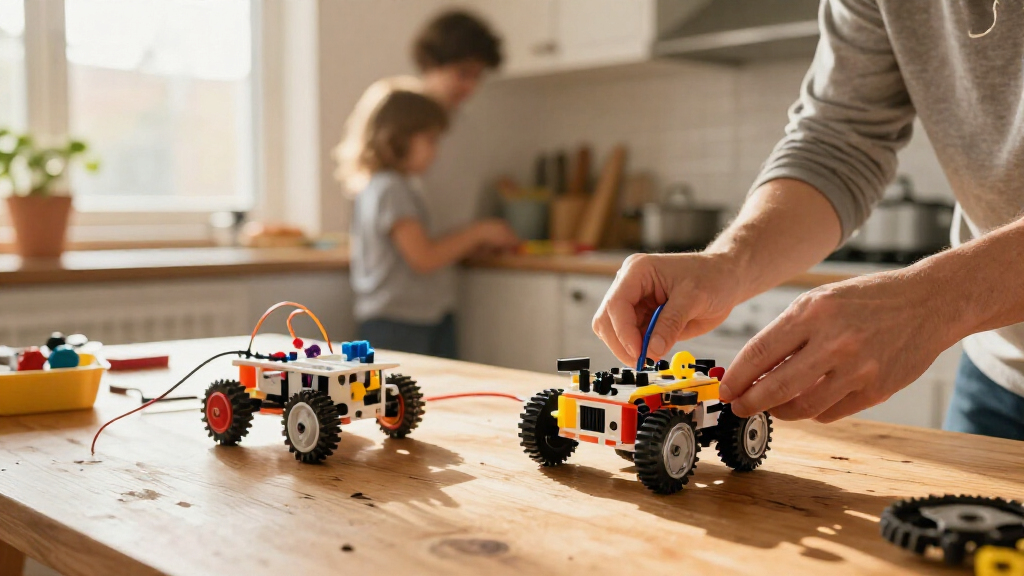
I compared these gifts by how clearly they connect play with a STEM idea, how approachable the activities appear for the stated age range, and how much a child can do without an adult taking over. I also weighed build complexity, opportunities to experiment or repeat activities, and whether the main materials and format suit the product’s intended use. These criteria matter because a clever concept can still disappoint if setup is difficult or the activity ends after one demonstration.
The ranking favors gifts with a useful balance of hands-on learning, accessibility, and continued play. Snap Circuits ranks first because its modular format supports repeated circuit experiments; guided science kits and logic games follow for their clear entry points. More specialized options—such as the digital microscope, geodes, and gardening kit—rank for particular interests rather than broad appeal. A lower position does not mean a poor gift; it often reflects a narrower age fit, more adult involvement, or a less reusable activity.
Factors to Consider When Choosing STEM Gifts For Kids
Before choosing, match the activity to how the child likes to learn. A gift that suits their patience, confidence, and interests is more likely to get used than one with the widest-sounding subject list.
Match the challenge to the child, not just the age label
Age guidance is a useful first filter, but it cannot capture every child’s reading level, fine-motor confidence, or tolerance for trial and error. A younger child may enjoy a guided experiment with an adult, while an older child may prefer a puzzle or build that leaves room to troubleshoot. Check whether the activity relies on small parts, written instructions, or careful assembly. A common mistake is choosing a kit that seems ambitious but requires an adult to perform most of the interesting steps. When in doubt, favor a project with clear early wins and optional harder challenges. That keeps the gift engaging without making it feel like homework.
Choose a learning style the child already enjoys
STEM can mean constructing, observing, coding, testing reactions, or solving a spatial puzzle. Think about whether the child prefers making something tangible, watching a process, or figuring out a problem with a definite answer. A hands-on builder may engage more with a robotic hand or gear model than with a set of demonstrations. A child fascinated by nature may get more from growing roots or examining specimens than from electronics. Do not choose only by the subject printed on the box; the activity format often matters more than the topic. A good match feels like play first, with the learning built into the process.
Check how much adult help the project needs
Some kits are best enjoyed together, while others are designed for a child to work through independently. Look for clues such as setup steps, safety directions, tool requirements, and whether an adult must prepare materials before each activity. Supervision can make experiments safer and more rewarding, but it changes the gift from solo play into a shared project. If the child will use it without a parent nearby, choose a format with straightforward instructions and manageable steps. Avoid assuming that a kit labeled for kids is automatically self-guided. Thinking about available adult time can prevent a promising gift from sitting unopened.
Consider replay value and what happens after the first project
A kit with multiple activities may still have limited replay if each one follows a fixed recipe. Modular parts, adjustable challenges, and room to modify a design can keep a child experimenting after the instructions are complete. By contrast, a one-time discovery activity can be a satisfying gift when the child is especially interested in the reveal or result. Ask whether the materials are reusable, consumable, or tied to a single build. A common buying error is counting projects without asking whether they lead to different kinds of play. For a child who returns to favorite toys repeatedly, favor kits that support new combinations or self-directed tests.
Think about space, cleanup, and storage
STEM gifts can involve small components, messy materials, a work surface, or a model that remains assembled between sessions. Consider where the child will use the kit and whether its parts can be stored without losing the next activity. Chemistry and craft-style projects may need a protected area and cleanup help, while compact puzzle or handheld options can fit into shorter play sessions. Large builds may be rewarding but can compete with shared table space. Check whether the kit needs extra household supplies or batteries before gifting it. Practical fit is part of play value: an activity that is easy to set up and put away is more likely to be used often.
Pay for a better fit, not a bigger feature list
More components, a screen, or a longer project list do not automatically create a better learning experience. Spend more only when the added format solves a real need, such as supporting repeated experimentation, a strong interest in a specific subject, or use across several skill levels. For a first science gift, a simple guided activity may be more rewarding than a complex kit with a steep setup curve. For a committed hobbyist, a specialized tool or build can feel more personal than a broad introductory set. Compare what the child will actually do with the kit, not just the number of included parts. The best choice is the one that fits their attention and interests, rather than the one with the most ambitious promise.
Frequently Asked Questions
Which STEM gift is a good first choice for a child who has not used a kit before?
Choose a gift with short, clearly guided activities and a low barrier to getting started. Doctor Jupiter’s science experiments suit children who enjoy demonstrations, while Gravity Maze works well for kids who like puzzles and can follow a visual challenge. The better fit depends on whether the child prefers doing an experiment or solving a problem. Avoid starting with a complex build if they get frustrated by long instructions or small assembly steps. An adult joining the first session can help the child learn how the kit works without taking over the activity.
Which option is most likely to keep a child experimenting after the instructions end?
Look for a kit that allows parts to be rearranged or a design to be changed, rather than one that only leads to a fixed finished result. Snap Circuits is a strong candidate because its electronics format supports trying different component combinations. Building and robotics kits can also invite modifications, depending on the child’s interest in construction. A guided experiment set may offer several activities but less open-ended play once those instructions are complete. If long-term exploration matters most, choose a subject the child already likes and check whether the materials can be reused.
Are STEM kits suitable as independent gifts, or should I expect to help?
It depends on the child’s age, confidence, and the project format. Logic games and some guided activities may be manageable alone, while construction, chemistry, and specimen-based projects can call for setup, safety supervision, or help interpreting instructions. Read the age guidance and activity details with the child’s abilities in mind rather than assuming the label guarantees independence. If you want a gift they can use solo, prioritize clear steps, limited preparation, and easy cleanup. If shared time is welcome, an adult-assisted kit can turn the activity into a useful family project.
How do I choose between a screen-based or coding toy and a hands-on building kit?
Start with the kind of play the child chooses when no one directs them. A child who likes assembling, drawing, or manipulating objects may connect more with a build or creative tool; one who enjoys cause-and-effect challenges may be drawn to coding or robotics. Also check whether the digital element adds meaningful problem-solving or mainly serves as a control method. Hands-on kits can still require careful instructions, and coding toys can still involve physical play, so the labels alone are not enough. If possible, favor a format that links a visible action to an understandable result.
What should I check before gifting a science kit to a child who will use it at home?
Review the recommended age, safety instructions, included materials, and any supplies the family must provide. Consider whether activities need a clear work surface, water, batteries, tools, or adult preparation, since these details can affect when the kit gets used. For experiments that involve breaking, mixing, or small components, check what supervision is advised and whether the household has a suitable place for the activity. Storage matters too: loose pieces can disappear if there is no easy way to keep them together. A quick check of these practical needs helps the gift fit the home as well as the child’s interests.
Conclusion
For the broadest mix of repeatable learning and approachable experimentation, I recommend the Elenco Snap Circuits Explorer SC-100 as best overall. My best value pick is ThinkFun Gravity Maze for a child who enjoys logic challenges and wants a gift that can be replayed in different ways. For beginners, choose Doctor Jupiter My First Science Experiments Kit when guided activities feel less intimidating than a build. The National Geographic LED Air Rocket Launcher is my best premium-style pick for active, outdoor play, while the BMDSAE digital microscope is better for a child specifically drawn to close-up observation. If the child’s interest is already clear, match the gift to it: circuits for electronics, the coding chameleon for programmable play, or the root viewer for plant growth. That interest match matters more than choosing the most complex kit.