
Finding the right science reference book for students comes down to one big tradeoff: depth versus accessibility. After comparing 15 popular titles across grade levels, subjects, and formats, The Science Book: Everything You Need to Know About the World and How It Works stands out as the best overall pick because it covers physics, chemistry, biology, and earth science in one visually organized volume that works from middle school through high school. Younger learners are better served by The Usborne Science Encyclopedia, which pairs clear explanations with internet-linked topics, while high schoolers studying for exams will get more mileage from the QuickStudy laminated guides in physiology and biology. The main decisions you’ll face are whether to buy a broad encyclopedia or a subject-specific reference, whether visual or text-heavy layouts suit your student, and how much to spend on a single volume versus building a small shelf. Keep reading for the full breakdown, including which books are worth the premium price and which ones fall short for older students.

Prime made for students and young adults
- Fast, free delivery for dorm and study essentials
- Prime Video and Amazon Music included
- Member-only deals
Key Takeaways
- Single-volume encyclopedias like The Science Book and National Geographic Kids Science Encyclopedia outperformed subject-specific titles for general homework help, but lost to QuickStudy guides once students needed exam-depth detail.
- Age labeling on these books is generally reliable, but visual-heavy titles like Knowledge Encyclopedia: Science read a full grade level or two younger than their stated range.
- The two atlases in this lineup (Student World Atlas and National Geographic Student World Atlas) only make sense as supplements — neither replaces a core science reference, which is why they rank lower despite strong quality.
- Laminated QuickStudy guides deliver the best cost-per-use value in the roundup at under $10, but only cover one subject each, so they work best as add-ons rather than standalone references.
- The American Heritage and Oxford student science dictionaries overlap heavily; choosing between them comes down to curriculum style rather than content quality.
| Physiology: QuickStudy Laminated Reference Guide |  | Best for Exam Cramming | Format: Laminated tri-fold reference guide | Subject: Human physiology | Audience: High school, college, and professional students | VIEW LATEST PRICE | See Our Full Breakdown |
| Biology: A QuickStudy Laminated Reference Guide | 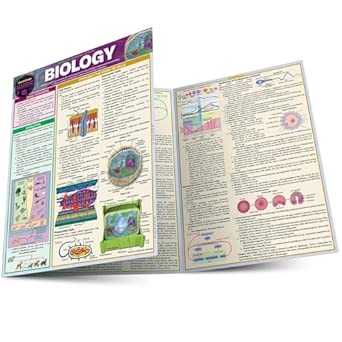 | Best Pocket Companion | Format: Laminated reference guide | Subject: General biology | Audience: High school and introductory college students | VIEW LATEST PRICE | See Our Full Breakdown |
| Everything You Need To Know About Science Homework: A Desk Reference for Students and Parents – 4th to 6th Grades |  | Best for Homework Help | Format: Paperback desk reference | Grade level: 4th through 6th grade | Audience: Students and parents | VIEW LATEST PRICE | See Our Full Breakdown |
| The Usborne Science Encyclopedia: An In-depth Guide for Young Scientists Exploring Gravity, Flight, Genes, DNA and More |  | Best Multimedia Encyclopedia | Format: Hardcover encyclopedia with digital links | Topics: Gravity, flight, genetics, DNA, and more | Multimedia: 180+ video clips, 1,000 recommended websites | VIEW LATEST PRICE | See Our Full Breakdown |
| Illustrated Elementary Science Dictionary: An Essential Reference for Kids Ages 7-10 |  | Best for Young Readers | Format: Illustrated dictionary | Age range: 7-10 years | Content: Basic science definitions with visuals | VIEW LATEST PRICE | See Our Full Breakdown |
| The American Heritage Student Science Dictionary, Second Edition |  | Best Vocabulary Builder | Format: Paperback | Edition: Second Edition | Publisher: Houghton Mifflin Harcourt | VIEW LATEST PRICE | See Our Full Breakdown |
| Oxford Student’s Science Dictionary |  | Best Budget-Friendly Dictionary | Format: Paperback | Publisher: Oxford University Press | Grade Level: Upper Elementary to Middle School | VIEW LATEST PRICE | See Our Full Breakdown |
| Student World Atlas, 9th Edition |  | Best Value Atlas | Format: Paperback | Edition: 9th Edition | Publisher: DK | VIEW LATEST PRICE | See Our Full Breakdown |
| Earth Science: A Reference Guide |  | Best Subject-Specific Reference | Format: Paperback | Publisher: Independent educational publisher | Grade Level: Middle to High School | VIEW LATEST PRICE | See Our Full Breakdown |
| National Geographic Student World Atlas, 6th Edition |  | Best Premium Atlas | Format: Hardcover/paperback | Edition: 6th Edition | Publisher: National Geographic | VIEW LATEST PRICE | See Our Full Breakdown |
| Science Book: Everything You Need to Know About the World and How It Works |  | Best All-in-One Overview | Publisher: National Geographic | Format: Hardcover | Coverage: Physics, chemistry, biology, Earth science, space | VIEW LATEST PRICE | See Our Full Breakdown |
| Knowledge Encyclopedia: Science for Children |  | Best for Younger Readers | Format: Hardcover encyclopedia | Target audience: Elementary-aged children (approx. 6–10) | Coverage: General science concepts and discoveries | VIEW LATEST PRICE | See Our Full Breakdown |
| National Geographic Kids Science Encyclopedia: Atom Smashing, Food Chemistry, Animals, Space, and More! |  | Best for Curious Upper-Elementary Kids | Publisher: National Geographic Kids | Format: Hardcover | Target audience: Ages 8–12 | VIEW LATEST PRICE | See Our Full Breakdown |
| The Way Things Work: Newly Revised Edition |  | Best for Engineering-Minded Students | Author: David Macaulay | Format: Hardcover | Focus: Machines, engineering, and everyday technology | VIEW LATEST PRICE | See Our Full Breakdown |
| The Complete Human Body: The Definitive Visual Guide |  | Best Deep-Dive for Biology Students | Publisher: DK | Format: Hardcover | Subject: Human anatomy and physiology | VIEW LATEST PRICE | See Our Full Breakdown |
| science reference books for student | Format | Depth | Publisher |
|---|---|---|---|
| Physiology: QuickStudy Laminat | Laminated tri-fold reference guide | Concise diagrams and terminology | — |
| Biology: A QuickStudy Laminate | Laminated reference guide | Concise key facts and definitions | — |
| Everything You Need To Know Ab | Paperback desk reference | — | — |
| The Usborne Science Encycloped | Hardcover encyclopedia with digital links | In-depth topical coverage | — |
| Illustrated Elementary Science | Illustrated dictionary | Simple definitions of core concepts | — |
| The American Heritage Student | Paperback | — | Houghton Mifflin Harcourt |
| Oxford Student’s Science Dicti | Paperback | — | Oxford University Press |
| Student World Atlas | Paperback | — | DK |
| Earth Science: A Reference Gui | Paperback | — | Independent educational publisher |
| National Geographic Student Wo | Hardcover/paperback | — | National Geographic |
| Science Book: Everything You N | Hardcover | Introductory overview | National Geographic |
| Knowledge Encyclopedia: Scienc | Hardcover encyclopedia | Introductory | — |
| National Geographic Kids Scien | Hardcover | Intermediate for children | National Geographic Kids |
| The Way Things Work: Newly Rev | Hardcover | — | — |
| The Complete Human Body: The D | Hardcover | Detailed specialist reference | DK |
More Details on Our Top Picks
Physiology: QuickStudy Laminated Reference Guide
Where most picks in this roundup trade depth for readability, this guide strips physiology down to what you actually need at 11 p.m. before an exam. The laminated tri-fold format survives backpack abuse and spilled coffee in a way that The Usborne Science Encyclopedia never could, and it folds small enough to review on a bus. Compared with Biology: A QuickStudy Laminated Reference Guide, this one goes deeper into body systems, which matters for nursing and pre-med students. The tradeoff is real: there are no explanations, only dense labeled diagrams and terminology, so a student who hasn’t attended lectures will be lost. Treat it as a memory jogger, not a teacher.
Pros:- Extremely durable laminated pages that withstand daily handling
- Condenses an entire semester of systems into one foldable sheet
- Fastest lookup speed of any format here
- Portable enough to study anywhere
Cons:- Assumes prior knowledge; provides no conceptual explanations
- Physiology only — students needing broader coverage should look elsewhere
Best for: Nursing, pre-med, and AP students who need rapid review of body systems before exams
Not ideal for: Students learning physiology for the first time — there is no narrative explanation to build understanding from
- Format:Laminated tri-fold reference guide
- Subject:Human physiology
- Audience:High school, college, and professional students
- Durability:Water-resistant lamination
- Depth:Concise diagrams and terminology
- Use case:Exam review and quick lookup
Our verdict“Buy this if you already understand the material and need a bulletproof, ultra-fast revision sheet, not a textbook replacement.”
Biology: A QuickStudy Laminated Reference Guide
This is the generalist sibling of the Physiology QuickStudy guide, trading that title’s specialized depth for a sweep across cell biology, genetics, ecology, and classification. For a student juggling multiple science subjects, that breadth in a pocket-sized, laminated sheet is the whole point — it’s the reference you keep in a binder all semester rather than pulling off a shelf. Against fuller books like The American Heritage Student Science Dictionary, it obviously loses on detail, but it wins on speed: a definition takes five seconds to find here. The honest drawback is that advanced students will hit its ceiling quickly, and there are no practice questions or online extras to extend it.
Pros:- Covers the full breadth of introductory biology in one sheet
- Laminated pages hold up to years of binder storage
- Faster than any dictionary for on-the-spot lookups
- Lightweight enough to carry to every class
Cons:- Outline format with minimal explanatory context
- Too shallow for advanced coursework
- No supplementary online or practice materials
Best for: High school and intro college biology students who want a durable cheat-sheet for quick recall
Not ideal for: AP Biology or college majors needing process explanations — the outline format stops at definitions
- Format:Laminated reference guide
- Subject:General biology
- Audience:High school and introductory college students
- Durability:Spill-resistant laminate
- Depth:Concise key facts and definitions
- Use case:Daily quick reference and study review
Our verdict“The cheapest, toughest quick-recall tool here — ideal as a supplement, inadequate as a primary resource.”
Everything You Need To Know About Science Homework: A Desk Reference for Students and Parents – 4th to 6th Grades
This is the only pick in the lineup aimed squarely at the parent-at-the-kitchen-table scenario. Rather than defining terms like the Oxford Student’s Science Dictionary, it walks through the actual homework topics a 4th-to-6th grader will face, which means a parent can relearn a concept fast enough to help that evening. The explanations favor plain language and worked examples over academic rigor — the right call for this age group, though a precocious student will outgrow it by middle school. Compared with the Usborne Science Encyclopedia, it’s narrower in scope but far more practical for nightly assignments, and its main weakness is simply that buyer feedback is thin, so expectations rest on the publisher’s track record.
Pros:- Directly aligned with elementary homework topics rather than abstract reference
- Parent-friendly explanations that don’t assume science background
- Accessible language that reduces homework friction
- Organized for fast lookup during assignments
Cons:- Content ceiling at roughly 6th grade
- Very few customer reviews to validate quality
- No multimedia or online components
Best for: Parents of grades 4-6 students who need to explain science homework they last saw decades ago
Not ideal for: Middle schoolers and up — the content deliberately stays at elementary level and offers nothing beyond it
- Format:Paperback desk reference
- Grade level:4th through 6th grade
- Audience:Students and parents
- Focus:Science homework support
- Explanation style:Simple, parent-friendly language
- Use case:Nightly homework assistance
Our verdict“If homework battles are the problem, this solves them; if you want a lasting reference, choose an encyclopedia instead.”
The Usborne Science Encyclopedia: An In-depth Guide for Young Scientists Exploring Gravity, Flight, Genes, DNA and More
This is the most ambitious middle-grade pick here, pairing a full-color encyclopedia with over 180 video clips and 1,000 vetted websites — a hybrid no other entry in this roundup attempts. That multimedia layer is what separates it from the also-excellent National Geographic Kids Science Encyclopedia: a curious 10-year-old can read about DNA, then immediately watch it animated. Topics like gravity, flight, and genetics are covered with real depth, not just definitions. The tradeoffs are weight and dependence — it’s a heavy desk volume, not a carry-along like the QuickStudy guides, and the digital links require internet access and QR scanning, which won’t suit every classroom or household.
Pros:- Broad coverage from physics to genetics in one volume
- 180+ video clips bring abstract concepts to life
- 1,000 curated websites extend every topic
- Rich visual layout that sustains independent reading
Cons:- Heavier and less portable than dictionaries or laminated guides
- Best value depends on internet access for linked content
- Limited verified customer feedback on this edition
Best for: Curious upper-elementary and middle school students who learn best when reading is paired with video
Not ideal for: Families limiting screen time or wanting a self-contained book — the richest content lives behind the links
- Format:Hardcover encyclopedia with digital links
- Topics:Gravity, flight, genetics, DNA, and more
- Multimedia:180+ video clips, 1,000 recommended websites
- Audience:Upper elementary to middle school
- Depth:In-depth topical coverage
- Use case:Independent exploration and research projects
Our verdict“The strongest choice for a young scientist who wants to go beyond the page — provided the household can support the digital extras.”
Illustrated Elementary Science Dictionary: An Essential Reference for Kids Ages 7-10
For the youngest audience in this roundup, this dictionary gets the formula right: clear definitions supported by illustrations on every page, sized for readers ages 7-10. Where the Everything You Need To Know About Science Homework reference is assignment-driven, this one builds vocabulary and confidence organically — a second-grader can look up ‘habitat’ independently and actually understand the answer. Compared with the thicker American Heritage Student Science Dictionary, it sacrifices entry count and reading level, but that’s the point: entries here are short, visual, and never intimidating. The obvious limits are scope and lifespan — it covers only elementary concepts, so a strong reader will be ready for a student-level dictionary within a couple of years.
Pros:- Every entry illustrated for visual learners
- Definitions written at early-reader reading level
- Builds independent lookup habits
- Covers the core vocabulary of elementary curricula
Cons:- Outgrown quickly by advanced readers
- No depth beyond basic definitions
- Limited to elementary-level topics
Best for: Ages 7-10 building science vocabulary and confidence through independent reading
Not ideal for: Readers above roughly age 10 — definitions stay deliberately simple and coverage stops at elementary concepts
- Format:Illustrated dictionary
- Age range:7-10 years
- Content:Basic science definitions with visuals
- Reading level:Early elementary
- Depth:Simple definitions of core concepts
- Use case:Building vocabulary and independent lookup skills
Our verdict“The right first science reference for young kids — buy it for confidence-building, and plan to upgrade in a few years.”
The American Heritage Student Science Dictionary, Second Edition
Where the Oxford Student’s Science Dictionary keeps things lean, this American Heritage edition goes deeper on vocabulary building, with definitions written specifically for middle and high school readers. Terms connect to what students actually meet in class, which makes this a stronger companion for homework and test prep than a general encyclopedia like The Usborne Science Encyclopedia, which prioritizes visuals over precision. The tradeoff is straightforward: it is a dictionary, not a learning resource — no diagrams, experiments, or multimedia. Compared with the Illustrated Elementary Science Dictionary, it skews older and denser, so younger kids may find it dry.
Pros:- Definitions pitched precisely at middle and high school reading levels
- Broad coverage across biology, chemistry, physics, and earth science
- Clear explanations that connect terms to classroom curricula
- Trusted American Heritage editorial pedigree
Cons:- Text-only format with no illustrations or diagrams
- Purely definitional — offers no experiments, context essays, or digital extras
Best for: Middle and high school students who need reliable definitions for assignments and standardized test vocabulary
Not ideal for: Elementary students or visual learners who need illustrations and diagrams, not just text definitions
- Format:Paperback
- Edition:Second Edition
- Publisher:Houghton Mifflin Harcourt
- Grade Level:Middle and High School
- Subjects Covered:General science terminology
- Reference Type:Dictionary
Our verdict“This pick makes the most sense for older students who need a dependable science vocabulary reference rather than a visual encyclopedia.”
Oxford Student’s Science Dictionary
Compared with the American Heritage Student Science Dictionary, this Oxford edition is the lighter, more affordable option — a good first dictionary for a student building a reference shelf without spending much. The definitions are student-friendly and the Oxford brand carries real authority for spelling and usage. The sacrifice is depth: entries are shorter, illustrations are sparse, and it will not carry a student through advanced high school coursework the way the American Heritage volume can. If your child needs pictures and context, The Usborne Science Encyclopedia is the better splurge; if you need quick word lookups at a low price, this is the one.
Pros:- Inexpensive entry point for a branded science reference
- Definitions written in accessible student language
- Portable and easy to keep in a backpack
- Backed by Oxford’s editorial standards
Cons:- Fewer illustrations and visual aids than competing dictionaries
- Shallower entries that limit usefulness at advanced levels
Best for: Parents buying an affordable first science dictionary for upper elementary or middle school students
Not ideal for: High schoolers tackling advanced coursework who need fuller, more technical definitions
- Format:Paperback
- Publisher:Oxford University Press
- Grade Level:Upper Elementary to Middle School
- Subjects Covered:General science terminology
- Reference Type:Dictionary
- Language:English
Our verdict“Buy this if you want a low-cost, trustworthy science dictionary for everyday lookups; skip it if your student needs depth.”
Student World Atlas, 9th Edition
This DK atlas splits the difference between the two dictionaries above (which ignore geography entirely) and the National Geographic Student World Atlas, its closest rival. Where the Nat Geo edition leans on stunning cartography and brand polish, the DK Student World Atlas delivers comparable coverage of world regions at a friendlier price, with clean maps and concise country profiles that work well for geography homework and reports. It is not the right tool for science-fair research — a title like Earth Science: A Reference Guide covers geology far better — but for map skills, political boundaries, and regional context, it holds its own. Just do not expect digital map links or interactive extras.
Pros:- Detailed political and physical maps of every world region
- Updated boundaries and geographic data in the 9th edition
- Cheaper than comparable National Geographic atlases
- Country profiles that support report writing
Cons:- Print-only format with no digital companion content
- Geography-focused — useless for biology, chemistry, or physics coursework
Best for: Students in geography or social studies classes who need dependable printed maps without the premium price
Not ideal for: Students who need digital or interactive map content, or science-focused reference material
- Format:Paperback
- Edition:9th Edition
- Publisher:DK
- Grade Level:Middle School and up
- Subjects Covered:World geography and maps
- Reference Type:Atlas
Our verdict“This option stands out as the practical value pick for printed map reference, especially for families who find the National Geographic atlas over their budget.”
Earth Science: A Reference Guide
Unlike the broad dictionaries and atlases elsewhere in this roundup, this guide goes deep on a single subject — geology, weather, oceans, and the processes that shape the planet. That focus is its whole value: where The Usborne Science Encyclopedia gives Earth science a chapter, this book gives it the entire volume. The writing is clear and concise, suited to students who need a survey course companion rather than an encyclopedia to browse. The catch is the visual presentation — compared with lushly illustrated titles like the National Geographic Student World Atlas, it reads plainly, and advanced students will outgrow it quickly.
Pros:- Focused, curriculum-aligned coverage of Earth science topics
- Explanations are concise enough for quick review before tests
- Serves both students and hobbyists
- More depth on geology and earth processes than any general encyclopedia here
Cons:- Sparse illustrations compared with visually rich competitors
- Content tops out before AP or college-level depth
Best for: Middle and high school students taking an Earth science or geology course who need focused topic review
Not ideal for: Students wanting a general science reference covering biology, chemistry, and physics too
- Format:Paperback
- Publisher:Independent educational publisher
- Grade Level:Middle to High School
- Subjects Covered:Earth science, geology, meteorology, oceanography
- Reference Type:Subject reference guide
- Audience:Students and enthusiasts
Our verdict“Choose this when one subject studied deeply beats ten subjects surveyed shallowly — ideal for Earth science coursework.”
National Geographic Student World Atlas, 6th Edition
This is the showpiece atlas of the roundup. Next to the Student World Atlas, 9th Edition, the National Geographic edition offers richer cartography, sharper infographics, and stronger editorial photography — the kind of book that gets browsed for fun, not just consulted for homework. That quality justifies the higher price for families who want geography to feel engaging. The tradeoffs mirror its rival’s: it is strictly print, with no digital map layers or updates when borders change, and it shares space poorly with science-focused picks like Earth Science: A Reference Guide if the goal is coursework support rather than exploration.
Pros:- Best-in-class cartography and photography in this category
- Current-edition boundaries and geographic data
- Infographics that make regional data digestible for students
- Browsing-friendly design that encourages independent exploration
Cons:- Pricier than the comparable DK Student World Atlas
- No digital companion or way to update maps as borders shift
Best for: Families and classrooms willing to pay more for a visually stunning, browsable atlas that inspires interest in geography
Not ideal for: Budget-conscious buyers or students who only need basic map lookups for assignments
- Format:Hardcover/paperback
- Edition:6th Edition
- Publisher:National Geographic
- Grade Level:Middle School and up
- Subjects Covered:World geography, physical and political maps
- Reference Type:Atlas
- Special Features:Infographics and photography
Our verdict“If the atlas should live on a coffee table and spark curiosity — not just survive a school year — this premium pick earns its price.”
Science Book: Everything You Need to Know About the World and How It Works
For students who want one book that spans every scientific discipline, this National Geographic title stands out as the broadest pick in the lineup. Where The American Heritage Student Science Dictionary helps with quick definitions, this volume actually explains how concepts connect, moving from physics and chemistry to Earth science and space in a single, visually rich narrative. The tradeoff is depth: compared with The Complete Human Body, which goes far deeper into a single subject, this book trades specialization for range, and advanced students will find the technical treatment shallow. I’d also flag the vague edition information, which can make it hard to confirm you’re getting the current printing. This pick makes the most sense for a student building general science literacy rather than cramming for one specific course.
Pros:- Covers every major scientific discipline in one volume
- Accessible language works for a wide age range
- Engaging illustrations clarify abstract concepts
- Strong for building cross-disciplinary connections
Cons:- Surface-level treatment of most topics
- Unclear edition and publication details
Best for: Middle and high school students who want a single visually-driven reference covering all major sciences
Not ideal for: Students preparing for AP or exam-level coursework that requires deeper technical detail
- Publisher:National Geographic
- Format:Hardcover
- Coverage:Physics, chemistry, biology, Earth science, space
- Reading level:Accessible to ages 12 and up
- Visuals:Full-color illustrations and diagrams
- Depth:Introductory overview
- Best use:General reference and browsing
Our verdict“The right choice for students who want broad science literacy in one attractive book rather than deep coverage of any single subject.”
Knowledge Encyclopedia: Science for Children
This encyclopedia earns its place as the most kid-friendly entry point in the roundup. Compared with National Geographic Kids Science Encyclopedia, which leans slightly older, this volume keeps explanations simpler and leans harder on visuals, making it a better fit for early readers encountering science vocabulary for the first time. It occupies similar territory to the Illustrated Elementary Science Dictionary, but with fuller explanations rather than pure definitions. The compromises are real: a middle schooler will outgrow the content quickly, the publisher doesn’t state a clear age range, and there’s no companion workbook or online material for follow-up study. Compared with the Science Book, this is narrower and easier — a deliberate choice that pays off for younger audiences but leaves older students wanting more substance.
Pros:- Gentle, visual-first explanations for early readers
- Builds genuine enthusiasm for science
- Covers a wide spread of topics for its age band
- Attractive layout invites independent browsing
Cons:- Content is too basic beyond elementary school
- No stated age range or supplementary materials
Best for: Parents of children roughly ages 6–10 who want a colorful first science encyclopedia for home
Not ideal for: Middle schoolers and up, who will find the explanations too simplified
- Format:Hardcover encyclopedia
- Target audience:Elementary-aged children (approx. 6–10)
- Coverage:General science concepts and discoveries
- Visuals:Rich illustrations and photography
- Reading level:Early reader friendly
- Depth:Introductory
- Supplements:None included
Our verdict“A strong first science encyclopedia for elementary-aged kids, provided buyers accept they’ll need a more advanced reference within a few years.”
National Geographic Kids Science Encyclopedia: Atom Smashing, Food Chemistry, Animals, Space, and More!
Sitting a step above Knowledge Encyclopedia: Science for Children in sophistication, this National Geographic Kids volume serves the gap between picture-heavy children’s books and student references like the Usborne Science Encyclopedia. Its topic breadth is the main draw — food chemistry, particle physics, and zoology share the same pages — which makes it genuinely useful for browsing-driven learning and school project brainstorming. The tradeoff versus Usborne is structure: this is an inspiration-first book rather than a systematic study aid, and its article format means topics get uneven depth. Some sections assume reading stamina and vocabulary that very young children won’t have, so despite the Kids branding, it’s not a preschool book. For a curious nine-to-twelve-year-old, though, few options in this roundup spark curiosity as effectively.
Pros:- Exceptionally broad topic coverage from chemistry to space
- National Geographic’s signature photography and design
- Strong at sparking curiosity and independent exploration
- Grows with a child better than simpler encyclopedias
Cons:- Article format gives topics uneven depth
- Text may frustrate readers below grade level
Best for: Curious kids ages 8–12 who browse science books for fun and need project-starting material
Not ideal for: Very young children, who will find the text too advanced, and students needing structured coursework support
- Publisher:National Geographic Kids
- Format:Hardcover
- Target audience:Ages 8–12
- Coverage:Chemistry, biology, physics, space, food science
- Structure:Article-based encyclopedia
- Visuals:Full-color photography and illustrations
- Depth:Intermediate for children
- Best use:Browsing and project inspiration
Our verdict“The best browsing encyclopedia for upper-elementary students who want science to feel exciting rather than homework-like.”
The Way Things Work: Newly Revised Edition
David Macaulay’s classic takes a different angle from every other pick here: instead of surveying science broadly like the Science Book, it answers how machines and technology actually function, from levers to laptops. For a student whose curiosity runs mechanical rather than biological, this is the strongest fit in the roundup — the warm, detailed illustration style teaches through visual storytelling in a way text-first references like Earth Science: A Reference Guide can’t match. It’s genuinely all-ages: a ten-year-old and a parent can read the same spread and both learn something. The drawbacks come at the edges. Students needing curriculum-aligned content won’t find it here, and buyers of the revised edition should know the updates over older printings are selective rather than transformative, so a used earlier copy is a legitimate budget alternative.
Pros:- Unique focus on mechanics and technology
- Celebrated illustration style that explains visually
- Genuinely appeals across age groups
- Revised edition adds modern technology coverage
Cons:- Narrow scope excludes much of core science curricula
- Revision adds limited new material over earlier editions
Best for: Tinkerers, budding engineers, and visual learners who want to understand how machines work
Not ideal for: Students who need a general science reference mapped to school coursework
- Author:David Macaulay
- Format:Hardcover
- Focus:Machines, engineering, and everyday technology
- Reading level:All ages, roughly 10 and up
- Visuals:Detailed pen-and-ink style diagrams
- Edition:Newly revised
- Best use:Mechanics and technology reference
Our verdict“An essential buy for mechanically curious students, but a supplementary one rather than a primary science reference.”
The Complete Human Body: The Definitive Visual Guide
Where most books in this roundup go wide, this one goes deep into a single subject, and that focus is exactly why it earns the specialist slot. For a high school biology student, it outclasses general references — even the Science Book‘s anatomy coverage is a footnote by comparison — and it makes the QuickStudy Biology laminated guide feel like a cheat sheet rather than a reference. The atlas-style illustrations support everything from homework diagrams to genuine anatomy interest, and the detail level stretches usefully into pre-med territory. The tradeoffs mirror its strengths: it’s useless for physics or chemistry questions, it’s a hefty book that demands shelf space, and DK doesn’t clearly flag what this printing updates over prior editions, so check whether an older copy suits your needs at a lower price.
Pros:- Professional-grade anatomical illustrations throughout
- Covers structure, function, and systems in real depth
- Useful from high school through early medical study
- Strong visual support for homework and diagrams
Cons:- Covers only human biology, nothing else
- Large and heavy compared with typical student references
- Unclear what’s new in this printing versus earlier editions
Best for: High school and pre-med biology students who need serious anatomy depth for coursework
Not ideal for: Students who need general science coverage across multiple subjects
- Publisher:DK
- Format:Hardcover
- Subject:Human anatomy and physiology
- Audience:High school students through medical learners
- Visuals:Full-color anatomical illustrations and imaging
- Depth:Detailed specialist reference
- Best use:Biology coursework and anatomy study
- Size:Large-format volume
Our verdict“The definitive pick for anatomy-focused students, as long as they have another reference for every other branch of science.”

How We Picked
I evaluated each book against four criteria that matter most for student reference use: age-appropriate depth (does the explanations match the stated grade range), organization and retrieval speed (can a student find an answer in under a minute), visual support (diagrams, photos, and charts that clarify rather than decorate), and longevity (whether the book stays useful for more than one school year). I also weighed how each title functions in real homework scenarios — quick fact-checking, report writing, and exam review — because that’s how students actually use reference books.
The ranking favors broad, multi-year usefulness over narrow specialization, which is why general encyclopedias sit above single-subject guides and atlases. Books that serve a specific job exceptionally well, like the QuickStudy guides for exam prep or The Complete Human Body for biology students, earned higher slots than similarly priced titles with less defined purposes. Cost-per-year of use, durability of bindings, and how well each book pairs with standard science curricula also shaped the final order.
| science reference books for student | Publisher |
|---|---|
| Physiology: QuickStudy Laminat | — |
| Biology: A QuickStudy Laminate | — |
| Everything You Need To Know Ab | — |
| The Usborne Science Encycloped | — |
| Illustrated Elementary Science | — |
| The American Heritage Student | Houghton Mifflin Harcourt |
| Oxford Student’s Science Dicti | Oxford University Press |
| Student World Atlas | DK |
| Earth Science: A Reference Gui | Independent educational publisher |
| National Geographic Student Wo | National Geographic |
| Science Book: Everything You N | National Geographic |
| Knowledge Encyclopedia: Scienc | — |
| National Geographic Kids Scien | National Geographic Kids |
| The Way Things Work: Newly Rev | — |
| The Complete Human Body: The D | DK |
Factors to Consider When Choosing Science Reference Books For Students
Before choosing a science reference book, it helps to understand the common mistakes buyers make and the tradeoffs that don’t show up on a product page. These are the factors I’d weigh before spending anything.Match the Book to Actual Homework Tasks
The most common mistake is buying a beautiful encyclopedia that never gets opened because it doesn’t fit how the student works. If your child needs quick definitions for vocabulary quizzes, a student science dictionary beats any encyclopedia. If they write regular reports, a broad encyclopedia with indexed topics and cross-references saves hours. And if they’re reviewing for a specific exam, a laminated subject guide wins outright. Before buying, look at the last five science assignments and ask which book would have helped with each one. A reference book that fits two out of five tasks will sit on the shelf; one that fits four becomes part of the routine. This single question eliminates more bad purchases than any spec comparison.
Visual Layouts Trade Depth for Engagement
Highly visual books like the National Geographic and DK titles pull reluctant readers in, but the photos and infographics take up space that text references devote to explanation. A visual encyclopedia might dedicate a two-page spread to volcanoes where a dictionary-style reference covers fifty related terms in the same pages. Neither approach is wrong, but they serve different students. Visual learners and younger readers retain more from image-rich layouts, while middle and high schoolers writing assignments need the denser factual coverage. A practical rule: the more writing the student does, the more text-dense the reference should be. Buying purely on visual appeal is how families end up with gorgeous books that can’t answer a homework question.
One Big Book Versus a Small Shelf
A single $25–40 encyclopedia feels like a bargain until you realize it covers every subject at a shallow level. Building a small shelf — one general encyclopedia, one science dictionary, and one or two subject guides — usually costs the same or less over two years and answers far more questions. The mistake to avoid is buying three general encyclopedias, which overlap almost entirely. Instead, stagger the formats: broad coverage from the encyclopedia, precise definitions from the dictionary, and exam-depth detail from laminated guides. If budget forces a single purchase this year, start with the broad encyclopedia and add specialized titles as specific courses demand them. This sequencing prevents both gaps and redundancy.
Grade Range Claims Are Often Optimistic
Publishers label books with wide age ranges to maximize the market, but the actual reading level usually sits in the bottom half of that range. A book marked for ages 9–13 often frustrates a 12-year-old working independently. When buying online, use the Look Inside feature to check a random page for vocabulary density and sentence complexity rather than trusting the stated range. It’s also worth buying slightly above a student’s current level for longevity — a stretch of one grade keeps a book useful for multiple years, while a stretch of three makes it inaccessible now. The exception is dictionaries, where reading above level is less punishing since entries are short and self-contained.
Binding Quality Determines Lifespan
Reference books get handled differently than reading books: they’re opened flat, left open, carried in backpacks, and passed between siblings. Paperback editions of encyclopedias often fail at the spine within a school year of daily use, which is why hardcover editions of the same title are usually worth the extra $5–10. Laminated guides sidestep this issue entirely and survive backpack abuse better than any bound book. Check the page count too — books over 300 pages in paperback format are the most likely to fail. If you’re buying for one child over one year, paperback is fine; for a family reference that passes down, pay for the hardcover.
Print Versus Digital Supplements
Several titles, including the Usborne encyclopedia, link to online resources, and families often assume the digital content replaces the print edition. It doesn’t — the links typically extend topics rather than cover the base material, and URLs go stale faster than print goes out of date. Treat digital supplements as a bonus, not a deciding factor, and verify the linked content still works before buying a book specifically for that feature. The reverse mistake also happens: skipping print entirely because a free website covers the same facts. A physical reference on the desk gets used during homework; a bookmarked page does not. The print habit, not the information itself, is what you’re paying for.
Frequently Asked Questions
Is a science encyclopedia or a science dictionary better for homework?
It depends on the assignment type. A dictionary like The American Heritage Student Science Dictionary excels at quick definitions, correct spelling, and pronunciation — the kind of lookups that take ten seconds. An encyclopedia like The Science Book is better for reports and concept explanations, since it provides context, diagrams, and connected topics rather than isolated definitions. If the student regularly faces vocabulary quizzes, buy the dictionary first. If they write explanations and papers weekly, the encyclopedia earns its spot first. Most students past elementary school eventually benefit from having both, but they should be bought months apart, not together, so each gets used before the next arrives.
Are laminated QuickStudy guides enough to replace a textbook?
No, and they’re not designed to. QuickStudy guides condense a subject into reference tables, labeled diagrams, and key formulas — ideal for exam review and quick recall, but they skip the explanatory narrative that teaches concepts the first time. A student who missed a physiology lecture can reconstruct it from a textbook far more easily than from a laminated chart. Where the guides shine is the week before a test, when a student needs to consolidate material they already partly know. They’re also the cheapest way to sample whether a subject deserves a bigger investment. Treat them as a supplement with a specific job, and the $7–10 price becomes one of the best values in school supplies.
Which book in this roundup works for multiple kids of different ages?
The Usborne Science Encyclopedia and The Science Book are the strongest multi-age picks because both use layered layouts — a young reader can absorb the images and captions while an older student reads the full explanatory text. Dictionaries also bridge ages well since entries are self-contained and short. The weakest multi-age choices are the grade-specific homework references like Everything You Need to Know About Science Homework, which is pitched precisely at grades 4–6 and becomes useless outside that window. If your children span more than three grades, prioritize visual encyclopedias with dense captions over text-driven titles. The upfront cost is higher, but the per-child cost over five years drops dramatically.
Do I need a dedicated atlas if my student already has a general science encyclopedia?
Usually not. General encyclopedias cover earth science, biomes, and even basic astronomy adequately for most homework. A dedicated atlas like the National Geographic Student World Atlas only earns its shelf space if your student’s curriculum includes geography as a separate subject, or if they’re studying climate, tectonics, or regional ecosystems in depth — subjects where map quality genuinely differs from encyclopedia insets. Atlases also date faster than most science references because country borders and place names change. If you do buy one, the National Geographic edition holds up better over time than cheaper school editions. Otherwise, spend the money on a subject guide instead.
When is it worth paying premium prices for a reference book?
Premium pricing makes sense when a book serves a multi-year, multi-student purpose — the $30–40 you’d spend on The Complete Human Body or a hardcover Science Book averages out to a few dollars per school year across siblings. It stops making sense for short windows: a book that covers one semester of one course, like a single-subject guide, should cost under $15, and anything pricier is padding. Also watch for premium editions of the same content in different covers, which happens often with encyclopedia reprints — compare the page count and copyright date, not the price tag, to spot the better value. The rule I’d apply: pay up for depth that gets reused, economize on anything tied to a single grade or exam. A dated-looking discount edition of a solid reference almost always beats a glossy new book covering less material.
Conclusion
After comparing all fifteen titles, the right choice depends on who’s doing the homework. For best overall, The Science Book: Everything You Need to Know About the World and How It Works covers the most subjects at the most grade levels, making it the safest single purchase for a family with mixed-age students. The best value pick is the QuickStudy laminated guides in physiology and biology — under $10 each and unmatched for exam review, though you’ll need the broader encyclopedia alongside them. For best premium, The Complete Human Body justifies its price with depth no other title in this lineup matches for biology and health science students planning to use it for years.
For beginners and younger students, the Illustrated Elementary Science Dictionary is the gentlest entry point for ages 7–10, with the Usborne Science Encyclopedia as the natural next step once report writing begins. For specific needs: vocabulary-heavy courses call for the American Heritage Student Science Dictionary, visual learners gravitate toward the National Geographic Kids Science Encyclopedia, and mechanically curious kids get more from The Way Things Work than any formal reference. Whichever you choose, buy one book that fits this semester’s actual assignments rather than three that might fit someday — that’s the difference between a reference that gets used and one that collects dust.
Halloween Picks
halloween
As an affiliate, we earn on qualifying purchases.