For a broad introduction, America in World War II: A History Just for Kids! is my best overall pick, while World War II History for Kids: 500 Facts suits fact-hungry readers and World War II: An Interactive History Adventure gives children choices as they read. The main tradeoff is between a guided narrative that explains events and formats built around photos, facts, battles, or military technology. Topic matters just as much: this lineup ranges from the American Revolution and World War I to the Pacific and European theaters of World War II. Younger or newer readers may benefit from visual support, while experienced readers may prefer detail and a narrower focus. Continue reading for the full breakdown and help matching a book to your child’s interests.

Prime made for students and young adults
- Fast, free delivery for dorm and study essentials
- Prime Video and Amazon Music included
- Member-only deals
Key Takeaways
- The broadest starting point is not the most specialized: America in World War II: A History Just for Kids! earns the overall recommendation for a general introduction, while the battle- and theater-focused titles suit readers ready to narrow their scope.
- Format separates the strongest choices: the 500-fact book favors quick browsing, the visual encyclopedia foregrounds images and reference use, and the interactive history adventure invites decision-led reading.
- World War II dominates this selection: readers looking for the American Revolution or World War I have fewer direct options, so those books are especially useful when a child already has a specific era in mind.
- Military subjects vary widely: battle accounts, submarines, combat vehicles, and objects of warfare offer different entry points; a child drawn to machines may not want a campaign-by-campaign narrative.
- More detail can mean a narrower fit: paired Pacific and Europe volumes and books centered on 15 battles can serve focused readers well, but they are less suitable as a single, wide-ranging introduction.
| America in World War II: A History Just for Kids! |  | Best for a Broad WWII Introduction | Topic: America in World War II | Audience: Kids | Subject area: Military history | VIEW LATEST PRICE | See Our Full Breakdown |
| World War II History for Kids: 500 Facts |  | Best for Fact Collectors | Topic: World War II | Audience: Kids | Fact count: 500 | VIEW LATEST PRICE | See Our Full Breakdown |
| Legends of War: American Revolution for Kids |  | Best for Young Revolution-Era Readers | Topic: American Revolution | Audience: Kids | Subject area: Military and historical stories | VIEW LATEST PRICE | See Our Full Breakdown |
| World War II: A Visual Encyclopedia of the Second World War |  | Best for Visual Browsing and Reference | Topic: World War II | Alternate topic name: Second World War | Series: DK Children’s Visual Encyclopedias | VIEW LATEST PRICE | See Our Full Breakdown |
| Brilliant Battle Strategies: Children’s Military and War History Books |  | Best for Strategy-Minded Readers | Topic: Battle strategies | Subject area: Military and war history | Audience: Children | VIEW LATEST PRICE | See Our Full Breakdown |
| Military History: The Definitive Visual Guide to the Objects of Warfare |  | Best for Object-Focused Browsing | Series: DK Definitive Visual Histories | Subject: Military history | Focus: Objects of warfare | VIEW LATEST PRICE | See Our Full Breakdown |
| A Visual History of World Military Machines: Legendary Combat Vehicles |  | Best for Military Vehicle Enthusiasts | Publisher: Fox Chapel Publishing | Subject: World military machines | Focus: Legendary combat vehicles | VIEW LATEST PRICE | See Our Full Breakdown |
| World War II: An Interactive History Adventure (You Choose: History) | 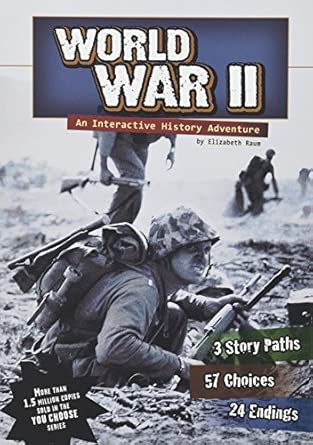 | Best for Choice-Driven Readers | Series: You Choose: History | Subject: World War II | Format: Interactive history book | VIEW LATEST PRICE | See Our Full Breakdown |
| Dive! World War II Stories of Sailors and Submarines in the Pacific |  | Best for Pacific War-at-Sea Stories | Subject: World War II | Setting: Pacific | Focus: Sailors and submarines | VIEW LATEST PRICE | See Our Full Breakdown |
| Great Battles for Boys: World War II Pacific |  | Best for Pacific Battle Coverage | Series: Great Battles for Boys | Subject: World War II | Theater: Pacific | VIEW LATEST PRICE | See Our Full Breakdown |
| National Geographic Kids Everything Battles: Arm Yourself with Fierce Photos and Fascinating Facts |  | Best for Visual Browsers | Publisher: National Geographic Kids | Subject: Battles | Audience: Kids | VIEW LATEST PRICE | See Our Full Breakdown |
| Historic Battles from World War II for Kids: 15 Battles from Europe and the Pacific |  | Best for Comparing WWII Theaters | Subject: World War II battles | Audience: Children | Number of battles: 15 | VIEW LATEST PRICE | See Our Full Breakdown |
| Legends of War: Military History for Kids — WWII |  | Best for Human Stories | Subject: World War II military history | Audience: Children | Content: True stories from the war | VIEW LATEST PRICE | See Our Full Breakdown |
| Great Battles for Boys: World War II Europe |  | Best for European Theater Focus | Subject: World War II battles | Region covered: Europe | Focus: Major battles | VIEW LATEST PRICE | See Our Full Breakdown |
| National Geographic Kids Everything World War I: Dig In With Thrilling Photos and Fascinating Facts |  | Best for a Photo-Led World War I Introduction | Publisher: National Geographic Kids | Subject: World War I | Audience: Kids | VIEW LATEST PRICE | See Our Full Breakdown |
| military history books for kid | Format | ASIN | Audience | Subject |
|---|---|---|---|---|
| America in World War II: A His | Not specified in provided product data | — | Kids | — |
| World War II History for Kids: | Fact-based | 1648763766 | Kids | — |
| Legends of War: American Revol | Not specified in provided product data | — | Kids | — |
| World War II: A Visual Encyclo | Visual encyclopedia | 1465440275 | Children | — |
| Brilliant Battle Strategies: C | Not specified in provided product data | — | Children | — |
| Military History: The Definiti | — | 1465436081 | — | Military history |
| A Visual History of World Mili | — | 1497104017 | — | World military machines |
| World War II: An Interactive H | Interactive history book | 142963457X | — | World War II |
| Dive! World War II Stories of | Nonfiction book | 054542559X | — | World War II |
| Great Battles for Boys: World | — | 0997749318 | — | World War II |
| National Geographic Kids Every | Book | 1426311001 | Kids | Battles |
| Historic Battles from World Wa | Book; further format details not provided | 1648763804 | Children | World War II battles |
| Legends of War: Military Histo | Book; further format details not provided | B0FCTZHVT7 | Children | World War II military history |
| Great Battles for Boys: World | Book; further format details not provided | 0997749326 | Boys, as stated in the series title | World War II battles |
| National Geographic Kids Every | Book | 1426317158 | Kids | World War I |
More Details on Our Top Picks
America in World War II: A History Just for Kids!
America in World War II: A History Just for Kids! is the broadest starting point in this group for a child whose interest is specifically the U.S. role in World War II. Its kid-focused framing makes it a more natural first pick than World War II History for Kids: 500 Facts, which emphasizes short, discrete facts rather than a general history. That distinction matters for readers who want an introductory account rather than a reference-style collection. The available product information does not describe its chapters, illustrations, length, or level of detail, so I would not choose it on the assumption that it offers maps or a particular narrative approach. Its U.S.-centered scope also leaves out the wider conflict unless a family pairs it with a broader title. It suits a young reader seeking an accessible entry point, but not a buyer who needs documented format details before choosing.
Pros:- Explicitly presents World War II history for kids
- U.S.-focused framing gives young readers a clear subject
- A broad-history alternative to the fact-by-fact format of World War II History for Kids: 500 Facts
Cons:- Provided information does not specify chapter structure or depth
- No format, length, or illustration details are available
- The America-centered scope may not satisfy readers seeking coverage of the entire war
Best for: Families seeking a kid-focused introduction to America’s part in World War II, rather than a book organized around a large fact count.
Not ideal for: Readers seeking a global account of the war, or buyers who need confirmed information about illustrations, length, or reading level.
- Topic:America in World War II
- Audience:Kids
- Subject area:Military history
- Historical conflict:World War II
- Geographic focus:America
- Format:Not specified in provided product data
Our verdict“Choose this for a child starting with America’s World War II story, but look elsewhere for a clearly documented global or visual reference.”
World War II History for Kids: 500 Facts
World War II History for Kids: 500 Facts is the clearest choice here for children who like quick discoveries, bite-size reading, and dipping into a topic rather than following one continuous account. The stated 500-fact format gives it a different job from America in World War II: A History Just for Kids!, whose title signals a broader introductory history. That format can make short reading sessions easier and help a curious reader sample many details, though the supplied description does not say how facts are grouped or how much context accompanies them. It is also limited to World War II, unlike the American Revolution focus of Legends of War: American Revolution for Kids. I would pick it for a child who enjoys collecting historical facts, not for someone who needs a sustained narrative or confirmed visual aids.
Pros:- Provides 500 World War II facts in a kid-focused format
- Fact-based structure can suit brief or occasional reading sessions
- Its focused subject separates it from the American Revolution coverage in Legends of War: American Revolution for Kids
Cons:- A collection of facts may provide less narrative continuity than a general history
- Provided information does not explain how facts are organized or contextualized
- No illustrations, length, or reading-level details are supplied
Best for: Children who prefer short fact-based reading and families looking for a World War II title that can be read in small sessions.
Not ideal for: Readers who want a continuous account of the war, or buyers who require confirmed information about illustrations and chapter organization.
- Topic:World War II
- Audience:Kids
- Fact count:500
- Series:History Facts for Kids
- Subject area:Military history
- Format:Fact-based
- ASIN:1648763766
Our verdict“Choose this for a fact-loving child who wants World War II in short entries, not for a reader seeking a fully described narrative or visual guide.”
Legends of War: American Revolution for Kids
Legends of War: American Revolution for Kids stands apart from the World War II-heavy options by taking young readers to the American Revolution. Its emphasis on lesser-known heroes, battles, and the fight for freedom offers a people-and-conflict angle rather than the broad U.S. World War II introduction in America in World War II: A History Just for Kids!. That makes this a better match for a child studying early American history or asking about figures beyond the most familiar names. The description gives no details about length, reading level, illustrations, or how the stories balance military events with political context, so I would avoid assuming it works as a complete survey. It is also a narrower historical choice than the World War II fact collection. Its appeal is strongest when the American Revolution itself is the point.
Pros:- Focuses on the American Revolution, broadening the lineup beyond World War II
- Highlights lesser-known historical heroes
- Connects battles with the fight for freedom
Cons:- Provided information does not specify format or length
- No reading-level or illustration details are available
- Its period-specific focus is not a broad survey of military history
Best for: Children studying the American Revolution who want stories about lesser-known figures alongside battles and the independence struggle.
Not ideal for: Families specifically seeking World War II coverage, or buyers who need confirmed details about format, length, and reading level.
- Topic:American Revolution
- Audience:Kids
- Subject area:Military and historical stories
- Coverage:Heroes, battles, and the fight for freedom
- Historical period:American Revolution
- Format:Not specified in provided product data
Our verdict“Choose this for a child interested in Revolutionary-era people and battles, but not as a substitute for a World War II history book.”
World War II: A Visual Encyclopedia of the Second World War
World War II: A Visual Encyclopedia of the Second World War is the reference-minded pick in this set: the visual encyclopedia format points toward browsing and looking things up, rather than reading a sequence of short facts like World War II History for Kids: 500 Facts. As part of DK’s Children’s Visual Encyclopedias, it is the strongest match here for a child drawn to visual reference books. The supplied data does not identify specific images, maps, subjects, or the depth of its entries, so I would not infer exactly what a reader will find inside. That uncertainty is a real limitation for buyers choosing by content detail. Compared with the more specifically American framing of America in World War II: A History Just for Kids!, this title is presented as a visual encyclopedia of the Second World War, making it a better fit for browsing than for a clearly defined national perspective.
Pros:- Visual encyclopedia format supports browsing and reference use
- Part of DK’s Children’s Visual Encyclopedias series
- Covers the Second World War rather than focusing only on America’s role
Cons:- Provided information does not list specific visual materials or subjects
- No details are supplied about entry length or historical depth
- The reference format may not suit children seeking a continuous story
Best for: Children who enjoy browsing visual reference books and families seeking a World War II title from a children’s encyclopedia series.
Not ideal for: Readers who prefer a continuous narrative or buyers who need specific image, map, or chapter details before selecting a book.
- Topic:World War II
- Alternate topic name:Second World War
- Series:DK Children’s Visual Encyclopedias
- Format:Visual encyclopedia
- Audience:Children
- Subject area:Military history
- ASIN:1465440275
Our verdict“Choose this for a child who likes visual reference books, while readers seeking a known narrative structure may prefer a more clearly described history.”
Brilliant Battle Strategies: Children’s Military and War History Books
Brilliant Battle Strategies: Children’s Military and War History Books is the most specialized choice here: its subject is how battles are planned and fought, rather than a single conflict or a general history. That angle may appeal to a child who asks why armies made particular decisions. Compared with World War II: A Visual Encyclopedia of the Second World War, which is identified as a reference encyclopedia, this title points toward strategic ideas as its central draw. But the available description offers no examples of battles, historical periods, diagrams, or level of detail, so buyers cannot tell how much context supports the strategy coverage. It also has less clearly defined scope than the World War II fact book or the American Revolution title. I would choose it for a specific interest in battle tactics, not as the safest all-purpose introduction to military history.
Pros:- Centers battle strategies, a distinct angle among the lineup
- Addresses children’s military and war history
- May suit readers more interested in decision-making than collecting historical facts
Cons:- Provided description gives no examples of strategies or battles covered
- Historical periods and geographic scope are not specified
- No information is available about format, length, or reading level
Best for: Children already curious about how military decisions and battle strategies work, rather than those looking for one conflict’s complete history.
Not ideal for: First-time young readers who need a clearly specified historical period, narrative structure, or confirmed visual support.
- Topic:Battle strategies
- Subject area:Military and war history
- Audience:Children
- Historical period:Not specified in provided product data
- Geographic scope:Not specified in provided product data
- Format:Not specified in provided product data
Our verdict“Choose this for a child specifically interested in battle strategy, but select a conflict-focused title for a more clearly defined history.”
Military History: The Definitive Visual Guide to the Objects of Warfare
Objects of warfare take center stage in this DK visual-history title, making it a different kind of entry point from books organized around battles or a single war. It may suit a child who likes examining military equipment and asking how objects relate to history, while the series’ visual approach offers a useful browsing format. Compared with A Visual History of World Military Machines, which specifically covers vehicles such as aircraft, submarines, and armored vehicles, this title is described more broadly as a guide to warfare objects; the available details do not confirm its precise range or depth. That limited information is the main tradeoff: I can’t recommend it for a particular age, reading level, or subject coverage from the supplied data. Choose it for visual, object-led exploration, not as a clearly documented battle-by-battle account.
Pros:- Centers the subject on objects of warfare
- Part of DK’s Definitive Visual Histories series
- Visual-guide positioning may suit browsing and discussion
Cons:- The supplied information does not identify specific objects or historical periods covered
- No age range, reading level, or extent of coverage is provided
- Less clearly suited to readers seeking a narrative of battles or campaigns
Best for: Children who prefer browsing visual references about military objects over following a chronological account of a war
Not ideal for: Buyers seeking confirmed age guidance, detailed battle coverage, or a clearly specified list of topics
- Series:DK Definitive Visual Histories
- Subject:Military history
- Focus:Objects of warfare
- Presentation:Visual guide
- Product type:Book
- ASIN:1465436081
Our verdict“Choose this for a child drawn to visual, object-led military history, but pick a more specifically documented title if coverage details matter.”
A Visual History of World Military Machines: Legendary Combat Vehicles
Vehicles are the clear draw here: the described coverage spans aircraft, submarines, armored vehicles, and stealth bombers, with examples including Spitfires, U-Boats, and Humvees. That range gives a vehicle-focused child several kinds of machines to explore rather than limiting the book to tanks or aircraft alone. Compared with Military History: The Definitive Visual Guide to the Objects of Warfare, this title has a more specific, confirmed subject; the DK book is framed around warfare objects more generally. The tradeoff is that machine-centered coverage may leave out the personal stories and battle narratives that help explain what war meant to people. The available description also gives no age guidance or detail on how much context accompanies the illustrations, so I’d choose it for a child already interested in military technology rather than as a broad introduction to war history.
Pros:- Covers several vehicle categories, including aircraft, submarines, and armored vehicles
- Names recognizable examples such as Spitfires, U-Boats, and Humvees
- Visual-history format centers the machines that vehicle enthusiasts want to explore
Cons:- The vehicle focus may leave less room for people, battles, and broader historical context
- The supplied description does not specify age suitability or the depth of explanations
Best for: Children who are especially curious about aircraft, submarines, armored vehicles, and other military machines
Not ideal for: Readers looking for personal wartime accounts, a battle-by-battle history, or confirmed age and reading-level guidance
- Publisher:Fox Chapel Publishing
- Subject:World military machines
- Focus:Legendary combat vehicles
- Vehicle categories:Aircraft, submarines, armored vehicles, and stealth bombers
- Examples named:Spitfires, U-Boats, and Humvees
- Presentation:Illustrated visual history
- ASIN:1497104017
Our verdict“Pick this for a child who wants a broad visual tour of combat vehicles rather than a people- or battle-centered account.”
World War II: An Interactive History Adventure (You Choose: History)
Readers make choices that guide the story, so this World War II book offers a more participatory route into history than a straightforward reference or battle survey. That format may encourage a reluctant reader to keep going and notice how decisions shape an account of the past, though the supplied description does not explain how choices connect to specific events or outcomes. Compared with Great Battles for Boys: World War II Pacific, which focuses on major Pacific battles, this title’s defining feature is the interactive adventure rather than a stated theater or battle list. That distinction also sets a limit: families looking for a detailed, systematic account of World War II may prefer a conventional history. No age guidance, length, or further content detail is supplied, so I’d select it for a child who enjoys branching narratives, not as the sole resource for studying the war.
Pros:- Readers make choices that guide their path through the book
- Uses an adventure format rather than a standard linear presentation
- Its World War II subject gives the interactive format a defined historical setting
Cons:- The supplied information does not identify the events or choices covered
- No reading level, age range, or extent of historical detail is provided
- The branching format may be less suited to readers seeking a systematic reference
Best for: Young readers who are more likely to engage with World War II through choices and an interactive adventure
Not ideal for: Families seeking a clearly mapped, comprehensive account of World War II or confirmed age and content guidance
- Series:You Choose: History
- Subject:World War II
- Format:Interactive history book
- Reading structure:Readers make choices that guide the path
- Presentation:Historical adventure
- Product type:Book
- ASIN:142963457X
Our verdict“Choose this for a child drawn to interactive reading, and pair it with a more structured history if they need broad coverage.”
Dive! World War II Stories of Sailors and Submarines in the Pacific
Sailors and submarines in the Pacific give this nonfiction title a focused human-and-maritime angle on World War II. It may appeal to a child more interested in life and conflict at sea than in equipment alone, and the Pacific setting provides a defined lens rather than an attempt to cover the whole war. Compared with World War II: An Interactive History Adventure, this book is described as nonfiction stories, not a choice-led adventure; compared with Great Battles for Boys: World War II Pacific, it narrows attention to sailors and submarines rather than major battles generally. That focus is also its limitation for readers seeking a broad overview of the Pacific theater. The available details do not specify story count, age suitability, or reading level, so I’d treat it as a targeted subject pick rather than a complete introduction.
Pros:- Focuses on sailors and submarines rather than military hardware alone
- Covers the Pacific setting during World War II
- Nonfiction stories offer a people-centered alternative to battle summaries
Cons:- Its sea-focused scope does not represent the full range of the war
- The supplied details do not give an age range, reading level, or story count
Best for: Children curious about World War II at sea, especially submarines, sailors, and the Pacific theater
Not ideal for: Readers seeking a broad survey of World War II or a battle-by-battle overview of the Pacific
- Subject:World War II
- Setting:Pacific
- Focus:Sailors and submarines
- Format:Nonfiction book
- Coverage:Stories from the war at sea
- ASIN:054542559X
Our verdict“Choose this for a child interested in the people and submarines of the Pacific war, not for a general World War II survey.”
Great Battles for Boys: World War II Pacific
Major Pacific battles are the stated focus, making this the most directly battle-centered choice among the five titles here. It may fit a young reader who wants to follow military engagements rather than explore vehicles, read a branching adventure, or focus on sailors’ stories. Compared with Dive! World War II Stories of Sailors and Submarines in the Pacific, it points toward battles as its organizing subject instead of life at sea; compared with World War II: An Interactive History Adventure, no interactive structure is described. The drawback is how little else is confirmed: the supplied information does not name battles, explain the depth of coverage, or provide age and reading-level guidance. I’d choose it when the Pacific battle focus is the priority, while seeking more detail before using it as a standalone study resource.
Pros:- Has a defined focus on major Pacific theater battles
- Battle-centered subject differs from the submarine stories in Dive!
- Offers a direct option for readers seeking military engagements over vehicles or interactive fiction
Cons:- The supplied description does not name the battles covered
- No age range, reading level, or depth of coverage is provided
- The Pacific focus does not cover the full scope of World War II
Best for: Children who specifically want to read about major battles in the Pacific theater of World War II
Not ideal for: Families who need confirmed battle lists, age guidance, or coverage of World War II beyond the Pacific
- Series:Great Battles for Boys
- Subject:World War II
- Theater:Pacific
- Focus:Major battles
- Product type:Book
- ASIN:0997749318
Our verdict“Choose this for a child focused on Pacific battles, but seek more information if you need a detailed or age-matched history resource.”
National Geographic Kids Everything Battles: Arm Yourself with Fierce Photos and Fascinating Facts
Photographs and battle facts make this the most visually oriented choice in this group. For a child who likes to browse, images can provide an accessible entry point to military history before they tackle a longer account. Compared with Historic Battles from World War II for Kids, which names a set of 15 battles across two theaters, this title appears broader in its focus on battles rather than being limited to World War II. The supplied details do not specify which conflicts it covers, how the material is organized, or the reading level, so I would not choose it for a child seeking a particular era or a clearly mapped sequence of events. It suits curiosity-led browsing better than a focused study assignment, and the limited description makes its depth hard to judge.
Pros:- Photographs offer a visual entry point to military history
- Battle facts suit short, browseable reading sessions
- A battle-focused scope may appeal beyond readers studying World War II alone
Cons:- The supplied details do not identify the battles or historical periods covered
- The depth, organization, and reading level are not specified
- Its broad battle focus may offer less guidance than a book centered on one war or theater
Best for: Kids who prefer photo-led nonfiction and want a broad introduction to battles without starting with a single named conflict
Not ideal for: Parents or students seeking a clearly defined account of a specific war, battle list, or chronological curriculum
- Publisher:National Geographic Kids
- Subject:Battles
- Audience:Kids
- Content:Photographs and facts about battles
- Format:Book
- ASIN:1426311001
Our verdict“Choose this for a photo-oriented young browser, but pick a more specifically scoped title if a particular war is the goal.”
Historic Battles from World War II for Kids: 15 Battles from Europe and the Pacific
Fifteen World War II battles give this book a clear, bounded scope, while coverage of both Europe and the Pacific helps young readers compare separate theaters rather than treating the war as one front. That breadth distinguishes it from Great Battles for Boys: World War II Europe, which is limited to the European theater, and from Legends of War: Military History for Kids — WWII, whose description emphasizes true stories and unsung heroes. This is the stronger fit when a child wants a selection of named battles across regions. The available product information does not say how each battle is explained, how much context is included, or what reading level it suits, so it may not satisfy readers looking for detailed analysis or a guided narrative. Its focused battle list is useful, but narrower than a general WWII history.
Pros:- Covers 15 World War II battles in a kid-focused format
- Includes battles from both Europe and the Pacific
- A defined battle count gives readers a clear sense of scope
- Part of the Historic Battles for Kids series
Cons:- The supplied details do not describe the depth or structure of each battle account
- Reading level and format details are not provided
- Its battle-centered scope may leave broader political and civilian history aside
Best for: Young readers studying World War II who want a defined selection of battles from both Europe and the Pacific
Not ideal for: Children seeking a broad account of the whole war, detailed battle analysis, or a story-driven introduction to individual people
- Subject:World War II battles
- Audience:Children
- Number of battles:15
- Regions covered:Europe and the Pacific
- Series:Historic Battles for Kids
- Format:Book; further format details not provided
- ASIN:1648763804
Our verdict“Pick this for a child comparing World War II battles across Europe and the Pacific, rather than seeking a full war narrative.”
Legends of War: Military History for Kids — WWII
True stories and unsung heroes give this World War II title a people-centered angle alongside its coverage of battles. That emphasis makes it a different choice from Historic Battles from World War II for Kids, which specifies 15 battles across Europe and the Pacific, and from Great Battles for Boys: World War II Europe, whose stated focus is major European battles. For children who connect more readily with individual lives than with a sequence of military engagements, the stories may make the history feel more personal. The description does not identify the people featured, the theaters covered, or the level of detail, though, so readers looking for a specific campaign or a balanced survey should check whether those needs are met. Its strongest distinction is its story-led framing, not a documented breadth of coverage.
Pros:- Uses true World War II stories as an entry point to military history
- Includes battles as well as unsung heroes
- Written for children
- A people-focused angle differs from titles organized around a specified battle list
Cons:- The supplied details do not name the featured heroes or stories
- The theaters and breadth of coverage are not specified
- Format, reading level, and depth of historical context are not provided
Best for: Children who are more engaged by true personal stories and overlooked figures than by a battle-by-battle outline
Not ideal for: Readers who need a stated list of battles, coverage across specific theaters, or a clearly documented account of the full war
- Subject:World War II military history
- Audience:Children
- Content:True stories from the war
- Topics:Battles and unsung heroes
- Format:Book; further format details not provided
- ASIN:B0FCTZHVT7
Our verdict“Choose this for a child drawn to personal accounts and lesser-known figures, not for a reader who needs a mapped battle survey.”
Great Battles for Boys: World War II Europe
A European theater focus makes this a targeted pick for boys interested in the major land and military campaigns fought there during World War II. Its narrower stated scope separates it from Historic Battles from World War II for Kids, which spans Europe and the Pacific, and from Legends of War: Military History for Kids — WWII, which highlights true stories and unsung heroes. That focus can help a child concentrate on one theater instead of jumping between regions. The tradeoff is equally clear: the description provides no specific battle list, reading level, format details, or account of how much context the book supplies. Readers seeking a two-theater comparison or a clearly documented set of battles may prefer the more explicit scope of the Historic Battles title. This is a focused option, but the available information leaves its depth uncertain.
Pros:- Keeps attention on the European theater of World War II
- Focuses on major battles rather than claiming to cover every aspect of the war
- Offers a narrower alternative to books spanning Europe and the Pacific
Cons:- The supplied details do not identify which battles are included
- Reading level and format are not specified
- The Europe-only scope excludes the Pacific theater
Best for: Young readers specifically interested in World War II in Europe who do not need Pacific coverage in the same book
Not ideal for: Families seeking a cross-theater overview, a stated list of battles, or confirmed information about reading level and detail
- Subject:World War II battles
- Region covered:Europe
- Focus:Major battles
- Audience:Boys, as stated in the series title
- Format:Book; further format details not provided
- ASIN:0997749326
Our verdict“Choose this for a child focused on World War II in Europe, but favor a cross-theater title for a broader view.”
National Geographic Kids Everything World War I: Dig In With Thrilling Photos and Fascinating Facts
World War I photographs and facts give this kids’ nonfiction book a visual, accessible route into a conflict that can be less familiar to young readers than World War II. It stands apart from National Geographic Kids Everything Battles, which has a broader battle subject, by naming a specific war; that focus makes it a better match for a child starting a World War I unit. Compared with Historic Battles from World War II for Kids, it also shifts the era rather than adding another WWII battle survey. The description does not specify how much context accompanies the images, what topics beyond military history appear, or the reading level. It may work well for browsing and introductory learning, but readers wanting a detailed campaign narrative or a defined set of battles may need a more tightly specified guide.
Pros:- Focuses specifically on World War I
- Photographs support visual browsing and discussion
- Presents historical facts for a kids’ audience
- Adds a different era to a roundup otherwise rich in World War II titles
Cons:- The supplied details do not establish how much historical context accompanies the facts
- Reading level and depth are not specified
- No particular battles or campaigns are identified in the product information
Best for: Kids beginning to learn about World War I who respond well to photographs and short factual material
Not ideal for: Readers seeking a detailed battle-by-battle account, a stated reading level, or a book with a specified list of campaigns
- Publisher:National Geographic Kids
- Subject:World War I
- Audience:Kids
- Format:Book
- Content:Photographs and historical facts
- ASIN:1426317158
Our verdict“Pick this for a visual first look at World War I, rather than for detailed coverage of specific campaigns.”
How We Picked
I compared these military history books for kids by the kind of reading experience each offers: accessible explanation, useful visual support, clear topic boundaries, and ways to hold a child’s interest. I also weighed whether a book works as a first introduction, a browseable reference, or a more focused follow-up. Since the lineup spans narrative histories, fact collections, visual guides, interactive reading, battles, and military technology, I treated format and subject fit as meaningful differences rather than ranking every title by breadth alone.
The ranking gives the lead to books that can serve a wider range of young readers without losing their historical focus. More specialized titles rank higher for the readers they serve best, but lower as all-purpose starting points. A narrow theater, era, or equipment focus can be a strength for an interested child and a limitation for a family seeking a broad survey. I also considered the tradeoff between easy browsing and sustained explanation: quick facts and strong visuals can invite readers in, while a coherent narrative can help them connect events.
| military history books for kid | Audience |
|---|---|
| America in World War II: A His | Kids |
| World War II History for Kids: | Kids |
| Legends of War: American Revol | Kids |
| World War II: A Visual Encyclo | Children |
| Brilliant Battle Strategies: C | Children |
| Military History: The Definiti | — |
| A Visual History of World Mili | — |
| World War II: An Interactive H | — |
| Dive! World War II Stories of | — |
| Great Battles for Boys: World | — |
| National Geographic Kids Every | Kids |
| Historic Battles from World Wa | Children |
| Legends of War: Military Histo | Children |
| Great Battles for Boys: World | Boys, as stated in the series title |
| National Geographic Kids Every | Kids |
Factors to Consider When Choosing Military History Books For Kids
Before choosing a title, I would match the book to the child’s reason for being interested—a particular war, a favorite vehicle, dramatic battles, or simply a first history book. The right format and scope can matter more than the number of facts on the page.
Choose a reading format that fits the child
A narrative can help a young reader follow how events connect, while a fact collection supports short visits and spontaneous browsing. Visual reference books can make unfamiliar equipment and settings easier to picture, but pictures alone may not explain why a campaign unfolded as it did. Interactive books can invite participation, though a branching format may offer less continuous coverage than a straight account. A common mistake is choosing the format an adult prefers rather than the one the child will return to. If attention comes in short bursts, favor a browseable structure; for readers who like following a story, look for a sustained narrative.
Match the era and theater to the child’s existing interest
“Military history” covers very different subjects, and a child curious about submarines may not be drawn to a general account of World War II. This roundup has several World War II options, but it also includes the American Revolution and World War I, so an era-specific choice can make history feel more immediate. Theater-focused books offer depth on the Pacific or Europe rather than equal coverage of the whole war. Avoid buying a broad title simply because it sounds more complete if the child has already settled on a particular topic. A focused book can be a better first step when it follows a genuine interest.
Check whether the book explains events or mainly presents facts
Facts, dates, and battle summaries are useful, but children also benefit from context about causes, consequences, and the people affected. A quick-reference book may be easier to dip into, yet it may not provide the same sense of how events fit together as a connected history. Before choosing, think about whether the child wants answers to specific questions or a guided account of a period. The common buying error is treating a high volume of facts as a substitute for explanation. For a first book, a clear narrative can provide a helpful foundation before a child moves to specialized reference titles.
Consider visuals as a learning aid, not just decoration
Photographs, illustrations, and diagrams can help children recognize vehicles, uniforms, locations, and equipment that may otherwise blur together. Visual-heavy books can also be more approachable for reluctant readers, especially when captions connect an image to a clear historical point. But images vary in purpose: some clarify, while others mainly make a page more eye-catching. Check whether the child enjoys looking closely at photographs and objects or prefers uninterrupted text. A visual guide may be an excellent companion, but it may not replace a book that explains a timeline or the relationships between events.
Think about intensity and the way war is presented
Children differ in how they respond to accounts of combat, casualties, and wartime hardship. A battle-centered book may appeal to an older or more confident reader but feel like too much for a child who is new to the subject. Descriptions and images can create different levels of intensity, so adults should check the book’s presentation rather than judging from its age-oriented title alone. Consider reading a section together if the child has not encountered military history before. A gentle introduction need not avoid difficult history, but it should give the child room to ask questions and process what they read.
Decide whether you want one overview or a focused series of reads
A single broad book is convenient when a child is still discovering which parts of military history interest them. Once an interest takes shape, a dedicated book on a battle, theater, vehicle, or service can offer a more satisfying level of detail. The paired Great Battles for Boys titles, for example, point toward separate Pacific and Europe reading rather than one all-purpose volume. A frequent mistake is buying several narrow books before knowing which topics will hold attention. Start with the scope that fits the child now, then add specialized reading if curiosity lasts.
Frequently Asked Questions
Which type of military history book is a good first choice for a child new to the subject?
I would start with a book that has a clear narrative, accessible language, and a manageable scope rather than one packed with specialized equipment terms or battle detail. A general introduction can help a child learn names, events, and context before they choose a narrower topic. If the child tends to browse instead of reading chapters, a visual or fact-based format may be a more inviting first step. Reading a sample together can reveal whether the pace and presentation feel comfortable. Let the child’s reading habits guide the choice more than the broad label “for kids.”
Should I choose a World War II overview or a book about one theater or battle?
Choose an overview if the child is still learning the broad outline of the war or wants a starting point that covers more than one topic. A theater- or battle-specific book makes more sense when they already ask about the Pacific, Europe, or a particular campaign. Focused coverage can provide more detail, but it will leave other parts of the war out. A useful path is to begin with an overview and follow the child’s questions into a specialized title. If they already have a strong interest, there is no need to make them start with a broad survey.
Are fact collections or visual encyclopedias better for reluctant readers?
Either format can help, but they work differently. A fact collection offers short sections that are easy to read in brief bursts, while a visual encyclopedia can draw attention through photographs, illustrations, and captions. Neither automatically gives a reluctant reader the context of a continuous narrative, so check whether the entries explain how details connect. A child who likes quizzes and quick answers may prefer facts; one who studies pictures may gravitate toward a visual reference. If possible, let the child browse a few pages before deciding.
How can I tell whether a military history book is too intense for my child?
Look at how the book handles combat, casualties, and wartime suffering, not only its intended audience or title. A visual battle book may affect a child differently from a text-led account, and children vary in how much detail they want. If you are unsure, read a passage or examine sample pages before handing it over. You can also read together and invite questions rather than expecting the child to manage difficult material alone. It is reasonable to choose a less battle-focused introduction and return to more intense subjects later.
When is a book about military vehicles or weapons a useful choice?
A technology-focused book is a strong fit when a child is already curious about how vehicles, ships, or other military objects were built and used. That interest can create an accessible route into history, especially for readers who do not yet seek out campaign narratives. The tradeoff is that equipment detail may not explain the political causes, human costs, or wider effects of a war. Pairing a technology title with a broader history can fill those gaps if the child wants more context. If the child’s interest is mainly people and events, a battle or era-focused narrative may be a better match.
Conclusion
For most families seeking one starting point, I recommend America in World War II: A History Just for Kids! as the best overall choice for a general introduction. World War II History for Kids: 500 Facts is my best-value pick for children who enjoy dipping into short facts, while World War II: A Visual Encyclopedia of the Second World War is the best premium-style choice for readers who want an image-led reference. For beginners who prefer active reading, World War II: An Interactive History Adventure offers a different way into the subject. For specific interests, choose Dive! for Pacific submarines, one of the Great Battles for Boys books for a focused theater, or the vehicle and warfare-object guides for technology-minded readers. If your child wants an era beyond World War II, the Revolution and World War I titles make more direct choices than another general World War II book.