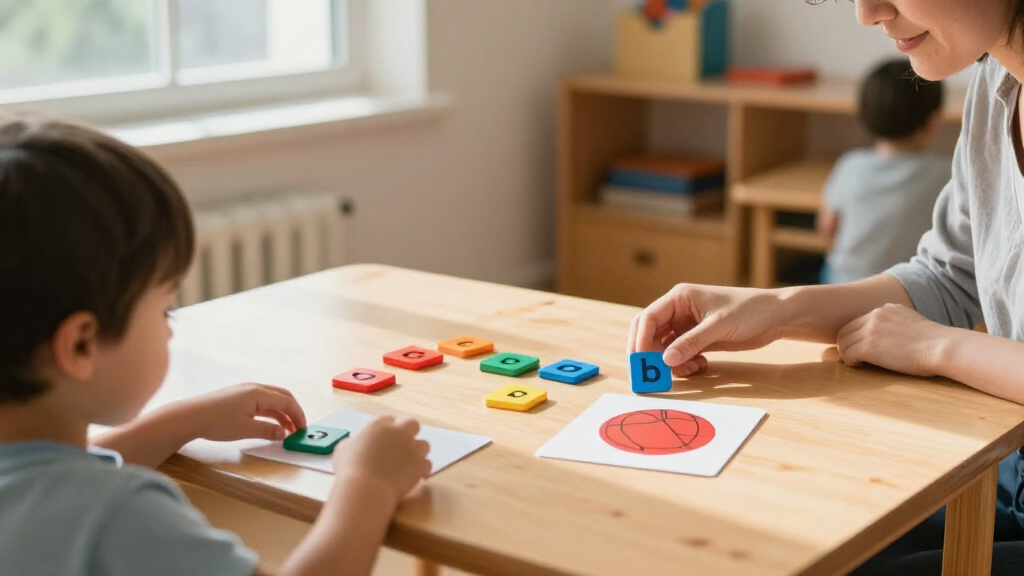
For early readers, the best phonics games make it easier to connect letter sounds with short words while keeping practice manageable. I’d start with Learning Resources 3-Letter Word Puzzle Cards as my best overall pick for focused CVC word building, while Skillmatics Phonics Sorter stands out for vowel sorting and Word Seeds Phonics Board Game for a more social format. The main tradeoff is between guided, sound-focused practice and variety that may hold a child’s attention but cover phonics less directly. Some sets emphasize listening, while others ask children to match, spell, or read independently. Read on for the full comparison and a guide to choosing the right kind of practice.

Prime made for students and young adults
- Fast, free delivery for dorm and study essentials
- Prime Video and Amazon Music included
- Member-only deals
Key Takeaways
- Learning Resources 3-Letter Word Puzzle Cards earn the overall lead because their short-word puzzle format keeps attention on blending sounds into CVC words.
- Skillmatics Phonics Sorter offers more targeted vowel practice than broad flash-card sets, making it a useful choice when short-vowel confusion is the main hurdle.
- Talking card toys such as Sinoome and QuTZ add audio prompts, but their extra features make them less focused than a simple word-building activity.
- Junior Learning CVC Match & Learn Dominoes and Snap It Up! Phonics suit shared play, while puzzle cards and spelling blocks make more sense for quieter, hands-on practice.
- Scholastic Sight Words Flash Cards address word recognition rather than phonics instruction, so they work best as a supplement for children who also need sound-to-letter practice.
| Sinoome Talking CVC Word Games and Phonics Flash Card Set |  | Best for Audio and Hands-On Practice | Brand: Sinoome | Model: WFB-02 | Recommended age: 4 years and up | VIEW LATEST PRICE | See Our Full Breakdown |
| Skillmatics Phonics Sorter Preschool Vowel Sorting Activity |  | Best for Short-Vowel Beginners | Brand: Skillmatics | Age range: 4–7 years | Set size: 105 pieces | VIEW LATEST PRICE | See Our Full Breakdown |
| QuTZ Phonics Learning Toy with Talking Flash Cards and Math Games |  | Best for a Broad Learning Range | Brand: QuTZ | Model: DCJ01 | Age range: 36 months to 10 years | VIEW LATEST PRICE | See Our Full Breakdown |
| Gojmzo CVC Word Writing & Spelling Flash Cards Set |  | Best for Reusable Writing Practice | Brand: Gojmzo | Age range: 3–6 years | Flashcards: 100 double-sided CVC cards | VIEW LATEST PRICE | See Our Full Breakdown |
| THE BAMBINO TREE Phonics Flash Cards for Ages 4–8 |  | Best for Progressive Phonics Skills | Brand: THE BAMBINO TREE | Age range: 4–8 years | Number of cards: 62 | VIEW LATEST PRICE | See Our Full Breakdown |
| Torlam Phonics Puzzle and Rhyming Flash Cards for Kids |  | Best for Phonics Variety | Brand: Torlam | Included components: 15 double-sided phonics puzzle cards | Words: 120 | VIEW LATEST PRICE | See Our Full Breakdown |
| Learning Resources 3-Letter Word Puzzle Cards |  | Best for CVC Beginners | Brand: Learning Resources | Puzzle count: 20 | Material: Paper | VIEW LATEST PRICE | See Our Full Breakdown |
| Junior Learning CVC Puzzles, 36-Piece Phonics Word Game |  | Best Hands-On CVC Puzzle | Brand: Junior Learning | Piece count: 36 | Puzzle count: 12 | VIEW LATEST PRICE | See Our Full Breakdown |
| Scholastic Sight Words Flash Cards |  | Best for Sight Word Practice | Product type: Flash cards | Subject: Sight words | VIEW LATEST PRICE | See Our Full Breakdown | |
| Learning Resources Snap It Up! Phonics: Word Families Card Game |  | Best for Group Word-Family Play | Brand: Learning Resources | Model: LER3043 | Age range: 6–10 years | VIEW LATEST PRICE | See Our Full Breakdown |
| Junior Learning CVC Match & Learn Dominoes |  | Best for CVC Matching Practice | Piece count: 28 | Material: Plastic | Age range: 7–12 years | VIEW LATEST PRICE | See Our Full Breakdown |
| Gojmzo Wooden CVC Word Spelling Game Set with Flash Cards and Letter Blocks |  | Best for Hands-On CVC Spelling | Age range: 3–7 years | Included components: 50 double-sided flash cards, 53 wooden letter blocks, 5 spelling boards, 1 storage box | Materials: Hardwood and laminated cardstock | VIEW LATEST PRICE | See Our Full Breakdown |
| Word Seeds Phonics Board Game |  | Best Overall for Growing Phonics Skills | Age range: 5–7 years; manufacturer recommended 4+ | Number of pieces: 132 | Educational objectives: Language skills, phonics, reading | VIEW LATEST PRICE | See Our Full Breakdown |
| Bananagrams My First Lowercase Letter Word Game for Ages 4+ |  | Best for Portable Family Play | Recommended age: 4–10 years | Players: 1–4 | Included tiles: 80 single-letter tiles and 13 combo-letter tiles | VIEW LATEST PRICE | See Our Full Breakdown |
| phonics games for early reader | Brand | Age range |
|---|---|---|
| Sinoome Talking CVC Word Games | Sinoome | — |
| Skillmatics Phonics Sorter Pre | Skillmatics | 4–7 years |
| QuTZ Phonics Learning Toy with | QuTZ | 36 months to 10 years |
| Gojmzo CVC Word Writing & Spel | Gojmzo | 3–6 years |
| THE BAMBINO TREE Phonics Flash | THE BAMBINO TREE | 4–8 years |
| Torlam Phonics Puzzle and Rhym | Torlam | — |
| Learning Resources 3-Letter Wo | Learning Resources | — |
| Junior Learning CVC Puzzles | Junior Learning | 4–6 years |
| Scholastic Sight Words Flash C | — | — |
| Learning Resources Snap It Up! | Learning Resources | 6–10 years |
| Junior Learning CVC Match & Le | — | 7–12 years |
| Gojmzo Wooden CVC Word Spellin | — | 3–7 years |
| Word Seeds Phonics Board Game | — | 5–7 years; manufacturer recommended 4+ |
| Bananagrams My First Lowercase | — | — |
More Details on Our Top Picks
Sinoome Talking CVC Word Games and Phonics Flash Card Set
Spoken word prompts, picture cards, and letter blocks make this the most multisensory pick in this group. A child can hear a word, connect it to an illustration, then build it, which gives caregivers several ways to reinforce the same early reading skill. Compared with Gojmzo’s write-and-wipe CVC cards, Sinoome offers audio support and physical letter-building; Gojmzo is the simpler choice for repeated pencil practice. The five word boards and 80 cards give families and classrooms plenty of material to rotate through, and teaching tips can help adults set up activities. The tradeoff is that the set is aimed at preschool and early elementary learners, so it may have limited use as reading skills advance. The product data also reports a unit count that differs from the listed card and block quantities.
Pros:- Combines spoken pronunciations, illustrations, and letter blocks for varied practice.
- Includes 80 word cards and five boards for multiple activities.
- Teaching tips and word lists support adult-led practice at home or in class.
Cons:- Its preschool and early elementary focus may limit use as children progress.
- The listed unit count does not match the stated quantities of cards and blocks.
Best for: Caregivers and preschool teachers who want beginning readers to hear, see, and build CVC words in one activity.
Not ideal for: Families seeking advanced phonics practice or a simple, low-component writing activity; Gojmzo’s reusable writing cards may suit the latter better.
- Brand:Sinoome
- Model:WFB-02
- Recommended age:4 years and up
- Word cards:80
- Letter blocks:63
- Word boards:5
- Included reader:Talking card reader
- Warranty:One year
Our verdict“Choose Sinoome if audio and hands-on word building will help your early reader stay engaged with CVC practice.”
Skillmatics Phonics Sorter Preschool Vowel Sorting Activity
Five vowel cups and more than 100 picture pieces turn short-vowel listening into a sorting task, giving young learners a concrete way to distinguish sounds. That narrow focus is an advantage for children just starting phonics: they can repeat one skill through matching, pronunciation, and storytelling rather than move quickly across many topics. Compared with THE BAMBINO TREE’s cards, which span CVC blending through trigraphs and silent letters, Skillmatics offers a more focused starting point but less range as reading develops. The sorting and fine-motor activity can also suit children who learn better by handling pieces than by working through flashcards. Its main limitation is the short-vowel scope, so buyers looking for broader phonics progression may prefer Bambino Tree. The set comes without a manufacturer warranty.
Pros:- Five cups give each short vowel a clear sorting destination.
- More than 100 picture pieces support repeated matching and listening practice.
- Learning guide adds pronunciation and storytelling activities.
- Combines sound recognition with hands-on sorting.
Cons:- Focuses on short vowels rather than a broad range of phonics patterns.
- No manufacturer warranty is listed.
Best for: Families and preschool educators introducing ages 4–7 to short vowels through picture-based sorting and conversation.
Not ideal for: Buyers who want one kit to cover a broad sequence of phonics skills, including advanced sound patterns, or who prioritize a manufacturer warranty.
- Brand:Skillmatics
- Age range:4–7 years
- Set size:105 pieces
- Picture pieces:100+
- Vowel cups:5
- Included guide:Learning guide
- Model number:SKILL1625PS
- Warranty:No warranty
Our verdict“Pick Skillmatics for a tactile introduction to short vowels, but choose a broader set when your reader is ready to progress beyond them.”
QuTZ Phonics Learning Toy with Talking Flash Cards and Math Games
Nine learning levels across three stages give QuTZ more room to grow with a child than the CVC-focused Gojmzo writing set. Its talking reader and cards cover letter sounds, combinations, segmenting, blending, and sentence practice, while number cards and math games add a separate activity track. That breadth can suit a household seeking one organized kit for several stages of early learning. Compared with Sinoome, QuTZ lists a wider progression and more word-card practice, while Sinoome pairs its audio with letter blocks and word boards for more direct word construction. Physical card insertion is part of using the reader, so sessions involve setup and keeping the cards together. The inclusion of counting and addition games broadens the kit, but it may be unnecessary for buyers who want a phonics-only activity.
Pros:- Nine levels cover letter sounds, blending, and sentence practice.
- Talking reader provides audio prompts for independent activities.
- Includes letter and combination cards, word cards, and number cards.
- Adds 35 counting and addition games beyond phonics.
Cons:- Activities require inserting physical cards into the reader.
- Math content may be extraneous for buyers focused only on phonics.
Best for: Families with children at different early reading stages who want audio-led phonics practice plus basic counting activities in one kit.
Not ideal for: Buyers seeking a compact, phonics-only activity or children who need direct letter-block construction rather than inserted-card practice.
- Brand:QuTZ
- Model:DCJ01
- Age range:36 months to 10 years
- Included components:191 cards and 1 card reader
- Letter and combination cards:73
- Word cards:265 words
- Number cards:10
- Learning levels:9 levels across 3 stages
- Dimensions:11.8 in L × 2.9 in W
Our verdict“Choose QuTZ for a staged, audio-led kit that combines early reading with basic math activities.”
Gojmzo CVC Word Writing & Spelling Flash Cards Set
Write, erase, and try again is the core appeal of this 100-card CVC kit. Missing-letter prompts at different positions let a child practice spelling patterns actively, while the double-sided laminated cards can be reused instead of consumed like paper worksheets. Compared with THE BAMBINO TREE’s flashcards, Gojmzo gives more direct writing practice for a narrow set of early word patterns; Bambino Tree reaches further into trigraphs and silent letters but does not list dry-erase markers. The four markers, storage box, and drawstring bag make the set ready to organize and carry, though adults need to wipe marks promptly to help prevent staining. Its CVC emphasis is useful for beginners but becomes a boundary when a reader is ready for broader phonics.
Pros:- One hundred double-sided cards provide varied CVC prompts.
- Laminated surfaces support repeated writing and erasing.
- Includes four markers, a storage box, and a carry bag.
- Colorful pictures connect spelling prompts with visual cues.
Cons:- Marks need prompt erasing to reduce the risk of staining.
- CVC-only scope offers limited support once a child advances to more complex patterns.
Best for: Caregivers and kindergarten teachers who want reusable, hands-on spelling practice for children ages 3–6 learning CVC words.
Not ideal for: Families seeking activities beyond CVC patterns or children who are not ready to write with dry-erase markers.
- Brand:Gojmzo
- Age range:3–6 years
- Flashcards:100 double-sided CVC cards
- Included markers:4 dry-erase markers
- Material:Laminated cardstock
- Storage:Storage box and drawstring bag
- Educational objectives:Language skills, phonics, and spelling
- Manufacturer part number:mr-cvc-write-100
Our verdict“Pick Gojmzo for repeatable CVC spelling and writing practice, then move to a broader set as your reader advances.”
THE BAMBINO TREE Phonics Flash Cards for Ages 4–8
Four difficulty levels make this set the clearest choice here for moving from simple CVC blending toward more complex patterns. Across 62 cards, the listed content includes 480 words and pictures and 120 sentences, giving adults material for both sound practice and early reading in context. Compared with Gojmzo’s 100 reusable CVC writing cards, Bambino Tree covers a wider stretch, including trigraphs and silent letters; Gojmzo is better suited to repeated written spelling within the CVC range. Four sorting rings can organize phonogram families or support games, so the cards do more than prompt one-at-a-time recall. The tradeoff is a thinner cardstock format and a set limited to English phonics. Buyers wanting audio or letter-building components may find Sinoome’s reader-and-block combination more interactive.
Pros:- Four levels progress from CVC blending to trigraphs and silent letters.
- Includes extensive word, picture, and sentence practice.
- Sorting rings support grouping and game-based activities.
- Portable cards suit home and classroom use.
Cons:- The 350gsm art card is thinner than a more substantial reusable writing surface.
- The set covers English-language phonics only.
- No audio reader or writing tools are listed.
Best for: Parents and teachers seeking a portable English phonics set that can progress from CVC blending to more advanced early-reading patterns.
Not ideal for: Buyers who need audio prompts, writing tools, or phonics materials in a language other than English.
- Brand:THE BAMBINO TREE
- Age range:4–8 years
- Number of cards:62
- Sorting rings:4
- Words and pictures:480
- Sentences:120
- Difficulty levels:4
- Phonogram family groups:20
- Material:350gsm art card
Our verdict“Choose Bambino Tree for a compact set with a wider phonics progression than CVC-only cards.”
Torlam Phonics Puzzle and Rhyming Flash Cards for Kids
For families who want practice beyond basic CVC words, Torlam’s four skill levels cover short and long vowels, blends, digraphs, and other spelling patterns. Its 15 double-sided cards pair 120 words with 120 pictures, giving an adult several ways to prompt matching, reading, and spelling. That broader range sets it apart from Learning Resources 3-Letter Word Puzzle Cards, which focus on simple three-letter words and may suit a newer reader better. The tradeoff is that 15 cards make for a smaller physical set, even with many words represented, and the data doesn’t specify how the four levels are divided. Laminated surfaces and rounded corners are practical for repeated handling, though the cards are still cardboard. This pick fits learners ready to move across several phonics patterns.
Pros:- Covers short vowels, long vowels, blends, digraphs, and other patterns across four levels
- Pairs 120 words with 120 pictures for matching and reading prompts
- Double-sided cards offer more activities than a single-sided set
- Laminated finish and rounded corners suit repeated handling
Cons:- Only 15 physical cards are included
- The product details do not explain how words are assigned across the four levels
- Cardboard pieces may not suit buyers seeking a rigid, wipe-clean game board
Best for: Families or educators helping a developing reader practice several spelling patterns with picture support
Not ideal for: Beginners who need a set limited to simple CVC words, or buyers who want a large number of separate cards
- Brand:Torlam
- Included components:15 double-sided phonics puzzle cards
- Words:120
- Pictures:120
- Phonics groups:5
- Levels:4
- Material and finish:Cardboard with laminated finish
- Card dimensions:4.3 x 4.3 x 0.1 inches
- Recommended age:3 years and up
Our verdict“Choose Torlam when a reader is ready to practice varied phonics patterns with picture cues in a compact card set.”
Learning Resources 3-Letter Word Puzzle Cards
Learning Resources 3-Letter Word Puzzle Cards keep the task narrow: children match a picture to a three-letter CVC word, then use the self-correcting puzzle format to check whether the pieces fit. That straightforward loop can make early decoding feel manageable for a child who is just connecting letter sounds to whole words. Compared with Junior Learning CVC Puzzles, this set has 20 puzzles rather than 12, while both stay focused on CVC practice. It offers less variety than Torlam’s multi-pattern cards, so a reader who has moved on to blends or digraphs may outgrow it quickly. The paper material also calls for gentler handling than the sturdier cardboard Junior Learning set. A reusable storage box helps keep the pieces together, including when taking the activity along.
Pros:- Self-correcting puzzles let children check their matches independently
- Twenty puzzles provide more CVC examples than Junior Learning CVC Puzzles
- Picture and word pairings connect vocabulary with letter sounds
- Reusable box helps with storage and travel
Cons:- Limited to simple three-letter CVC words
- Paper pieces may wear with frequent handling
- Provides less phonics-pattern variety than the Torlam set
Best for: Caregivers and teachers introducing CVC decoding to children aged 4–6 who benefit from picture matching
Not ideal for: Readers ready for blends, digraphs, or varied word families, and families seeking durable cardboard pieces
- Brand:Learning Resources
- Puzzle count:20
- Material:Paper
- Recommended age:4–6 years
- Model number:LER6088
- Included components:20 puzzles
Our verdict“Pick this set for a child beginning CVC words who can benefit from a simple picture-to-word matching routine.”
Junior Learning CVC Puzzles, 36-Piece Phonics Word Game
Junior Learning CVC Puzzles turn each CVC word into a small assembly task: children join color-coded consonant and vowel pieces, then connect the finished word with its matching image. The color cues make the structure of a word more visible, which can help a young reader notice how the vowel sits between its surrounding sounds. Compared with Learning Resources 3-Letter Word Puzzle Cards, this set has fewer puzzles—12 versus 20—but its 36 cardboard pieces offer a more tactile build-and-match activity. That focus also limits its reach: these are consonant-vowel-consonant words, so children ready for blends or more complex patterns will need another activity. It makes sense for a beginner who enjoys handling and fitting pieces, while the Learning Resources set may appeal more to someone who prefers a larger number of simpler picture-word puzzles.
Pros:- Color-coded consonants and vowels make word structure easier to see
- Self-correcting pieces support independent matching
- Pictures tie each completed word to its meaning
- Cardboard pieces are designed for repeated use
Cons:- Only 12 word puzzles are included
- Practice is limited to CVC patterns
- Fewer puzzles than Learning Resources 3-Letter Word Puzzle Cards
Best for: Children aged 4–6 who are learning to blend CVC sounds and enjoy building words with puzzle pieces
Not ideal for: Readers who need practice with blends, digraphs, or a broader set of word patterns
- Brand:Junior Learning
- Piece count:36
- Puzzle count:12
- Material:Cardboard
- Age range:4–6 years
- Manufacturer:Junior Learning
- Model number:JL240
Our verdict“Choose Junior Learning for tactile, color-coded CVC practice when hands-on word building matters more than a larger puzzle count.”
Scholastic Sight Words Flash Cards
Scholastic Sight Words Flash Cards target recognition of common words, a different job from the sound-and-blend practice offered by Junior Learning CVC Puzzles or the word-family play in Learning Resources Snap It Up! Phonics. That distinction can make this a useful companion for an early reader who is also building a bank of quickly recognized sight words. The supplied product details are sparse: they identify flash cards and the sight-word subject but give no card count, age range, or information about how the words are presented. I can’t judge how much practice the set provides from those details, so buyers should be comfortable with an unspecified scope. It is a focused supplement rather than a game with described puzzle mechanics or phonics-pattern progression.
Pros:- Specifically targets sight-word practice
- Flash-card format is suited to brief review sessions
- Can complement CVC puzzles by focusing on a different reading skill
Cons:- Product details do not specify the number of cards
- No age range or additional learning features are provided
- Sight-word recognition does not offer the same sound-by-sound practice as CVC puzzles
Best for: Families or educators seeking a focused flash-card activity for practicing sight-word recognition alongside phonics work
Not ideal for: Buyers who need a specified card count, age guidance, or activities centered on sounding out words
- Product type:Flash cards
- Subject:Sight words
Our verdict“Consider these cards as a sight-word supplement when you do not need detailed product information or a decoding-focused game.”
Learning Resources Snap It Up! Phonics: Word Families Card Game
Where the puzzle sets here are built for matching one word at a time, Snap It Up! Phonics makes word-building a shared card game for two to six players. Its 90 color-coded cards support three- and four-letter words from word families, giving children a reason to compare patterns and decode in turns. That group format sets it apart from the solo-friendly Learning Resources 3-Letter Word Puzzle Cards, while its 6–10 age range points to readers who have moved beyond the earliest CVC stage. The pace and need for another player may be a poor fit for a child who needs quiet, self-directed practice. It also depends on comfort with taking turns and following game play. For a family or classroom group, adaptable levels can help keep the activity relevant to different readers.
Pros:- Supports two to six players for family or classroom use
- Practices spelling, decoding, and word-family patterns
- Color-coded cards help distinguish patterns during play
- Gameplay can be adapted for different reading levels
Cons:- Requires at least two players
- Designed for children aged 6–10, so it may be advanced for preschool beginners
- Card game pace may not suit a child who needs self-paced practice
Best for: Families, tutors, or teachers with two or more readers aged 6–10 ready to practice word families together
Not ideal for: A beginning reader who needs solo, slower-paced CVC practice, or a household without a second player
- Brand:Learning Resources
- Model:LER3043
- Age range:6–10 years
- Players:2–6
- Included components:90 cards
- Material:Cardstock
- UPC:765023030433
Our verdict“Choose Snap It Up! for a small group of older early readers who are ready to build and decode word-family patterns together.”
Junior Learning CVC Match & Learn Dominoes
Junior Learning CVC Match & Learn Dominoes makes the most sense for a child who already recognizes some letters and is ready to match simple consonant-vowel-consonant words. Its thick plastic dominoes are easy for small hands to handle, while the tin gives families a place to keep the pieces together. Compared with Word Seeds Phonics Board Game, this set focuses narrowly on CVC matching rather than progressing through blends, digraphs, and long vowels. That narrower scope can make practice straightforward, but it also limits how long the activity grows with a reader. The listed age range of 7–12 is older than many early phonics products, so caregivers should check whether the word level suits their learner. Choose it for focused matching; skip it if you want varied phonics challenges.
Pros:- Direct practice matching consonant-vowel-consonant words
- Thick plastic pieces are easy to handle
- Tin provides a dedicated storage container
Cons:- Learning activity is limited to CVC word matching
- Listed age range of 7–12 may not fit many beginning readers
Best for: Families seeking a compact, hands-on way for a child who knows letter sounds to practice matching CVC words.
Not ideal for: Buyers looking for multiple phonics levels, spelling boards, or activities that progress beyond CVC words.
- Piece count:28
- Material:Plastic
- Age range:7–12 years
- Players:1 or more
- Language:English
- Container:Collector tin
- Dimensions:7.8 x 4.7 x 1.5 inches
- Warranty:1 year
Our verdict“Choose these dominoes for focused CVC matching practice, but pick Word Seeds if your reader needs a broader range of phonics levels.”
Gojmzo Wooden CVC Word Spelling Game Set with Flash Cards and Letter Blocks
Gojmzo’s CVC spelling set suits a preschooler or kindergartner who learns by moving letters and building words, rather than only matching finished words. It combines double-sided cards, wooden letter blocks, and spelling boards, with red vowels and blue consonants giving children a visual cue as they assemble CVC words. That makes it more varied for letter-building practice than Junior Learning CVC Match & Learn Dominoes, which centers on matching. The tradeoff is that Gojmzo remains focused on a particular word pattern: q, y, and z are absent, and its supplied materials are described as single-player. It is a better fit for guided home practice or an individual classroom station than a group game. Choose it when hands-on spelling matters more than shared play or a wide range of word forms.
Pros:- Pairs flash cards with letter blocks and spelling boards
- Color-coded vowels and consonants offer a visual cue
- Hardwood blocks and laminated cards are suited to repeated handling
- Storage box helps keep the components together
Cons:- Excludes q, y, and z, limiting the available word-building options
- Designed for single-player use, which offers less collaborative play
- Focuses on CVC structures rather than a wider phonics progression
Best for: Caregivers and teachers supporting a preschool or kindergarten learner who benefits from building CVC words with physical letters.
Not ideal for: Buyers seeking a multiplayer phonics game or letter coverage that includes q, y, and z.
- Age range:3–7 years
- Included components:50 double-sided flash cards, 53 wooden letter blocks, 5 spelling boards, 1 storage box
- Materials:Hardwood and laminated cardstock
- Letter blocks:53 total: 12 red vowels and 41 blue consonants
- Excluded letters:q, y, z
- Model number:mr-zmk-cvc-50
- Usage:Indoor
Our verdict“Pick Gojmzo for guided, hands-on CVC spelling; choose Word Seeds for leveled gameplay that covers more phonics patterns.”
Word Seeds Phonics Board Game
Word Seeds Phonics Board Game earns the broadest role in this group because its three card levels move from CVC words to blends, digraphs, and long vowels. That gives an early reader room to take on more complex patterns within one game, unlike the narrower CVC practice in Junior Learning CVC Match & Learn Dominoes. The garden-themed board and 15-minute sessions give play a clear shape for children with short attention spans, and the cards can be used at home or in a classroom. Its focus is still phonics: families wanting sight-word practice need a separate activity. The recommended ages are 5–7, with the manufacturer also listing 4+; older or already fluent readers may outgrow the level. I’d choose Word Seeds when a family wants progression and shared game play.
Pros:- Three card levels cover CVC words, blends and digraphs, and long vowels
- 15-minute gameplay suits brief play sessions
- Designed for home and classroom use
- Manufacturer offers replacement for lost game pieces
Cons:- Sight-word practice requires a separate product
- Focuses on early readers and may not suit older or advanced children
Best for: Families and kindergarten teachers looking for a short group game that can progress from simple CVC words to more advanced phonics patterns.
Not ideal for: Older or advanced readers, or buyers who want sight-word practice included in the same game.
- Age range:5–7 years; manufacturer recommended 4+
- Number of pieces:132
- Educational objectives:Language skills, phonics, reading
- Materials:Cardstock and plastic
- Theme:Garden
- Gameplay duration:15 minutes
- Word levels:CVC words, blends and digraphs, long vowels
- Brand and manufacturer:Barnacle Toys; Melby Toys
Our verdict“Choose Word Seeds for a short, playable route through several phonics levels; choose Gojmzo for individual hands-on CVC spelling practice.”
Bananagrams My First Lowercase Letter Word Game for Ages 4+
Bananagrams My First Lowercase suits families who want phonics and word-building tiles they can bring along for play at home or on the go. The set combines 80 single-letter tiles with 13 combo-letter tiles, giving early readers more tile types to explore than the narrowly CVC-focused Junior Learning dominoes. Its 1–4 player format supports solo practice or shared play, and the pouch keeps the game portable without batteries or a screen. The tradeoff is that small loose tiles can be misplaced, and the description does not outline the same clear word-level progression as Word Seeds Phonics Board Game. Its broad listed age span, 4–10, also means some younger players may need guidance to use the tiles for phonics practice. Pick it for flexible, portable play rather than structured lessons.
Pros:- Includes both single-letter and combo-letter tiles
- Supports 1–4 players
- Portable banana pouch is suited to travel
- Manual play requires no batteries
Cons:- Small tiles can be easy to lose
- Does not specify a structured progression through phonics patterns
Best for: Families with a young reader who want a portable letter-tile game for solo play or activities with up to four players.
Not ideal for: Caregivers seeking leveled phonics instruction or a set with large pieces that are harder to lose.
- Recommended age:4–10 years
- Players:1–4
- Included tiles:80 single-letter tiles and 13 combo-letter tiles
- Container:Green banana pouch
- Playing time:15 minutes
- Language:English
- Power:Manual; no batteries required
- Item weight:11.36 ounces
- Dimensions:8.86 x 3.35 x 3.35 inches
Our verdict“Choose Bananagrams for portable, flexible tile play; choose Word Seeds if you want clearly leveled phonics challenges.”
How We Picked
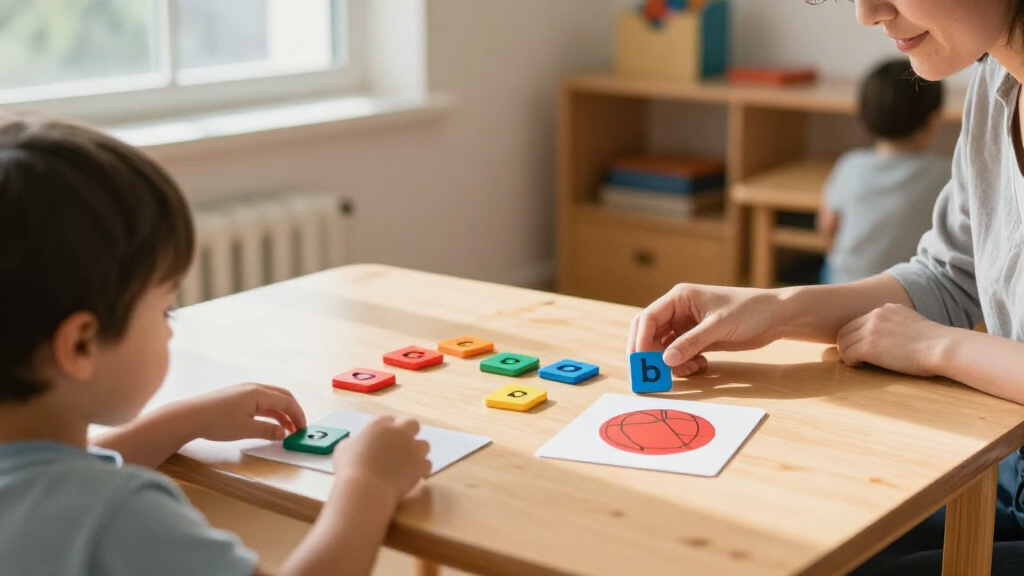
I ranked these games by how directly they help a beginning reader connect sounds, letters, and short words. I gave more weight to clear phonics practice, manageable play steps, and opportunities for a child to respond rather than only watch or listen. I also considered whether a format supports repeated practice, works well with an adult or another child, and offers a distinct use such as vowel sorting, rhyming, or spelling with letter pieces.
The order reflects fit for the specific goal of early phonics practice, not the number of features in a box. Focused CVC activities lead because they give children repeated chances to blend or build words; broader card sets and multi-skill toys rank lower when their phonics role is less defined. I treated sight-word recognition as a useful neighboring skill, but not a substitute for learning how letters represent sounds. Age labels and product names alone do not show whether a child is ready for a particular activity, so I also weighed the kind of support each format may call for.
Factors to Consider When Choosing Phonics Games For Early Readers
Before choosing a game, I’d start with the reading task your child needs to practise and how much support they need to do it. The right format can make a short practice session feel clear and achievable; a mismatch can leave a child guessing or leaning on pictures instead of sounds.
Match the Activity to the Reading Skill
Phonics covers several steps, and a game that helps with one step may not practise another. A child learning to blend sounds needs chances to hear or say each sound and combine them into a word; a child who already blends may benefit more from spelling or sorting patterns. Rhyming can build awareness of sound patterns, but it does not by itself teach a child to decode an unfamiliar word. Check what the child actually does during a turn, rather than relying on a broad label such as “reading game.” A common mistake is buying an activity that repeats a skill the child has mastered while leaving the difficult step untouched. If you are unsure, watch which part of a simple word causes the pause: hearing the first sound, blending through the word, or recalling the letter.
Choose the Right Amount of Help
Audio prompts, pictures, and adult directions can help a new reader get started, but too much prompting can hide whether the child can work out a word. Think about whether your child benefits from hearing a sound model or needs room to attempt the word independently. A self-correcting puzzle can give a child a way to check a match, while open-ended letter pieces may need an adult to guide the first few turns. Look for a format that lets you reduce hints as confidence grows. Avoid treating a wrong answer as a sign that the game is a poor fit; it may simply show that the child needs a smaller step or a brief demonstration. The best support helps a child take the next turn with less help.
Balance Repetition With Variety
Early readers often need to meet the same sound pattern many times, yet a long sequence of identical drills can lose its appeal. A game can add variety through turn-taking, sorting, movement, or changing letter pieces while keeping the target skill steady. Too much variety can also distract: a toy with several modes may split attention between phonics, numbers, and general play. I’d prioritize repeated practice of a small set of patterns before adding a large mix of new words. Notice whether the game makes it easy to replay the useful part without setting up the whole activity again. A shorter session that invites another round can be more practical than a large activity that is difficult to return to.
Decide Whether Play Is Solo or Shared
Some formats work best when an adult reads directions, gives sound cues, or helps a child check a spelling; others make turn-taking part of the game. Consider who will be available during play and whether the child can manage the pieces or cards without frequent setup help. A group card game can make practice social, but a child who is still learning the rules may spend more effort following turns than listening for sounds. Solo puzzles can suit short independent practice, though they may offer less spoken feedback. Check the number and size of loose pieces if the game will travel or be used at a table with younger siblings nearby. Choose for the way your household will actually play, not an ideal session that rarely happens.
Treat Sight Words as a Separate Need
Some common words are taught for quick recognition, while phonics games focus on using letter-sound patterns to read and spell. Both can support beginning reading, but a sight-word deck does not replace practice blending unfamiliar words. If your child recognizes familiar words but struggles to sound out new ones, choose a game centered on decoding or spelling. If blending is coming along and a child needs practice recalling frequent words, flash cards can fill that narrower role. Avoid judging progress only by how quickly a child names memorized cards; ask whether they can work through a new short word too. Keeping these goals distinct makes it easier to see what practice is helping.
Look at Practical Fit Before Adding Features
A game’s parts affect how often it gets used. Cards are usually easy to bring out for a brief session, while boards, blocks, and many loose pieces may need more space and sorting afterward. Sound-enabled toys can provide a cue without an adult reading every prompt, but they depend on a child finding the audio interaction helpful and manageable. Extra activities can be useful if the child will return to them; otherwise, they may add clutter without adding phonics practice. Consider storage, setup, and whether the pieces are easy for your child to handle before choosing a more elaborate kit. Paying more for a complex format makes sense when its additional modes match a real learning need.
Frequently Asked Questions
Should I choose a talking phonics toy or a hands-on word puzzle?
I’d choose based on what makes it easier for the child to participate. A talking toy can model sounds and support play when an adult is not available to prompt every turn, but audio cues do not always show whether the child can blend independently. A hands-on puzzle or letter set asks the child to make or check a word, which can reveal more about their current skill. If attention is the barrier, audio interaction may help; if the child needs practice connecting sounds to letters, prioritize a format that requires that connection. Either way, join the first few rounds to see whether the child is responding to the sounds or relying mainly on pictures and cues.
Are CVC games useful if my child already knows the alphabet?
Yes, because naming letters and blending their sounds are different skills. CVC activities focus on combining consonant and short-vowel sounds into simple words, which gives alphabet knowledge a practical reading use. If your child can already read those words smoothly, a basic CVC puzzle may offer too little challenge; look for a format that adds spelling, word families, or more varied patterns. Watch whether the child sounds through a new word or recalls it from a picture or previous turn. That distinction helps you decide whether to keep practising CVC words or move on.
Can sight-word flash cards replace phonics games?
No single format covers every early reading skill. Flash cards can build quick recognition of familiar words, while phonics games practise how letters and sounds work together to read or spell words. A child may benefit from both, but the balance depends on the current gap. If unfamiliar words are difficult, keep decoding practice in the mix instead of focusing only on memorization. If the child can decode but reads a set of frequent words slowly, short card sessions can target that need.
How do I know whether a phonics game is too difficult?
Notice whether your child can begin a turn after a brief example and whether they can make progress with a small cue. If every turn requires the adult to supply the answer, the activity may be asking for a skill the child is not ready to use independently. Try reducing the choices, saying sounds aloud, or focusing on one word at a time before setting the game aside. A little challenge can be productive when the child can still take part and understand the task. If play repeatedly ends in frustration, choose a simpler step and return to the harder activity later.
What should I prioritize if I can buy only one kind of game?
Choose the skill your child finds hardest, rather than the format with the most activities. For a child who struggles to blend short words, a focused CVC puzzle or matching game is a direct starting point. If short vowels are the sticking point, sorting can make those contrasts easier to practise. For a child who benefits from shared play, a turn-taking card or board format may be more likely to get used. A small activity that fits the child’s current need and your available play time can be more useful than a broad kit with several unused modes.
Conclusion
For a clear starting point, I’d choose Learning Resources 3-Letter Word Puzzle Cards as the best overall fit for short-word blending and building. Skillmatics Phonics Sorter is my best value-style pick for targeted vowel practice, while Word Seeds Phonics Board Game suits families who want a shared-play option. For beginners who need sound prompts, consider Sinoome or QuTZ, keeping in mind their broader features can make practice less focused. If your child learns by handling pieces, Gojmzo Wooden CVC Word Spelling Game is the premium-style choice; for frequent-word recognition, Scholastic Sight Words Flash Cards serve a specific supplementary need. I’d make the final choice by matching the activity to the skill your child is ready to practise now.