🔍 Read the full analysis: DeepSeek At Home: One Switch Ties Safety Settings To Censorship on ThorstenMeyerAI.com

Prime made for students and young adults
- Fast, free delivery for dorm and study essentials
- Prime Video and Amazon Music included
- Member-only deals
TL;DR
AtomicChat has published an edited DeepSeek-V4.1-Flash-1017 model and says it reduced refusals on a safety test from 85.2% to 0%. The publisher says the edit removes refusals across topics, not just harmful-request refusals; the results have not been independently replicated, and whether political bias changes is unknown.
AtomicChat has published an edited version of DeepSeek-V4.1-Flash-1017 that it says removes the model’s refusal behavior across topics, including refusals to harmful requests and political questions. The build is available on Hugging Face, and the publisher reports a drop in refusal rates on a safety test from 85.2% to 0%; those figures have not been independently verified.
The repository, named DeepSeek-V4.1-Flash-1017-Uncensored-GSQ-RCO-GGUF, combines DeepSeek’s model with compression work from ISTA-DASLab at the Institute of Science and Technology Austria and a separate refusal-removal edit by AtomicChat. The compression methods are not themselves safety modifications. AtomicChat says it changed a small number of shared model components, while leaving the large expert blocks as supplied by the compression lab. That account has not been checked by an independent party.
AtomicChat reports that the edited model scored 0.0% refusals on JailbreakBench, compared with 85.2% for the unedited version, and says reasoning scores held. The test figures are the publisher’s own results, not independent findings. Its model card also warns that its refusal classifier checks the beginning of a response, so a refusal later in the answer may be counted as a response rather than a refusal.
The repository is not gated and is MIT-licensed, according to its listing. The source report recorded 30,284 downloads in the previous month and 221 likes as of November 3, 2026. Those are repository activity figures, not evidence of how many people installed or used the model. The source also reports other edited DeepSeek builds on Hugging Face, including one with roughly 366,000 downloads, though the figure’s time window and comparison basis are not specified.
Infographic 01 · From a paper to a gaming PC
“Uncensored” is two years old. The new part is the size.
How a 2024 research finding, an MIT licence, a compression lab and a hobby engine put a 763-billion-parameter model on one 12 GB graphics card.
- 15 Aug 2023China’s generative AI rules take effectServices must “(u)phold the Core Socialist Values”
- Jun 2024Refusal is “a single direction”Shown across 13 open chat models up to 72B; removing it stops refusals
- Sep 2025US evaluators: censorship sits in the weightsNIST CAISI on older DeepSeek models (R1, R1-0528, V3.1), not V4.1
- 10 Sep 2026DeepSeek-V4.1-Flash released under MITFirst uncensored forks within hours, per Tech Insider
- 17 Oct 2026Update V4.1-Flash-1017Weights on Hugging Face and ModelScope; no safety statement
- 24 Oct 2026A free hobby engine adds the modelStrata 0.2.4: one 12 GB GPU, the rest streamed from RAM and SSD
- 3 Nov 202612,613 models tagged “abliterated”Hugging Face tag filter; several V4.1-Flash builds on page one
Hardware figures from the Strata release notes and the ISTA-DASLab model card (publisher figures). “Consumer hardware” here means a well-equipped gaming or workstation PC, not a laptop.
Sources: DeepSeek model card, DeepSeek, 17 Oct 2026, Arditi et al., arXiv 2406.11717 (2024), NIST CAISI, 30 Sep 2025 (older models), FPF on China's Interim Measures, Tech Insider, Strata release notes 0.2.4/0.2.5 (24/25 Oct 2026), ISTA-DASLab model card, Hugging Face model search (3 Nov 2026).
Powered by Thorsten Meyer AI
One Edit Removes Multiple Refusals
The significance is not simply that a model has been labeled “uncensored.” Edits intended to remove refusal behavior are already common: the source reports that Hugging Face’s “abliterated” tag listed 12,613 models on November 3, 2026. The more consequential point is that AtomicChat says its modification removes refusals across topics rather than preserving a distinction between dangerous requests and political content.
That matters because earlier DeepSeek models have faced scrutiny over political responses. The source says US government evaluators found built-in Chinese Communist Party censorship in older DeepSeek versions. Whether this particular edit changes political bias in the model’s answers has not been measured. Removing a refusal is not the same as removing a viewpoint or making answers more accurate.
For organizations, the claimed ability to run a large model locally raises a governance concern: employees could use a model outside approved services, monitoring, and policy controls. An offline model may offer privacy benefits, but it can also be harder for an employer to audit. Removing refusals may also leave one fewer internal safeguard against unsafe requests or prompt injection; it does not remove the need for external security controls or legal review.
For individual users, local access can reduce reliance on a hosted platform and its content rules. The trade-off is that users take on more responsibility for evaluating outputs and complying with applicable law. “Uncensored” describes a claimed behavior change; it does not certify neutrality, truth, or safety.
Popular right now

Dyson W1 PencilWash Cordless Wet and Dry Floor Cleaner with Dock

Shark HydroVac MessMaster Corded Wet Dry Vacuum and Mop (WD161)

Ninja Flip Toaster Oven & Air Fryer, Large Capacity, Stainless, SP151
As an affiliate, we earn on qualifying purchases.
From DeepSeek Release to Local Build
DeepSeek released V4.1-Flash on September 10, 2026, then issued the 1017 update on October 17, according to the source report. DeepSeek’s announcement described the update as “a Pareto improvement in performance and cost” and did not discuss safety. The report says DeepSeek’s model card lists an MIT license and contains no safety section or acceptable-use policy.
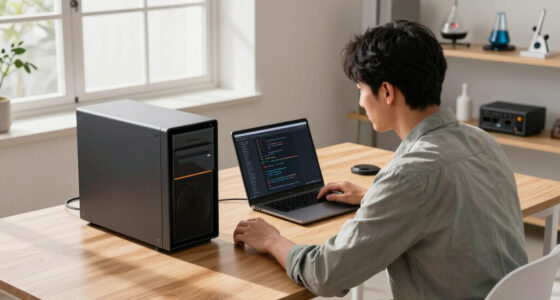
The local-running claim depends on compression and a separate engine, not on the model fitting entirely in graphics-card memory. ISTA-DASLab’s compression work produces smaller model files, while the free Strata engine runs the model with some components in system memory. The developers’ reported requirements include one 12 GB GPU, 46 to 64 GB of RAM, and about 250 GB of downloads, with speed estimated at roughly 5 to 10 tokens per second. These are developer-reported figures, not independent performance measurements.
The source describes refusal removal as an established research and community practice, citing a 2024 paper on a “single direction” associated with refusal in chat models. In this release, the methods have distinct roles: DeepSeek supplies the base model, ISTA-DASLab supplies compression, and AtomicChat supplies the refusal edit. The source says the edit’s file sizes are consistent with its account of the changes, but that consistency does not amount to independent verification.
“The edit removes refusals across topics; it does not keep a narrower set of them.”
— AtomicChat model card
Safety and Bias Results Remain Unchecked
The reported 85.2% to 0% refusal change and preserved reasoning scores are self-reported. No independent replication is provided in the source, and the model card’s stated test limitation means its refusal measure may not capture every refusal in a response. It is also unclear how the edit performs across different prompts, languages, or evaluation methods.
No measurement is given of whether political bias or censorship in the model’s answers changed. A refusal-removal edit could make the model respond to questions it previously declined without changing the substance or slant of those responses. The source’s reference to US government evaluations concerns older DeepSeek versions, not a direct evaluation of this edited build.
The source’s technical account of which model components AtomicChat changed has not been independently audited. The reported hardware and speed figures also come from developer tests, and actual performance may depend on the system and workload. Download totals do not establish active use, and the report does not identify who downloaded the model or for what purpose.
Independent Tests Are the Next Check
The immediate next step is independent evaluation of the refusal results, reasoning performance, and political responses. Such testing would need to distinguish a refusal at the start of an answer from later refusals and compare the edited model with the same base version under the same prompts and conditions.
Technical review could also verify the publisher’s description of the edited components and test whether the stated memory, storage, and speed requirements hold across ordinary consumer systems. Until those checks are available, the release establishes that the repository is public and that AtomicChat makes these claims—not that its results have been confirmed.
Organizations considering local deployment will need to decide how the model fits their existing access controls, monitoring, and rules for employee use. The source notes that obligations under the EU AI Act depend on how a system is used, rather than solely on who removed its refusals; specific obligations will depend on the deployment and applicable rules. No regulatory finding about this repository is reported.
Key Questions
What did AtomicChat publish?
It published an edited DeepSeek-V4.1-Flash-1017 build on Hugging Face, combining DeepSeek’s model, third-party compression work, and AtomicChat’s refusal-removal edit.
Has the model’s refusal rate been independently confirmed?
No. The reported fall from 85.2% to 0% on JailbreakBench comes from AtomicChat, and the source says it has not been independently replicated.
Does removing refusals make the model politically neutral?
That has not been established. The publisher says refusals are removed across topics, but no measurement shows whether political bias or the content of political answers changed.
Can it run on a computer with a 12 GB graphics card?
The developers say it can run with one 12 GB GPU, but also report a need for 46 to 64 GB of system RAM and roughly 250 GB of downloads. The figures have not been independently tested in the source material.
What should users take from the “uncensored” label?
It refers to the publisher’s claim that the model refuses fewer requests. It is not evidence that answers are accurate, neutral, or safe, and the publisher says users are responsible for their use of the model.
Source: ThorstenMeyerAI.com