🔍 Read the full analysis: What Went Wrong With Version One Of Our AI Horror-Comedy? on ThorstenMeyerAI.com

Prime made for students and young adults
- Fast, free delivery for dorm and study essentials
- Prime Video and Amazon Music included
- Member-only deals
TL;DR
Thorsten Meyer says his 97-second AI horror-comedy Hollow House took three versions in one night, after the first looked polished but felt boring. He attributes the improvement mainly to faster cuts and using one video model with references for the full cast; the project used 2,220 Higgsfield credits and about 2,100 ElevenLabs characters.
Filmmaker Thorsten Meyer says the first cut of Hollow House, a 97-second AI-generated horror-comedy, looked good but was too slow to work as a comedy, prompting him to make three versions overnight. In a behind-the-scenes account published October 28, Meyer says the final version used quicker editing and a single video model supplied with references for the full cast; the account frames the problem as one of rhythm, not image quality.
Hollow House follows a ghost who joins the scare crew at an extreme haunted attraction. When a guest says the safe word, the scaring does not stop; staff then treat the supernatural newcomer as a workplace issue. Meyer says the characters, voices and sets were AI-generated, and that the script, characters and jokes were his own. He says the structure was inspired by a horror-comedy short shared on X.
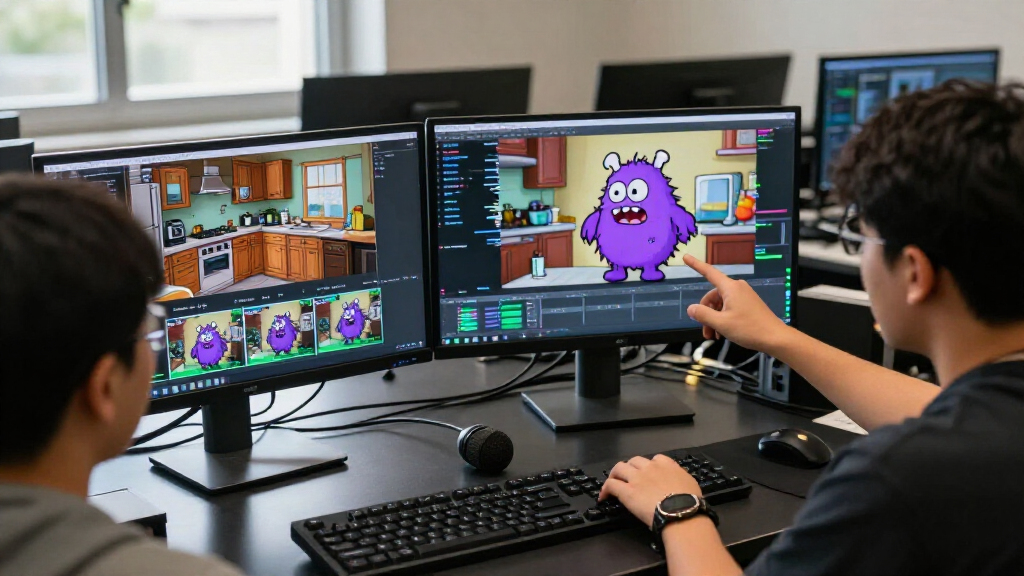
The first version used 20 shots assembled from generated stills and animated with Google’s Veo 3.1 fast mode. It ran 2 minutes 15 seconds, with an average shot length of 5.6 seconds. Meyer compared it with the short that inspired the project, which he counted as having about 74 cuts in 2 minutes 14 seconds, or roughly 1.8 seconds per cut. He concluded that the first cut’s long, mostly static shots and lack of music weakened its comic timing.
Meyer says the second version used 66 fast cuts and ran 2 minutes 21 seconds. The third was built as three roughly 30-second segments using one model with reference images for the cast, and ran 1 minute 37 seconds. Across the three versions, he reports spending 2,220 Higgsfield credits, which he estimates at about $95 at his plan price, as well as roughly 2,100 ElevenLabs characters for music and sound effects. These are the creator’s figures; the account does not provide an independently verified production budget.
What Went Wrong With Version One Of Our AI Horror-Comedy?
Thorsten Meyer’s 97-second short took three versions in one night. The first looked polished, but the jokes dragged. The turning point was an edit: quicker cuts, tighter timing, and one video model guided by references for the cast.
“The pictures were never the problem. The rhythm was.”— Thorsten Meyer, on the main production problem
A polished image can still miss the joke
Meyer says the first cut had consistent faces, costumes, and lighting. Its long, mostly static shots left too little room for rapid jokes and reactions.
Shots lingered
At an average 5.6 seconds per shot, the first version moved slowly for a comedy built around quick reactions.
Little room for laughs
Long holds weakened the setup, the reaction, and the handoff to the next beat. Meyer called the result “terribly boring and amateurish.”
Music was missing
The first cut lacked music, removing another tool for building suspense and shaping comic timing.
Three versions, one night
Production began in the early evening of October 27 and continued until about 1:30 a.m. on October 28, according to Meyer.
Good-looking, too slow
Twenty planned shots, each animated from a generated still with Veo 3.1 fast mode. The cut ran 2 minutes 15 seconds.
More cuts, still long
The second pass used 66 fast cuts, but ran 2 minutes 21 seconds. More edits alone did not produce the final short structure.
Shorter, more coherent
The final version used three roughly 30-second segments and one video model with reference images for the full cast.
The rhythm reset
For context, Meyer counted about 74 cuts in the short that inspired the project. These are creator-reported timings, not an independent edit analysis.
The reference short ran about 2 minutes 14 seconds, with roughly 74 cuts by Meyer’s count. No final average shot length was provided.
From ghost story to workplace problem
Hollow House follows a ghost joining the scare crew at an extreme haunted attraction. When a guest uses the safe word, the scares continue—and staff have a supernatural staffing issue.
A ghost joins the attraction’s scare crew.
A guest asks for the scaring to stop.
The supernatural newcomer misses the cue.
Ray asks whether the new guy signed the waiver.
What the production account reports
Meyer describes AI-generated characters, voices, and sets, with the script, characters, and jokes written by him.
Reference sheets
Eight character reference images were made before video generation to help keep hair, clothing, and appearance consistent.
Prompts needed checks
Meyer says a word typed in capitals was spoken letter by letter. Whisper speech recognition helped flag dialogue that differed from the script.
Not every action landed
A planned 180-degree head turn did not appear, and a requested floating stunt came back weaker than intended.
Reported production usage
These numbers come from Meyer’s account. The source does not provide an independently verified, all-in production budget.
Meyer estimates this at about $95 at his plan price across the three versions.
Used for music and sound effects, according to the creator.
What remains open
The account documents one creator’s revision process. It leaves several questions unanswered.
How did audiences respond?
No independent audience measurements or comparison of reception across the three cuts are provided.
What was the full cost?
The estimate does not establish the value of subscription time, unused credits, or other production effort.
Why did a filter intervene?
Meyer says an early lift attempt was blocked, apparently because it resembled hanging. The provider’s reason is not confirmed in the account.
Will this workflow generalize?
One short cannot show whether the same model and editing approach will work with different material or tools.
Key questions
The creator’s main takeaway: attractive images did not solve the editing problem. The final cut depended on changing the pace.
What is Hollow House?
A 97-second horror-comedy short about a ghost joining the staff of an extreme haunted attraction.
Why reject version one?
Meyer says its 20 shots averaged 5.6 seconds each, making the cut feel too slow for the comedy.
How did the final version differ?
It ran 1 minute 37 seconds, used three roughly 30-second segments, and used cast reference images with one video model.
What is the cost estimate?
2,220 Higgsfield credits, estimated at about $95 at Meyer’s plan price, plus roughly 2,100 ElevenLabs characters. These are creator-reported figures.
Why the First Cut Fell Flat
The account points to a practical limitation in AI-assisted filmmaking: generating attractive images did not solve the editing problem. Meyer says the first cut had consistent faces, costumes and lighting, yet the long shots left too little space for rapid jokes and reactions. In his account, the final improvement came from a human decision to reject the polished first pass and change the pace.
The production also illustrates how creators may need to manage consistency and model errors as part of the filmmaking process. Meyer describes making character reference sheets before generating video, then checking speech transcripts against the script. That workflow helped him track details such as a shouted word being spoken letter by letter, but it did not make every requested action possible. The example is a single creator’s account, not evidence that all AI video projects will encounter the same results or costs.
Popular right now

Bose QuietComfort Wireless Bluetooth Headphones with Active Noise Cancellation, Mic, USB‑C Charging, Deep Bass, 24‑Hour Battery – White Smok

Bose QuietComfort Wireless Noise-Cancelling Over-Ear Headphones, Black

Ninja CREAMi 7-in-1 Ice Cream Maker, NC301
As an affiliate, we earn on qualifying purchases.
Three Versions, One Night
Meyer says production began in the early evening of October 27 and continued until about 1:30 a.m. October 28. Before generating clips, he made eight character reference images with Google’s Nano Banana 2 image model through Higgsfield. He says each image cost two credits at 2K resolution and that the set was completed in under two minutes. The images served as visual references for later frames and clips, intended to reduce changes in hair, clothing and appearance between shots.
For version one, Meyer generated a start frame for each of 20 planned shots and animated them with Veo 3.1 fast mode, which he says generated speech and sound alongside the video. His account also describes practical failures: the model spelled out a word typed in capitals, did not produce a planned 180-degree head turn, and returned a weaker version of a requested floating stunt. A speech-recognition check using Whisper helped identify dialogue that differed from the script. These details are reported by Meyer and are not independent tests of the tools.
““terribly boring and amateurish.””
— Thorsten Meyer, describing his reaction to the first cut
What the Production Account Leaves Open
The article does not include a full shot-by-shot comparison of all three versions or independent measurements of audience response. Meyer’s cut counts, timing comparisons and cost estimates are his own account; the source does not state how the approximate $95 figure accounts for subscription fees, unused credits, or other production time. It also does not provide enough detail to compare the final version’s reception with the earlier cuts.
Some technical explanations remain the creator’s interpretation. Meyer says a content filter blocked an early attempt to lift a character, apparently because the image resembled hanging, while a reworded prompt produced a limited floating effect. The source does not identify a confirmed reason from the model provider. It also does not establish whether the final workflow would work as well on another project, with different models or different comedic material.
The Final Cut and Its Reception
Meyer’s account links to the finished 1:37 Hollow House short and describes the third version as the one that worked. The source does not announce a release schedule, follow-up film, or further production milestone. The next observable step for readers is to compare the final short with Meyer’s account of the first two versions and assess whether the faster cutting supports the jokes.
Any broader conclusion about AI filmmaking will depend on more examples and on details not included here, such as audience response and the full cost of production. For now, the confirmed development is a creator’s documented account of revising one short: the images were not enough, and the final edit depended on changing the pacing.
Key Questions
What is Hollow House?
Hollow House is a 97-second horror-comedy short about a ghost joining the staff of an extreme haunted attraction. Meyer says the characters, voices and sets were AI-generated.
Why did Meyer reject the first version?
Meyer says the first cut looked good but felt boring and amateurish. It had 20 shots averaging 5.6 seconds each, which he judged too slow for the comedy’s timing.
How did the final version differ?
The third version ran 1 minute 37 seconds and was made in three roughly 30-second segments using one video model with reference images for the full cast. Meyer says the faster pacing made it work better.
How much did the project cost?
Meyer reports using 2,220 Higgsfield credits, which he estimates at about $95 at his plan price, plus about 2,100 ElevenLabs characters for music and sound effects. These figures come from his account and are not an independently audited budget.
Source: ThorstenMeyerAI.com