
🔍 Read the full analysis: Choose The Best Studio Condenser Microphone For AI In 2026 on ThorstenMeyerAI.com

Prime made for students and young adults
- Fast, free delivery for dorm and study essentials
- Prime Video and Amazon Music included
- Member-only deals
TL;DR
In 2026, the RØDE NT1 Signature is confirmed as the top studio condenser microphone for AI work, offering exceptional sound quality and durability. Other options like Audio-Technica AT2020 remain popular for budget-conscious users, with new models adding connectivity features. The choice depends on sound needs, setup, and budget.
In 2026, the RØDE NT1 Signature has been confirmed as the best overall studio condenser microphone for AI applications, praised for its exceptional sound clarity and build quality. This development reflects ongoing advances in microphone technology tailored for AI-driven audio workflows, making it a critical choice for professionals and enthusiasts alike.
The RØDE NT1 Signature leads the market due to its pristine sound reproduction, durable construction, and included accessories such as shock mounts and pop filters. It offers a flat frequency response ideal for capturing nuanced vocals and instrument sounds, essential for high-fidelity AI training data and voice synthesis. The model’s popularity is driven by its reliability in studio environments and its ability to handle complex audio tasks with minimal noise, as detailed in the original analysis.
Meanwhile, the Audio-Technica AT2020 remains a favored budget option, providing solid audio performance at a lower price point. It is favored by home studio users and beginners who prioritize affordability without sacrificing too much quality. Additionally, the latest models like the RØDE NT1 5th Gen introduce USB-C connectivity, simplifying setup for modern digital workflows, though at a higher cost. These options highlight the trade-offs between sound quality, ease of use, and price, which consumers must consider based on their specific needs.
Manufacturers continue to innovate, with new models emphasizing features such as multiple pickup patterns and enhanced noise rejection, vital for AI training and voice data collection. The market remains competitive, with a focus on delivering professional-grade audio in versatile formats, whether for studio recording, AI dataset creation, or live voice processing.
The 10 picks
- 1
 RØDE NT1 5th Gen Studio Condenser Microphone, XLR + USB-C, SilverView on Amazon →
 - 2
 RØDE NT1 Signature Series Studio Condenser Microphone, BlackView on Amazon →
 - 3
 Audio-Technica AT2020 Cardioid Condenser Studio XLR Microphone, BlackView on Amazon →
 - 4
 AKG Pro Audio P120 – Affordable 2/3-Inch Diaphragm Condenser Microphone for C…View on Amazon →
 - 5
 Melon Audio MA-87 Studio Condenser Microphone with AccessoriesView on Amazon →
 - 6
 MAONO A04 Gen2 XLR/USB Condenser Microphone Kit for PC Podcast RecordingView on Amazon →
 - 7
 Maono PM320S Condenser PC Microphone with XLR Cable, Boom Arm, Pop FilterView on Amazon →
 - 8
 Mackie EM-Series Large-Diaphragm Condenser Microphone (EM-91C)View on Amazon →
 - 9
 FIFINE T669 Studio Condenser USB Microphone for Recording and PodcastingView on Amazon →
 - 10
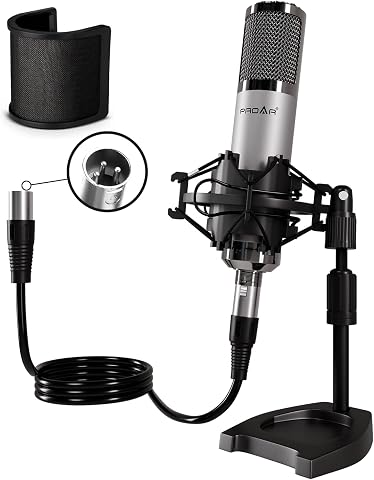 XLR Condenser Microphone with Desktop Stand for Vocals and PodcastingView on Amazon →
Why High-Quality Microphones Matter for AI Development
High-quality studio condenser microphones are essential for AI applications because they ensure accurate voice and sound data collection, which directly impacts the performance of speech recognition, synthesis, and other AI models. As AI systems become more sophisticated, the demand for pristine audio input increases. Choosing the right microphone affects not only sound fidelity but also the reliability and consistency of AI training datasets, making this a critical investment for developers, researchers, and content creators working in AI in 2026.
Evolution of Microphones for AI Work in Recent Years
The market for studio microphones has evolved significantly over the past decade, driven by the rise of AI and machine learning. Previously, XLR microphones like the RØDE NT1 series dominated professional studios due to their superior audio quality and expandability. The introduction of models like the NT1 5th Gen with USB-C connectivity reflects a shift toward more accessible, plug-and-play solutions suitable for AI data collection in digital workflows. Budget options like the Audio-Technica AT2020 have maintained popularity for their affordability, especially among emerging AI developers and small studios. As AI applications expand across industries, the demand for microphones that combine high fidelity, durability, and ease of integration continues to grow, prompting manufacturers to innovate with features like multiple pickup patterns and noise rejection.
“The choice of microphone in AI applications is critical; it directly influences the quality of data used for training and deployment. The RØDE NT1 Signature exemplifies the level of fidelity needed today.”
— Thorsten Meyer, AI Audio Expert
Outstanding Questions About Microphone Choices in 2026
While the RØDE NT1 Signature is confirmed as the top overall choice, it is not yet clear how upcoming models or alternative brands will compare in terms of new features like enhanced noise rejection or AI-specific optimizations. The long-term durability of newer USB-C models and their compatibility with evolving AI workflows remains to be seen. Additionally, the impact of emerging digital standards and integration with AI platforms could influence future preferences, but these developments are still unfolding and have not yet been fully evaluated.
Next Steps for AI Audio Microphone Selection in 2026
Manufacturers are expected to release updated models with improved features tailored for AI applications, including better noise handling and connectivity options. Consumers and professionals should monitor these releases and consider testing new models once available. Additionally, as AI technology advances, integrating microphones with AI-optimized features and compatibility with emerging digital standards will become increasingly important. Users should also evaluate their specific workflow requirements and future-proof their setups accordingly.
Key Questions
Is the RØDE NT1 Signature suitable for AI data collection?
Yes, the RØDE NT1 Signature offers exceptional sound clarity and low noise, making it highly suitable for AI training datasets and voice recognition projects.
What is the main advantage of USB-C microphones for AI work?
USB-C microphones like the NT1 5th Gen provide plug-and-play convenience with modern connectivity, simplifying setup and integration into digital workflows.
Are budget microphones reliable for professional AI applications?
Budget models such as the Audio-Technica AT2020 can deliver good performance for less demanding or initial AI projects but may lack advanced features needed for high-stakes or large-scale datasets.
Do I need special accessories for optimal AI recording?
Using shock mounts, pop filters, and proper acoustic treatment can significantly improve recording quality, which is crucial for AI applications requiring high-fidelity data.
Will future microphone models impact current AI workflows?
Yes, upcoming models with enhanced noise rejection, better connectivity, and AI-specific features are likely to influence best practices and setup choices in the near future.
Source: ThorstenMeyerAI.com
Halloween Picks
halloween
As an affiliate, we earn on qualifying purchases.