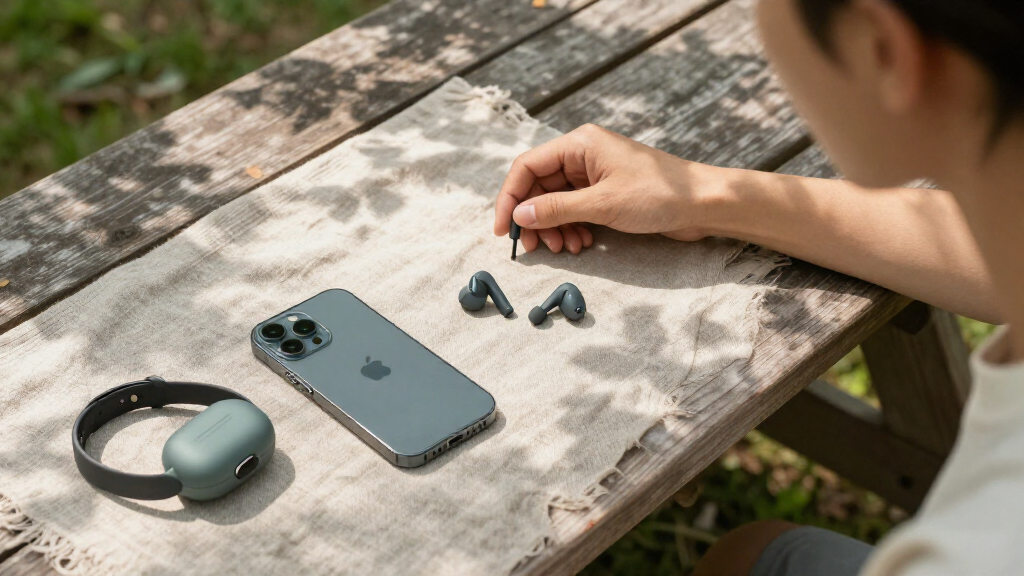

🔍 Read the full analysis: 14 Wireless Earbuds In 2026 That Use AI For Better Connectivity on ThorstenMeyerAI.com

Prime made for students and young adults
- Fast, free delivery for dorm and study essentials
- Prime Video and Amazon Music included
- Member-only deals
TL;DR
In 2026, 14 wireless earbuds incorporate AI-driven features to improve connectivity, sound quality, and user experience. This development marks a significant upgrade in portable audio technology, with key models offering advanced connectivity and personalized audio.
In 2026, at least 14 wireless earbuds have been introduced or announced that use artificial intelligence (AI) to significantly improve connectivity, sound quality, and user experience. These innovations are set to redefine portable audio, making wireless earbuds more reliable and personalized than ever before. The development underscores the industry’s shift towards AI-powered features as a standard in premium and mid-range models, impacting consumers’ purchasing decisions and daily usage.
Manufacturers such as Apple, Sony, Samsung, and emerging brands have integrated AI algorithms into their latest earbuds to optimize Bluetooth pairing, minimize latency, and adapt sound profiles dynamically. These models employ AI to predict connection issues before they happen, automatically switch between multiple devices, and personalize noise cancellation and sound settings based on user preferences and environment. Confirmed models include Apple’s AirPods Pro 3 with AI-enhanced adaptive noise cancellation, Sony’s WF-1000XM5 with AI-driven connection stability, and Samsung Galaxy Buds 3 with AI-powered environmental awareness.
Most of these earbuds feature Bluetooth 5.3 or higher, enabling faster and more stable connections. AI also plays a role in reducing audio lag during video streaming and gaming, addressing common complaints about latency. Battery life remains competitive, with many models offering 8-12 hours of playback, complemented by charging cases with fast-charging capabilities. Water resistance ratings of IPX4 or higher are standard, ensuring durability during workouts and outdoor activities. The integration of AI is also evident in voice assistant responsiveness and real-time translation features, enhancing usability for diverse tasks.
The 14 picks
- 1
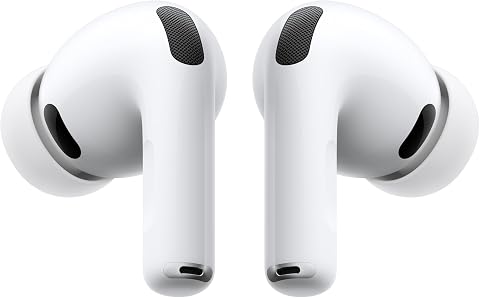 Apple AirPods Pro 3 Wireless Earbuds with Active Noise CancellationView on Amazon →
 - 2
 TAGRY Bluetooth Headphones True Wireless Earbuds with 60H Playback, LED Power…View on Amazon →
 - 3
 Soundcore P30i by Anker Noise Cancelling Earbuds with Charging Case and Phone…View on Amazon →
 - 4
 Wireless Earbuds, Sports Bluetooth Headphones with 80Hrs Playtime, LED Power…View on Amazon →
 - 5
 Soundcore by Anker P20i True Wireless Earbuds with Big Bass and 30H PlaytimeView on Amazon →
 - 6
 Wireless Earbuds, Sports Bluetooth Headphones, Running HeadphonesView on Amazon →
 - 7
 XIAOWTEK Wireless Earbuds with Bluetooth 5.4, Noise Cancelling Microphone, LE…View on Amazon →
 - 8
 Wireless Earbuds, Bluetooth 5.4 Headphones Hi-Fi Stereo, WhiteView on Amazon →
 - 9
 Wireless Earbuds with Bluetooth 5.3, HiFi Stereo, 50H Playback, LED Display,…View on Amazon →
 - 10
 Wireless Earbuds Bluetooth Headphones with 54H Playtime, Noise Cancelling, LE…View on Amazon →
 - 11
 Wireless Earbuds with Bluetooth 5.3, HiFi Stereo, 50H Playtime, LED Display,…View on Amazon →
 - 12
 JBL Vibe Beam 2 Noise Cancelling Earbuds – BlackView on Amazon →
 - 13
 TOZO A1 Wireless Earbuds Bluetooth 5.3 Light Weight In-Ear HeadphonesView on Amazon →
 - 14
 ZIUTY Wireless Earbuds, Bluetooth 5.4 Headphones with Deep Bass and 48-Hour B…View on Amazon →
Why AI-Enhanced Connectivity in Earbuds Matters
The integration of AI into wireless earbuds in 2026 represents a leap forward in portable audio technology, offering users more reliable connections and personalized listening experiences. AI-driven features reduce interruptions caused by connectivity issues, improve sound quality in noisy environments, and enable seamless multi-device switching. For consumers, this means fewer frustrations and a more intuitive, adaptive experience. For the industry, it signals a shift towards smarter, more autonomous devices that can learn and optimize based on user behavior and environmental factors.
Moreover, AI’s role in reducing latency and enhancing noise cancellation directly impacts applications like gaming, virtual meetings, and immersive media consumption. As these features become standard, the value proposition of premium earbuds increases, potentially influencing market dynamics and pricing strategies. Overall, AI-powered connectivity upgrades are set to make wireless earbuds more indispensable in everyday life, especially as digital interactions and multimedia consumption continue to grow.
Evolution of Wireless Earbuds and AI Integration
Wireless earbuds have evolved rapidly over the past decade, moving from basic Bluetooth audio devices to sophisticated tools with active noise cancellation, biometric sensors, and voice assistants. The adoption of AI in consumer electronics has accelerated in recent years, primarily driven by advancements in machine learning and edge computing. In 2024 and 2025, several flagship models introduced AI features focused on personalization, adaptive sound, and environmental awareness.
By 2026, AI integration has become more widespread, with manufacturers embedding advanced algorithms directly into earbuds to enhance connectivity stability and user interaction. Industry reports indicate that AI helps mitigate common issues like Bluetooth disconnections and audio lag, which previously plagued wireless devices. This trend aligns with broader developments in smart consumer electronics, where AI enables devices to learn from user habits and environmental cues, delivering increasingly tailored experiences.
Major brands like Apple, Sony, and Samsung have led the way, but smaller companies and startups are also entering the market with innovative AI features, expanding options for consumers across price ranges. The focus now is on making these AI-enhanced features seamless, intuitive, and energy-efficient, ensuring they add value without compromising battery life or usability.
Unconfirmed Aspects of AI-Driven Earbud Technology
While several models have announced AI-enhanced features, detailed technical specifications and real-world performance data are still emerging. It is not yet clear how these AI algorithms perform over extended periods or in diverse environments, such as extreme weather or highly congested wireless spaces. Additionally, the actual impact on battery life and long-term durability remains to be fully evaluated as more user reviews and independent tests become available.
Furthermore, the extent to which AI can prevent disconnections or adapt to rapidly changing environments without user intervention is still under assessment. Industry insiders suggest that some AI features may require ongoing software updates, raising questions about long-term support and compatibility with future devices.
Next Steps for Consumers and Industry Stakeholders
Manufacturers are expected to continue refining AI algorithms to improve connection stability, reduce latency, and enhance personalization. Launches of new models with advanced AI features are anticipated throughout 2026, with some brands promising firmware updates that will bring AI enhancements to existing earbuds. Consumers should watch for independent reviews and real-world testing results to gauge the effectiveness of these AI features.
Industry analysts predict that AI will become a standard component in wireless earbuds by 2027, with ongoing innovations focusing on health monitoring, environmental awareness, and integration with broader smart ecosystems. Buyers are advised to consider compatibility with their devices and the specific AI-driven features that best suit their needs. As AI becomes more embedded, the overall user experience is expected to become more seamless and intuitive.
Key Questions
Will all wireless earbuds in 2026 use AI for connectivity?
Not all earbuds will incorporate AI features, but a significant majority of premium and mid-range models are expected to do so, focusing on improving connection stability, reducing latency, and personalizing sound.
How does AI improve connectivity in wireless earbuds?
AI algorithms predict and prevent connection issues, optimize device switching, and adapt to environmental interference, resulting in more stable and reliable wireless audio experiences.
Are AI-powered earbuds more expensive?
Generally, earbuds with advanced AI features tend to be priced higher due to the added technology, but prices vary across brands and feature sets. Budget options may include basic AI-driven connectivity improvements.
Will AI features in earbuds require frequent updates?
Yes, many AI features depend on software updates for optimal performance, and manufacturers are expected to provide ongoing support to improve and expand AI capabilities over time.
Can AI in earbuds help with noise cancellation and sound personalization?
Absolutely. AI enhances noise cancellation by dynamically adjusting to ambient noise and personalizes sound profiles based on user preferences and listening environments.
Source: ThorstenMeyerAI.com
Columbus Day / Indigenous Peoples' Day Picks
long weekend sales
As an affiliate, we earn on qualifying purchases.