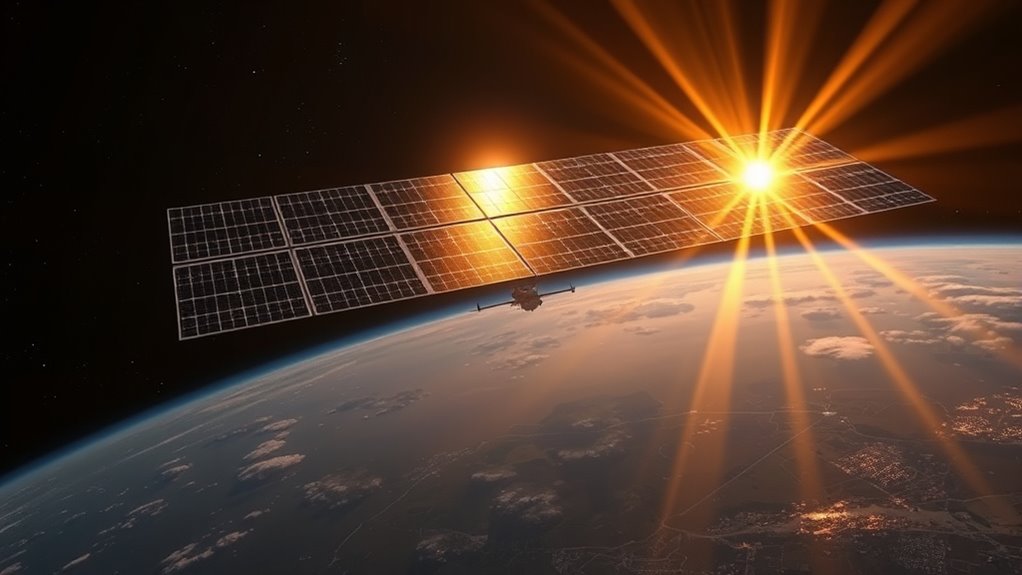

Space-Based Solar Power (SBSP) captures sunlight in orbit and beams it back to Earth as clean electricity. This innovative technology provides a continuous energy supply, unhindered by weather or daylight. Satellites equipped with large solar panels convert sunlight into electricity and use microwave or laser methods to transmit power. It’s a promising solution for energy security and sustainability. Want to discover how it works and the challenges it faces? There’s much more to explore!
Key Takeaways
- Space-Based Solar Power (SBSP) harnesses solar energy from orbit, providing a continuous energy supply unaffected by weather or daylight conditions.
- Satellites convert sunlight into electricity and transmit it back to Earth using microwave or laser technology for efficient energy delivery.
- SBSP enhances energy access to remote and underserved communities, supporting a shift towards cleaner energy sources and reducing dependence on fossil fuels.
- Continuous energy collection promotes energy security and aligns with environmental sustainability goals by lowering carbon footprints.
- Engineering efforts focus on developing efficient energy transmission methods and autonomous systems for maintaining satellite orbit stability amidst space debris challenges.

Have you ever imagined harnessing the sun’s energy from space? Space-based solar power (SBSP) is a revolutionary concept that could change how we generate electricity on Earth. Instead of relying on terrestrial solar panels that only work during daylight and are affected by weather conditions, you can tap into the sun’s energy 24/7 from orbit. This means you’d have a consistent and reliable power source, reducing dependence on fossil fuels and minimizing carbon footprints.
To make this dream a reality, engineers and scientists are working on advanced energy transmission methods. Imagine satellites equipped with large solar panels collecting sunlight and converting it into electricity. These satellites would then transmit this energy back to Earth, likely using microwave or laser technology. This process guarantees that energy can be sent to remote areas or disaster-stricken regions where traditional power infrastructure may be damaged or non-existent. The potential to reach underserved communities with clean energy is a game-changer.
However, one of the substantial challenges in SBSP is orbit maintenance. Satellites aren’t just floating in space; they require precise positioning and regular adjustments to stay in the correct orbit. You’d need to contemplate factors like gravitational forces, solar radiation pressure, and even space debris, all of which could affect the satellite’s stability and performance. Engineers are developing autonomous systems to help maintain the satellites’ orbits, ensuring they remain functional and efficient over time.
solar panel for satellite applications
As an affiliate, we earn on qualifying purchases.
As an affiliate, we earn on qualifying purchases.
Frequently Asked Questions
How Much Energy Can Space-Based Solar Power Generate Annually?
Space-based solar power systems can generate an estimated 10 to 20 terawatts annually, depending on energy collection efficiency and orbital placement strategies. You’ll find that ideal positioning in geostationary orbits allows for continuous sunlight exposure, maximizing energy capture. By utilizing advanced technologies, these systems can convert sunlight into usable energy more effectively. So, as you explore this innovative approach, consider how strategic placements enhance overall energy production and sustainability.
What Are the Environmental Impacts of Space-Based Solar Power Systems?
Space-based solar power systems can have environmental impacts, primarily regarding space debris and planetary protection. As you deploy these systems, you’re increasing the risk of space debris, which can threaten satellites and astronauts. Additionally, you need to guarantee that these systems don’t interfere with Earth’s ecosystems or contribute to pollution. Balancing energy generation with sustainability is vital, so it’s important to take into account the long-term effects on both space and our planet.
How Do Space-Based Solar Power Systems Compare in Cost to Terrestrial Solar?
When you look at cost comparison, space-based solar power systems tend to be substantially more expensive than terrestrial solar installations. The high initial investment includes satellite technology and launch costs. However, you’ve got to take into account the potential for continuous energy generation without weather or daylight interruptions. Deployment challenges also arise, as launching and maintaining these systems is complex and costly, but their long-term benefits might outweigh the high upfront expenses.
What Materials Are Used to Construct Space-Based Solar Power Satellites?
You wouldn’t believe the incredible materials used in crafting space-based solar power satellites! To withstand the harsh conditions of space, engineers rely on super durable materials like titanium and carbon fiber for satellite design. These materials offer unmatched strength while keeping the weight down. They also incorporate specialized coatings to resist radiation and extreme temperatures. By combining cutting-edge technology with these tough materials, they guarantee satellites can thrive in the cosmos for years to come!
Who Funds Research and Development for Space-Based Solar Power Technologies?
Research and development for space-based solar power technologies often gets funding from a mix of government grants and private investments. You’ll find that governments are keen to support innovative energy solutions, providing grants to academic institutions and companies. At the same time, private investors see potential in this emerging field and contribute capital to foster advancements. By combining these funding sources, developers can push the boundaries of solar technology and make it viable for the future.
microwave energy transmission kit
As an affiliate, we earn on qualifying purchases.
As an affiliate, we earn on qualifying purchases.
Conclusion
As we stand on the brink of a new era, space-based solar power shines like a distant star, promising to illuminate our world with clean energy. Imagine harnessing the sun’s embrace from above, beaming its warmth down to Earth, nourishing our lives. This technology isn’t just a dream; it’s a bridge to a sustainable future, where our planet breathes freely. Let’s reach for the sky and transform that dream into a radiant reality for generations to come.
laser communication modules
As an affiliate, we earn on qualifying purchases.
As an affiliate, we earn on qualifying purchases.
space debris removal tools
As an affiliate, we earn on qualifying purchases.
As an affiliate, we earn on qualifying purchases.