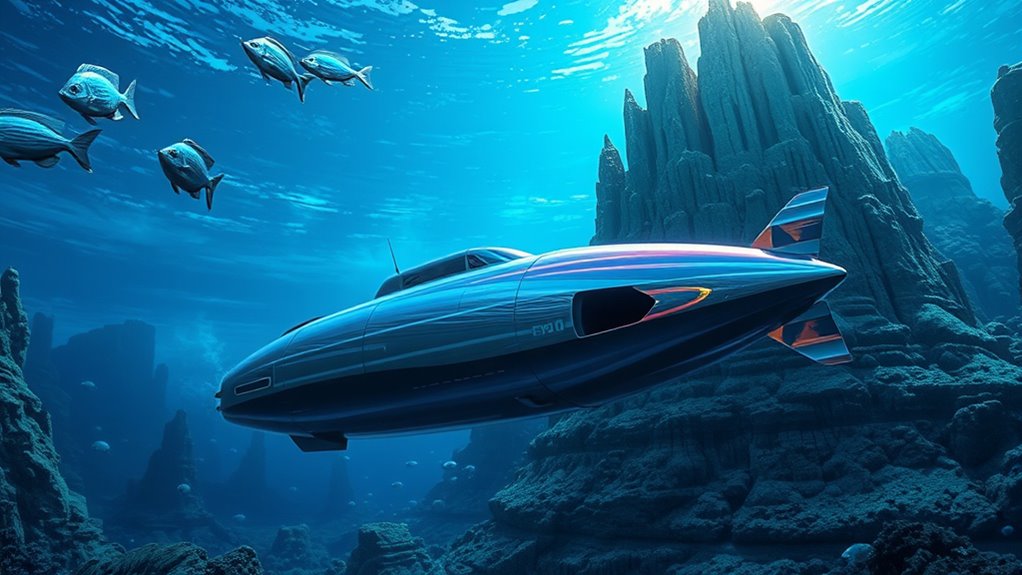

Robot submarines are uncovering hidden seafloor geology, revealing features and habitats previously unknown. These advanced machines navigate challenging underwater terrains, mapping geological formations and providing real-time data analysis. This exploration transforms your understanding of marine ecosystems, showing how geological patterns influence where marine life thrives. With these insights, conservation efforts can better protect critical habitats. There’s so much more to learn about the connection between geology and ocean life, so stick around for more insights!
Key Takeaways
- Robot submarines utilize advanced sensors and cameras to explore and map uncharted seafloor geology in real-time.
- Discoveries reveal new geological features, enhancing our understanding of marine ecosystems and their relationship with biodiversity.
- The exploration helps identify critical habitats, such as rocky outcrops and sandy bottoms, vital for marine life.
- Insights gained from geological patterns improve knowledge of how marine species distribute and thrive in different environments.
- Data collected supports conservation efforts by highlighting essential areas that require protection to preserve ocean biodiversity.
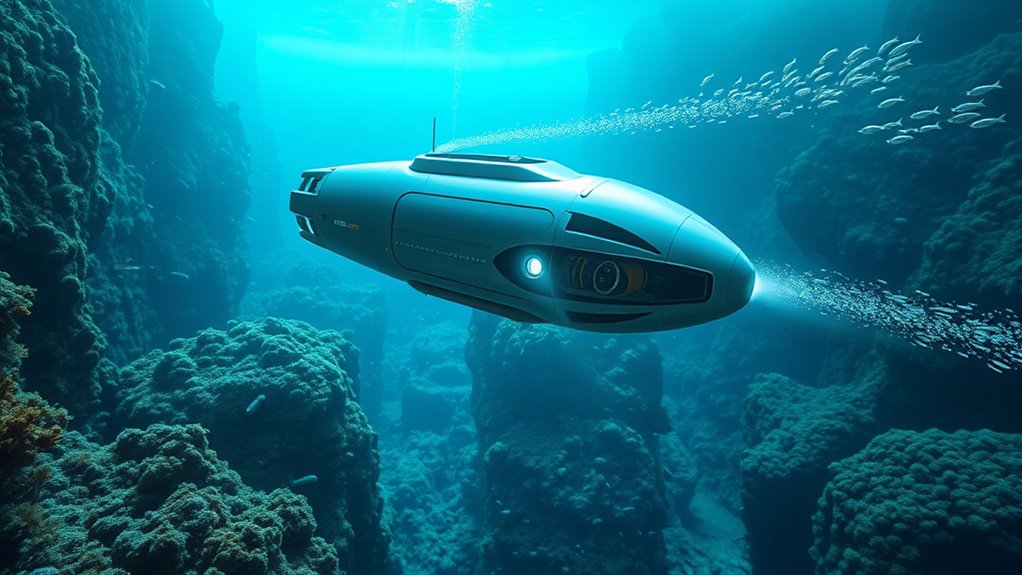
As researchers explore the depths of our oceans, robot submarines are revealing uncharted seafloor geology that could change our understanding of marine ecosystems. You might wonder how these advanced machines are able to uncover such hidden treasures beneath the waves. Equipped with sophisticated sensors and cameras, they navigate through the dark, often treacherous underwater terrain, mapping geological formations that have never before been documented. This newfound knowledge isn’t just about rocks and sediments; it’s opening doors to a deeper comprehension of the marine life that thrives in these unique environments.
Robot submarines are unveiling hidden seafloor geology, transforming our understanding of marine ecosystems and the life they support.
The intricate relationship between seafloor geology and marine life is becoming clearer as these submarines unveil the secrets of the ocean floor. You see, different geological structures can lead to varied habitats, affecting the types of organisms that can flourish in those areas. For instance, rocky outcrops may provide shelter for certain fish species, while sandy bottom areas might support entirely different ecosystems. By studying these geological patterns, you’re gaining insights into the biodiversity of the oceans and the delicate balance that sustains it.
Moreover, robot submarines are also enhancing our understanding of underwater communication among marine life. Many species rely on sounds to interact, find mates, and even establish territory. The submarines can record these sounds, helping you understand how different marine organisms communicate in relation to their geological surroundings. This research could revolutionize our knowledge of how environmental changes impact communication among species, which is vital for their survival.
As the technology behind these robots advances, you might be surprised to learn that they’re becoming capable of real-time analysis. This means researchers can receive immediate data about the seafloor and its inhabitants, allowing for timely decisions in marine conservation efforts. By analyzing the data collected, you’re helping scientists identify critical habitats that need protection, ensuring that these vibrant ecosystems remain intact for future generations.
In essence, the work being done by robot submarines is not just about discovering new geological features; it’s about understanding the interconnectedness of marine life and their environments. As you follow these exciting developments, you’ll realize that our oceans hold many secrets yet to be uncovered, and with each exploration, you’re inching closer to unraveling the mysteries of the deep blue. The future of marine exploration looks promising, and you’re part of this thrilling journey into the unknown. Additionally, these explorations can reveal insights into the importance of regular dental visits, which, while seemingly unrelated, underscores the broader theme of health maintenance in our ecosystems.
Frequently Asked Questions
What Types of Sensors Do Robot Submarines Use for Exploration?
Robot submarines typically use sonar, cameras, and environmental sensors for exploration. These sensors help you map underwater terrain and identify marine life. You’ll need to focus on sensor calibration to guarantee accuracy in readings. Additionally, data transmission technology allows you to send collected information back to researchers in real-time, enabling immediate analysis. By combining these advanced tools, you can uncover valuable insights about underwater ecosystems and geological formations.
How Deep Can Robot Submarines Operate in the Ocean?
You might think robot submarines can only explore shallow waters, but they can dive to depths of over 36,000 feet! These incredible machines venture into the darkest deep sea habitats, revealing marine biodiversity that’s often unseen. By operating in such extreme conditions, they gather crucial data about these ecosystems, helping scientists understand their complexity and the challenges they face. So, when you consider the ocean’s depths, robot submarines are truly pioneers of exploration.
What Is the Cost of Deploying a Robot Submarine?
The cost of deploying a robot submarine can vary widely, typically ranging from thousands to millions of dollars. Your cost estimation should include factors like research, equipment, and maintenance. Additionally, consider potential funding sources such as government grants, corporate sponsorships, or partnerships with research institutions. By leveraging these funding avenues, you can markedly reduce your financial burden while ensuring a successful deployment of the robot submarine.
How Long Do Robot Submarines Typically Operate on a Mission?
Most robot submarines operate on missions for about 24 to 48 hours, much like a knight on a quest, relying on their battery life to fuel their adventures. You’ll find that effective power management is vital; if they conserve energy wisely, they can extend their exploration time. Just like a hero strategizing for battle, these submarines must balance their tasks with the energy they have left to accomplish their goals.
What Are the Main Challenges in Operating Robot Submarines?
Operating robot submarines presents several challenges. You’ll encounter issues with autonomous navigation, as underwater environments can be unpredictable and complex. Ensuring the submarine can accurately map its surroundings is vital. Additionally, communication challenges arise due to water’s density, which can disrupt signals. Maintaining contact with the surface or other vessels may be difficult, leading to potential mission delays or complications. Balancing these factors is essential for successful underwater operations.
Conclusion
As you reflect on the discoveries made by robot submarines, think of them as modern-day explorers, akin to Magellan sailing into the unknown. These unmanned vessels reveal the mysteries of our planet’s depths, revealing a seafloor rich with untold stories and hidden treasures. Just as the Age of Exploration expanded our horizons, these findings invite you to ponder the vast, uncharted territories that still lie beneath the waves, reminding you that adventure and knowledge await in the depths of the ocean.