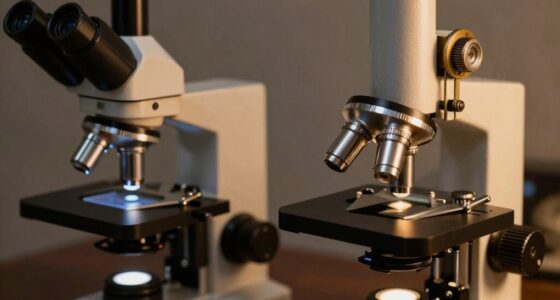
Freeze Dryers Sound Extreme Until You See What They Actually Do

I never knew that the loud sounds from freeze dryers actually indicate powerful preservation technology in action, and you’ll be amazed once you see what they do.

TIL only a fraction of Isaac Newton’s total written output was dedicated to science and math. 60% of his surviving written works were dedicated to Biblical prophecy and alchemy.

New research reveals that less than half of Newton’s 10 million words focused on science, with significant portions dedicated to religion and alchemy.

TIL there exists a shape that, instead of having a clean “inside” and “outside”, has a clean “inside” but the outside world is segmented and split. It is called the Alexander Horned Sphere

Researchers have identified a topological shape, the Alexander horned sphere, that challenges traditional notions of inside and outside in 3D space.

TIL that in 2024 a PhD student “accidently” discovered Valeriana – a Edinburgh sized hidden Mayan city in Mexico while browsing for data on the internet.

A Tulane PhD student using laser survey data found a previously unknown ancient Maya city in Mexico, reshaping understanding of regional history.

The license. Why the AI content market pays the brand-name corpus and strands the long tail.

Exploring why the AI content industry favors licensed brand-name corpora and the implications for the long tail of data sources.

The calendar technicality. Why Elon Musk’s lawsuit against Sam Altman and OpenAI lost on timing, not on substance.

Elon Musk’s lawsuit against Sam Altman and OpenAI was dismissed due to a calendar technicality, not on the merits of the case. The development raises questions about legal strategy and timing.

Raw-feed licensing. The contract that doesn’t exist yet.

A formal contract for raw-feed licensing has yet to be established, raising questions about industry standards and future regulations.

Ask an Astronaut: 333 hours of Q&A footage with astronauts

A new collection of 333 hours of astronaut Q&A footage offers insights into space missions, astronaut experiences, and space science, now accessible to the public.

The First Atomic Bomb Test in 1945 Created an Entirely New Material

Researchers discover a new calcium-copper-silicon clathrate formed during the 1945 Trinity atomic test, revealing insights into extreme conditions’ material effects.