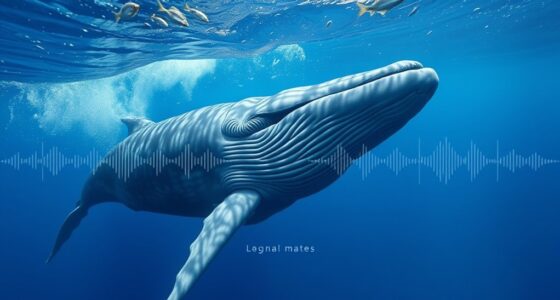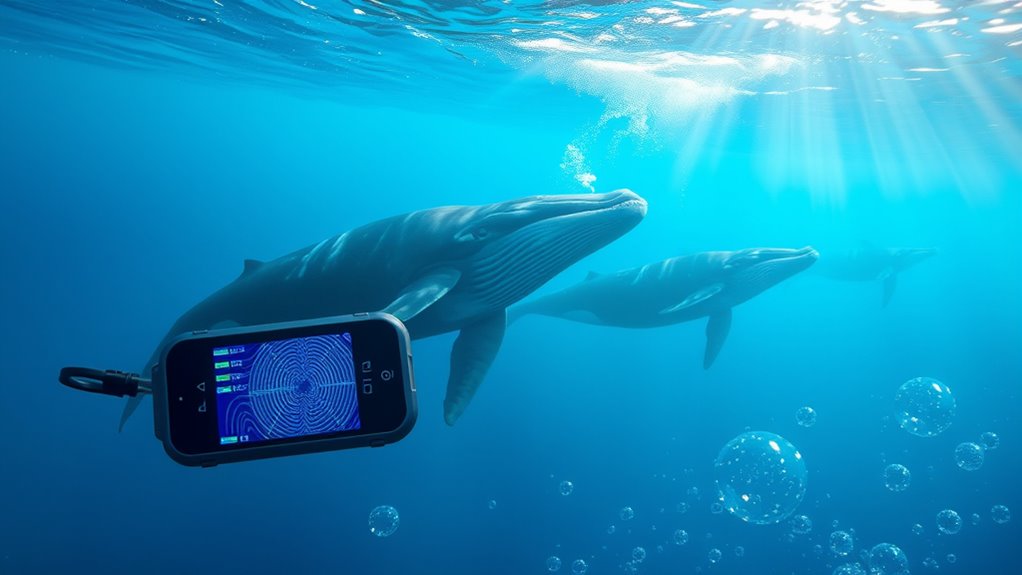

You’ll discover how machine learning is transforming our understanding of whale songs. By analyzing complex vocalizations, researchers can uncover the meanings behind intricate melodies that whales use for communication. These advanced algorithms classify diverse songs, revealing patterns and adaptations based on different marine environments. So, as you explore more about this fascinating topic, you’ll gain deeper insights into how these magnificent creatures interact and adapt to their underwater world.
Key Takeaways
- Machine learning allows researchers to analyze large datasets of whale songs, identifying patterns in vocalizations that are often missed by human analysis.
- Acoustic analysis using advanced algorithms helps classify different whale species’ songs, enhancing our understanding of their communication methods.
- Whale songs adapt to various marine environments, demonstrating resilience and the need for effective communication across different habitats.
- Decoding whale songs contributes to conservation efforts by informing strategies to protect whale populations and their natural habitats.
- Understanding the nuances in whale communication through machine learning aids in monitoring social interactions and population dynamics among whale species.

How do these majestic creatures communicate across the vast ocean? Whale songs are mesmerizing, intricate melodies that echo through marine habitats, serving as a crucial form of communication among these intelligent beings. As you explore the world of whale songs, you’ll discover that each note and rhythm carries meaning, allowing whales to convey emotions, warn of dangers, or even attract mates. Understanding these complex vocalizations requires more than just keen listening; it involves acoustic analysis—a fascinating approach to deciphering the nuances of their communication.
Whale songs are intricate melodies that convey emotions and vital messages across the ocean, revealing their intelligence and social dynamics.
Acoustic analysis helps researchers interpret the songs of different whale species, revealing patterns and variations that might otherwise go unnoticed. By applying advanced algorithms and machine learning techniques, scientists can classify and analyze vast amounts of acoustic data collected from underwater recordings. Imagine being part of this groundbreaking research, contributing to the understanding of how these incredible animals interact with each other and their environment.
Each marine habitat presents unique challenges for communication, from the depths of the ocean to surface waves. Whales adapt their songs to these environments, changing pitch and frequency to guarantee their messages travel effectively through water. By studying these adaptations, you’ll gain a deeper appreciation for the whales’ resilience and intelligence.
The beauty of machine learning lies in its ability to process this information at an unprecedented scale. You might find yourself amazed by how algorithms can identify patterns in whale songs that humans may overlook. This technology not only enhances our understanding of whale communication but also aids in monitoring their populations and behaviors in their natural habitats.
As you explore the acoustic world of whales, consider the implications of your findings. By decoding these songs, you’re not just uncovering the intricacies of whale communication; you’re also contributing to conservation efforts. Understanding how these creatures interact with each other and their surroundings can lead to more effective protection measures in the face of environmental threats. Furthermore, the use of machine learning techniques in analyzing whale songs represents a significant advancement in the study of animal communication.
In essence, the study of whale songs using machine learning and acoustic analysis opens a window into a hidden domain of communication. By engaging with this research, you’re joining a community dedicated to preserving the majestic lives of whales and ensuring their songs continue to resonate across the vast ocean for generations to come. Your involvement can help bridge the gap between human understanding and the enchanting world of these magnificent marine mammals.

Trident Aquacraft Noise Signal Underwater Device
Aquacraft Scuba Diving Underwater Signal Device/Noise Maker
As an affiliate, we earn on qualifying purchases.
As an affiliate, we earn on qualifying purchases.
Frequently Asked Questions
What Types of Whales Are Being Studied for Their Songs?
You’re looking at Humpback whales and Blue whales when it comes to studying their songs. Humpback whales are known for their complex and melodic songs that change over time, while Blue whales produce low-frequency sounds that can travel long distances. Researchers focus on these species to understand their communication patterns better. By analyzing their vocalizations, you can gain insights into their behavior and social interactions within their oceanic environments.
How Does Machine Learning Analyze Whale Songs Specifically?
You’ll find that machine learning analyzes whale songs through audio pattern analysis, identifying unique sound features. By applying neural network applications, it recognizes complex patterns within these underwater melodies. This process helps researchers understand communication methods among whales, revealing insights into their behavior and social structures. Coincidentally, just as you decode a friend’s voice, machine learning deciphers these intricate songs, bridging the gap between human and marine understanding.
Are There Any Ethical Concerns With Studying Whale Communication?
Yes, there are ethical concerns when studying whale communication. You’ll want to contemplate privacy concerns, as whales may have their own social structures that could be disrupted by human interference. Additionally, there’s a risk of data misuse; if the information gathered is not handled responsibly, it could lead to exploitation or harm to the whales. It’s essential to prioritize their well-being and ensure that research practices respect their natural habitats and behaviors.
What Other Animal Communications Are Being Studied With Machine Learning?
You’re likely to find that researchers are diving into various animal communications using machine learning. They’re analyzing dolphin chatter to uncover patterns and meanings, while also studying bird calls to understand their social dynamics. These efforts help you grasp how different species interact, showing the complexity of animal communication. By applying advanced technology, scientists are revealing the intricate ways animals convey messages, enriching our knowledge of the natural world.
How Can Whale Song Research Benefit Marine Conservation Efforts?
Whale song research can substantially benefit marine conservation efforts by informing the establishment of marine protected areas. By understanding whale communication patterns, you can identify critical habitats and migration routes, leading to better policy implications. This data helps policymakers create regulations that protect these areas, ensuring the survival of whale populations and preserving ocean ecosystems. Ultimately, your work in decoding whale songs contributes to a healthier marine environment and sustainable practices.
marine mammal listening equipment
As an affiliate, we earn on qualifying purchases.
As an affiliate, we earn on qualifying purchases.
Conclusion
In decoding whale songs, you’ve uncovered a symphony of communication that reveals much about these magnificent creatures. By harnessing machine learning, you’re not just listening; you’re translating their intricate melodies into meaningful insights. This groundbreaking work is like shining a light into the depths of the ocean, illuminating the complex lives of whales. As you continue this journey, remember: every song is a story, and each story brings you closer to understanding their world.

Music Software Bundle for Recording, Editing, Beat Making & Production – DAW, VST Audio Plugins, Sounds for Mac & Windows PC
No Demos, No Subscriptions, it's All Yours for Life. Music Creator has all the tools you need to…
As an affiliate, we earn on qualifying purchases.
As an affiliate, we earn on qualifying purchases.
underwater microphone for marine research
As an affiliate, we earn on qualifying purchases.
As an affiliate, we earn on qualifying purchases.