

Lidar technology’s electrifying archaeology by uncovering hidden cities and ancient landscapes once concealed by dense vegetation and soil. It uses laser light to create detailed topographical maps, revealing forgotten civilizations, structures, and roads in just seconds. This rapid surveying helps protect cultural heritage at risk from urban development. Plus, it fosters collaboration among scientists and historians. Want to discover how this innovative tool transforms our understanding of the past? There’s so much more to explore!
Key Takeaways
- Lidar technology penetrates dense vegetation, revealing hidden ancient cities and structures previously obscured by foliage and soil.
- This technology produces high-resolution 3D maps, allowing archaeologists to visualize and reconstruct lost landscapes effectively.
- Rapid surveying capabilities enable extensive area coverage, identifying archaeological sites at risk from urban development and environmental threats.
- Collaborative efforts among scientists, engineers, and historians enhance the analysis and understanding of ancient urban planning and societal interactions.
- Lidar’s versatility extends beyond archaeology, supporting environmental monitoring and sustainable development initiatives in cultural and natural resource preservation.

As you explore the cutting-edge world of archaeology, you’ll find that Lidar technology has revolutionized how we uncover hidden landscapes and ancient structures. This innovative remote sensing tool utilizes laser light to penetrate dense vegetation and provide detailed topographical maps of the ground below. By using Lidar, you can reveal the remnants of forgotten civilizations, uncovering cities and structures that would otherwise remain hidden beneath layers of dirt and foliage.
Imagine wandering through a jungle, surrounded by towering trees and thick underbrush, only to discover an ancient city that’s been lost to time. Lidar makes this possible by capturing millions of data points in mere seconds, creating a high-resolution 3D representation of the terrain. You’ll see how this technology empowers archaeologists to identify and map structures, roads, and other features that help reconstruct historical landscapes.
Discover ancient cities hidden beneath dense jungles as Lidar technology unveils forgotten landscapes in stunning detail.
One of the most significant advantages of Lidar is its ability to promote cultural preservation. With the ability to survey vast areas quickly, archaeologists can identify sites that are at risk of being destroyed by urban development or environmental changes. By pinpointing these locations, you’ll find that they can prioritize excavation and conservation efforts, ensuring that valuable cultural heritage isn’t lost. This proactive approach is essential in an age where rapid development often threatens archaeological sites.
As you explore more deeply into the implications of Lidar in archaeology, you’ll appreciate how it fosters collaboration among scientists, engineers, and historians. They work together to analyze the data collected, providing insights that help to piece together the puzzle of human history. You’ll witness how interdisciplinary partnerships enhance our understanding of ancient societies, their urban planning, and their interactions with the environment.
Furthermore, Lidar’s applications extend beyond archaeology. Environmentalists and conservationists also use this technology to monitor ecosystems, assess environmental changes, and implement strategies for sustainable development. This cross-disciplinary usage showcases Lidar’s versatility and significance in preserving both cultural and natural resources. Additionally, the integration of sizing and load-planning tools ensures that archaeologists can effectively manage the resources needed for extensive excavations.

Dxtvate D500 LiDAR Kit with 360° Laser Scanning, 12m Range, High Precision for SLAM, Robotics, UAV and 3D Mapping Applications
【360° High-Speed Laser Scanning】:Equipped with advanced DTOF (Direct Time-of-Flight) technology, the D500 LiDAR performs 360° rotating laser scanning…
As an affiliate, we earn on qualifying purchases.
As an affiliate, we earn on qualifying purchases.
Frequently Asked Questions
What Is Lidar Technology and How Does It Work?
Lidar technology is a remote sensing method that uses laser light to measure distances. You send out laser pulses, and when they hit an object, they bounce back to the sensor. This process helps create detailed 3D maps of the terrain. After collecting the data, you process it to reveal features hidden beneath vegetation or debris. By analyzing these maps, you can uncover valuable information about landscapes and structures that might otherwise remain unseen.
How Accurate Are Lidar Scans Compared to Traditional Mapping Methods?
Lidar scans are often more accurate than traditional mapping methods, especially in complex terrains. When you conduct an accuracy evaluation, you’ll find that lidar can capture detailed elevation data and surface features with precision. In a comparative analysis, lidar typically outperforms GPS and photogrammetry in dense vegetation or rugged areas. So, if you’re looking for reliable data, lidar’s advanced technology makes it a superior choice for mapping and appraising landscapes.
What Types of Landscapes Are Most Suited for Lidar Mapping?
Lidar mapping thrives in dense forests and open desert plains. In fact, studies show that lidar can penetrate up to 80% of forest canopy, revealing hidden structures beneath. This technology excels in areas where traditional methods struggle, like thick vegetation, making it invaluable for revealing ancient sites. On desert plains, lidar’s ability to capture subtle terrain changes uncovers features otherwise lost to the eye, showcasing its versatility across different landscapes.
Are There Any Limitations to Using Lidar in Archaeology?
Yes, there are limitations to using lidar in archaeology. First, the equipment can be costly, which might restrict access for some projects. Additionally, weather limitations can impact lidar effectiveness; heavy rain or dense foliage can obstruct the laser signals, leading to incomplete data. You’ll need to take these factors into account when planning your lidar surveys to make certain you get the most accurate results possible for your archaeological explorations.
How Has Lidar Changed the Field of Archaeology in Recent Years?
Lidar’s like a flashlight illuminating hidden treasures in the dark. In recent years, it’s revolutionized archaeology by enhancing remote sensing techniques, allowing you to uncover cultural heritage sites buried beneath dense foliage or urban sprawl. You can now visualize landscapes in stunning detail, revealing structures that traditional methods might miss. This technology not only preserves history but also opens new avenues for research, making it an invaluable tool for archaeologists worldwide.

SHARE3DCAM SLAM S20 3D LiDAR Scanner,Handheld Professional Surveying Design Architecture Scanning Measurement Spatial Camera Point Cloud 3DGS,Indoor and Outdoor Spaces, 1-Inch Sensor Accuracy 1cm 70m
High-Precision & Long-Range Scanning: Dual 1-inch large area CMOS sensors deliver 16MP resolution per lens with 2.4μm pixel…
As an affiliate, we earn on qualifying purchases.
As an affiliate, we earn on qualifying purchases.
Conclusion
As you stand amidst the ancient ruins, the whispers of forgotten civilizations echo through the trees. Lidar, like a modern-day Excalibur, slices through the dense canopy, revealing the hidden cities that lie beneath. Each pulse of light uncovers stories waiting to be told, reminding you that history is alive, breathing beneath our feet. You realize that every shadow holds a secret, and with each discovery, you become a part of the tapestry woven by time itself.
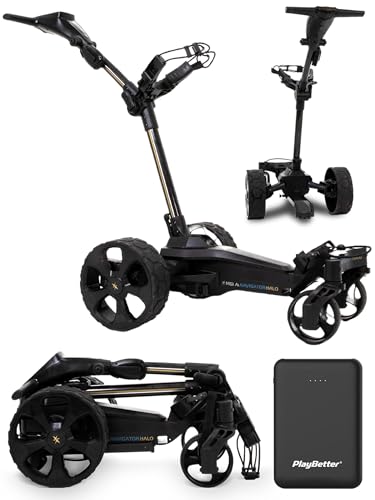
MGI Ai Navigator Halo with Halo Eye Remote Electric Golf Caddy Bundle – LiDAR-Based Follow Me Technology, Geo Protect Technology, Terrain Handling with PlayBetter Portable Charger
Halo Eye LiDAR Follow Me for Hands-Free Golf: Advanced radar tracks your movement, maintains distance, and avoids obstacles…
As an affiliate, we earn on qualifying purchases.
As an affiliate, we earn on qualifying purchases.

Dxtvate Livox Avia High-Performance LiDAR Sensor Lase Radar 3D Mapping & Robotics Navigation Drone Surveying
Extended Detection & Triple-Return Technology: Max detection range: 320 m (80% reflectivity target), with 70% optimized performance for…
As an affiliate, we earn on qualifying purchases.
As an affiliate, we earn on qualifying purchases.