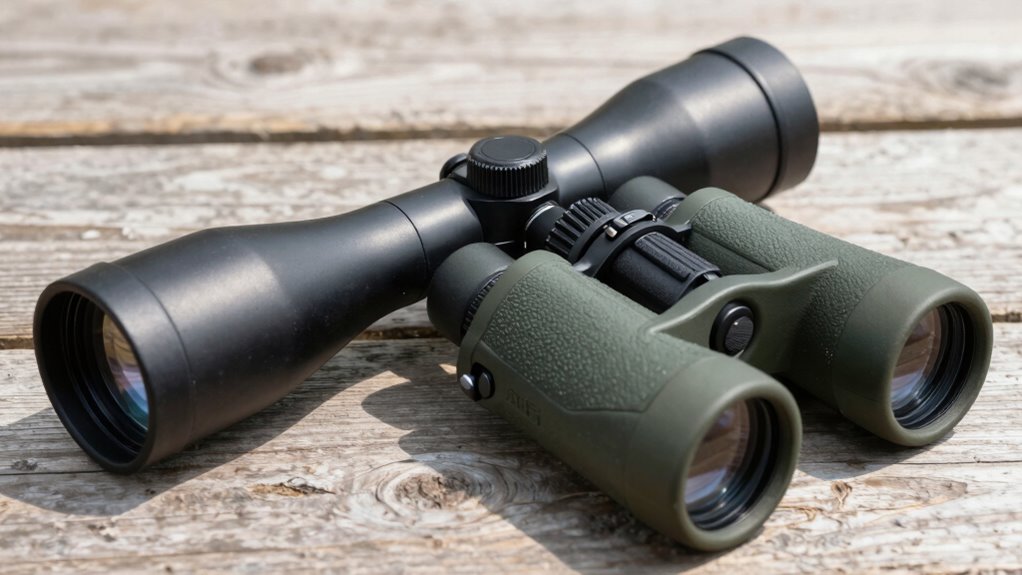

If you’re looking for detailed views of distant subjects, a spotting scope is your best bet thanks to its higher magnification and focus on specific objects. On the other hand, if you want a versatile, portable option for quick scans and broader landscapes, binoculars are more suitable. Binoculars offer a wider field of view and are easier to handle in active situations. For a clearer comparison and how to choose the right tool for your activities, keep exploring the details.
Key Takeaways
- Spotting scopes offer higher magnification for detailed distant viewing, ideal for specific identification tasks.
- Binoculars provide a wider field of view for quick scanning and tracking fast-moving subjects.
- Use spotting scopes with a tripod for stability during long, detailed observations; binoculars are portable and handheld-friendly.
- For broad landscape observation and mobility, binoculars are more practical and user-friendly.
- Choose based on activity: scopes for detailed, long-range observation; binoculars for quick, versatile outdoor viewing.
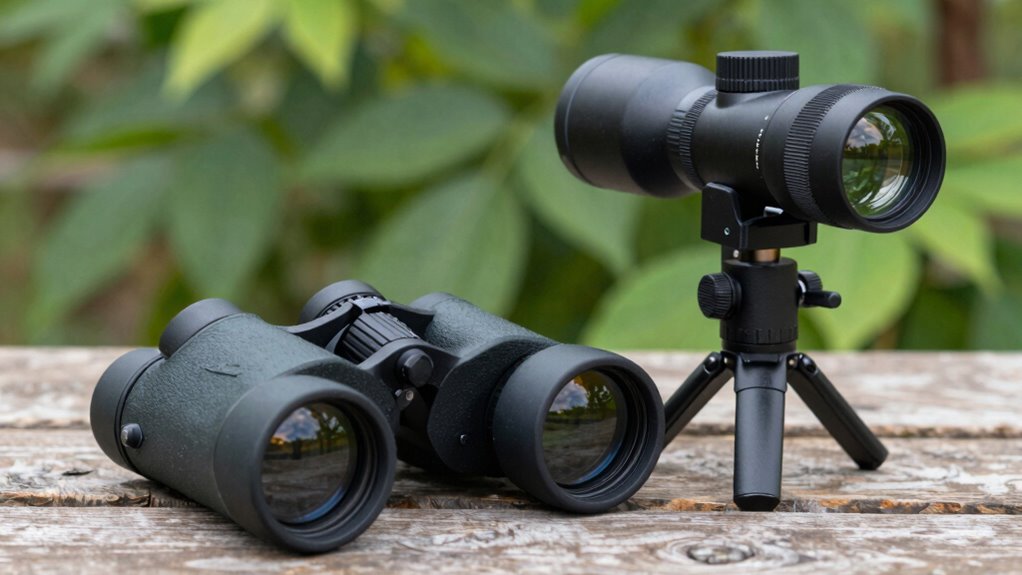
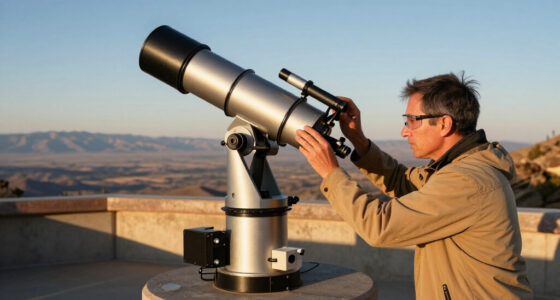
Have you ever wondered which optical device is better suited for your outdoor adventures—spotting scopes or binoculars? The choice often comes down to how you prioritize lens magnification and field of view. Spotting scopes typically feature higher lens magnification, which allows you to see distant objects in more detail. If you’re birdwatching or observing wildlife from far away, that extra magnification helps you pick out the tiniest features, making it easier to identify species or observe behavior without disturbing the animals. However, that increased lens magnification usually comes with a narrower field of view, so you might find it harder to scan large areas quickly.
Spotting scopes offer higher magnification for detailed, distant viewing but have a narrower field of view.
Binoculars, on the other hand, usually have lower lens magnification but offer a broader field of view. This wider perspective makes them perfect for general observation, especially when you want to quickly scan a landscape, keep track of moving animals, or navigate unfamiliar terrain. Their design also makes them more stable and less prone to shaking, which is a common issue when using high-magnification spotting scopes. If your goal is to observe a wide area in real-time, binoculars give you a more natural, immersive experience, making it easier to follow fast-moving subjects or locate objects before zooming in with a scope. Additionally, optical device stability is an important factor, as high-magnification scopes often require a tripod for steady viewing, whereas binoculars are more portable and can be used handheld with minimal fatigue.
Choosing the right device also involves considering ergonomics, as comfort during extended use can significantly affect your observation experience. Your decision should align with how you prefer to observe: whether in detailed, focused sessions or broader, more dynamic explorations. Understanding the differences in optical performance between these tools can help you make a more informed decision tailored to your needs. Moreover, considering the ease of use and how quickly you can adapt to each device can also influence your choice, especially if you are a beginner or need to set up your equipment quickly in the field. Ultimately, each tool has its strengths, and choosing the right one depends on your specific outdoor activities and what kind of observation experience you’re after.
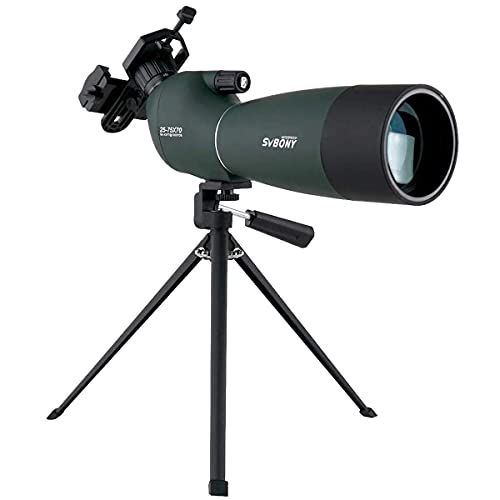
SVBONY SV28 Spotting Scope, Angled 25-75×70 with Tripod for Target Shooting
- Magnification Range: 25-75x zoom for versatile viewing
- Large Objective Lens: 70mm lens for bright, clear images
- Waterproof Design: Resistant to environmental elements
As an affiliate, we earn on qualifying purchases.
As an affiliate, we earn on qualifying purchases.
Frequently Asked Questions
Which Is Lighter to Carry for Long Outdoor Trips?
Binoculars are lighter to carry for long outdoor trips. Their weight comparison shows they’re more portable, making them ideal if you prioritize ease of transport. You’ll find binoculars compact and less bulky, allowing you to hike longer without fatigue. Spotting scopes tend to be heavier and bulkier, which can hinder extended outdoor adventures. So, if portability considerations matter most, binoculars are the better, lighter choice for your trips.
Can Spotting Scopes Be Used Effectively for Birdwatching?
Yes, spotting scopes are perfect for birdwatching, especially when you want long-range observation and stunning image clarity. Imagine spotting a rare bird from miles away, with every feather and color crystal clear—that’s the power of a spotting scope. While they’re bulkier, they give you unparalleled detail at distance, making them a fantastic choice for serious birders who crave in-depth views and sharp visuals.
Are Binoculars Better for Beginner Outdoor Enthusiasts?
Yes, binoculars are better for beginner outdoor enthusiasts because they offer easier handling and a wider field of view. With lower magnification differences, binoculars make it simple to scan landscapes and spot wildlife without losing focus. They’re lightweight and portable, perfect for getting started in outdoor observation. As you gain experience, you can explore spotting scopes for more detailed views, but binoculars are ideal for beginners.
How Do Weather Conditions Affect Each Tool’s Performance?
Weather conditions considerably impact each tool’s performance. Rain, fog, or humidity can reduce optical clarity, making it harder to see details clearly. Wind may shake binoculars or spotting scopes, affecting stability. Cold weather can fog lenses or cause condensation, further diminishing image quality. To get the best observation, you’ll want to protect your gear from elements and consider weather-resistant models, ensuring peak performance despite weather impact.
What Maintenance Is Required for Each Optical Device?
You need to regularly perform optical cleaning on your binoculars and spotting scope to keep images clear. Use a soft brush or lens cleaning cloth to remove dust and smudges, and avoid harsh chemicals. Protect the lenses with caps when not in use, and store your devices in a dry, padded case to prevent scratches and moisture damage. Proper lens protection guarantees peak performance during every observation session.
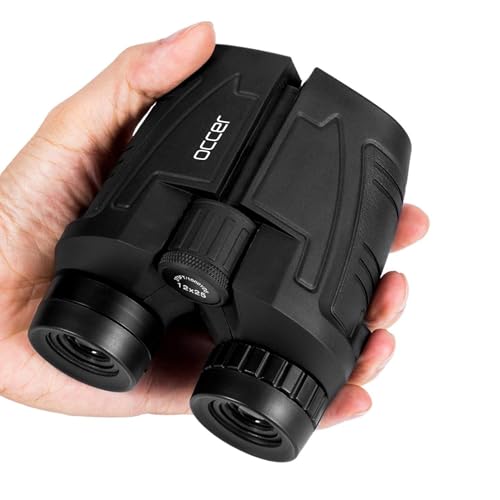
Occer 12×25 Compact Binoculars for Adults and Kids
- High Magnification and Wide View: 12x magnification with 25mm lens, 273ft field of view
- Adjustable Eye Cups: Fits glasses wearers and non-glasses users
- Premium Coatings: FMC broadband coating and BAK4 prisms for clear images
As an affiliate, we earn on qualifying purchases.
As an affiliate, we earn on qualifying purchases.
Conclusion
Choosing between a spotting scope and binoculars is like selecting a trusty steed for your adventure. Binoculars are your nimble, all-around companion, perfect for quick, close encounters. The spotting scope, on the other hand, is your powerful telescope, ideal for distant, detailed exploration. Think of it as trading your swift horse for a majestic eagle’s eye—each has its place, but only one will carry you further into the wild, revealing secrets hidden in plain sight.

69” Tripod for Spotting Scopes, Binocular & Camera, Includes Binocular Adapter, 2 QR Plates, Phone Holder & Carry Bag, Ideal for Bird Watching, Hunting, Wildlife Viewing & Target Shooting
- Adjustable Height: Extends from 16.9 to 69 inches
- Lightweight and Compact: Detachable head for easy storage
- Durable Construction: Made of robust metal with reinforced legs
As an affiliate, we earn on qualifying purchases.
As an affiliate, we earn on qualifying purchases.

Bushnell PowerView 2 20×50 Binoculars – High-Definition with Multi-Coated Lenses, Durable Aluminum Alloy Chassis, Wide Field of View, Ideal for Wildlife Observation, Hiking and Sporting Events
- Trusted Brand: Bushnell PowerView 2 binoculars from USA
- Durable Construction: Aluminum alloy chassis for longevity
- High-Quality Optics: Multi-coated lenses for bright, clear images
As an affiliate, we earn on qualifying purchases.
As an affiliate, we earn on qualifying purchases.