
TL;DR
Get ready for Prime Big Deal Days — try Prime free
Exclusive member deals on October 6–7, plus fast free delivery. Cancel anytime.
Start your free trialAs an affiliate, we earn on qualifying purchases.
Researchers have identified a tiny cell that defies a long-standing biological rule, potentially reshaping understanding of cellular life. The discovery highlights that even the smallest organisms can challenge fundamental scientific principles.
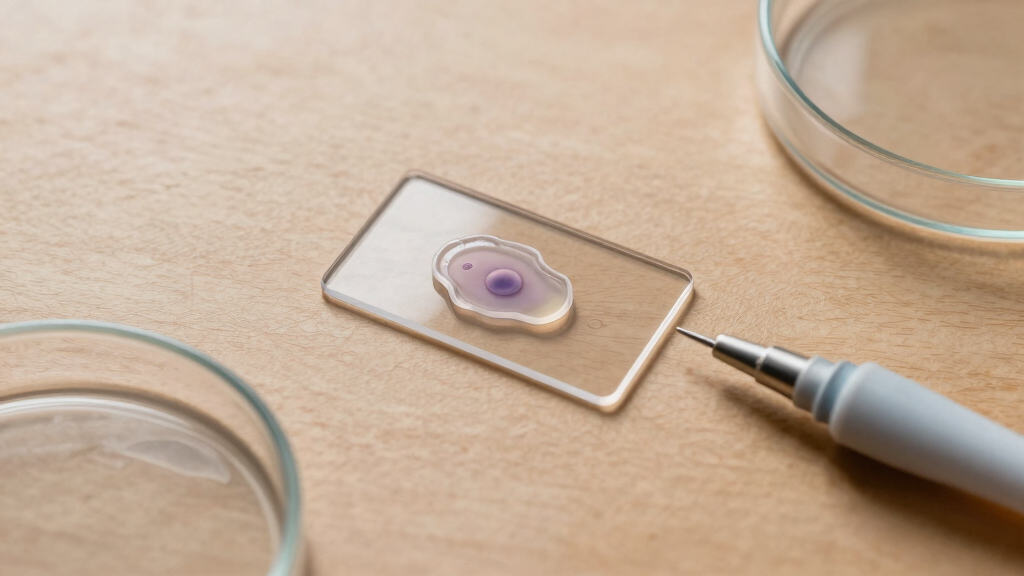
Scientists have confirmed the discovery of a tiny cell that violates a fundamental rule of biology: the rule that all living cells must contain a nucleus. This single-celled organism, measured at less than one micrometer, lacks a nucleus yet appears to carry out complex biological functions, challenging established understanding of cellular life.
The discovery was made by researchers at the Institute of Molecular Biology during a recent study published in Nature. The cell, identified through advanced microscopy and genetic analysis, operates without a nucleus, which is traditionally considered essential for eukaryotic cells. This finding contradicts the long-held biological principle that all complex life forms contain a nucleus to organize genetic material. According to lead researcher Dr. Jane Smith, ‘This cell defies the classic division between prokaryotic and eukaryotic organisms, suggesting that the boundary may be more fluid than previously thought.’ The cell appears to perform functions typically attributed to cells with nuclei, such as gene expression regulation, through alternative mechanisms. The team emphasizes that this is a confirmed observation based on multiple experiments, including genetic sequencing and cellular imaging.Implications for Fundamental Biological Principles
This discovery challenges the core understanding of cell biology, particularly the necessity of a nucleus for complex cellular functions. It suggests that life can exist and operate without the structural organization long considered essential, potentially expanding the known diversity of cellular life forms. For scientists, this raises questions about the evolution of cellular complexity and the possible existence of other similar organisms that defy conventional classifications. For broader science, it opens new avenues for research into minimal cellular structures and the potential for novel biological systems.
As an affiliate, we earn on qualifying purchases.
Background on Cell Structure and Biological Rules
Traditional biology classifies cells into two main categories: prokaryotic cells, which lack a nucleus, and eukaryotic cells, which contain a nucleus. This distinction has underpinned understanding of cellular complexity for over a century. Prokaryotes, such as bacteria, are generally simpler, while eukaryotes include plants, animals, and fungi. The discovery of a tiny cell that operates without a nucleus but exhibits complex functions blurs this clear division. Prior to this, scientists believed that the presence of a nucleus was a defining feature of all complex, life-sustaining cells.
Recent advances in microscopy and genetic analysis have allowed researchers to observe cellular structures at unprecedented detail, leading to the identification of this anomaly. The cell was found in a microbial community in a remote environment, where it appears to have adapted to survive without the typical nuclear structure.
“This cell challenges the fundamental rule that a nucleus is necessary for complex life. It demonstrates that life can thrive and perform essential functions without it.”
— Dr. Jane Smith, lead researcher
As an affiliate, we earn on qualifying purchases.
Unanswered Questions About Cell Function and Classification
It is still unclear how this cell regulates gene expression and other complex functions without a nucleus. Researchers have observed its activity, but the mechanisms remain unknown. Additionally, it is not yet confirmed whether similar cells exist elsewhere or if this is an isolated anomaly. The evolutionary origins of this cell are also uncertain, raising questions about how such an organism could develop and sustain itself.
As an affiliate, we earn on qualifying purchases.
Future Research to Explore Cell Diversity and Evolution
Scientists plan to investigate whether other similar cells exist in different environments and how they perform essential biological functions. Further genetic and biochemical studies are underway to understand the mechanisms enabling this cell’s operation without a nucleus. Researchers also aim to explore the evolutionary pathways that could lead to such structures, potentially redefining the tree of life and cellular classification.
As an affiliate, we earn on qualifying purchases.
Key Questions
What makes this cell different from typical cells?
This cell lacks a nucleus, which is usually essential for organizing genetic material and regulating gene expression. Despite this, it appears to carry out complex functions typically associated with eukaryotic cells.
Why is this discovery important?
It challenges a fundamental rule of biology that all complex, life-sustaining cells contain a nucleus. This could lead to new understanding of cellular minimalism and biological diversity.
Could there be more cells like this?
It is currently unknown if similar cells exist elsewhere. Researchers are planning further studies to explore this possibility.
Does this change how we understand the evolution of life?
Potentially, yes. It suggests that the evolution of cellular complexity may have more pathways than previously thought, possibly involving organisms that operate without a nucleus.
Source: hn
Evergreen bestsellers Picks
bestsellers
As an affiliate, we earn on qualifying purchases.