TL;DR

Prime made for students and young adults
- Fast, free delivery for dorm and study essentials
- Prime Video and Amazon Music included
- Member-only deals
A Works in Progress Newsletter essay by Patrick Fitzsimmons argues that drought, conflict and other crises help explain the Bronze Age collapse, but not why centralized empires were not rebuilt for centuries. It points to iron’s local availability as a possible force that weakened rulers’ military advantage, while the causes and timing of the transition remain debated.
A new essay in the Works in Progress Newsletter argues that the Bronze Age collapse should be understood not only as the fall of eastern Mediterranean powers around 1200 BC, but also as the long failure to rebuild empires of comparable scale. Writer Patrick Fitzsimmons suggests that the spread of locally produced iron may have weakened the military advantage held by states that controlled distant supplies of bronze-making materials.
The essay describes the familiar explanation for the collapse as a cluster of droughts, famine, invasions and internal revolts. These pressures are commonly associated with the disruption around 1200 BC, when major powers including the Hittites and Mycenaean Greeks fell or lost much of their influence. Fitzsimmons argues that crises alone do not answer the larger question: why similarly powerful states were not restored for centuries afterward.
His proposed answer focuses on the materials used for weapons. Bronze required copper and tin, and tin had to be transported over long distances from uncertain sources. That supply chain, the essay says, helped concentrate bronze weapons in imperial armies and elite institutions. Iron, by contrast, could be produced more locally, potentially making weapons more accessible to communities outside imperial centers.
The source presents this as a broad interpretation of political change, not a settled finding that iron alone caused the collapse. It also traces earlier changes in warfare: copper weapons offered an advantage over stone, while stronger bronze displaced copper in many military uses. The argument is that shifts in access to military materials could alter the balance between central states and their subjects over time.
How Iron Could Shift Military Power
If Fitzsimmons’s interpretation is right, the collapse was more than the result of a run of disasters. It also marked a change in the conditions that made centralized military power possible. When rulers could no longer maintain a large advantage through control of scarce materials and long-distance trade, local groups may have become harder to dominate or incorporate into a single state.
The argument matters because it connects the ancient collapse to a wider question about technology and political authority: who can obtain the tools of warfare, and how that access shapes the power of states? The essay draws a parallel with modern societies, where military capabilities remain concentrated, but does not establish that contemporary technologies will produce the same outcome. Its historical claim is a proposed explanation, not a prediction.
As an affiliate, we earn on qualifying purchases.
From Bronze Networks to Iron
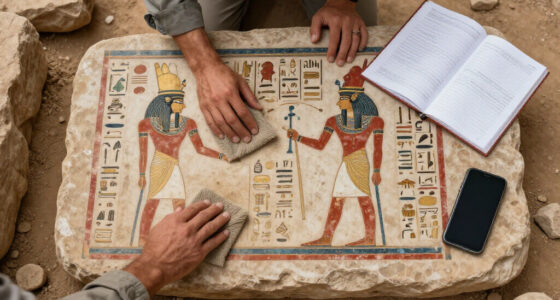
The Bronze Age powers described in the source included the Egyptians, Hittites, Assyrians, Babylonians and Mycenaean Greeks. They governed extensive territories and could raise armies, collect taxes and build large infrastructure. The Battle of Kadesh, fought between Egypt and the Hittites around 1274 BC, illustrates their military capacity. The source says Ramesses II later commissioned temple reliefs portraying the battle, and that the two powers signed a peace treaty 16 years later.
Bronze depended on combining copper with tin, which was not necessarily available near the centers that used it. Fitzsimmons contrasts that reliance on distant supply networks with iron production that could be carried out closer to where people lived. The source also notes earlier archaeological signs associated with copper use, including fortified settlements, differences in grave goods and specialized smelting sites. These details provide a timeline for the essay’s claim that changes in metalworking accompanied changes in political organization.
“The question is not why the Bronze Age empires fell, but why, after they fell, nothing like them returned for centuries.”
— Patrick Fitzsimmons, writing in the Works in Progress Newsletter
As an affiliate, we earn on qualifying purchases.
What Caused the Long Disruption
The source does not establish that iron was the decisive cause of the collapse or that it became widely available at the same moment across the region. It offers a theory about why empires did not quickly return, while the relative roles of climate stress, warfare, famine, revolt and economic disruption remain uncertain. The material supplied also does not cite a specific archaeological study proving a direct link between iron access and the political breakdown of each named state.
The source’s account raises further questions about chronology and variation: the collapse unfolded across different societies, and it is not clear from the essay excerpt how quickly iron production spread or how its military use changed from place to place. The evidence supports a debate over interacting causes rather than a single confirmed explanation.
As an affiliate, we earn on qualifying purchases.
Evidence Needed to Test the Theory
The next step is to compare the proposed explanation with archaeological evidence on the timing and distribution of iron production, weapons and settlement changes across the eastern Mediterranean. Researchers would need to establish whether iron became accessible beyond imperial centers before, during or after the states weakened, and whether those shifts tracked changes in military and political power.
For now, the essay offers a framework for interpreting a well-known historical disruption, rather than reporting a new excavation or a consensus among historians. The timing and strength of iron’s contribution, alongside environmental and political pressures, remain open questions.
historical bronze and iron artifacts
As an affiliate, we earn on qualifying purchases.
As an affiliate, we earn on qualifying purchases.
Key Questions
When did the Bronze Age collapse happen?
The essay places the major disruption around 1200 BC. The decline and disappearance of powers occurred across a period rather than as one single event.
Which empires were affected?
The source names the Hittites and Mycenaean Greeks among the powers that fell or dwindled, alongside the Egyptians, Assyrians and Babylonians, whose fortunes also changed.
What explanation does the essay propose?
Patrick Fitzsimmons argues that the shift from bronze, which depended on copper and distant tin supplies, toward locally produced iron may have reduced the military advantage of imperial centers. He presents this as an interpretation, not a proven sole cause.
Did drought or invasion cause the collapse?
Drought, famine, invasions and internal revolts are among the pressures commonly linked to the collapse. The essay says these may help explain the upheaval but do not, by themselves, explain why comparable empires were not rebuilt for centuries.
Source: hn
Fall Picks
fall essentials
As an affiliate, we earn on qualifying purchases.