
TL;DR

Prime made for students and young adults
- Fast, free delivery for dorm and study essentials
- Prime Video and Amazon Music included
- Member-only deals
In 1990, East German researchers successfully ported Unix to their mainframe systems, creating a German-supported version. This marked a significant step in GDR computing history, emphasizing local innovation amid Cold War constraints.
In 1990, researchers in East Germany (GDR) successfully ported Unix to their mainframe systems, creating a German-supported version that supported peripherals and ran independently. This development marked a significant milestone in GDR computing, reflecting local innovation during a period of political change.
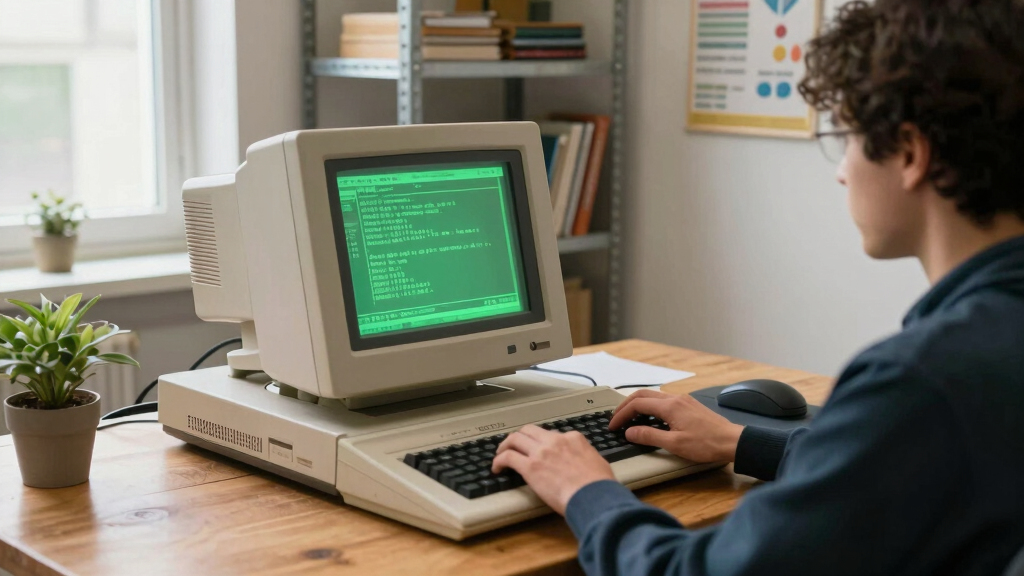
During 1990, East German computer scientists undertook a series of efforts to adapt Unix for their mainframe systems, notably the IBM 360 and later the IBM 370. Initially, they discovered Unix-related code on magnetic tapes, which led to the translation and porting of Unix components, including the C compiler, to their hardware. These efforts were driven by the desire to have an operating system that could be written in high-level language and run across different machines.
The department at Technische Universität Karl-Marx-Stadt (now Chemnitz) played a central role, developing a version of Unix that supported all peripherals and could operate independently without virtual machine support. They collaborated with other East German institutions, such as the ZKI, LfA Berlin, and the TH Ilmenau, to enhance and port Unix tools, including the nroff text formatter and other utilities. The porting process involved translating code by hand into assembly language suitable for IBM 360/370 hardware, a complex task given the limited resources and the need for compatibility with existing systems.
Why It Matters
This development was significant because it allowed East German researchers and students to work with a Unix-based environment, fostering local software development and education. It also demonstrated the technical capability of GDR engineers to adapt and modify international software despite Cold War restrictions, contributing to the broader history of computing in East Germany.
IBM mainframe computer accessories
As an affiliate, we earn on qualifying purchases.
As an affiliate, we earn on qualifying purchases.
Background
Throughout the 1980s, East Germany had limited access to Western computing technology, relying heavily on Soviet and indigenous systems. The discovery of Unix-related code on magnetic tapes in 1982 sparked early interest, leading to ongoing efforts to port and adapt Unix in the GDR. By 1990, these efforts culminated in a functional, fully supported Unix system on mainframe hardware, coinciding with political upheaval and the approaching reunification of Germany.
“Our department’s efforts in porting Unix demonstrated that even under restrictive conditions, local engineers could achieve significant milestones in software development.”
— Guenther Fischer
“Porting Unix was a complex task, but it allowed us to develop tools and environments that supported our educational and research needs.”
— Matthias Clausz
Unix operating system software for mainframes
As an affiliate, we earn on qualifying purchases.
As an affiliate, we earn on qualifying purchases.
What Remains Unclear
While the porting of Unix was completed in 1990, it is not yet clear how widely this version was adopted across other GDR institutions or how it influenced subsequent software developments in East Germany. Details about the long-term use and distribution of this system remain limited.
historical computer hardware books
As an affiliate, we earn on qualifying purchases.
As an affiliate, we earn on qualifying purchases.
What’s Next
Following the successful porting, the next steps involve expanding the system’s deployment, improving stability, and integrating more tools. As political changes unfolded in 1990, efforts to unify East and West German computing environments also gained momentum, potentially impacting the future of this Unix version.
programming books for Unix and mainframes
As an affiliate, we earn on qualifying purchases.
As an affiliate, we earn on qualifying purchases.
Key Questions
What was the significance of porting Unix in East Germany?
It enabled local researchers and students to access a powerful, flexible operating system, fostering innovation despite political and resource constraints.
How did East German scientists manage to port Unix without Western support?
They relied on magnetic tapes containing Unix code, translated components by hand, and collaborated across institutions to adapt the system for their hardware.
Was this Unix version used outside of research institutions?
Details are limited, but it primarily served academic and research purposes within East Germany, with some influence on local software development efforts.
Did the political changes of 1990 affect this Unix project?
Yes, the political upheaval and eventual reunification likely impacted the system’s future deployment and integration with Western technologies, but specific outcomes are not fully documented.
Are there any remaining artifacts or legacy from this Unix port?
Some documentation and source code may still exist in archives, but their accessibility and influence on later systems are uncertain.
Source: Hacker News
Halloween Picks
halloween
As an affiliate, we earn on qualifying purchases.