
Telehealth 2.0 is revolutionizing your healthcare experience by integrating remote diagnostics, real-time monitoring, and AI-driven insights. You can manage your health from home, connecting with providers easily and receiving personalized care tailored to your specific needs. With continuous data sharing, you’ll spot issues early and enjoy better health outcomes. This evolution makes healthcare more accessible and efficient, ensuring you stay informed about emerging innovations. Discover how telehealth can transform your health journey moving forward.
Key Takeaways
- Telehealth 2.0 enhances remote diagnostics, allowing patients to consult healthcare providers from home with real-time data transmission.
- Continuous monitoring of health metrics empowers individuals to manage their conditions actively and receive timely interventions.
- AI integration improves diagnostic accuracy by analyzing large datasets and identifying potential health issues that may be overlooked.
- Personalized care and increased accessibility eliminate geographical barriers, ensuring tailored healthcare solutions and faster consultations.
- Future telehealth innovations will focus on proactive healthcare, making services more efficient and accessible for all users.

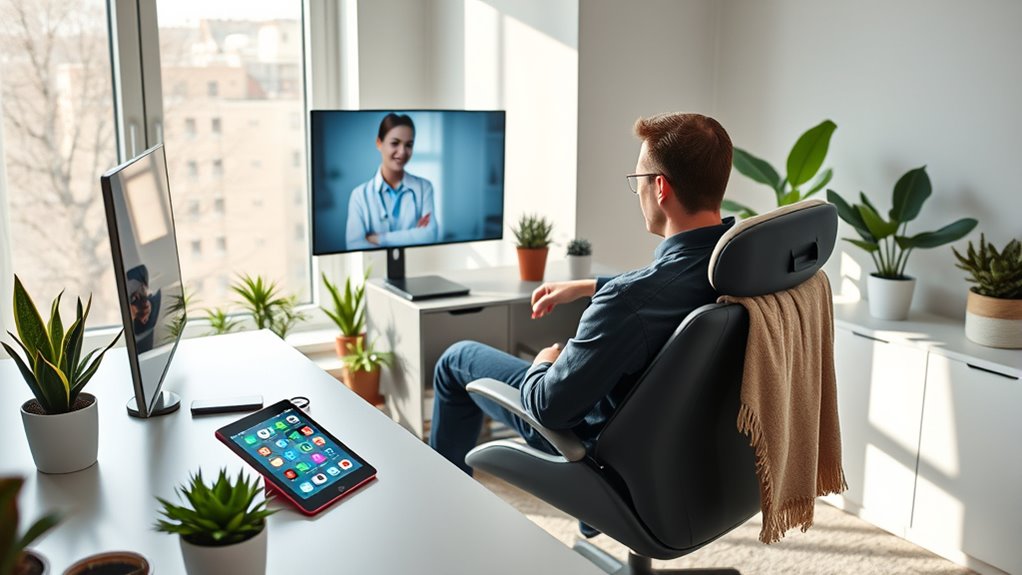
Telehealth 2.0 is here, and it’s reshaping how you access medical care, making it more convenient, efficient, and personalized. With remote diagnostics, you can now get medical evaluations and consultations from the comfort of your home. Imagine being able to send your health data directly to your doctor without stepping into a waiting room. This innovation saves you time and offers a level of accessibility that’s hard to beat.
Remote diagnostics allow healthcare professionals to monitor your health conditions in real time. Whether it’s tracking your blood pressure, glucose levels, or heart rate, these technologies make it easier for you to stay engaged with your health. You can use wearable devices that transmit your health metrics directly to your healthcare provider. This way, they can analyze the data, identify potential issues, and intervene early if necessary. You’re not just a passive participant; you’re actively involved in managing your health.
Remote diagnostics empower you to actively manage your health by enabling real-time monitoring and direct communication with your healthcare provider.
AI integration takes this even further. By utilizing sophisticated algorithms, AI can analyze vast amounts of data quickly, offering insights that were previously unimaginable. Imagine an AI system that helps your doctor diagnose conditions by comparing your data with thousands of previous cases. This technology can flag abnormalities that might escape even the most experienced eyes. The result? More accurate diagnoses, better treatment options, and ultimately, improved outcomes for you.
Telehealth 2.0 isn’t just about convenience; it’s about empowerment. You’re no longer limited by geographical boundaries or long wait times. You can connect with specialists from anywhere, ensuring you receive the best possible care. The integration of remote diagnostics and AI means that your healthcare providers have a much clearer picture of your health status, allowing for tailored treatments that fit your unique needs. Additionally, the use of high refresh rates in telehealth technology can enhance real-time communication and reduce latency during virtual consultations.
As the world moves beyond the pandemic, telehealth will continue to evolve. You can expect to see more innovations that will further enhance your healthcare experience. With technology advancing at such a rapid pace, staying informed about these changes is essential. Embracing telehealth can lead you to a more proactive and personalized approach to your health. So, are you ready to take charge of your healthcare journey? The future is here, and it’s more accessible than ever.
Frequently Asked Questions
What Types of Services Can I Access Through Telehealth 2.0?
You can access a variety of services through telehealth, including remote diagnostics and mental health services. With remote diagnostics, doctors can evaluate your condition using advanced technology, saving you time and hassle. For mental health, virtual therapy sessions connect you with licensed professionals, allowing you to discuss your concerns from the comfort of home. Whether it’s a routine check-up or ongoing therapy, telehealth makes it easier for you to get the care you need.
How Do I Prepare for My First Telehealth Appointment?
To prepare for your first telehealth appointment, start by checking your technology requirements. Make certain your device has a camera and microphone, and download any necessary software beforehand. Find a quiet, well-lit space for your virtual appointment. Write down any questions or concerns you have, and have your medical history handy. Test your internet connection to avoid interruptions, and don’t forget to log in a few minutes early to get settled.
Is My Personal Health Information Secure in Virtual Care?
Imagine a digital fortress protecting your health information, where security protocols act as vigilant guards. Yes, your personal health information can be secure in virtual care. Most providers implement stringent data privacy measures, ensuring your data stays confidential. While you navigate this virtual domain, it’s wise to verify that your healthcare provider uses secure platforms, encrypted communications, and robust authentication methods. In this way, you can confidently engage in your virtual health journey.
Can I Use Telehealth for Emergency Situations?
You can’t rely solely on telehealth for emergency situations. While it can provide guidance, it’s essential to follow emergency response protocols and call for an ambulance if you’re facing a life-threatening issue. Telehealth can help you assess your condition and coordinate with emergency services, but it shouldn’t replace immediate medical assistance when needed. Always prioritize direct communication with professionals who can dispatch help quickly. Your safety is the most important thing.
Are There Any Costs Associated With Telehealth 2.0 Services?
Yes, there can be costs associated with telehealth services. For instance, if you use a telehealth platform for a mental health consultation, your insurance might cover part of the fee, but you could still face a copay. Additionally, some services may charge out-of-pocket service fees if they’re not in-network. It’s essential to check your insurance coverage and understand any potential costs before scheduling your appointment.
Conclusion
As we embrace Telehealth 2.0, you’re not just stepping into a new era of healthcare; you’re surfing the wave of innovation that’s reshaping how we connect with providers. Remember when a phone call was groundbreaking? Now, you’re accessing medical expertise from the comfort of your home in real-time. This isn’t just a trend; it’s the future of care. By leveraging technology, you’ll stay empowered, informed, and healthier than ever before. Welcome to your health revolution!