Modern sleep tech uses brainwave entrainment to help you achieve restorative sleep. Devices combine calming sounds, light pulses, and tactile feedback to synchronize your brainwaves with deep relaxation frequencies like delta and theta. This controlled stimulation promotes faster sleep onset, deeper rest, and reduced insomnia symptoms. By aligning your brain activity with natural sleep rhythms, these tools enhance overall sleep quality. If you keep exploring, you’ll discover how specific techniques heighten your rest and well-being.
Key Takeaways
- Sleep tech using binaural beats and isochronic tones synchronizes brainwaves to promote relaxation and deeper sleep stages.
- Multisensory devices combine sound, light, and touch stimuli to enhance brainwave entrainment for restorative sleep.
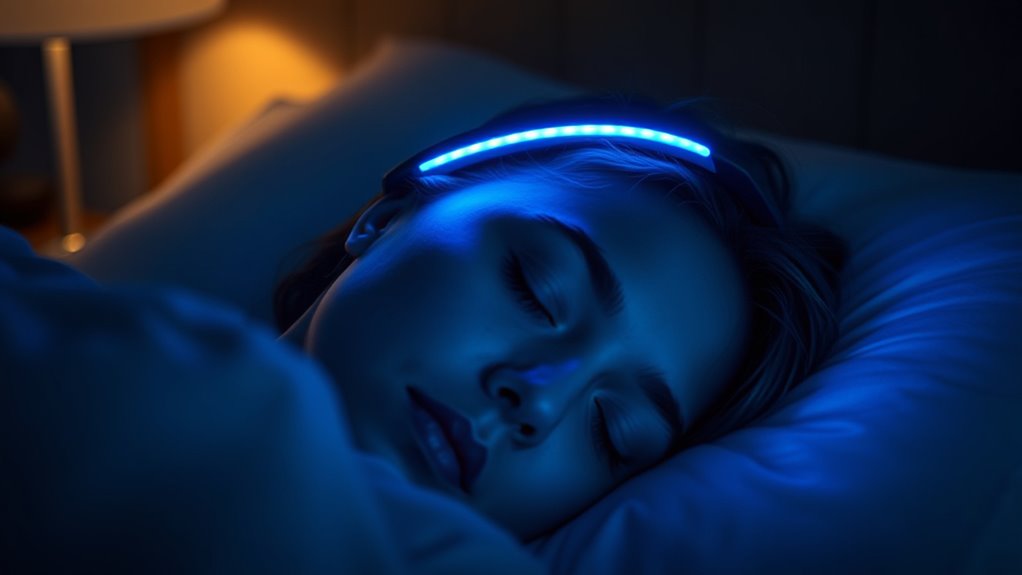
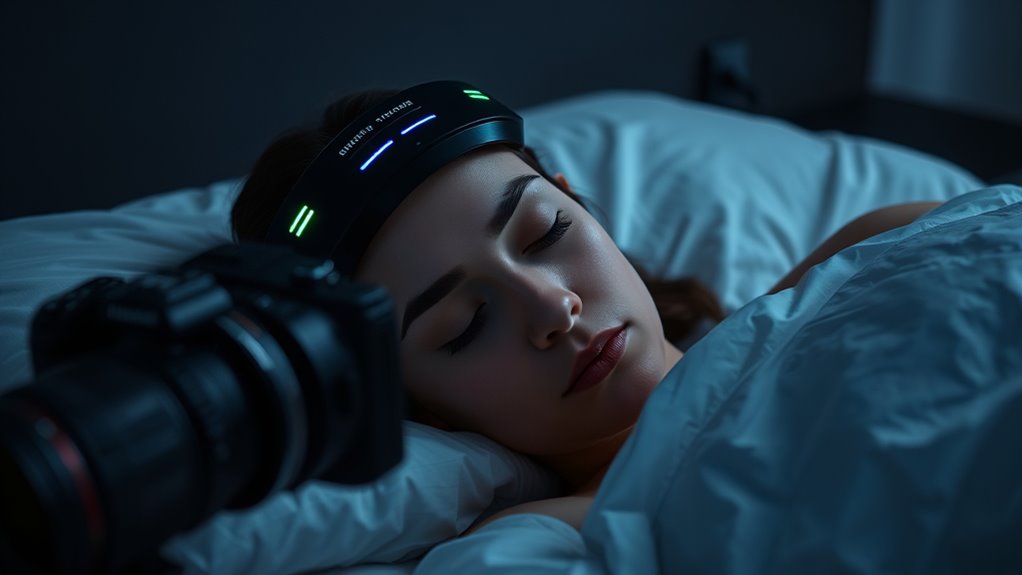
- Specialized headbands and eye masks deliver rhythmic light pulses and auditory cues to facilitate faster sleep onset.
- Some systems incorporate tactile feedback targeting acupuncture points to strengthen overall brainwave synchronization.
- These technologies aim to naturally align brain activity with sleep-friendly frequencies, improving sleep quality and reducing insomnia.
Ever wondered how technology can help you achieve truly restorative sleep? Brainwave entrainment is a fascinating approach that does just that by syncing your brain’s electrical activity with external sensory stimuli like sound, light, or touch. When you use rhythmic auditory cues such as binaural beats or isochronic tones, your brain naturally follows these rhythms through a process called the frequency-following response. Basically, your brain adapts its electrical patterns to match these external signals, leading to altered states of consciousness—perfect for relaxing, focusing, or drifting into sleep. This concept isn’t new; ancient cultures used rhythmic drumming and chanting to influence mental states, but today, science has refined these techniques for modern use. It’s especially promising for improving sleep quality and tackling insomnia.
Brainwave entrainment uses rhythmic sounds and lights to naturally deepen sleep and improve relaxation.
Binaural beats are a popular form of brainwave entrainment. They work by playing two slightly different frequencies in each ear, which your brain perceives as a beat frequency. When this beat falls within the theta or delta range, it can guide your brain into states associated with deep sleep and relaxation. Research shows binaural beats can increase theta power, particularly in brain regions essential for transitioning into sleep, such as the temporal, parietal, and frontal lobes. Combining binaural beats with Autonomous Sensory Meridian Response (ASMR) sounds can amplify this effect, creating a calming environment that helps you fall asleep faster. Many users report that these stimuli can reduce insomnia symptoms by encouraging your brain to naturally entrain to sleep-friendly frequencies. However, some people might feel irritable or agitated when listening to binaural beats alone, but this often improves when paired with soothing sounds like ASMR.
Beyond audio, multisensory stimulation techniques incorporate visual and tactile stimuli to enhance sleep. Visual cues, such as rhythmic light pulses delivered through special eye masks, synchronize with sound to deepen the entrainment effect. Some systems even include haptic feedback by targeting specific acupuncture points, like HT-7, to promote relaxation further. These combined stimuli produce stronger, more reliable effects than single-modality approaches. Many of these devices are designed for self-use, with automated controls that make consistent application easy, boosting compliance for those struggling with sleep issues.
Different brainwave frequencies play unique roles in sleep stages. Delta waves, the slowest at 0.5–4 Hz, dominate deep NREM sleep and are essential for physical and mental restoration. Theta waves, ranging from 4–8 Hz, occur during lighter sleep stages and help ease your transition into sleep. Entrainment targeting these frequencies can speed up sleep onset and improve overall sleep quality. Increased theta activity is linked to psychological stability and lower cortisol levels, making it a desirable goal for sleep enhancement. Choosing the right frequencies is fundamental; mismatched stimuli can be ineffective or even disrupt your sleep cycle. By aligning your brain’s activity with these natural sleep rhythms, you can experience deeper, more restorative sleep, waking up refreshed and ready for the day.
Frequently Asked Questions
How Quickly Can I Expect to See Improvements in Sleep Quality?
You might notice improvements in your sleep within 1 to 2 weeks of consistent use. Your sleep latency could decrease, and you’ll likely experience fewer nighttime awakenings early on. Over the next few weeks, deep sleep phases may increase, and total sleep time can improve. To see the best results, follow personalized protocols and stay committed, as ongoing use and tailored adjustments accelerate your journey to restorative sleep.
Are Sleep Brainwave Devices Safe for Long-Term Use?
You’re wondering if sleep brainwave devices are safe for long-term use. Current evidence suggests they’re generally safe, with no serious adverse effects reported in studies. Mild side effects like sleepiness or eye strain may occur, but long-term safety data is limited. To stay safe, it’s best to consult healthcare professionals before extended use, especially if you have neurological conditions, and use monitoring devices to track your progress and any potential issues.
Can These Technologies Help With Insomnia or Other Sleep Disorders?
Yes, these technologies can help with insomnia and other sleep issues. You can benefit from neurofeedback, brainwave stimulation devices, or neuromodulation methods like tDCS and rTMS, which actively regulate your brainwaves to promote better sleep. These non-invasive and safe options target hyperarousal and improve sleep cycles, making it easier for you to fall asleep and stay asleep. With consistent use, they offer a promising alternative to medication.
Do Brainwave Sleep Aids Work for All Age Groups?
Is one size really fits all? When it comes to brainwave sleep aids, the answer is no. You’ll find they work differently across age groups because brainwave patterns and sleep needs change with age. Younger adults might respond better to certain frequencies, while older adults may require tailored protocols to boost slow-wave sleep. To truly optimize sleep, these aids must be adapted to your unique age-related brainwave activity.
How Do I Choose the Best Sleep Tech for My Needs?
When choosing the best sleep tech, first consider your specific needs—do you want to track sleep stages, improve relaxation, or address issues like sleep apnea? Think about device type, comfort, and usability, ensuring it fits your lifestyle. Check the metrics offered, like heart rate or brain activity, and compare costs and features. Prioritize comfort, battery life, and compatibility to find a device that helps you sleep better every night.
Conclusion
As you explore sleep tech that tunes your brainwaves, remember that over 70% of adults struggle with quality sleep. These innovative devices could be your key to restorative rest, helping you wake up refreshed and ready. With advancements in neurotechnology, achieving deeper, more restful sleep is becoming easier than ever. So, why not give these options a try? Better sleep might just be a brainwave away, transforming your nights and days alike.