Nano-robots are revolutionizing targeted drug delivery in medicine. These tiny machines navigate your bloodstream, delivering medication precisely where it’s needed. They respond to specific signals, guaranteeing drugs are released at targeted sites, which reduces side effects and improves outcomes for conditions like cancer. Made from biocompatible materials, they assure safe interaction with your body, enhancing treatment effectiveness. Discover how these innovative technologies are shaping the future of healthcare and what it means for personalized medicine.
Key Takeaways
- Nano-robots are tiny machines that deliver drugs directly to specific areas in the body, enhancing treatment effectiveness.
- They navigate through the bloodstream using sophisticated mechanisms and respond to internal stimuli for targeted action.
- Biocompatible materials ensure safe interaction with the body and minimize harmful immune responses during drug delivery.
- Controlled drug release maximizes therapeutic benefits at the disease site while reducing side effects associated with traditional treatments.
- Personalized treatment plans utilizing nano-robots could transform healthcare, making interventions safer and more effective for patients.
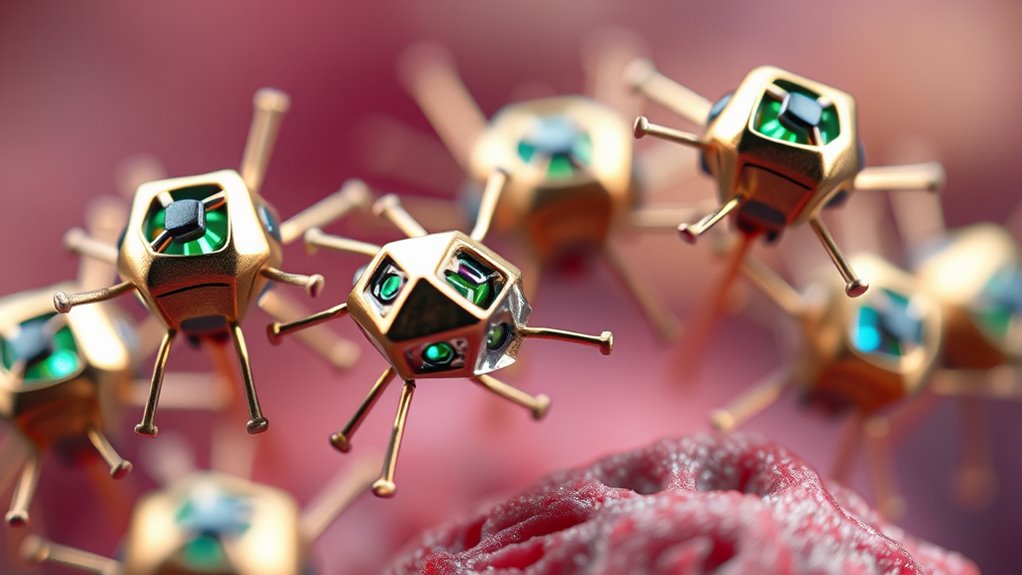
As scientists continue to push the boundaries of medicine, nano-robots are emerging as a revolutionary solution for targeted drug delivery. These tiny machines, often just a few nanometers in size, can navigate through your body with remarkable precision, delivering medication exactly where it’s needed. Imagine a world where you don’t have to worry about side effects from systemic treatments because the drugs are administered directly to the affected area. That’s the promise of nanobot technology.
Nano-robots are revolutionizing targeted drug delivery, ensuring precise medication administration and minimizing side effects.
The key to this innovation lies in effective nanobot navigation. These robots are designed with sophisticated mechanisms that enable them to travel through your bloodstream and target specific cells or tissues. They can respond to various stimuli, such as temperature changes or the presence of certain biomarkers. This ability to sense and adapt to their environment is what sets nanobots apart from traditional drug delivery systems. You’d be amazed at how they can differentiate between healthy and diseased cells, ensuring that the medication reaches its intended target while minimizing damage to surrounding tissues.
An essential aspect of successful nanobot implementation is the use of biocompatible materials. These materials are indispensable, as they guarantee that the nanobots can safely interact with your body without causing harmful reactions. Researchers are exploring various options, from natural polymers to synthetic compounds, to create a biocompatible shell for these tiny robots. This shell not only protects the drug inside but also aids in the navigation process, allowing the nanobots to glide through your bloodstream smoothly.
Once the nanobots reach their destination, they can release their drug payload in a controlled manner. This targeted release means that you’ll receive the full therapeutic benefit of the medication without unnecessary exposure to the rest of your body. It’s a game-changer for treating chronic diseases like cancer, where precision is essential. With nanobots, you can expect fewer side effects and improved treatment outcomes, as they eliminate the guesswork involved in traditional drug delivery methods.
As this technology continues to evolve, it holds the potential to transform the landscape of medicine. You might find yourself benefiting from personalized treatment plans tailored to your unique biological makeup. The future of healthcare is promising, and nanobots are paving the way for a new era of targeted therapies, making medicine more effective and safer for everyone. Notably, this innovation could lead to advancements in IRA investment strategy as healthcare costs influence retirement planning and investment decisions.
Frequently Asked Questions
How Are Nano-Robots Manufactured for Drug Delivery Applications?
You manufacture nano-robots for drug delivery by utilizing advanced nano fabrication techniques. These methods allow you to create intricate structures at the nanoscale, guaranteeing precision in design and functionality. You often choose biocompatible materials to guarantee safety and effectiveness within the human body. By combining these techniques and materials, you can develop nano-robots that efficiently deliver drugs to targeted areas, enhancing treatment outcomes while minimizing side effects.
What Are the Ethical Concerns Surrounding Nano-Robot Use in Medicine?
When you explore the ocean of innovation, ethical concerns can feel like turbulent waves. You’ll find privacy concerns at the forefront, as nano-robots might collect sensitive health data. Without proper ethical oversight, the line between beneficial technology and invasive surveillance blurs. You must consider the implications of autonomy and consent, ensuring patients’ rights are respected while venturing into this uncharted territory. Balancing progress and ethics is crucial for a responsible future in medicine.
Can Nano-Robots Target Multiple Types of Diseases Simultaneously?
Yes, nano-robots can target multiple types of diseases simultaneously, enhancing therapy versatility. By utilizing advanced programming and design, they can deliver different medications to specific cells affected by various conditions. This multi-disease targeting approach allows for a more all-encompassing treatment plan, potentially improving patient outcomes. You’ll find that as technology advances, the ability for these nano-robots to tackle multiple diseases concurrently will become increasingly effective and efficient.
How Do Nano-Robots Avoid the Immune System During Drug Delivery?
Think of nano-robots as modern-day Odysseus, using stealth mechanisms to navigate the treacherous waters of your immune system. They employ immune evasion strategies, like mimicking natural cells or coating themselves with biocompatible materials, to avoid detection. By carefully disguising their presence, these tiny agents can deliver drugs directly to targeted areas without triggering an immune response. This clever approach enhances their effectiveness and minimizes side effects, making treatment more precise and efficient.
What Are the Potential Side Effects of Using Nano-Robots in Treatment?
You might experience potential side effects from using nano-robots in treatment, such as an immune response, where your body reacts to the foreign particles. There’s also a concern about toxicity risks, as these tiny devices could potentially release harmful substances or trigger adverse reactions. Monitoring and managing these risks is vital to guarantee the benefits of nano-robot technology outweigh the possible side effects you could face during treatment.
Conclusion
In summary, nano-robots are revolutionizing the way we think about drug delivery, making treatments more precise and effective than ever before. Imagine a tiny army of robots working tirelessly within your body, targeting diseases with pinpoint accuracy! This groundbreaking technology not only enhances treatment outcomes but also minimizes side effects, paving the way for a healthier future. As we continue to explore their potential, the possibilities are truly limitless, promising a brighter tomorrow for medicine.