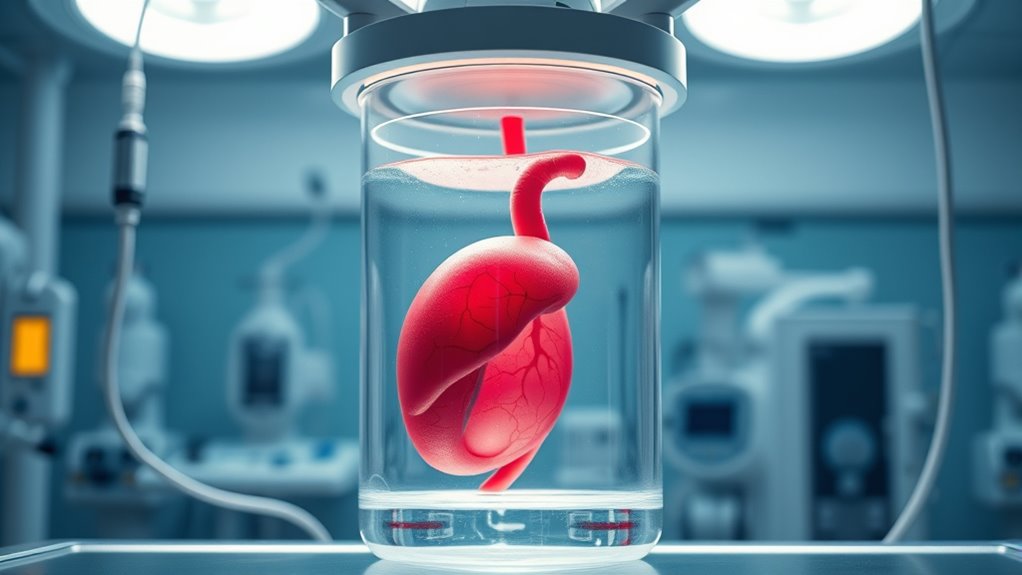

Lab-grown organs are starting to arrive on transplant lists, offering hope to those waiting for life-saving procedures. These organs are created using advanced bioprinting, stem cells, and scaffold technologies, which can produce personalized, compatible organs and reduce rejection risks. Although challenges remain, such as vascularization and safety, ongoing breakthroughs suggest they could soon transform transplantation. Stay with us to learn how these innovations are shaping the future of organ replacement.
Key Takeaways
- Lab-grown organs are progressing towards clinical use, potentially soon appearing on transplant lists.
- Advances in bioprinting and tissue engineering enable the development of functional, patient-specific organs.
- These organs could reduce wait times and dependence on donor shortages for transplant patients.
- Regulatory approvals and safety testing are ongoing to ensure lab-grown organs meet clinical standards.
- Their integration into transplant lists marks a significant step toward revolutionizing organ replacement medicine.
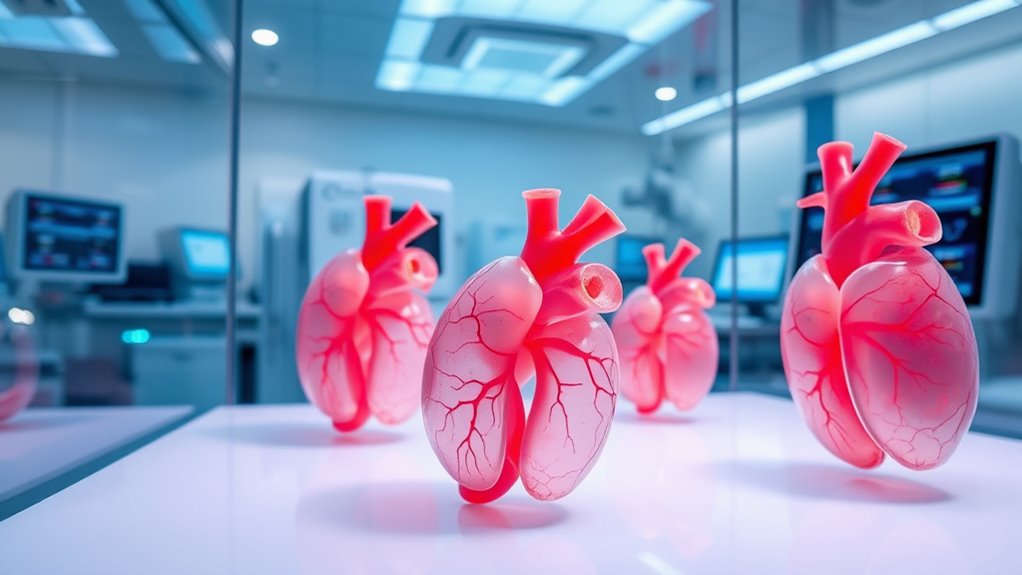
Have you ever wondered if lab-grown organs could solve the urgent shortage of donor transplants? Right now, over 104,000 people in the U.S. are waiting for life-saving organs, and each day, around 17 of them die before a suitable match becomes available. The limited supply of donor organs drives scientists and medical professionals to explore alternatives like lab-grown organs, which could revolutionize transplantation. The global market for 3D bioprinting and organ engineering was worth $2 billion in 2022 and is expected to grow annually by 12.5% through 2030. This growth is fueled by the persistent donor shortage and the increasing number of aging populations with chronic illnesses that require transplantation. Public awareness and education efforts have also increased in recent years, encouraging more people to register as donors and supporting research initiatives.
In 2022, over 157,000 solid organ transplants were performed worldwide, with kidney transplants making up about 65% of those procedures. Liver and heart transplants followed, but the demand continues to outpace supply. In the U.S., organ transplants hit a record high of over 48,000 in 2024, a 23.3% increase over five years. Deceased donors numbered nearly 17,000, complemented by over 7,000 living donors. Notably, more donors aged 65 and older are donating, reflecting demographic shifts and adding complexity to transplant logistics. Additionally, advancements in bioprinting technologies are accelerating the development of functional lab-grown organs.
Lab-grown organs offer promising solutions to these challenges. They could eliminate long wait times by providing organs on demand, directly addressing the critical shortage. Because these organs can be created using patient-specific cells, the risk of organ rejection could drop substantially, improving long-term success rates. This approach also reduces dependence on deceased or living donors, easing ethical debates and donor scarcity issues. Moreover, scientists envision engineering organs with enhanced functionalities or resistance to diseases, potentially improving transplant outcomes. Beyond transplantation, lab-grown organs serve as valuable models for research, advancing personalized medicine and understanding transplant biology better.
Creating these organs involves advanced techniques like 3D bioprinting, which layers living cells and biomaterials to form complex structures. Stem cell differentiation is used to generate specific cell types needed for organ function. Scaffold-based tissue engineering supports cell growth on biodegradable frameworks that mimic natural tissue. Although promising, these methods face hurdles; replicating the full complexity and vascularization of organs remains difficult. Regulatory approval is stringent, and safety concerns still need addressing before widespread clinical use. Costs are high, and scaling production to meet demand presents additional challenges.
Despite these hurdles, the potential of lab-grown organs to transform transplantation is immense. They could save countless lives by bridging the gap between organ supply and demand, making the future of organ transplantation more efficient, ethical, and personalized.
3D Bioprinting: Modeling In Vitro Tissues and Organs Using Tissue-Specific Bioinks
As an affiliate, we earn on qualifying purchases.
As an affiliate, we earn on qualifying purchases.
Frequently Asked Questions
How Long Does It Take to Grow a Lab-Grown Organ?
When you ask how long it takes to grow a lab-grown organ, keep in mind that it varies widely. Simpler tissues like skin can mature in weeks or months, while complex organs like kidneys or hearts often need several months or longer. You’re dealing with intricate biological processes, which makes timing unpredictable. Factors like tissue complexity, bioprinting methods, and maturation periods all influence the total growth time.
What Are the Costs Associated With Lab-Grown Organ Transplants?
You’re wondering about the costs of lab-grown organ transplants. These expenses can range from $5,000 to over $50,000, mainly driven by stem cell source, organ complexity, and treatment needs. You’ll also need to factor in additional costs like follow-up visits, travel, and hospital stays. While initial R&D and manufacturing are high, long-term savings may come from reduced waiting times and increased organ availability, ultimately lowering overall healthcare costs.
Are Lab-Grown Organs Accepted Universally by All Transplant Centers?
You might wonder if all transplant centers accept lab-grown organs. The truth is, acceptance varies widely. Some centers are more willing, especially larger or research-focused ones, while others remain cautious due to regulatory, ethical, and resource challenges. Institutional protocols, safety concerns, and limited long-term data influence their decisions. So, not every center will universally accept lab-grown organs, and acceptance depends on many factors.
How Do Lab-Grown Organs Compare in Longevity to Natural Organs?
While natural organs have a well-known lifespan, lab-grown organs show promise for longer durability. By reprogramming stem cells, you could create organs that resist typical aging and damage, potentially outlasting their natural counterparts. With advancements in engineering complex networks, you can expect these lab-grown organs to offer extended functionality, reducing the need for replacements. Though still in development, their potential longevity could revolutionize transplant medicine, offering more lasting solutions for patients.
What Are the Ethical Considerations Surrounding Lab-Grown Organ Development?
You should consider the ethical issues involved in developing lab-grown organs, such as obtaining proper donor consent and protecting privacy. You also need to weigh risks in clinical trials, like infections or tumors, against potential benefits. Safety and long-term effects are vital, along with ensuring fair access. Engaging the public and creating transparent regulations help maintain trust, address moral concerns like chimeras, and promote responsible innovation in this rapidly evolving field.

Transplant Survivor T Shirt Organ Recipient Recovery Gift T-Shirt
Are you or a loved one like parents, daughter, son or friends going through a heart, liver, lung,…
As an affiliate, we earn on qualifying purchases.
As an affiliate, we earn on qualifying purchases.
Conclusion
As you consider the future of organ transplants, know that lab-grown organs could dramatically reduce wait times. Currently, over 100,000 people are on waiting lists in the U.S. alone. Imagine a world where these numbers drop considerably thanks to advances in biotechnology. With lab-grown organs arriving on the transplant list, you might soon see more lives saved and fewer patients left waiting. The future of medicine is closer than you think—and it’s more promising than ever.

Extrusion Bioprinting of Scaffolds for Tissue Engineering
As an affiliate, we earn on qualifying purchases.
As an affiliate, we earn on qualifying purchases.

Stem Cell Release Factor | Aging and Stem Cell Support | Stimulate Migration of Stem Cells | Regeneration | 60 Ct.
ADVANCED Stem Cell Nutrition
As an affiliate, we earn on qualifying purchases.
As an affiliate, we earn on qualifying purchases.