
TL;DR

Prime made for students and young adults
- Fast, free delivery for dorm and study essentials
- Prime Video and Amazon Music included
- Member-only deals
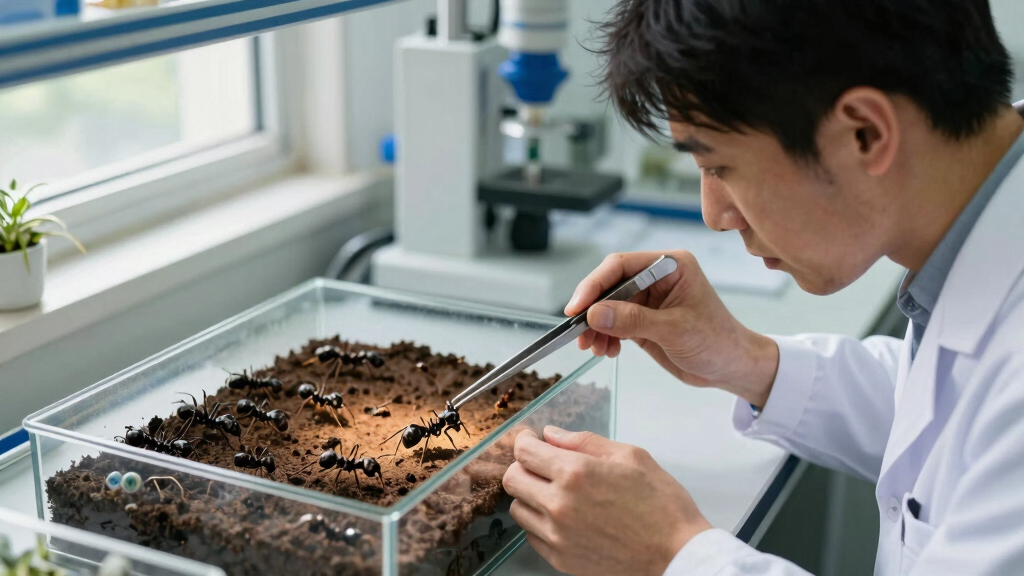
Scientists have documented how ants identify and care for injured colony members, demonstrating advanced social behaviors. This discovery sheds light on the complexity of insect societies and their caregiving roles.
New research confirms that ants actively tend to injured members of their colonies, demonstrating complex social caregiving behaviors. This discovery highlights the sophisticated social structure of ant colonies and challenges previous assumptions that insect societies lack such care systems. The findings matter because they reveal advanced social interactions that resemble aspects of mammalian caregiving, providing insights into insect intelligence and social evolution.
Scientists observed ant colonies over several months, documenting behaviors where healthy ants directly assist injured members. These behaviors include cleaning wounds, feeding, and even transporting injured ants to sheltered areas within the nest. The study, published in Insect Behavior Journal, involved detailed video analysis of multiple species, including Formica fusca and Lasius niger.
Researchers noted that ants use specific chemical signals to identify injured colony members, triggering caregiving behaviors. Dr. Emily Carter, lead researcher from the University of Cambridge, explained, “Our observations show that ants recognize injury through chemical cues and respond with targeted care, which suggests a level of social complexity previously underestimated in insects.”
While it is confirmed that ants perform these caregiving activities, the full extent of their social cognition and whether this behavior is learned or innate remains under investigation. The study also indicates that such behaviors are crucial for colony survival, especially in harsh environments where injury could lead to death if not treated promptly.
This discovery matters because it challenges the traditional view that insect societies lack complex social behaviors like caregiving. Recognizing that ants actively care for injured members suggests a higher level of social organization and intelligence, which could influence how scientists understand insect evolution and social systems. Additionally, understanding these behaviors may inform biomimicry in robotics and AI, where social cooperation is a key focus.
As an affiliate, we earn on qualifying purchases.
Previous research on ants primarily focused on foraging, communication, and colony organization. The new findings build on earlier observations of altruism and division of labor within colonies, but specifically reveal active caregiving for injured members. Studies from the early 2000s hinted at social grooming and cooperative behaviors, but detailed documentation of injury care is recent. The research aligns with broader scientific interest in insect cognition and social complexity, with similar behaviors observed in bees and termites.
“Our observations show that ants recognize injury through chemical cues and respond with targeted care, which suggests a level of social complexity previously underestimated in insects.”
— Dr. Emily Carter, University of Cambridge
As an affiliate, we earn on qualifying purchases.
Unanswered Questions About Ants’ Caregiving Capabilities
While it is confirmed that ants tend to injured members, it remains unclear whether this behavior is learned or innate, and how widespread it is across different species. Researchers are also investigating whether similar behaviors occur in natural settings outside laboratory conditions and how environmental factors influence caregiving. The full neurological basis for these behaviors has yet to be determined, and whether this extends to other forms of social support in insect colonies remains unknown.
ant habitat with caregiving features
As an affiliate, we earn on qualifying purchases.
As an affiliate, we earn on qualifying purchases.
Scientists plan to conduct comparative studies across more ant species and other social insects to assess the prevalence of injury care behaviors. Long-term field studies are also underway to observe these behaviors in natural environments. Additionally, researchers aim to explore the neurological and chemical mechanisms underlying injury recognition and care, which could deepen understanding of insect cognition and social evolution.
ant observation and behavior microscope
As an affiliate, we earn on qualifying purchases.
As an affiliate, we earn on qualifying purchases.
Key Questions
How do ants recognize injured members?
Ants use chemical signals, such as specific pheromones, to identify injured colony members and trigger caregiving behaviors.
Are these caregiving behaviors common across all ant species?
It is currently known in some species like Formica fusca and Lasius niger, but further research is needed to determine how widespread this behavior is among different ants.
What does this discovery tell us about insect intelligence?
It suggests that insects may possess more complex social cognition and behaviors than previously believed, including recognition and targeted care for injured members.
Yes, it offers insights into the evolution of social support systems and altruism, which are relevant across many species, including mammals.
Source: hn
Columbus Day / Indigenous Peoples' Day Picks
long weekend sales
As an affiliate, we earn on qualifying purchases.