📊 Full opportunity report: Restaurant Groups: How To Review Food Supplier Invoices on IdeaNavigator AI — validation score, market gap, and execution plan.

Prime made for students and young adults
- Fast, free delivery for dorm and study essentials
- Prime Video and Amazon Music included
- Member-only deals
TL;DR
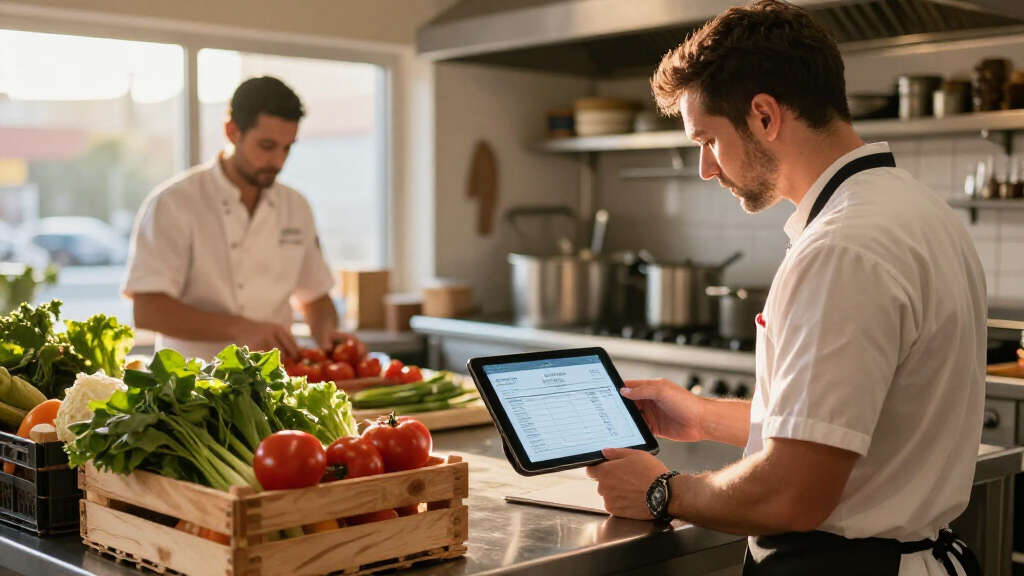
A proposal for independent restaurant groups would use invoice data, contracts and order records to identify possible overcharges, short-ships and price increases. It is an unvalidated business concept, not a launched product or a report of recovered savings; a proposed test would examine 90 days of records at three groups.
IdeaNavigator AI has proposed a supplier-invoice auditing workflow for independent restaurant groups, designed to compare billed prices and quantities with contracts, orders and deliveries. The concept targets purchasing directors and controllers managing multiple locations, but no product launch, customer results or recovered-credit figures are reported; its suggested next step is a 90-day review of records from three groups.
The proposed tool would collect supplier invoices, using electronic data interchange (EDI) where available and otherwise extracting information from PDFs or photographs. It would also use supplier contracts or quote sheets and the restaurant group’s order guide. The intended comparison is among what was ordered, what was received, what was billed and the agreed price.
Its proposed flags include prices above contract or quote, cases billed in full despite a short shipment, substitutions charged at a higher price and increases between orders. The workflow would then draft a credit request for the supplier and track it until a credit appears on a later invoice. The proposal describes this as a potential product, not an established capability or a guarantee that suppliers will issue credits.
The suggested commercial model is a monthly fee per location, with an optional contingency fee tied to credits recovered. To test whether the model is worthwhile, IdeaNavigator AI proposes reviewing 90 days of paid invoices and pricing documents at three restaurant groups, calculating documented discrepancies per location and comparing that amount with a planned subscription fee. No groups, findings or fee levels are identified.
Reviewing Food Supplier Invoices A savings idea to test
IdeaNavigator AI proposes comparing invoices with orders, deliveries and agreed prices. The workflow is a business concept, with no reported launch or recovered savings.
What the workflow would check
It would compare what was ordered, received, billed and agreed.
Above agreement
Flag bills above contract or quote prices for review.
Short shipments
Check cases billed in full against delivery records.
Substitutions and increases
Review higher-priced substitutions and price increases between orders.
How a review could work
Collect paid invoices, contracts or quote sheets, order guides and delivery information.
Match billed prices and quantities to agreements, orders and deliveries; check flags before making claims.
Calculate verified credits per location and compare them with a planned subscription fee.
What the proposed test measures
The suggested decision rule is to proceed only if documented credits per location clearly exceed the planned fee.
- 90 days of paid invoices
- Three restaurant groups
- Discrepancies checked against pricing and delivery records
- Total documented credits per location
- Compare with a planned subscription
- No participants, fee levels or results are reported
Market context is not proof of savings
USDA Economic Research Service forecasts cited in the proposal concern 2026 prices; they do not measure invoice errors or product performance.
| Forecast category | 2026 forecast |
|---|---|
| Retail beef and veal prices | Up 9.4% |
| Wholesale beef prices | Up 8.5% |
| Food-away-from-home prices | Up 3.5% |
Checking Supplier Costs Against Agreements
For a multi-location operator, a small discrepancy on a single delivery could recur across many invoices. A structured comparison could help purchasing and finance teams spot issues that manual review misses, including unapplied agreed prices, billed quantities that do not match deliveries and price changes that merit follow-up. Whether those flags translate into credits or lasting savings has not been established.
The proposal frames the potential benefit as protecting food-cost margins when supplier prices are rising faster than menu prices. It cites a USDA Economic Research Service forecast dated Sept. 25, 2026: retail beef and veal prices were forecast to rise 9.4% in 2026, wholesale beef prices 8.5%, and food-away-from-home prices 3.5%. Those are forecasts, not confirmed outcomes, and they do not measure the savings an invoice-auditing product could produce.
The suggested test focuses on documented credits per location, rather than assuming that every flagged mismatch is recoverable. That distinction matters to restaurant groups weighing software costs: a discrepancy may reflect an error, but it may also require verification against delivery records, substitution terms or updated pricing agreements before a credit request is justified.
Popular right now

Shark HydroVac MessMaster Wet/Dry Vacuum & Mop Combo (AW261)

iRobot Roomba 105 Combo Robot Vacuum and Mop

Ninja Foodi DZ201 8-Quart DualZone 6-in-1 Air Fryer
As an affiliate, we earn on qualifying purchases.
The Proposed Three-Group Test
The concept is aimed at an independent restaurant group with several locations that buys from broadline and specialty food and beverage suppliers. Its stated buyer is a director of purchasing or controller. The problem description says these teams may process hundreds of supplier invoices a week, while kitchen staff may sign for deliveries without checking each item against the order and office staff may pay from the invoice.
The proposed 90-day lookback would compare paid invoices with contracts or quote sheets, then total three types of discrepancy: amounts billed above agreed prices, short-shipped cases billed in full and price increases between orders. The proposal says to proceed if documented credits per location clearly exceed the planned subscription fee. That is a proposed decision rule; no completed pilot or results are included.
The USDA figures are offered as market context for the idea, not as evidence that restaurant groups are currently being overcharged or that an auditing service would offset food inflation. The forecast concerns price changes across specified food categories and menu prices; it does not describe the performance of any particular supplier or operator.
Pilot Results and Product Status
No launch, pilot or customer outcome is reported. The proposal does not identify participating restaurant groups, the size of any discrepancies, credits actually secured, subscription prices or the proportion of flagged invoices expected to be errors.
It is also unclear how the proposed system would verify delivery quantities when records are incomplete, treat authorized substitutions, handle supplier-specific invoice formats or resolve disagreements over contract terms. EDI availability and the accuracy of PDF or photo extraction could vary by supplier. The proposed workflow would need reliable underlying records and a process for staff to check flags before making claims.
The USDA numbers are forecasts for 2026, not final measurements. The proposal provides no later data showing whether prices followed those forecasts or how restaurant operators’ costs changed. The business case therefore remains a hypothesis to test, not a demonstrated source of savings.
A 90-Day Records Review
The next step proposed by IdeaNavigator AI is a 90-day retrospective review for three restaurant groups. The review would match paid invoices against contracts or quote sheets and examine short shipments and price changes, then calculate documented credits per location.
Those results could help the groups compare potential recoveries with a proposed monthly subscription and decide whether to continue testing the idea. The proposal does not give a start date, name participants or set a timetable for a product launch. Until a test is reported, the scale of the problem and the workflow’s ability to recover credits remain unverified.
Source: IdeaNavigator AI
Key Questions
Is this an available restaurant invoice-auditing product?
The information describes a proposed workflow. It does not report a product launch, available service or operating customer base.
What would the proposed tool check?
It would compare supplier invoices with orders, delivery information, contracts or quote sheets, and the group’s order guide. Potential flags include price mismatches, short-ships billed in full, higher-priced substitutions and price increases.
How would restaurant groups test the idea?
The proposed test is a 90-day review of paid invoices and pricing documents at three restaurant groups, measuring documented credits per location against a planned subscription fee. No results have been provided.
Do the cited USDA forecasts prove the tool would save money?
No. The cited figures are forecasts for 2026 and provide market context. They do not establish how many invoice discrepancies exist or how much an auditing workflow could recover.
Source: IdeaNavigator AI