

📊 Full opportunity report: Home signal monitor: Mortgage Rates Inch to Another 6-Week Low on IdeaNavigator AI — validation score, market gap, and execution plan.
Open a free Amazon Business account
Business pricing, bulk buying and tax-exempt orders.
Create a free accountAs an affiliate, we earn on qualifying purchases.
TL;DR
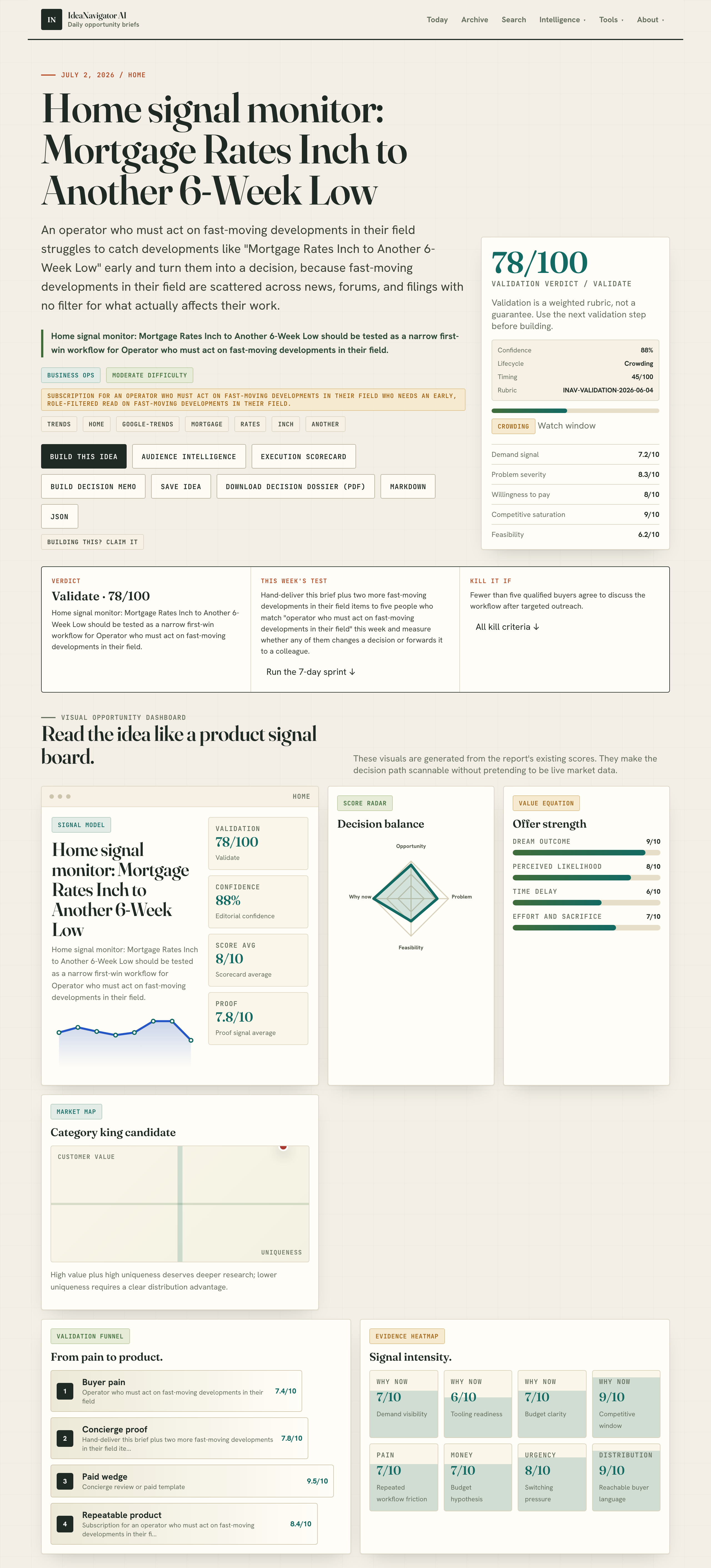
Mortgage rates have decreased to their lowest level in six weeks, according to recent market data. This development could influence borrowing costs and housing market activity. Details on the drivers behind this decline are still emerging.
Mortgage rates have declined to their lowest point in six weeks, according to recent market data. This drop is significant for homebuyers, homeowners, and the broader housing market, as it could influence borrowing costs and activity levels. The decline was confirmed by market analysts and mortgage industry reports, highlighting a potential shift in the mortgage rate trend.
Data from financial market sources indicate that the average 30-year fixed mortgage rate has decreased to approximately 6.10%, matching the lowest levels recorded since early March. This represents a slight decline from last week’s average of 6.20%, according to industry tracker reports. Experts attribute this movement partly to recent bond market fluctuations and broader economic signals.
Market analysts from financial research firms have noted that this decline could prompt increased activity in the housing sector, as lower mortgage rates typically encourage homebuying and refinancing. However, some caution that external factors such as inflation concerns and Federal Reserve policies may influence future rate movements.
It is important to note that while the decline is confirmed by market data, the exact timing and sustainability of this trend remain uncertain. Mortgage lenders and real estate professionals are closely monitoring these developments for potential impacts on their operations and strategic planning.
Implications of the Six-Week Low for Borrowers and the Housing Market
The decline to a six-week low in mortgage rates could lead to increased borrowing activity, potentially boosting home sales and refinancing applications. For prospective homebuyers, lower rates may improve affordability, while existing homeowners might consider refinancing to reduce monthly payments. This movement also signals possible shifts in monetary policy expectations and market sentiment, which could influence future rate trends and housing market stability.
As an affiliate, we earn on qualifying purchases.
Recent Trends and Market Factors Driving Mortgage Rate Movements
Mortgage rates have experienced volatility over the past few months amid inflation concerns, Federal Reserve rate policies, and bond market fluctuations. In early March, rates reached recent highs above 6.20%, before gradually trending downward. Analysts note that recent economic data, including inflation reports and employment figures, have contributed to market reassessments of future rate trajectories.
Market watchers have been closely observing bond yields, which often serve as a leading indicator for mortgage rates. The recent decline in bond yields has coincided with the rate drop, suggesting a possible easing of borrowing costs if the trend continues. However, external economic uncertainties and policy signals keep the outlook uncertain.
“While the decline is encouraging, borrowers and lenders should remain cautious, as external economic factors could influence future rate directions.”
— a mortgage industry expert
As an affiliate, we earn on qualifying purchases.
Factors That Could Influence Future Mortgage Rate Movements
It remains uncertain whether the current decline will persist or reverse in the coming weeks. External factors such as inflation trends, Federal Reserve policy decisions, and global economic conditions could significantly alter the trajectory of mortgage rates. Market analysts caution that while the current movement is confirmed, its sustainability is not guaranteed.
As an affiliate, we earn on qualifying purchases.
Monitoring Economic Indicators and Policy Announcements
Next steps include closely watching upcoming economic data releases, Federal Reserve statements, and bond market movements. These factors will help determine whether the current trend in mortgage rates continues or if new fluctuations emerge. Industry stakeholders will also assess how these developments influence housing market activity and borrowing decisions.
As an affiliate, we earn on qualifying purchases.
Key Questions
What caused mortgage rates to decrease recently?
The decline is attributed to fluctuations in bond yields, economic data, and market expectations regarding future Federal Reserve policies, though exact causes are complex and multifaceted.
How might this rate movement affect homebuyers?
Lower mortgage rates can reduce borrowing costs, potentially making home purchases more affordable and encouraging refinancing activity.
Is this decline expected to continue?
The sustainability of the decline is uncertain, as external economic factors and policy decisions could influence future rate movements.
When will we see the full impact of this rate change?
It may take several weeks to observe significant changes in housing market activity and refinancing trends, depending on how long the current rate levels persist.
Source: IdeaNavigator AI
Flea & tick season Picks
flea and tick prevention
As an affiliate, we earn on qualifying purchases.