
TL;DR

Prime made for students and young adults
- Fast, free delivery for dorm and study essentials
- Prime Video and Amazon Music included
- Member-only deals
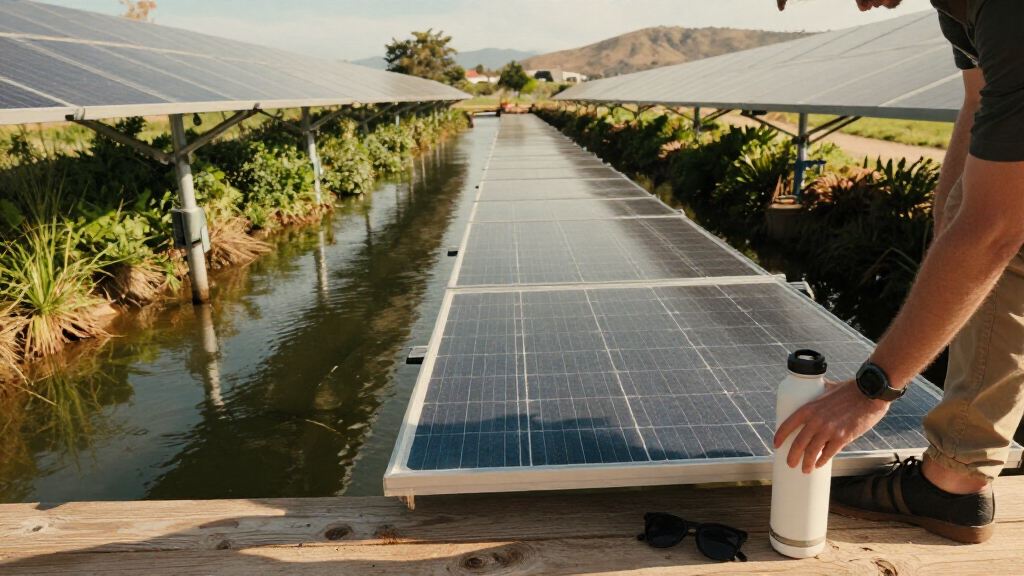
California is evaluating the use of solar panels installed over irrigation canals as a dual solution for renewable energy generation and water management. Early pilot projects are underway, but full impacts and feasibility are still being studied. This approach could influence future sustainable infrastructure efforts.
California is actively testing the installation of solar panels over its irrigation canals as a means to generate renewable energy while reducing water evaporation. This innovative approach aims to address multiple environmental and resource management challenges simultaneously, making it a notable development in sustainable infrastructure. The state’s pilot projects are in early stages but are generating interest among policymakers and environmental groups.
Multiple pilot projects are underway across California, where solar panels are being installed directly over irrigation canals. These installations are designed to capture solar energy while allowing water to flow beneath, potentially reducing water loss from evaporation and improving water management efficiency. The California Department of Water Resources and the California Energy Commission are collaborating on these initiatives, which began as exploratory efforts in recent years.
Preliminary data from these pilot projects suggest that solar panels over canals can produce significant renewable energy, with some sites reporting capacity factors comparable to land-based solar farms. Additionally, early observations indicate that shading from the panels may reduce water temperature and evaporation rates, although comprehensive studies are still ongoing to confirm these benefits. Experts emphasize that the approach could also reduce land use conflicts associated with large solar farms.
However, challenges remain, including concerns about maintenance access, potential impacts on aquatic ecosystems, and the structural integrity of installations over water. The projects are being closely monitored to assess long-term viability, environmental impacts, and cost-effectiveness before any broader rollout.
Implications for California’s Renewable and Water Strategies
This initiative could significantly influence California’s efforts to expand renewable energy capacity while simultaneously conserving water resources. If successful, solar panels over irrigation canals could reduce land use conflicts, lower evaporation losses, and provide a model for other water-scarce regions. The approach aligns with California’s dual goals of increasing renewable energy production and improving water efficiency, making it a noteworthy development in sustainable infrastructure planning.
solar panel over irrigation canal kit
As an affiliate, we earn on qualifying purchases.
As an affiliate, we earn on qualifying purchases.
Background on Solar Innovations and Water Management in California
California has long been a leader in renewable energy adoption, with extensive solar farm development and ambitious climate goals. At the same time, the state faces persistent water scarcity issues, exacerbated by droughts and climate change impacts. Traditional solar farms require large land areas, which can lead to land use conflicts and ecological concerns.
In recent years, innovative solutions have emerged, including floating solar panels on reservoirs and now, solar installations over irrigation canals. These approaches aim to maximize land and water use efficiency, reduce environmental impacts, and enhance the resilience of water and energy infrastructure. The concept of installing solar panels over canals is still in experimental stages but has gained attention as a potential multi-benefit solution.
While some pilot projects have shown promising results, the approach remains under evaluation, and comprehensive data on long-term performance and environmental impacts are still being collected. The interest is partly driven by the need to meet California’s aggressive renewable energy targets while managing limited water resources.
floating solar panels for water management
As an affiliate, we earn on qualifying purchases.
As an affiliate, we earn on qualifying purchases.
Unconfirmed Long-Term Environmental and Economic Impacts
It is not yet clear how these solar installations will perform over the long term in terms of structural durability, maintenance costs, and ecological effects on aquatic ecosystems. The full environmental benefits, such as water conservation and habitat impacts, are still under evaluation, and comprehensive data is pending from ongoing studies. Additionally, the economic viability and scalability of this approach remain uncertain as pilot projects progress.
As an affiliate, we earn on qualifying purchases.
Next Steps in Pilot Evaluation and Broader Adoption Plans
Researchers and state agencies plan to continue monitoring pilot sites over the coming years, collecting detailed data on energy output, water savings, ecological impacts, and maintenance challenges. Pending positive results, California may expand these projects or develop guidelines for wider implementation. Further funding and policy support are also expected to shape the future of this innovative approach.
water-efficient solar energy systems
As an affiliate, we earn on qualifying purchases.
As an affiliate, we earn on qualifying purchases.
Key Questions
How much energy can solar panels over canals generate?
Preliminary estimates indicate that solar panels installed over canals can produce enough energy to power thousands of homes, but exact figures vary based on site conditions and panel efficiency. Long-term data from pilot projects are still being collected to determine precise capacity and output.
What are the environmental concerns associated with this approach?
Potential concerns include impacts on aquatic ecosystems, water flow, and maintenance access. Ongoing studies aim to assess these factors comprehensively before large-scale deployment.
Could this method be used in other regions?
Yes, regions facing water scarcity and land use conflicts could consider similar approaches, but local environmental and infrastructural conditions will influence feasibility. California’s ongoing projects will provide valuable insights for other areas.
When will the pilot projects produce conclusive results?
Initial data is expected over the next 1-3 years, with more definitive conclusions on performance, environmental impacts, and economic viability anticipated within that timeframe.
Source: hn
Halloween Picks
halloween
As an affiliate, we earn on qualifying purchases.