
Waste-to-energy innovations are turning your garbage into valuable energy sources you can rely on. Through techniques like biomass conversion and landfill gas capture, organic waste is transformed into electricity, heat, and biofuels. This shift not only reduces landfill dependence but also promotes renewable energy. By recycling organic matter, you’re helping create a cleaner, more sustainable future. Discover how these exciting technologies can empower communities and reshape waste management practices.
Key Takeaways
- Waste-to-energy innovations transform organic waste into valuable energy sources, reducing landfill reliance and promoting sustainable power options.
- Biomass conversion techniques like anaerobic digestion and gasification efficiently convert waste into biogas and syngas for energy generation.
- Biogas, produced by microorganisms from organic waste, serves as a renewable alternative for heating and electricity, lowering fossil fuel dependence.
- Landfill gas capture systems mitigate methane emissions by converting decomposed organic waste into usable energy, contributing to sustainable waste management.
- Community involvement and advocacy for waste-to-energy technologies can enhance energy independence and foster a cleaner, sustainable future.
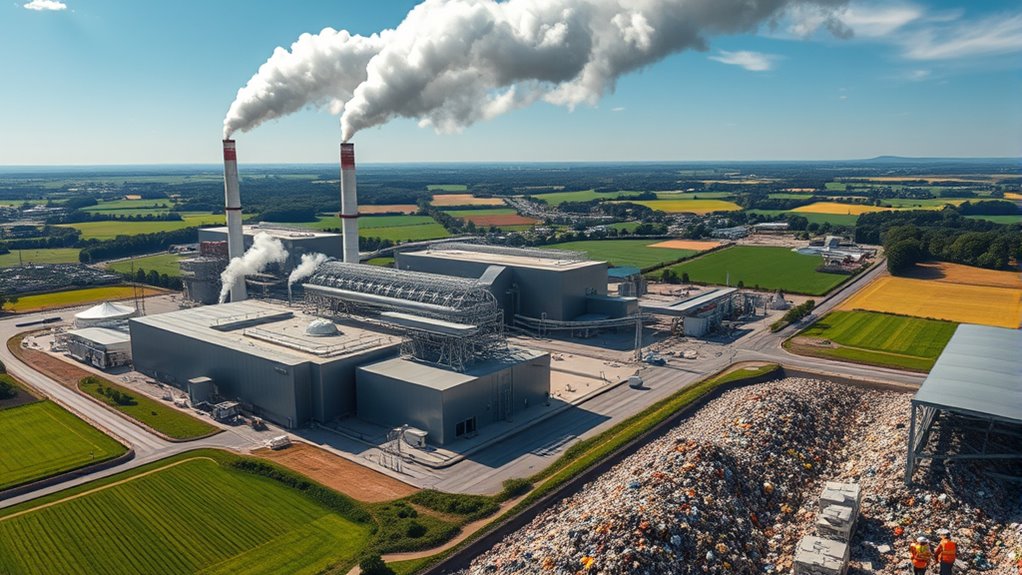
Have you ever wondered how waste can be transformed into a valuable energy source? The answer lies in innovative processes that convert various types of waste into usable energy, helping to reduce landfill dependence and provide sustainable power options. One of the most fascinating methods involves biomass conversion, where organic materials like food scraps, agricultural residues, and even wood waste are turned into energy. By harnessing the natural decomposition of these materials, you can generate electricity, heat, or biofuels, transforming what once was a burden into a crucial resource.
Biomass conversion utilizes several techniques, including anaerobic digestion and gasification. In anaerobic digestion, microorganisms break down organic matter in the absence of oxygen, producing biogas—essentially a mix of methane and carbon dioxide. This biogas can be used directly for heating or electricity generation, making it an excellent alternative to fossil fuels. If you think about it, it’s like recycling waste into energy, reducing both environmental impact and energy costs.
Biomass conversion transforms organic waste into biogas, providing a sustainable energy source and reducing environmental impact.
Another significant aspect of waste-to-energy innovations is the capture and use of landfill gas. When organic waste decomposes in landfills, it generates landfill gas, primarily composed of methane. This gas can be collected, processed, and used to generate electricity or heat, effectively turning a harmful byproduct of waste into a valuable energy source. By capturing this gas before it escapes into the atmosphere, you’re not only mitigating greenhouse gas emissions but also tapping into a readily available energy source.
It’s incredible to think how much potential lies in the waste we generate daily. With the right technologies and systems in place, you can transform your food scraps and yard waste into clean energy. Cities around the world are increasingly adopting these waste-to-energy solutions, recognizing that they not only address waste management challenges but also contribute to energy independence and sustainability. Additionally, utilizing biomass conversion can significantly enhance the efficiency of energy generation from waste materials.
As you think about the future, reflect on how you can support these innovations in your community. Whether it’s advocating for better waste management practices or investing in technologies that facilitate biomass conversion and landfill gas utilization, your involvement can make a difference. By embracing waste-to-energy solutions, you’re taking a step towards a cleaner, more sustainable world where waste becomes a resource rather than a problem.
Frequently Asked Questions
How Does Waste-To-Energy Compare to Traditional Energy Sources?
Waste-to-energy offers a unique alternative to traditional energy sources, often showcasing greater economic viability by converting waste into usable energy. While it reduces landfill usage, public perception can be mixed; some may view it as a cleaner option, while others express concerns about emissions. You’ll find that when waste-to-energy is effectively managed, it not only provides sustainable energy but also addresses waste management challenges, making it an attractive option for many communities.
What Types of Waste Can Be Converted Into Energy?
Think of your trash as a treasure map. You can convert various types of waste into energy, including biodegradable plastics and even electronic waste. Biodegradable plastics break down and release energy during processing, while electronic waste, often deemed useless, contains precious metals and materials that can be reclaimed and converted into power. By harnessing these waste types, you’re not just reducing landfill piles; you’re fueling a sustainable future.
Are There Any Environmental Risks Associated With Waste-To-Energy?
Yes, there are environmental risks associated with waste-to-energy processes. You should be aware that burning waste can lead to air pollution and toxic emissions, which pose health risks to nearby communities. It’s vital to implement stringent regulations and advanced technologies to minimize these impacts. While waste-to-energy can reduce landfill use, the potential for harmful byproducts means careful consideration and management is essential to guarantee a safer, more sustainable approach.
How Is the Efficiency of Waste-To-Energy Systems Measured?
You know what they say, “Every penny counts.” When measuring the efficiency of waste-to-energy systems, you’ll look at efficiency metrics like conversion rates. These rates show how effectively waste transforms into energy. Typically, higher conversion rates indicate better efficiency, revealing how much energy is generated from the waste input. By analyzing these metrics, you can assess the system’s performance and its potential contribution to energy needs while minimizing waste.
What Future Trends Are Expected in Waste-To-Energy Technology?
You can expect future trends in waste-to-energy technology to focus on innovative processes and policy developments. As advancements in conversion techniques emerge, efficiency will improve, leading to more sustainable energy production. Governments are likely to implement stricter regulations and incentives, encouraging investments in cleaner technologies. Additionally, integrating smart technologies and circular economy principles will enhance waste management, making it easier for you to harness energy from waste effectively.
Conclusion
In summary, waste-to-energy innovations are transforming garbage into valuable power sources, showcasing a smarter way to manage waste. Did you know that for every ton of waste processed, we can generate enough energy to power a home for about a week? By harnessing this potential, we’re not just reducing landfill waste but also contributing to a cleaner, more sustainable future. Embracing these technologies can make a significant impact on our planet and our energy needs.