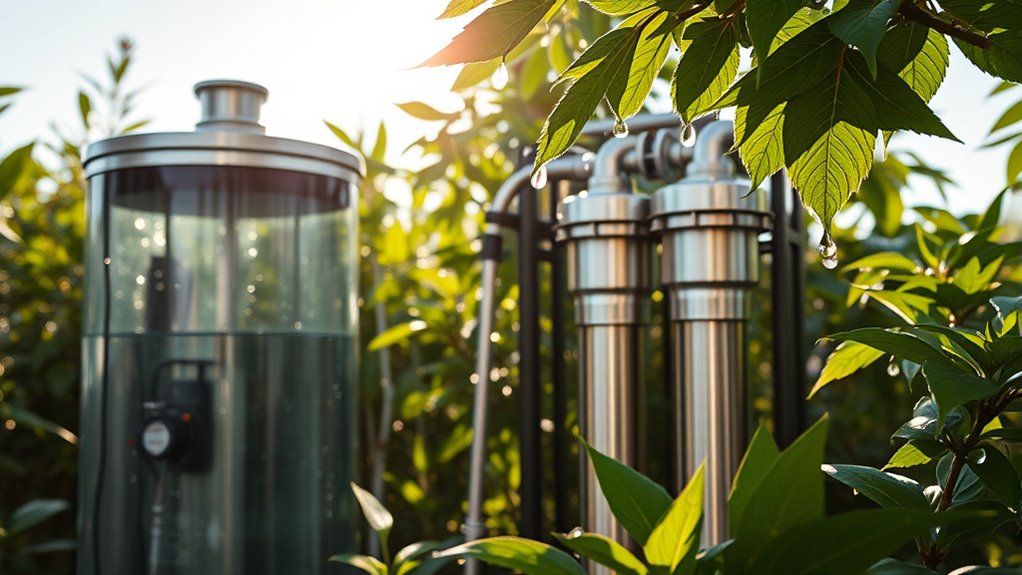

Rainwater Harvesting 2.0 transforms urban water conservation with innovative smart storage and filtration systems. These advanced technologies collect rainwater from rooftops, ensuring you have access to clean water for irrigation, toilet flushing, and laundry. By monitoring water quality and levels, these systems alert you when maintenance is needed and manage usage based on rainfall forecasts. This means reduced water bills and a smaller environmental footprint. Discover how this approach can enhance your sustainable lifestyle further.
Key Takeaways
- Smart rainwater harvesting systems utilize advanced filtration to ensure clean water is stored efficiently for various household uses.
- Integrated technology allows for real-time monitoring of water quality and storage levels, enhancing overall system performance.
- Automated alerts inform homeowners of maintenance needs, promoting proactive care and efficient water management.
- Smart systems can adjust usage based on rainfall forecasts, optimizing water conservation during dry periods.
- These innovations support sustainable urban living, helping communities adapt to climate change and water scarcity challenges.
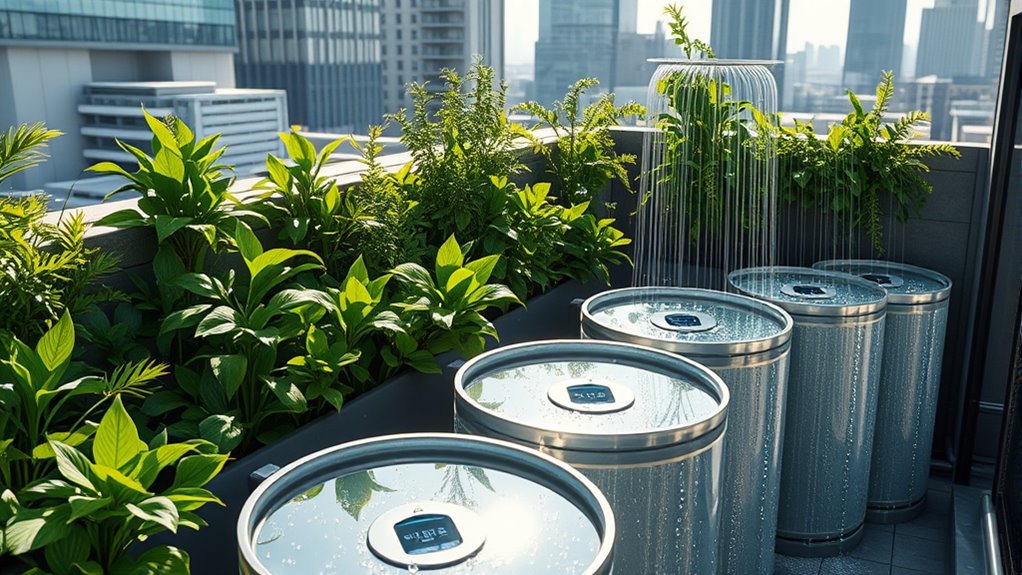
As climate change intensifies and water scarcity becomes a growing concern, you might wonder how to make the most of every drop. Rainwater harvesting has emerged as a practical solution, especially in urban areas where infrastructure often struggles to meet the rising demand for water. By capturing and using rainwater, you can not only alleviate the pressure on your local water supply but also contribute to broader water conservation efforts.
Imagine collecting rainwater from your roof and diverting it into a smart storage system. This isn’t just about a barrel sitting in your backyard; it’s about integrating advanced filtration and storage solutions designed to ensure you have clean water ready for various uses. These systems can be seamlessly incorporated into existing urban infrastructure, allowing you to optimize water use without disrupting your environment. When you invest in a rainwater harvesting system, you’re taking a proactive step toward sustainable living.
You might think about how this affects your daily life. By using rainwater for irrigation, flushing toilets, or even washing clothes, you reduce your reliance on municipal water supplies. This not only helps you save money on your water bill but also decreases the overall demand on local resources. In a world where every drop counts, your actions can make a significant difference.
Moreover, modern rainwater harvesting systems come equipped with smart technology that monitors water quality and levels. These systems can alert you when maintenance is needed or manage usage based on rainfall forecasts, ensuring you’re always prepared. It’s about harnessing technology for better water conservation—something that can transform how you interact with water in your home.
As cities grow and climate patterns shift, adapting your water use is more important than ever. Rainwater harvesting isn’t just a trend; it’s a critical component of future urban living. By embracing this method, you’re not only ensuring your household has access to water but also helping to mitigate the effects of climate change on a larger scale.
Frequently Asked Questions
What Are the Initial Costs of Installing a Rainwater Harvesting System?
The initial costs of installing a rainwater harvesting system can vary widely, typically ranging from $1,500 to $5,000. Cost estimates depend on factors like system size, collection method, and filtration options. You might want to explore financing options, such as government incentives or loans, to help ease the upfront investment. It’s essential to evaluate your specific needs and budget to guarantee you choose the right system for your home.
How Much Rainwater Can Be Realistically Harvested From My Roof?
Rainwater readiness really relies on your roof size and rainfall amount. If you’ve got a bigger roof, you can collect more water. On average, one inch of rain on a 1,000-square-foot roof can yield about 600 gallons of water. So, if you live in an area with regular rain, you could realistically harvest thousands of gallons annually. Just consider your local climate to maximize your rainwater harvesting potential!
Are There Any Legal Restrictions on Rainwater Harvesting in My Area?
Yes, there can be legal restrictions on rainwater harvesting in your area. You’ll want to check local regulations to make certain you’re in compliance. Some regions may require permits, while others might have guidelines on how much water you can collect or how it’s stored. It’s essential to educate yourself about these laws to avoid potential fines or issues. Always consult your local government or water authority for specific requirements.
How Often Should I Clean My Rainwater Storage Tanks?
You should clean your rainwater storage tanks at least once a year. Regular tank maintenance guarantees clear water, prevents contamination, and keeps your system functioning efficiently. During cleaning, check for debris, sediment buildup, and any signs of algae. If you notice heavy rainfall or significant debris, consider cleaning more frequently. Staying proactive about tank upkeep not only safeguards your water quality but also extends the life of your rainwater harvesting system.
Can I Use Harvested Rainwater for Drinking and Cooking?
Yes, you can use harvested rainwater for drinking and cooking, but you need to address water quality concerns. Make certain you install an effective filtration system that meets health standards. Regular testing of the water is vital to guarantee its safety. If you’re unsure about your filtration requirements, consult local regulations or experts. By taking these steps, you can safely enjoy the benefits of rainwater in your daily life.
Conclusion
In embracing Rainwater Harvesting 2.0, you’re not just catching rain; you’re transforming it into a smart resource for your home. Imagine the surprise when you discover that the rainwater you collected during a storm powers your garden irrigation just when you need it most. With innovative storage and filtration solutions, you’re not only conserving water but also enhancing your sustainability efforts. So, why not plunge into this modern approach and let the rain work wonders for you?