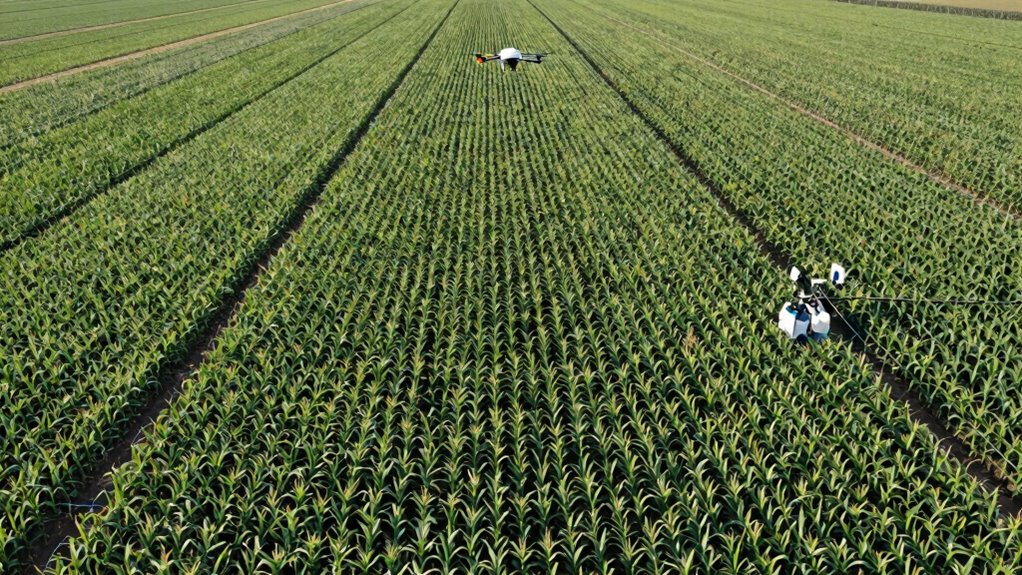

Precision agriculture helps you reduce waste and boost yields by using data from sensors, satellites, and drones to target specific areas of your farmland. It monitors soil health, moisture, and nutrients in real-time, allowing you to apply fertilizers and water only where needed. This targeted approach minimizes chemical use, lowers costs, and protects the environment. By embracing this technology, you’ll improve crop quality and sustainability—there’s much more to uncover behind these benefits.
Key Takeaways
- Targets specific field areas for fertilizer and water application, minimizing excess use and waste.
- Uses real-time sensor data to optimize inputs, reducing over-application and resource runoff.
- Employs satellite and drone imagery to monitor soil health and identify nutrient deficiencies early.
- Promotes sustainable practices that maintain soil fertility, preventing degradation and increasing productivity.
- Integrates advanced technology to enhance crop yields while conserving water, nutrients, and other resources.
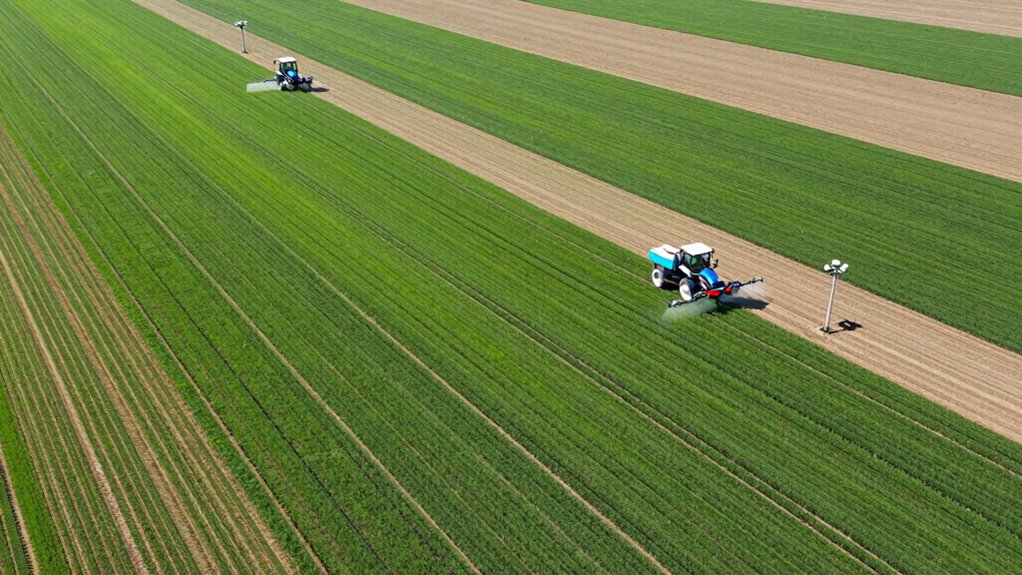
Have you ever wondered how farmers are increasing crop yields while reducing environmental impact? One of the key ways they’re achieving this is through precision agriculture, a technology-driven approach that uses data to optimize farming practices. By focusing on soil health, farmers can tailor their interventions to specific areas of their fields, ensuring that plants get exactly what they need for healthy growth. Instead of applying uniform amounts of fertilizer or water across entire fields, they use data analytics to identify variations in soil composition, moisture levels, and nutrient content. This not only improves crop quality but also minimizes waste, as resources aren’t wasted on over-application.
Data analytics plays an essential role in this process. Farmers collect data from various sources—sensors, satellite images, drones—and analyze it to make informed decisions. For example, sensors placed in the soil continuously monitor pH levels, moisture, and nutrient content, providing real-time information. This data enables farmers to identify areas that require more or less fertilizer, water, or pest control. As a result, they avoid unnecessary inputs, which reduces costs and lessens the environmental footprint. Precision agriculture also helps in preventing overuse of chemical inputs that can harm soil health and surrounding ecosystems. Incorporating data-driven decisions into farming routines ensures resources are used more efficiently and sustainably.
Data analytics helps farmers optimize inputs, reduce costs, and protect ecosystems through real-time soil monitoring.
By integrating data analytics into their daily routines, farmers can predict crop performance more accurately and respond proactively to potential issues. Suppose a particular section of a field shows signs of nutrient deficiency; farmers can apply targeted treatments instead of blanket solutions. This approach not only boosts yields but also preserves soil integrity and biodiversity. Maintaining healthy soil is essential because it enhances the land’s natural fertility, reduces erosion, and increases its ability to retain water. Soil health is a fundamental aspect of sustainable farming, supported by precision agriculture practices. Additionally, the use of remote sensing technology can help monitor large areas efficiently, enabling better management decisions across entire farms. When soil health is prioritized, crops grow stronger and more resilient, which further reduces the need for chemical interventions. Moreover, the integration of advanced technology creates opportunities for more precise resource management, ultimately leading to a more sustainable and productive agricultural system.
In essence, precision agriculture empowers you to be more efficient and environmentally conscious. It transforms traditional farming into a smart, sustainable practice where every resource counts. Thanks to advances in data analytics, you can make smarter decisions that lead to higher yields and healthier soil. This not only benefits your farm’s productivity but also contributes to a healthier planet by reducing waste and conserving critical resources. As technology continues to evolve, the potential for precision agriculture to revolutionize farming practices becomes even more promising, making sustainable food production more achievable than ever. Incorporating sustainable farming practices ensures that these innovations benefit both the environment and future generations.

Toro PSS-KIT Precision Soil Moisture Sensor Kit
As an affiliate, we earn on qualifying purchases.
As an affiliate, we earn on qualifying purchases.
Frequently Asked Questions
How Cost-Effective Is Precision Agriculture for Small-Scale Farmers?
Precision agriculture can be quite cost-effective for small-scale farmers when you do a proper cost-benefit analysis. While initial technology adoption costs might seem high, the long-term savings on inputs and increased yields often outweigh these expenses. You’ll need to carefully evaluate your farm’s specific needs and scale, but embracing precision tools can boost productivity and reduce waste, making it a smart investment over time.
What Are the Environmental Impacts of Adopting Precision Agriculture?
Adopting precision agriculture benefits the environment by promoting healthier soil and conserving water. You’ll see improvements in soil health because targeted fertilizer and pesticide use prevent over-application, reducing runoff and soil degradation. Water conservation is achieved through precise irrigation, minimizing waste and protecting water resources. Overall, embracing this technology helps you farm more sustainably, reducing your ecological footprint while maintaining or increasing crop yields.
How Long Does It Take to See Results From Precision Agriculture?
Like waiting for a good vintage to age, you’ll see results from precision agriculture in about one to three growing seasons. Once you start with technology adoption and crop monitoring, improvements in yield and waste reduction become noticeable relatively quickly. Early benefits, such as optimized resource use and targeted interventions, often emerge within the first season, but full results, including increased profitability, typically take a few seasons to mature.
What Training Is Needed to Implement Precision Agriculture Technologies?
You need to pursue farmer education to effectively implement precision agriculture technologies. Training should cover understanding new tools, data analysis, and technology adoption strategies. Attend workshops, webinars, or seek hands-on experience to build confidence. Collaborate with experts or agronomists to learn best practices. This preparation helps you optimize technology use, reduce waste, and improve crop yields, ensuring successful integration into your farming operations.
Are There Any Risks Associated With Precision Agriculture?
While precision agriculture boosts efficiency, it also carries risks like data privacy breaches and increased technology dependency. You might find sensitive data vulnerable to cyber threats, and over-reliance on tech could lead to operational disruptions if systems fail. Balancing innovation with security measures is essential. Embracing this technology offers benefits, but you should stay vigilant about these risks to maintain sustainable, resilient farming practices.

DJI P4 Multispectral Agriculture Drone, 3-Axis Stabilized Camera, RGB + 5 Multispectral Sensors, RTK Module, 27-Min Flight Time, 4.4-Mile Range
- Multispectral Imaging: RGB plus 5 spectral sensors
- Precision Data Collection: TimeSync for centimeter accuracy
- Long Flight Time: Up to 27 minutes of flight
As an affiliate, we earn on qualifying purchases.
As an affiliate, we earn on qualifying purchases.
Conclusion
By adopting precision agriculture, you harness technology like a skilled captain steering through a storm, reducing waste and boosting yields. It turns your fields into finely tuned symphonies, where every note counts. This approach isn’t just about better harvests; it’s about cultivating a sustainable future, where efficiency and care grow side by side. With each strategic move, you’re not only nurturing your crops but also safeguarding the world’s resources for generations to come.

Estimating Cropland Development by the Use of Satellite Imagery
As an affiliate, we earn on qualifying purchases.
As an affiliate, we earn on qualifying purchases.

THIRDREALITY Smart Soil Moisture Sensor Gen2, Zigbee hub Needed, Enhanced Signal Stability, Capacitive Moisture Monitoring, Garden Planting, Compatible with Hubitat, SmartThings, Home Assistant, Homey
- Zigbee Hub Required: Compatible with Zigbee 3.0 devices
- Enhanced Signal Stability: Optimized for stronger wireless performance
- Stable Soil Monitoring: Provides consistent moisture readings
As an affiliate, we earn on qualifying purchases.
As an affiliate, we earn on qualifying purchases.