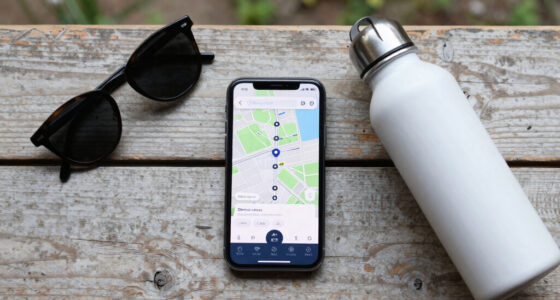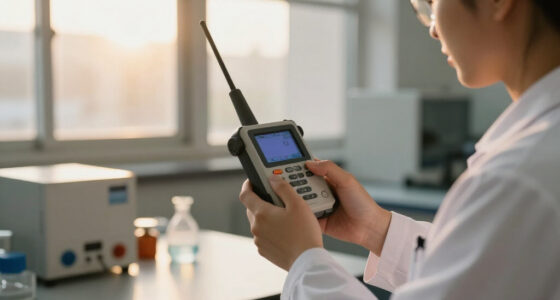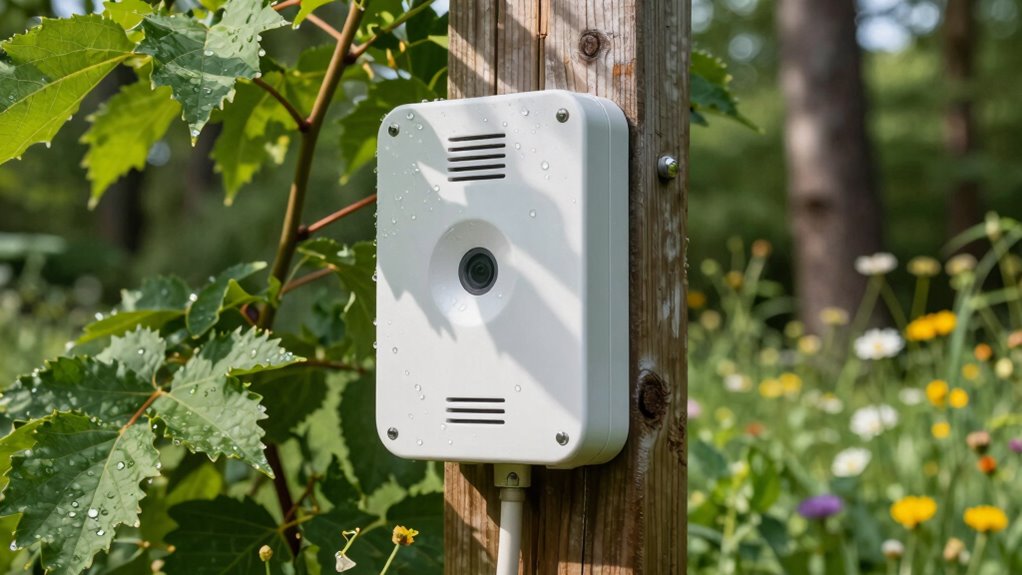

Environmental sensors help you protect ecosystems by providing real-time, accurate data on air, water, temperature, and humidity. They let you detect threats early and respond quickly, preventing pollution or climate damage. Proper calibration guarantees the data remains reliable, while routine maintenance keeps sensors functioning well. Choosing the right sensors for your environment improves measurement accuracy. Keep exploring to discover how these tools can make a real difference in safeguarding our planet’s health.
Key Takeaways
- Enable continuous monitoring of air, water, and climate parameters for early threat detection.
- Ensure accurate data through proper calibration, supporting reliable environmental assessments.
- Facilitate timely responses to pollution or climate change indicators, minimizing ecosystem damage.
- Help select appropriate sensors for specific environments, improving measurement reliability.
- Promote maintenance practices that sustain data quality, ensuring long-term ecosystem protection.
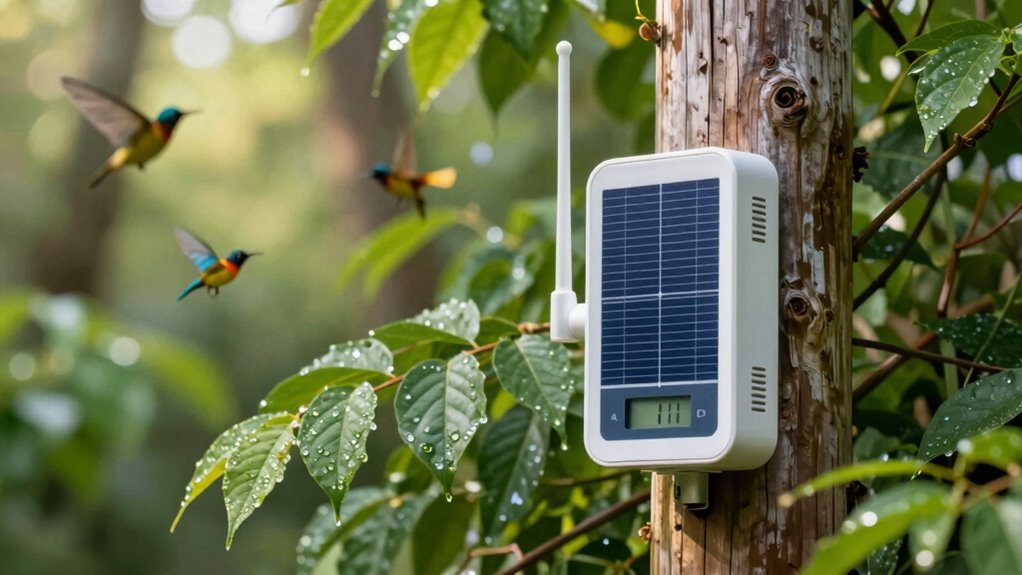
Environmental sensors have become essential tools in safeguarding ecosystems by providing real-time data on factors like air and water quality, temperature, and humidity. This continuous data collection allows for more precise environmental management and timely responses to potential threats. However, for these sensors to be effective, sensor calibration is fundamental. Proper calibration ensures that the data collected is reliable and reflects the true state of the environment. Without regular calibration, sensors can drift or produce inaccurate readings, which could lead you to make poor decisions or overlook critical issues.
When you focus on sensor calibration, you’re making sure that each measurement aligns with standardized references. This process involves comparing sensor outputs to known values and adjusting them as needed. Accurate calibration is especially important in ecosystems where small changes can have significant impacts, such as detecting early signs of pollution or temperature fluctuations. By maintaining calibration routines, you optimize data accuracy, which in turn supports informed decision-making. Precise data helps you identify patterns and anomalies, enabling proactive measures before problems escalate. Additionally, selecting sensors with proper environmental specifications can further enhance the reliability of your measurements in diverse conditions.
Data accuracy is at the heart of environmental monitoring. You rely on sensors to deliver trustworthy information, but even the most advanced sensors can produce errors if not maintained properly. That’s why routine calibration and validation are essential. When your sensors are accurately calibrated, you minimize the risk of false alarms or overlooked issues. This accuracy empowers you to assess pollution levels, track climate changes, or manage water resources effectively. It also ensures that your efforts are based on solid evidence, making your interventions more targeted and successful. Incorporating quality sensor selection is crucial for achieving dependable results in diverse environmental conditions. Additionally, choosing sensors with built-in calibration features can simplify ongoing maintenance and improve long-term data reliability.
Another aspect that enhances data accuracy is the choice of high-quality sensors designed for specific environments. Whether you’re monitoring air quality in urban areas or water conditions in remote lakes, selecting sensors suitable for the conditions ensures more reliable data. Additionally, implementing regular maintenance, such as cleaning and recalibration, preserves the sensors’ performance over time. Regular calibration practices help mitigate issues like sensor drift and extend the lifespan of your equipment. When you combine these practices with proper calibration techniques, you maximize the lifespan of your sensors and the quality of the data they produce.
Smart Sensors for Real-Time Water Quality Monitoring (Smart Sensors, Measurement and Instrumentation, 4)
- Water quality monitoring sensors: Real-time water quality measurement
As an affiliate, we earn on qualifying purchases.
As an affiliate, we earn on qualifying purchases.
Frequently Asked Questions
How Accurate Are Environmental Sensors in Remote Locations?
Environmental sensors in remote locations are quite accurate when properly calibrated and maintained. Regular sensor calibration guarantees data reliability, preventing drift over time. Additionally, efficient data transmission systems allow you to receive real-time data, even from distant areas. Keep in mind, environmental conditions might affect sensor performance, so ongoing calibration and robust transmission methods are essential to maintain accuracy and gather trustworthy data for ecosystem protection.
What Is the Lifespan of Common Environmental Sensors?
You might think environmental sensors last forever, but their lifespan varies—usually 2 to 5 years, depending on usage and conditions. Ironically, regular sensor calibration and ensuring reliable data transmission can extend their life. Harsh environments wear sensors out faster, yet proper maintenance and timely replacements keep data accurate. So, while they’re built to last, don’t forget to monitor and maintain them; otherwise, your ecosystem protection efforts could falter.
Are Environmental Sensors Cost-Effective for Large-Scale Deployment?
Yes, environmental sensors are cost-effective for large-scale deployment when you consider their benefits. Proper sensor calibration guarantees accurate data, reducing costly errors. Additionally, data integration allows you to analyze information efficiently across multiple sensors, saving time and resources. Over time, these sensors help you detect issues early, preventing costly environmental damage. Their long-term value makes them a smart investment for monitoring vast ecosystems.
How Do Sensors Differentiate Between Natural and Human-Caused Changes?
You can tell natural from human-caused changes by analyzing sensor data with proper calibration and data integration. When sensors are calibrated correctly, they accurately detect subtle variations, helping you identify anomalies. By integrating data from multiple sensors, you gain an all-encompassing view of environmental shifts. This combined approach allows you to distinguish between natural fluctuations and human impacts, enabling more targeted and effective ecosystem protection strategies.
Can Sensors Predict Future Environmental Threats Effectively?
Sensors can predict future environmental threats effectively if they are well-calibrated and their data is integrated properly. You need to regularly calibrate sensors to guarantee accuracy and combine data from multiple sources for thorough analysis. This way, you can identify early warning signs of potential threats, like pollution spikes or climate shifts, enabling proactive responses. Proper calibration and data integration are key to making reliable predictions about future environmental challenges.
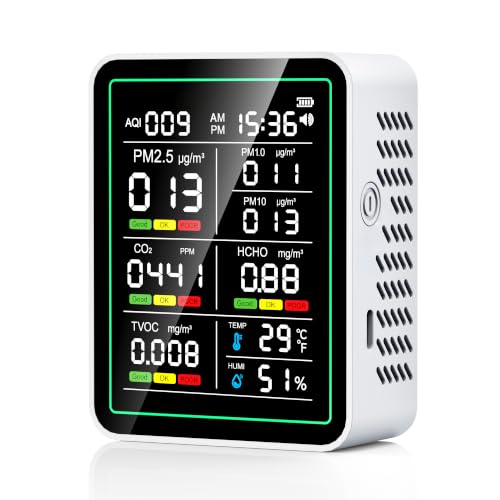
ZEMEOLLO Air Quality Monitor Indoor, 10-in 1 Smart Air Quality Tester
- 10-in-1 Multi-Gas Detection: Monitors CO₂, HCHO, TVOC, benzene, PM2.5, PM10
- HD Color Display with Visual Data: Real-time data with color-coded alerts
- Intelligent Environmental Assessment: Automatic safety threshold alerts and reports
As an affiliate, we earn on qualifying purchases.
As an affiliate, we earn on qualifying purchases.
Conclusion
Ironically, while environmental sensors are designed to safeguard ecosystems, their presence often highlights just how fragile and endangered these environments truly are. You might think technology would make things easier, yet it’s a stark reminder that we need constant monitoring to catch issues before they spiral out of control. In the end, these sensors serve as both protectors and wake-up calls—proving that even with all our advancements, nature’s delicate balance still depends on our vigilant eyes.

Aqara Zigbee Temperature and Humidity Sensor 3 Pack, Thermometer Hygrometer
- Requires Aqara Hub (sold separately): Compatible with Aqara Hub only
- 3-in-1 Environmental Monitoring: Measures temperature, humidity, pressure
- Real-time Data Tracking: Displays data on Aqara app
As an affiliate, we earn on qualifying purchases.
As an affiliate, we earn on qualifying purchases.

Lamotte Green Program Low Cost Water Monitoring Kit, Adults
- Versatile Water Testing: Tests fresh, brackish, and saline water
- Complete Testing Kit: Includes manual, color chart, apparatus, TesTabs
- Easy to Use: Laminated color chart and step-by-step instructions
As an affiliate, we earn on qualifying purchases.
As an affiliate, we earn on qualifying purchases.