
Urban compost heat networks capture heat produced by decomposing organic waste to warm entire neighborhoods sustainably. You can use special pipes to circulate water or air that absorbs this heat and transfers it to buildings nearby. This process reduces reliance on fossil fuels, lowers emissions, and promotes recycling. As you explore further, you’ll discover how system design, community involvement, and innovative technology make this eco-friendly heating solution a real urban game-changer.
Key Takeaways
- Compost heat networks utilize decomposing organic material to generate sustainable warmth for entire neighborhoods.
- Special piping systems transfer heat from compost piles to nearby buildings, reducing reliance on fossil fuels.
- Proper system design and community engagement are essential for efficient urban implementation.
- These networks lower greenhouse gas emissions and support circular waste management practices.
- Challenges include high initial costs, regulatory hurdles, and maintaining compost quality for consistent heat output.
How Compost Heat Networks Work
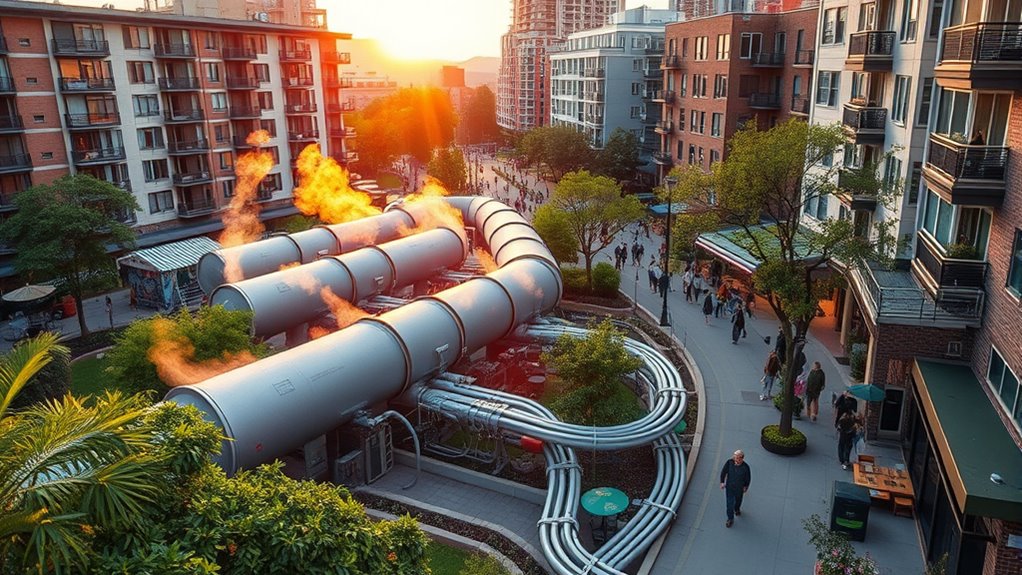
Ever wondered how compost heat networks generate warmth for urban buildings? It all starts with the compost itself. High-quality compost ensures ideal heat production because it has the right balance of moisture, aeration, and organic material. The better the compost quality, the more consistent heat it can generate. Inside the network, heat transfer efficiency is key. Special pipes circulate water or air through the compost piles, absorbing the heat produced during decomposition. This heated fluid then moves to nearby buildings, providing warmth without relying on fossil fuels. The process relies on maintaining ideal compost conditions and maximizing heat transfer efficiency. Proper compost management is essential to ensure continuous and optimal heat output. This way, compost heat networks sustainably harness the natural warmth generated by decomposing organic matter to heat urban spaces effectively.
Benefits for Urban Sustainability

Urban compost heat networks substantially contribute to sustainability by reducing reliance on fossil fuels and lowering greenhouse gas emissions. They enhance waste management by converting organic waste into useful heat, decreasing landfill use and methane emissions. This process encourages better waste sorting and recycling practices, supporting circular economy goals. Additionally, these networks promote urban greening, as they often integrate with city landscaping projects, encouraging green spaces that improve air quality and urban biodiversity. By utilizing locally sourced compost heat, neighborhoods cut down on energy consumption from traditional heating methods. This not only saves energy but also fosters community engagement in sustainable practices. Moreover, the integration of innovative technologies such as skincare innovation and transparency measures can promote public trust and adoption of these initiatives. Overall, compost heat networks help cities become more resilient, cleaner, and more environmentally friendly, paving the way for healthier, more sustainable urban living.
Designing and Implementing a System

When designing and implementing your compost heat network, you need to develop clear system planning strategies that align with your urban environment. Next, focus on the infrastructure development steps to make sure of efficient heat transfer and integration with existing systems. Additionally, selecting the appropriate monitoring protocols is essential for maintaining system performance and sustainability over time. Finally, establish maintenance and monitoring protocols to keep the system running smoothly and sustainably over time.
System Planning Strategies
Designing and implementing an effective urban compost heat network requires careful planning to guarantee peak performance and integration within the existing infrastructure. You should prioritize selecting suitable thermal storage solutions to maximize heat retention and ensure a steady supply. Public engagement plays a crucial role; involving community members early helps build support and addresses concerns about the system’s impact. When planning, consider zoning and the placement of collection points to minimize disruption and enhance heat transfer. Map out the flow of compost and heat, ensuring seamless connections between sources and consumers. Regular assessments and adjustments are essential to maintain efficiency. Both system security and operational practices should be considered to protect against potential vulnerabilities. By combining strategic thermal storage with active public participation, you set a strong foundation for a resilient, sustainable compost heat network that benefits the entire neighborhood.
Infrastructure Development Steps
Developing a compost heat network involves a series of structured steps to guarantee successful implementation. First, you must align with existing urban policy to assure the project fits city priorities. Next, engage the public early to build support and gather valuable feedback. Then, design the system considering local infrastructure, zoning, and future expansion plans. Implementing the system requires detailed planning, securing permits, and coordinating with stakeholders. Effective public engagement keeps residents informed and involved throughout the process, fostering trust and cooperation. Additionally, maintaining the system’s tire longevity is crucial for long-term efficiency and sustainability. Here’s a quick overview:
| Step | Focus Area | Key Action |
|---|---|---|
| Planning & Design | Urban policy, layout | Ensure compliance and efficiency |
| Public Engagement | Community involvement | Host meetings and gather feedback |
| Implementation | Construction & permits | Coordinate stakeholders |
Maintenance and Monitoring
Effective maintenance and monitoring are essential to guarantee your compost heat network operates efficiently and reliably over time. Regularly calibrate sensors to ensure accurate temperature and flow readings, preventing system failures. Implement system redundancy so if one component fails, backup systems kick in seamlessly, maintaining continuous operation. Keep an eye on key indicators like temperature consistency and energy output, adjusting as needed. Schedule routine inspections to spot issues early, such as leaks or sensor drift. Use remote monitoring tools to stay updated on system performance around the clock. Establish clear protocols for maintenance, including sensor calibration checks and redundant system testing, to minimize downtime and extend equipment lifespan. Staying proactive helps you maximize the network’s efficiency and lifespan. Additionally, self-awareness of system performance can help identify underlying issues before they escalate, ensuring optimal operation and longevity.
Case Studies of Successful Deployments

You’ll see how neighborhood-wide energy savings are achieved in real-world projects, demonstrating the tangible benefits of compost heat networks. These case studies highlight innovative urban infrastructure that integrates composting with energy systems seamlessly. Exploring these successes can inspire your own community to adopt sustainable heating solutions effectively. Additionally, understanding personal debt forgiveness bills and their impact on funding opportunities can help communities secure financial support for such initiatives.
Neighborhood-wide Energy Savings
Have you ever wondered how neighborhoods can substantially reduce their energy costs through innovative heat networks? Successful deployments showcase how urban compost heat networks enhance thermal efficiency and optimize resource management. They turn organic waste into heat, lowering reliance on traditional energy sources and cutting costs. Additionally, these systems promote environmental sustainability by utilizing renewable organic materials and reducing greenhouse gas emissions. Consider these benefits: – Reduced overall energy bills for residents – Lower carbon emissions and environmental impact – Efficient use of organic waste as a resource – Increased resilience against energy price fluctuations – Enhanced community sustainability efforts These case studies prove that neighborhood-wide energy savings are achievable with compost heat networks. By harnessing local resources smartly, you can create a more sustainable, cost-effective neighborhood while maximizing thermal efficiency. It’s a win-win for residents and the environment.
Innovative Urban Infrastructure
Urban compost heat networks are transforming city infrastructure by integrating organic waste management with energy systems, demonstrating how innovative designs can enhance sustainability. These systems showcase creative urban infrastructure that tackles waste management challenges while improving energy efficiency. In successful deployments, organic waste is converted into heat, reducing reliance on traditional energy sources and lowering emissions. Cities like Copenhagen and Toronto have adopted these networks, turning waste into valuable energy assets that warm neighborhoods and support local sustainability goals. By combining waste management with energy production, these projects exemplify how cities can optimize resource use and promote resilience. Such innovative infrastructure not only reduces landfill waste but also provides a reliable, clean energy source, showcasing the future of eco-friendly urban development. Additionally, implementing waste-to-energy solutions can further improve the efficiency and sustainability of these networks.
Challenges and Considerations
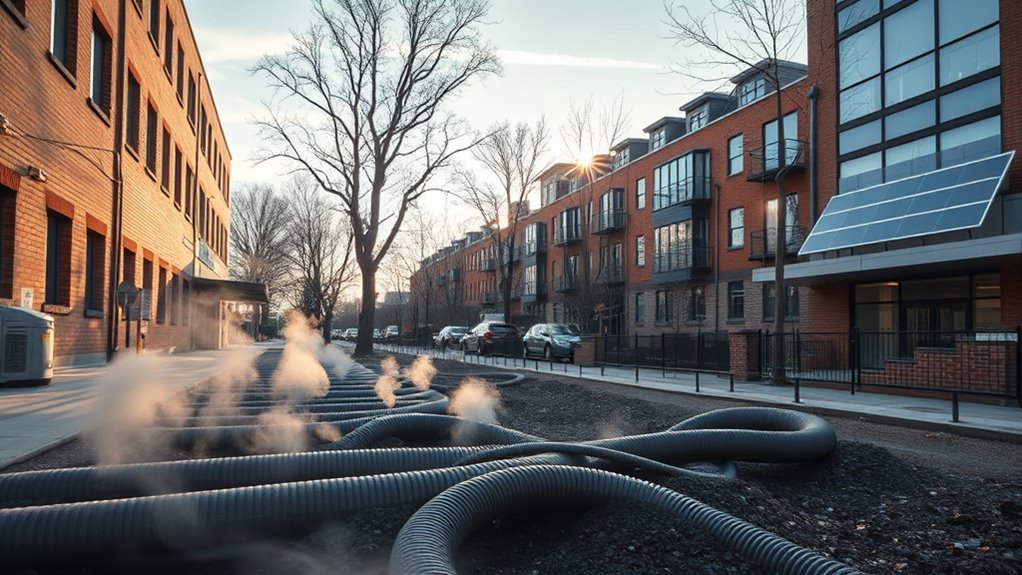
Implementing compost heat networks in cities presents several challenges that must be carefully addressed. One key issue involves cost implications, as initial setup and maintenance require significant investment. Securing funding can be difficult, especially with competing city priorities. Regulatory hurdles also pose obstacles; existing laws may not accommodate new waste-to-heat systems, leading to delays. Additionally, integrating these networks into existing infrastructure demands careful planning. You’ll also need to think about community acceptance, as residents might have concerns about odors or disruptions. Finally, technical challenges such as ensuring consistent heat output and managing waste quality must be tackled to keep the system efficient and sustainable. Addressing these considerations early on helps pave the way for successful implementation and long-term benefits. Incorporating innovative design solutions can help overcome some of these technical and logistical hurdles.
Future Opportunities and Innovations

Advancements in technology and innovative design are opening new opportunities for compost heat networks to become more efficient and scalable. Biomass integration allows you to maximize heat recovery from organic waste, enhancing energy output without expanding infrastructure. Incorporating smart grid technology enables real-time monitoring and dynamic distribution of heat, optimizing system performance and reducing waste. These innovations let you better match heat supply with neighborhood demand, increasing overall efficiency. As sensors and automation improve, compost heat networks can adapt quickly to changing conditions, lowering operational costs. Future developments could also explore modular designs, making expansion easier and more cost-effective. Embracing these opportunities helps you create sustainable, resilient urban energy systems that leverage waste as a valuable resource.
Getting Involved: Community and Policy Roles

Community engagement and supportive policies are essential for the success of compost heat networks. Your active participation can drive change through citizen advocacy, raising awareness and encouraging local support. Policy incentives, like grants or tax breaks, motivate stakeholders to adopt sustainable solutions. To get involved, consider attending town hall meetings or joining neighborhood committees to voice your interest. You can also:
Active community participation and supportive policies are key to expanding compost heat networks.
- Advocate for local policies that promote compost heat projects
- Collaborate with community groups to build awareness
- Support initiatives that provide financial incentives
- Educate neighbors about environmental benefits
- Partner with local officials to streamline approval processes
Your involvement helps create a culture of sustainability, ensuring policies and community efforts align to keep compost heat networks thriving and expanding. Together, you can make a tangible impact on your neighborhood’s energy future.
Frequently Asked Questions
What Are the Total Costs Involved in Establishing Compost Heat Networks?
When you consider establishing compost heat networks, a thorough cost analysis helps you understand the total costs involved, including infrastructure, maintenance, and operational expenses. You should also explore available financial incentives, which can substantially reduce upfront costs and improve the project’s feasibility. While initial investments may seem high, long-term savings and environmental benefits make compost heat networks a worthwhile choice for sustainable urban energy solutions.
How Long Does It Typically Take to See Energy Savings From These Systems?
You might wonder how long it takes to see energy savings from these systems. Typically, after the initial cost considerations are addressed, you can expect to notice long-term savings within 3 to 5 years. The system’s efficiency improves over time, reducing energy bills and maintenance costs. Patience is key, but the benefits become clear as the system continues to operate and generate cost reductions.
Are Compost Heat Networks Suitable for Small or Rural Communities?
Imagine a cozy rural village, where compost piles quietly generate warmth beneath the open sky. Compost heat networks can suit small communities, offering rural adaptation and sustainable energy. While small-scale feasibility depends on local waste availability and infrastructure, these systems can efficiently serve limited areas, reducing reliance on distant energy sources. You might find that, with careful planning, compost heat networks provide an eco-friendly, cost-effective solution for rural neighborhoods.
What Maintenance Is Required to Keep the System Running Efficiently?
To keep your compost heat network running efficiently, you need to focus on regular maintenance schedules that guarantee system durability. Check for blockages, monitor temperature levels, and inspect equipment regularly to prevent issues. Cleaning and replacing filters, and ensuring proper insulation, help maintain excellent performance. Staying proactive with maintenance not only extends your system’s lifespan but also guarantees reliable heat delivery for your community.
How Do Compost Heat Networks Impact Local Air Quality and Pollution Levels?
You might think it’s a tall order, but compost heat networks can actually improve air quality and reduce pollution levels. By generating heat from organic waste, they cut down on fossil fuel use and emissions. This green approach keeps the air cleaner and helps fight pollution, proving that small changes can add up. You’ll notice healthier neighborhoods and fresher air as these systems grow in popularity, making a real difference.
Conclusion
As you embrace compost heat networks, envision neighborhoods bathed in warmth, their futures fueled by green energy rising from earth’s humble gifts. These systems transform waste into warmth, turning the city’s silent compost into a vibrant heartbeat of sustainability. By getting involved and supporting innovative policies, you become part of a movement that transforms concrete jungles into lush, thriving ecosystems. Together, you can ignite a greener, warmer future—a radiant promise rooted in nature’s quiet power.