
Circular textiles mean your clothing is made to last, be repaired, and recycled endlessly. You can keep garments in use without waste by supporting designs rooted in sustainability and durability. This approach reduces environmental harm, cuts resource use, and promotes ethical practices. Instead of your clothes turning to trash, they become part of a closed-loop system, ensuring a more eco-friendly fashion future. Keep exploring how this innovative concept can reshape your wardrobe and the planet.
Key Takeaways
- Circular textiles are designed for durability, repairability, and recyclability to ensure clothing can be continuously reused and repurposed.
- They operate within a closed-loop system, preventing waste and reducing reliance on virgin raw materials.
- These textiles support sustainable fashion by minimizing environmental impact through resource conservation and waste reduction.
- Modular and recyclable design principles enable garments to be easily repaired or reprocessed into new products.
- The goal is a future where clothing remains a renewable resource, eliminating the concept of fashion waste.
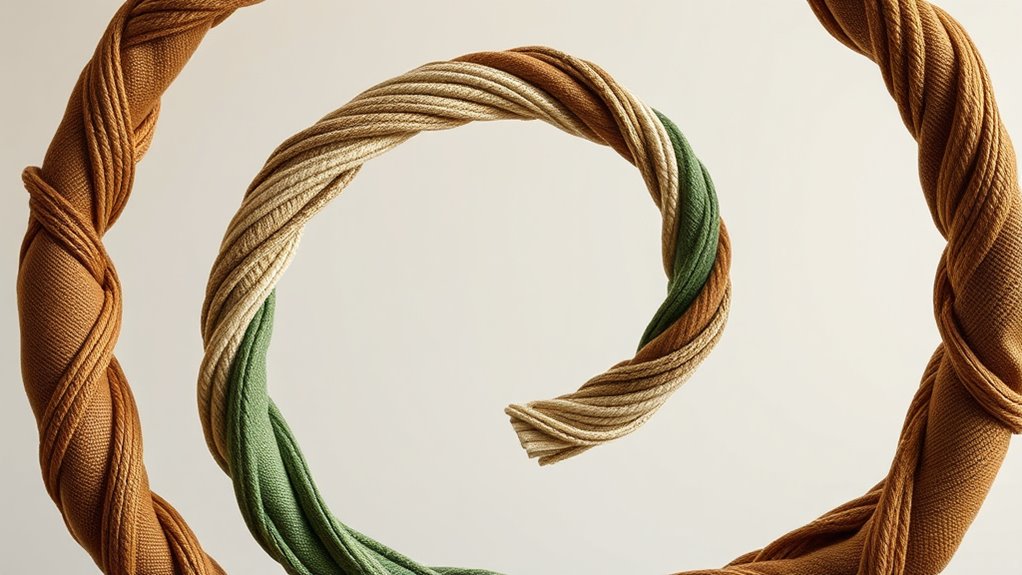
Have you ever wondered how the fashion industry can become more sustainable? The answer lies in circular textiles—a revolutionary approach that transforms how clothes are designed, produced, and reused. Unlike the traditional “take, make, dispose” model, circular textiles operate within a closed-loop system where garments are continually reused, recycled, and repurposed. This method aims to minimize waste and conserve resources by designing clothing for durability, repairability, and recyclability, ensuring products stay in circulation for as long as possible. When you embrace circular textiles, you’re supporting a shift towards a sustainable fashion industry rooted in the principles of the circular economy, which promotes regeneration and environmental responsibility across the entire supply chain.
Circular textiles transform fashion by promoting reuse, recycling, and sustainability within a closed-loop system.
By adopting circular textile practices, you directly contribute to reducing textile waste that would otherwise end up in landfills, polluting ecosystems and contributing to environmental degradation. This approach cuts down the demand for virgin raw materials like cotton and synthetic fibers, saving vast amounts of water, land, and energy used in cultivation and manufacturing. It also decreases the need for pesticides and fertilizers, which harm biodiversity and soil health. As a result, your choices help lower greenhouse gas emissions and lessen the strain on natural landscapes, including oceans, by preventing textile waste leakage. Recycling and sustainable production methods further reduce the carbon footprint associated with clothing, making your wardrobe a part of a larger effort to protect our planet. Incorporating sustainable materials into your wardrobe supports the development of eco-friendly textiles and enhances the circular system.
Circular textiles also boost economic efficiency by reducing resource extraction and processing costs. They foster new business models—like clothing take-back programs, repair services, and resale platforms—that promote responsible consumption. These models not only decrease expenses related to raw materials and waste management but also stimulate innovation in sustainable materials and recycling infrastructure. By supporting such practices, you help create a more resilient and resource-efficient fashion industry that values waste reduction and material recovery.
On a social level, circular textiles promote better labor conditions through localized production and transparent supply chains. They shift industry focus from fast fashion’s disposability to garments built for longevity, which encourages ethical sourcing and fair working environments. As a consumer, your participation in recycling programs, repairs, and resale initiatives fosters a sense of personal responsibility and awareness, strengthening the bond between you and your clothing. Ultimately, circular textiles champion a more ethical and inclusive industry that prioritizes sustainability, durability, and social responsibility.
Design principles centered on circular textiles emphasize creating garments that last. This involves choosing eco-friendly, innovative materials like recycled fibers and organic cotton, and designing clothes that can be easily repaired or reconfigured. Modular designs and recyclable components ensure that clothing can be seamlessly integrated back into the cycle, reducing waste and extending the life of each piece. By supporting these principles, you’re helping to build a future where clothing truly never becomes trash but remains a renewable resource in a sustainable fashion ecosystem.
Frequently Asked Questions
How Do Circular Textiles Impact Global Textile Industry Employment?
You might wonder how circular textiles influence global employment. As you explore, you’ll see that shifting to circular models creates more jobs, especially in reuse, recycling, and repair sectors, potentially adding millions worldwide. But, it also means some traditional roles, like raw material production, could decline. You’ll need to think about how this progression affects workers’ skills, safety, and fair wages, ensuring a just and sustainable employment landscape.
Are Circular Textiles Affordable for Everyday Consumers?
Oh, so you think affordable fashion should include circular textiles? Well, think again. These eco-friendly options often come with higher prices due to costly collection, processing, and limited supply. While rental models and consumer education help, they can’t fully bridge the gap without policy support or technological breakthroughs. Until then, circular textiles remain a premium choice, making it tough for everyday folks to access affordable, sustainable fashion.
What Are the Main Challenges in Scaling Circular Textile Production?
You face several hurdles in scaling circular textile production. Technologically, recycling blends like cotton-polyester is tough, and costs remain high. Economically, recycled fabrics struggle to compete with cheap virgin materials, and supply chain issues add instability. Consumer demand for low-cost, new clothes also limits market growth. Additionally, inconsistent regulations and social concerns, like worker conditions, slow down widespread adoption. Overcoming these challenges requires innovation, policy support, and shifting consumer habits.
How Can Consumers Identify Truly Sustainable Circular Clothing?
Think of finding truly sustainable circular clothing like hunting for a rare gem. You should look for durable designs, repairability, and eco-friendly materials like recycled fibers or organic cotton. Check labels for certifications like bluesign or recycled content. Brands with take-back programs or repair services show genuine commitment. Use transparency tools and ask about their sourcing and recycling practices—these clues help you spot clothing that’s genuinely circular and eco-conscious.
What Policies Support the Growth of Circular Textile Initiatives?
You should know that policies like Extended Producer Responsibility make producers responsible for end-of-life textile management, encouraging circular design and recycling. Governments set ambitious recycling targets, mandate textile collection, and promote infrastructure investments in sorting and fiber-to-fiber technologies. They also foster stakeholder collaboration through alliances and advisory groups. Economic incentives like subsidies, grants, and tax breaks motivate companies to adopt circular practices, ensuring a supportive environment for sustainable textile initiatives to thrive.
Conclusion
By choosing circular textiles, you’re helping to keep clothing out of landfills and support sustainable fashion. Remember, “a stitch in time saves nine”—the sooner you embrace this change, the better for our planet. Your choices matter, and small actions can lead to big impacts. So, stay conscious of your wardrobe and opt for clothing that’s designed to last and be reused. Together, we can make a difference, one garment at a time.