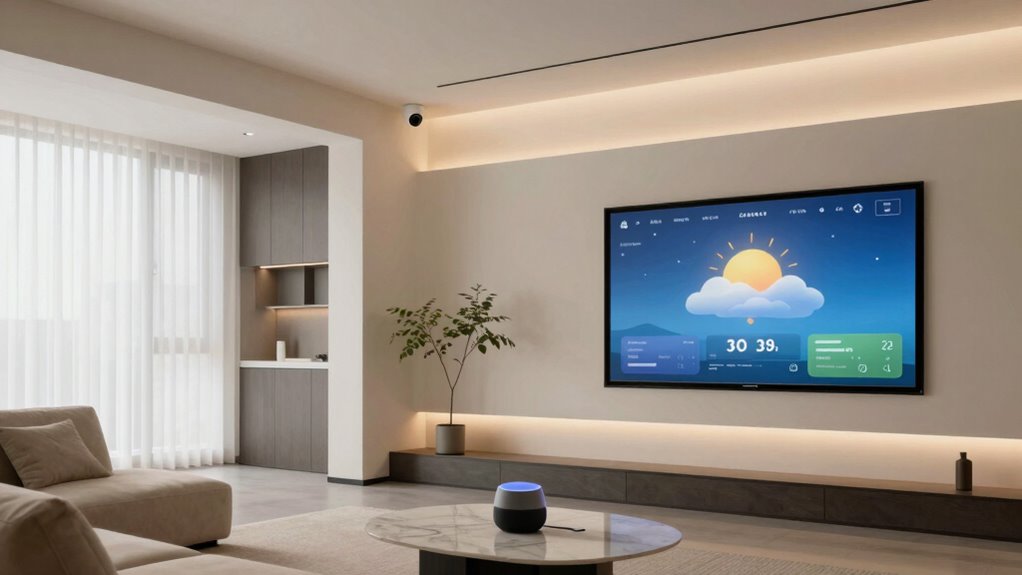

Smart homes become smarter without annoying you by learning your preferences and adjusting seamlessly over time. They use voice commands to control devices, reducing the need for manual switches, and automate energy use to save costs and the environment. Advanced features balance comfort with efficiency, making adjustments automatically without constant notifications or interruptions. If you want to find out how these systems perfect your home experience while keeping annoyances at bay, there’s more to explore.

Prime made for students and young adults
- Fast, free delivery for dorm and study essentials
- Prime Video and Amazon Music included
- Member-only deals
Key Takeaways
- Implement adaptive systems that learn user preferences to deliver personalized, non-intrusive automation.
- Use relevant, context-aware notifications to avoid overwhelming users with unnecessary alerts.
- Provide manual override options for users to maintain control and prevent system annoyance.
- Balance automation with privacy controls, ensuring data use aligns with user comfort.
- Continuously evolve system intelligence to anticipate needs without excessive prompts or disturbances.
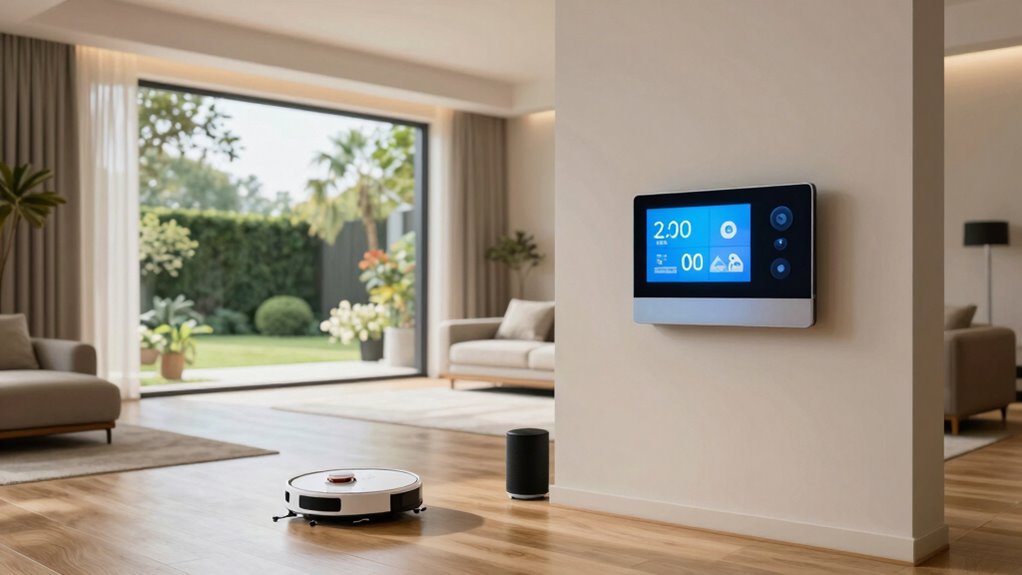
As technology advances, smart homes are becoming more intuitive and efficient than ever before. You no longer have to fumble for switches or remember complex commands to control your environment. Instead, voice control has revolutionized the way you interact with your home. With just a simple voice command, you can turn on lights, adjust the thermostat, or start your coffee maker. This seamless integration not only makes daily routines smoother but also minimizes the frustration of manual adjustments. As you rely more on voice commands, your home learns your preferences over time, further customizing responses to suit your habits. This adaptive feature prevents the system from becoming annoying or intrusive, ensuring that it functions as a helpful partner rather than a nuisance.
Beyond convenience, your smart home becomes more energy-efficient through intelligent automation. Devices work together to optimize energy consumption, such as adjusting heating and cooling based on your schedule or turning off unused appliances automatically. This focus on energy efficiency not only reduces your utility bills but also lessens your environmental impact. Additionally, projector technology advancements allow for more immersive entertainment experiences, seamlessly integrating with your smart home system for optimal viewing conditions. As your smart home gathers data on your routines, it fine-tunes its operations, creating a balance between comfort and conservation. You might find that your thermostat lowers the temperature when you’re away or that lighting dims automatically during daylight hours, all without you having to lift a finger. These subtle adjustments keep your home comfortable and eco-friendly without feeling overwhelming or intrusive. Incorporating smart automation further enhances the system’s ability to adapt to your lifestyle effortlessly. Also, understanding privacy policies helps you manage your data and maintain control over your personal information.
Furthermore, advancements in digital concepts have paved the way for smarter, more responsive systems that continually evolve to meet user needs. Smart home systems are designed with user experience in mind. They avoid becoming annoying by avoiding constant notifications or unnecessary prompts. Instead, they deliver relevant information only when needed, like alerting you if a window is left open or if there’s an unusual energy spike. You can also set preferences to control how much interaction you want, ensuring the system aligns with your comfort level. Many devices also include manual override options, so you can take control whenever you prefer. This balance prevents the technology from feeling overbearing, making your smart home feel more like a helpful assistant than an intrusive presence.
As an affiliate, we earn on qualifying purchases.
Frequently Asked Questions
How Do Smart Homes Protect User Privacy?
Smart homes protect your privacy by using robust data encryption, ensuring your personal information stays secure. They minimize privacy concerns by only collecting necessary data and allowing you to control what’s shared. Regular software updates patch security vulnerabilities, and transparent policies clarify how your data is used. Additionally, many devices offer local processing options, reducing reliance on cloud storage and giving you greater control over your privacy.
Can Smart Home Devices Be Hacked Easily?
Can smart home devices be hacked easily? Yes, they can if you don’t address device vulnerabilities. Hackers often exploit weak passwords or outdated software, so you need robust hacking prevention measures. Regularly update firmware, enable two-factor authentication, and change default passwords. Staying vigilant reduces the risk of intrusion, ensuring your smart home remains safe and secure. Are you doing enough to protect your connected devices?
How Energy-Efficient Are Smart Home Systems?
Smart home systems are quite energy-efficient, helping you reduce overall energy consumption. They automatically adjust lighting, heating, and cooling based on your habits, which boosts sustainability benefits. By optimizing energy use, these devices lower utility bills and lessen environmental impact. You’ll find your home becomes more sustainable without sacrificing comfort, making smart systems a practical choice for eco-conscious living.
What Is the Cost of Upgrading to a Smarter Home?
Upgrading to a smarter home costs between a few hundred to several thousand dollars, depending on the devices you choose. While the cost comparison shows affordability for basic systems, upgrade challenges like compatibility issues can add to expenses. You might find some smart gadgets are pricey, but investing in a few key devices can improve convenience and energy savings. Planning your budget carefully helps you avoid surprises and makes your smart home journey smoother.
How Do Smart Homes Handle System Malfunctions?
When your smart home faces system malfunctions, voice control features and device integration play key roles in troubleshooting. You can quickly identify issues by using voice commands to run diagnostics or reset devices. Most systems are designed with seamless device integration, allowing you to troubleshoot multiple components simultaneously. Regular updates and robust customer support guarantee your smart home remains reliable, minimizing disruptions and making malfunctions easier to manage.
energy-efficient smart thermostat
As an affiliate, we earn on qualifying purchases.
As an affiliate, we earn on qualifying purchases.
Conclusion
As smart homes continue to evolve, they’re becoming more intuitive without overwhelming you. Imagine your home anticipating your needs, adjusting lighting, temperature, and even your coffee brewing—all seamlessly. Did you know that 70% of homeowners say smart devices save them time and reduce stress? This shows how smarter homes enhance daily life without intruding. With thoughtful design, your smart home can be both helpful and unobtrusive, making everyday living truly effortless.
As an affiliate, we earn on qualifying purchases.
privacy-focused smart home devices
As an affiliate, we earn on qualifying purchases.
As an affiliate, we earn on qualifying purchases.
Halloween Picks
halloween
As an affiliate, we earn on qualifying purchases.